
Instruments · Aerophones
Harmonica
A harmonica is small musical instrument that is played with the mouth by blowing into holes in its side. Harmonicas are cheap and easy to play. Harmonicas produce their musical sounds from the vibrations of reeds in the harmonica's metal case. Harmonicas are used in blues music, folk music, rock and roll music, and pop music. A special type of harmonica, the chromatic harmonica, is used in jazz and classical music. Harmonicas are made in several different keys: G, A♭, A, B♭, B, C, D♭, D, E♭, E, F, and F♯. Each key can play a different range of notes. It's a popular instrument in music genres, such as blues, folk, jazz, country and rock music.
Summary: Simple English Wikipedia, “Harmonica” — CC BY-SA 4.0. Revision of 2024-08-16.
Museum photographs
These 7 photographs span 1860–1980, 1 place of origin and 2 museums. Every photograph is public domain or openly licensed, and links to the museum’s own record.
-
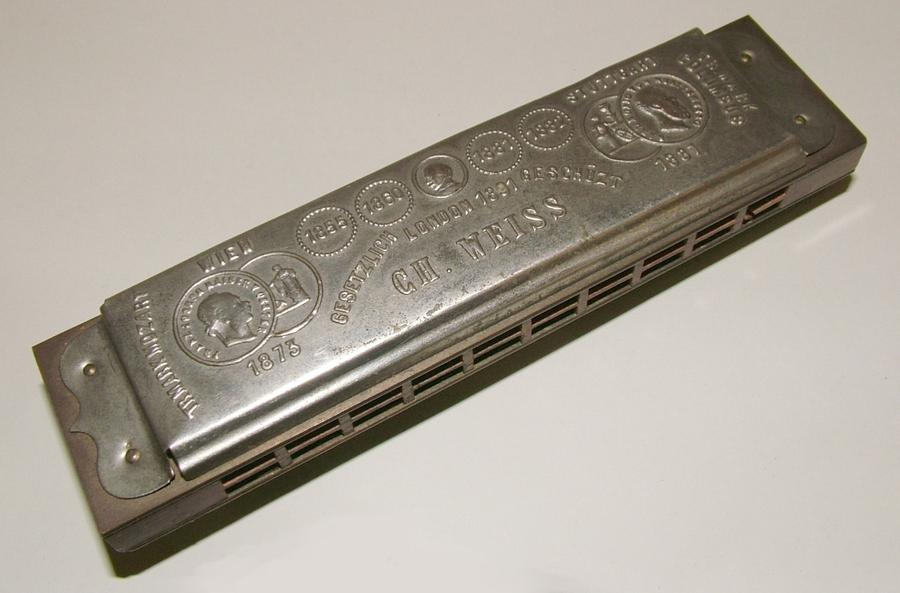
Harmonicaca. 1895 · Germany -
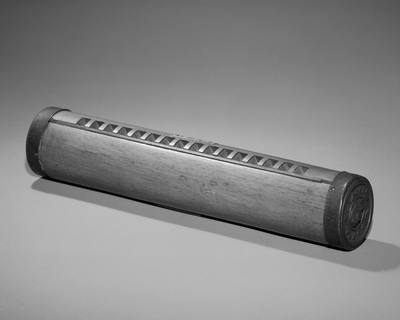
Harmonica1860–70 · Germany -
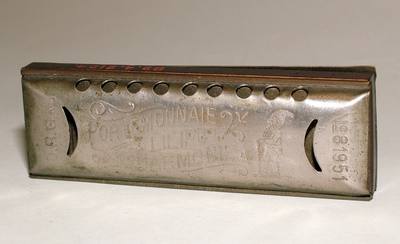
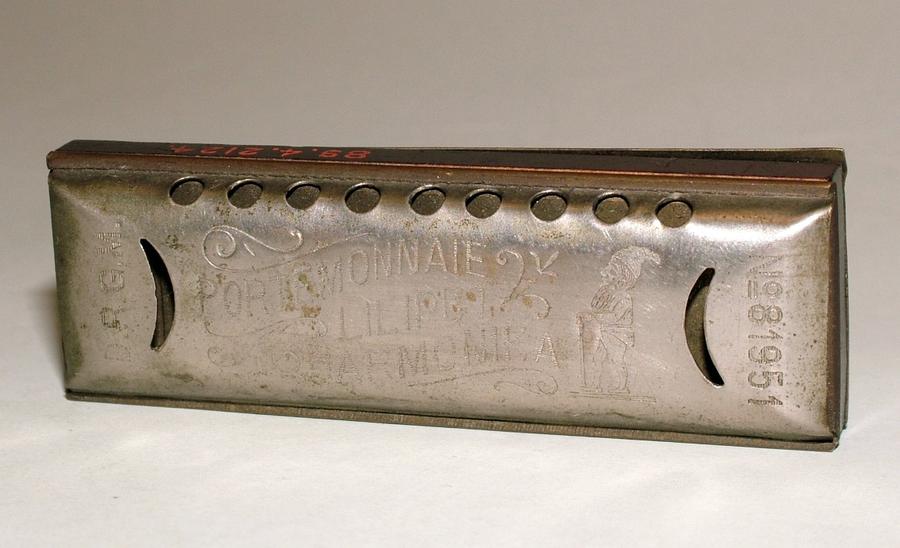
Harmonicaca. 1900 · Germany -
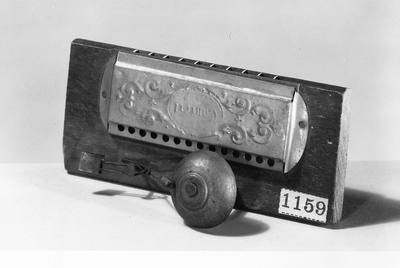
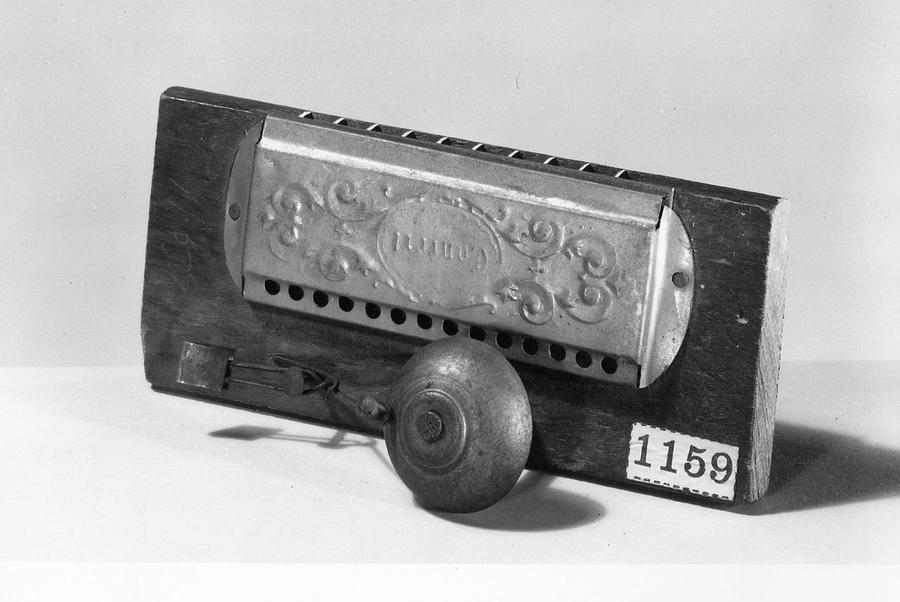
Harmonicaearly 20th century · Germany -
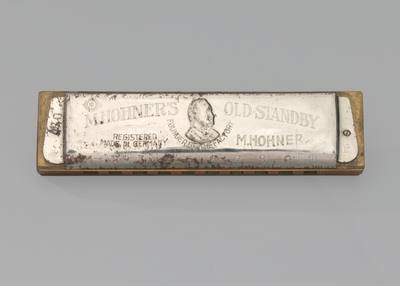
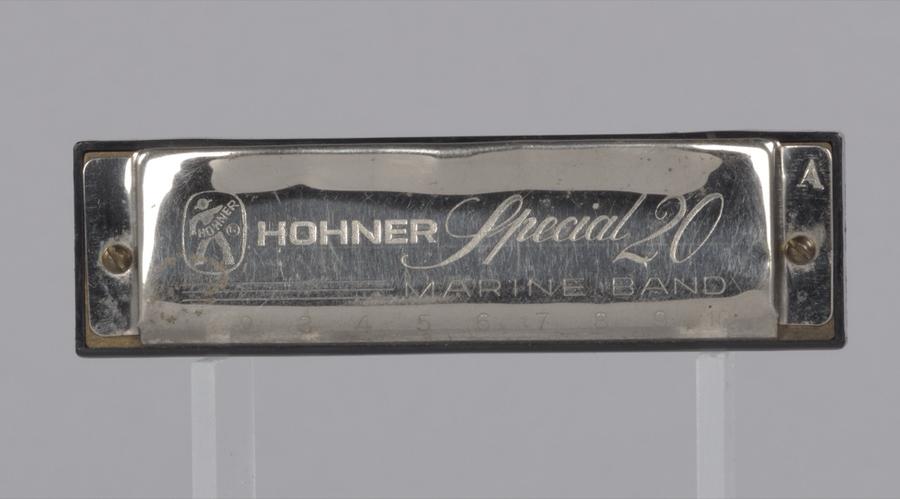
Harmonica owned by Big Mama Thorntonca. 1950 · African Americans (Germany) -
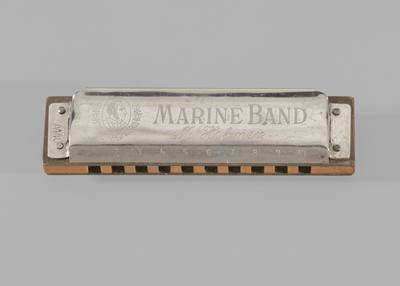
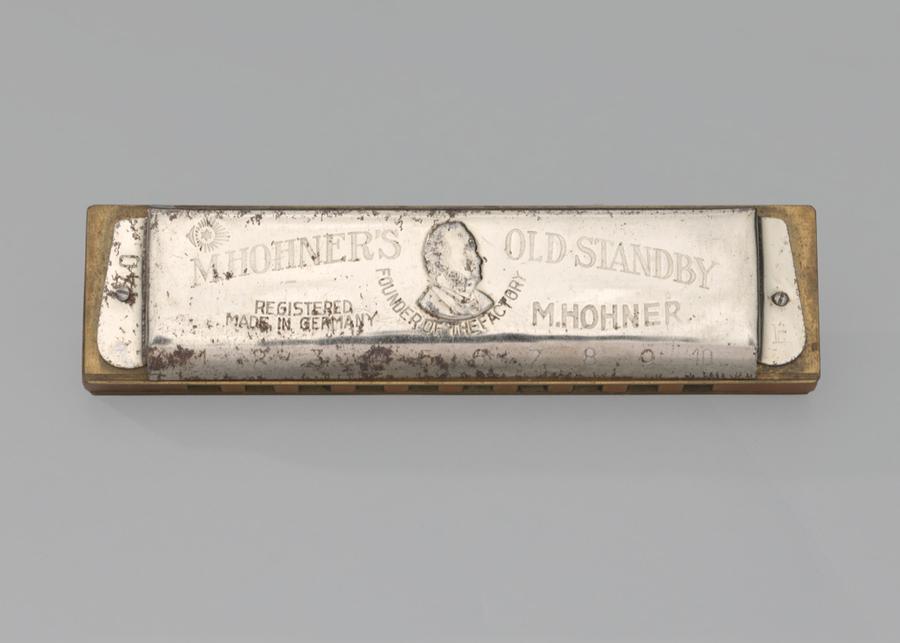
Harmonica played by DeFord Baileyca. 1976 · African Americans (Germany) -
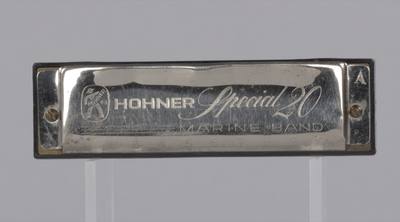
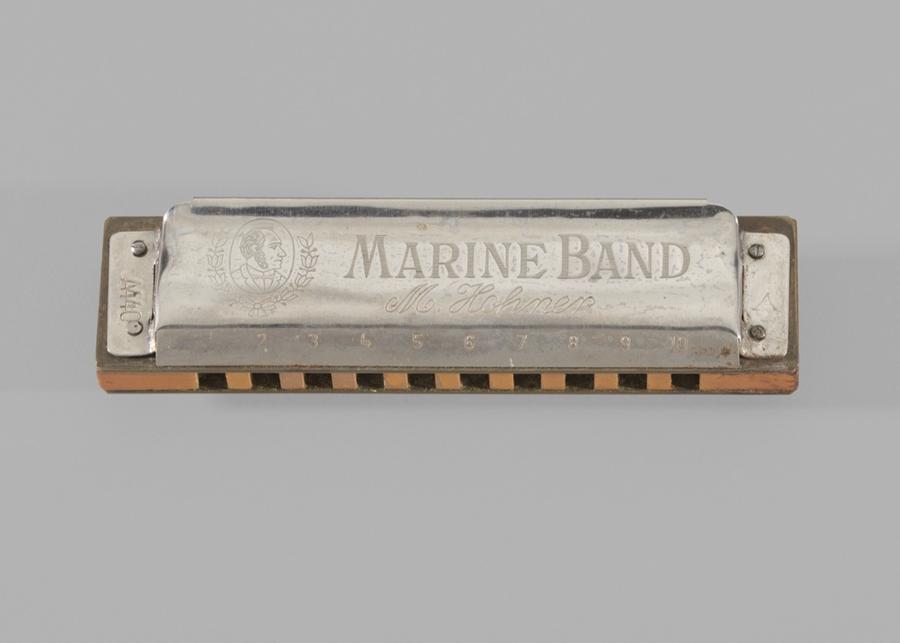
Harmonica used by Arthur Leeca. 1980 · African Americans (Germany)
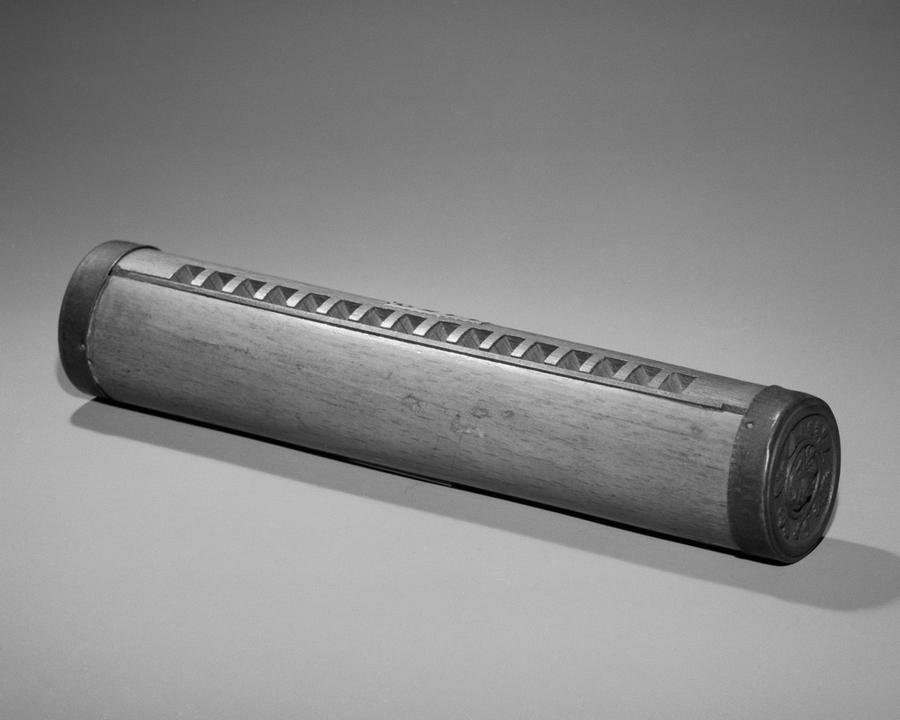
Facts at a glance
| Hornbostel–Sachs number | 412.132 — Free reed aerophone |
|---|---|
| Hornbostel–Sachs group | Aerophones › Free aerophones › Interruptive free aerophones |
| Also known as | French harp, blues harp, mouth organ, mouth harp, gob iron, harp, harpoon, Louisiana saxophone, Mississippi sax, Mississippi saxophone |
| Developed | 1820s |
| Wikidata labels | 112 languages |
| Wikipedia article | Harmonica |
| Wikidata item | Q51290 |
| Wikimedia Commons category | Harmonicas |
| MusicBrainz instrument | 63e37f1a-30b6-4746-8a49-dfb55be3cdd1 |
| Encyclopaedia Britannica | art/harmonica |
| Audio sample (Wikimedia Commons) | Chromatik Mundharmonika.ogg |
Sources: Wikidata (CC0 1.0) — classification number, aliases, identifiers (dump of 2026-07-22); Wikipedia (CC BY-SA 4.0) — infobox fields (description of the classification number, development, inventors) and the names of the Hornbostel–Sachs groups (article “Hornbostel–Sachs”, revision of 2026-01-04).
The name in other languages
| Language | Name | Also written |
|---|---|---|
| English | harmonica | French harp, blues harp, mouth organ |
| French | harmonica | musique à bouche |
| German | Mundharmonika | |
| Spanish | armónica | armonica, harmónica, harmonica |
| Italian | armonica a bocca | armonica da bocca |
| Portuguese | harmónica | gaita de boca |
| Dutch | mondharmonica | |
| Russian | губная гармоника | губная гармошка |
| Japanese | ハーモニカ | 口琴, 口風琴, ブルースハープ |
| Chinese | 口琴 | |
| Korean | 하모니카 | 구풍금 |
| Arabic | هرمونيكا | الشَّفَوِيَّة, هرمونكة, أرغن فموي |
Sources: Wikidata (CC0 1.0) — labels and aliases; MusicBrainz (CC0 1.0) — instrument aliases (names only).
About the harmonica: history, construction and playing
The harmonica, also known as a French harp or mouth organ, is a free reed wind instrument used worldwide in many musical genres, notably in blues, American folk music, classical music, jazz, country, and rock. The many types of harmonica include diatonic, chromatic, tremolo, octave, orchestral, and bass versions. The harmonica is played by using the lips and tongue to direct air into or out of one (or more) holes along a mouthpiece (which covers one edge of the harmonica for most of its length). Behind each hole is a chamber containing at least one reed. The most common type of harmonica is a diatonic Richter-tuned instrument with ten air passages and twenty reeds, often called a blues harp. The harmonica reed is a flat, elongated spring typically made of brass, stainless steel, or bronze, which is secured at one end over a slot that serves as an airway. When the free end is made to vibrate by the player's air, the reed alternately blocks and unblocks the airway to produce sound.
Comb
The comb is the main body of the instrument, which, when assembled with the reed plates, forms air chambers for the reeds. The term "comb" may originate from the similarity between this part of a harmonica and a hair comb. Harmonica combs were traditionally made from wood, but now are also made from plastic (ABS) or metal (including titanium for high-end instruments). Some modern and experimental comb designs are complex in the way that they direct the air.
Dispute exists among players about whether comb material affects the tone of a harmonica. Those saying no argue that unlike the soundboard of a piano or the top piece of a violin or guitar, a harmonica's comb is neither large enough nor able to vibrate freely enough to substantially augment or change the sound. Among those saying yes are those who are convinced by their ears. Few dispute that comb surface smoothness and air tightness when mated with the reed plates can greatly affect tone and playability. The main advantage of a particular comb material over another one is its durability. In particular, a wooden comb can absorb moisture from the player's breath and contact with the tongue. This can cause the comb to expand slightly, making the instrument uncomfortable to play, and to then contract, potentially compromising air tightness. Various types of wood and treatments have been devised to reduce the degree of this problem.
Reed plate
The reed plate is a grouping of several reeds in a single housing. The reeds are usually made of brass, but steel, aluminium, and plastic are occasionally used. Individual reeds are usually riveted to the reed plate, but they may also be welded or screwed in place. Reeds fixed on the inner side of the reed plate (within the comb's air chamber) respond to blowing, while those fixed on the outer side respond to suction.
Most harmonicas are constructed with the reed plates screwed or bolted to the comb or each other. A few brands still use the traditional method of nailing the reed plates to the comb. Some experimental and rare harmonicas also have had the reed plates held in place by tension, such as the WWII-era all-American models. If the plates are bolted to the comb, the reed plates can be replaced individually. This is useful because the reeds eventually go out of tune through normal use, and certain notes of the scale can fail more quickly than others.
A notable exception to the traditional reed plate design is the all-plastic harmonicas designed by Finn Magnus in the 1950s, in which the reed and reed plate were molded out of a single piece of plastic. The Magnus design had the reeds, reed plates, and comb made of plastic and either molded or permanently glued together.
Mouthpiece
The mouthpiece is placed between the air chambers of the instrument and the player's mouth. This can be integral with the comb (the diatonic harmonicas; the Hohner Chrometta); part of the cover (as in Hohner's CX-12); or may be a separate unit, secured by screws, which is typical of chromatics. In many harmonicas, the mouthpiece is purely an ergonomic aid designed to make playing more comfortable. In the traditional slider-based chromatic harmonica, it is essential to the functioning of the instrument because it provides a groove for the slide.
Techniques
Vibrato is a technique commonly used while playing the harmonica and many other instruments, to give the note a 'shaking' sound. This technique can be accomplished in a number of ways. The most common way is to change how the harmonica is held. For example, the vibrato effect can be achieved by opening and closing the hands around the harmonica very rapidly. The vibrato might also be achieved via rapid glottal (vocal fold) opening and closing, especially on draws (inhalation) simultaneous to bending, or without bending. This obviates the need for cupping and waving the hands around the instrument during play. An effect similar to vibrato is that of the 'trill' (or 'roll', or 'warble, or 'shake'); this technique has the player move their lips between two holes very quickly, either by shaking the head in a rapid motion or moving the harmonica from side to side within the embouchure. This gives a quick pitch-alternating technique that is slightly more than vibrato and achieves the same aural effect on sustained notes, albeit by using two different tones instead of varying the amplitude of one.
In addition to the 19 notes readily available on the diatonic harmonica, players can play other notes by adjusting their embouchure and forcing the reed to resonate at a different pitch. This technique is called bending, a term possibly borrowed from guitarists, who literally bend a string to subtly change the pitch. Bending also creates the glissandos characteristic of much blues harp and country harmonica playing. Bends are essential for most blues and rock harmonica due to the soulful sounds the instrument can bring out. The "wail" of the blues harp typically requires bending. In the 1970s, Howard Levy developed the over bending technique (also known as "overblowing" and "overdrawing".) Over Bending, combined with bending, allowed players to play the entire chromatic scale.
History
The harmonica was developed in Europe in the early part of the 19th century. Free-reed instruments like the Chinese sheng had been fairly common in East Asia since ancient times. They became relatively well known in Europe after being introduced by the French Jesuit Jean Joseph Marie Amiot (1718–1793), who lived in Qing-era China. Around 1820, free-reed designs began being created in Europe. Christian Friedrich Ludwig Buschmann is often cited as the inventor of the harmonica in 1821, but other inventors developed similar instruments at the same time. In 1829, Charles Wheatstone developed a mouth-organ under the name "Aeolina" (inspired by the Aeolian harp). Mouth-blown free-reed instruments appeared in the United States, South America, the United Kingdom and Europe at roughly the same time. These instruments were made for playing classical music.
Early instruments
The harmonica first appeared in Vienna, where harmonicas with chambers were sold before 1824. Richter tuning, invented by Joseph Richter (who also is credited with inventing the blow and draw mechanism), was created in 1826 and was eventually adopted nearly universally. In Germany, violin manufacturer Johann Georg Meisel from Klingenthal bought a harmonica with chambers (Kanzellen) at an exhibition in Braunschweig in 1824. He and the ironworker Langhammer copied the instruments in Graslitz three miles away; by 1827 they had produced hundreds of harmonicas. Many others followed in Germany and also nearby Bohemia. In 1829, Johann Wilhelm Rudolph Glier also began making harmonicas.
In 1830, Christian Messner, a cloth maker and weaver from Trossingen, copied a harmonica his neighbour had brought from Vienna. He had such success that eventually his brother and some relatives also started to make harmonicas. From 1840, his nephew Christian Weiss was also involved in the business. By 1855, there were at least three harmonica-making businesses: C. A. Seydel Söhne, Christian Messner & Co, and Württ. Harmonikafabrik Ch. Weiss. (Currently, only C.A. Seydel is still in business.) Owing to competition between the harmonica factories in Trossingen and Klingenthal, machines were invented to punch the covers for the reeds.
In 1857, Matthias Hohner, a clockmaker from Trossingen, started producing harmonicas. Eventually he became the first to mass-produce them. He used a mass-produced wooden comb that he had made by machine-cutting firms. By 1868, he began supplying the United States. By the 1920s, the diatonic harmonica had largely reached its modern form. Other types followed soon thereafter, including the various tremolo and octave harmonicas.
By the late 19th century, harmonica production was a big business, having evolved into mass production. New designs were still developed in the 20th century, including the chromatic harmonica, first made by Hohner in 1924, the bass harmonica, and the chord harmonica. In the 21st century, radical new designs have been developed and are still being introduced into the market, such as the Suzuki Overdrive, Hohner XB-40, and the ill-fated Harrison B-Radical.
Japanese tremolo tuning
In Europe and the United States, tremolo harmonica uses the Richter tuning, developed in Germany. In 1913, Shōgo Kawaguchi (川口章吾), known in Japan as the "Father of the harmonica", devised an alternate tuning, which is more suited to playing Japanese folk tunes. This tuning is also suited to local music throughout East Asia, and harmonicas using the tuning became popular in the region.
Minor key tuning
Initial diatonic harmonica tunings were major key only. In 1931, Hiderō Satō (佐藤秀廊) announced the development of a minor key harmonica. There are two types of minor key tunings, "natural minor" suitable for folk and contemporary music, and Latin American music, and the "harmonic minor" suitable for some famous Japanese pieces.
Medical use
Playing the harmonica requires inhaling and exhaling strongly against resistance. This action helps develop a strong diaphragm and deep breathing using the entire lung volume. Pulmonary specialists have noted that playing the harmonica resembles the kind of exercise used to rehabilitate COPD patients such as using a PFLEX inspiratory muscle trainer or the inspiratory spirometer. Learning to play a musical instrument also offers motivation in addition to the exercise component. Many pulmonary rehabilitation programs therefore have begun to incorporate the harmonica.
When President Ronald Reagan suffered a punctured lung in the 1981 attempt on his life, his breathing therapist was Howard McDonald, of the Cambridge Harmonica Orchestra. Orchestra director Pierre Beauregard had hoped that Reagan's therapeutic harmonica experience would help them get a chance to play at the White House, but this never occurred.
Source: Wikipedia, “Harmonica” — CC BY-SA 4.0 — text excerpted as published (references, images and tables removed); see the article for the full text and the list of authors. Revision of 2026-07-02.
From Grove’s Dictionary (1900)
HARMONICA. The power of producing musical sounds from glass basons or drinking glasses by the application of the moistened finger, and of tuning them so as to obtain concords from two at once, was known as early as the middle of the 17th century, since it is alluded to in Harsdörfer's 'Mathematische und philosophische Erquickungen,' ii. 147 (Nuremberg, 1677). Gluck, the great composer, when in England, played 'at the Little Theatre in the Haymarket,' April 23, 1746—'a concerto on 26 drinking glasses tuned with spring water, accompanied with the whole band, being a new instrument of his own invention; upon which he performs whatever may be done on a violin or See 'General Advertiser' of this date, and Walpole's letter to Mann, March 28.harpsichord.' This or some other circumstance made the instrument fashionable, for 15 years later, in 1761, Goldsmith's fine ladies in the Vicar of Wakefield, who confined their conversation to the most fashionable topics, 'would talk of nothing but high life and high lived company … pictures, taste, Shakspeare, and the musical glasses.' That they occupied the attention of better persons than Lady Blarney and the Hon. Carolina Wilelmina Amelia Skeggs is evident from the testimony of Franklin. He came to London in 1757, and writing on July 13, 1762, to Padre Beccaria at Turin, he tells him of the attempts of Mr. Puckeridge and of Mr. Delaval, F.R.S. who fixed their glasses in order on a table, tuned them by putting in more or less water, and played them by passing the finger round the brims. Franklin's practical mind saw that this might be greatly improved, and he accordingly constructed an instrument in which the bells or basons of glass were ranged or strung on an iron spindle, the largest and deepest-toned ones on the left, and gradually mounting in pitch according to the usual musical scale. The lower edge of the basons dipped into a trough of water. The spindle was made to revolve by a treadle. It carried the basons round with it, and on applying a finger to their wet edges the sound was produced. The following cut is reduced from the engraving in Franklin's letter (Sparks's ed. vi. 245).
Source: Wikisource, A Dictionary of Music and Musicians (Grove, 1900) — “Harmonica” (entry by George Grove) — Public domain (published 1879–1910; authors died before 1929) — the first paragraphs of the entry, as transcribed; see the page for the full entry.
Composers who played it
3 composers on this site list the harmonica as an instrument they played. A selection:
Composers with a page on this site whose Wikidata record lists this instrument; featured and best-dated first. Data: Wikidata (property “instrument”, P1303), CC0 1.0.
Sources and licences
- Harmonica, Ch. Weiss, ca. 1895, Germany. Wood, metal. The Crosby Brown Collection of Musical Instruments, 1889 (89.4.625). Museum record · CC0 1.0 (public domain dedication)
- Harmonica, 1860–70, Germany. Beech, metal. The Crosby Brown Collection of Musical Instruments, 1889 (89.4.1153). Museum record · CC0 1.0 (public domain dedication)
- Harmonica, ca. 1900, Germany. Wood, metal. The Crosby Brown Collection of Musical instruments, 1889 (89.4.2124). Museum record · CC0 1.0 (public domain dedication)
- Harmonica, early 20th century, Germany. Wood, metal. The Crosby Brown Collection of Musical Instruments, 1889 (89.4.1159). Museum record · CC0 1.0 (public domain dedication)
- Harmonica owned by Big Mama Thornton, ca. 1950, African Americans (Germany). brass (alloy) , wood , metal and plastic. Collection of the Smithsonian National Museum of African American History and Culture. Museum record · CC0 1.0 (public domain dedication)
- Harmonica played by DeFord Bailey, ca. 1976, African Americans (Germany). stainless steel, metal and wood. Collection of the Smithsonian National Museum of African American History and Culture, Gift of Christine Bailey Craig. Museum record · CC0 1.0 (public domain dedication)
- Harmonica used by Arthur Lee, ca. 1980, African Americans (Germany). metal and plastic. Collection of the Smithsonian National Museum of African American History and Culture, Gift of Diane Lee in memory of Arthur Taylor Lee. Museum record · CC0 1.0 (public domain dedication)
Photographs: open-access collections of the museums named above; each is shown here reduced in size, otherwise unchanged. Text: Wikipedia (CC BY-SA 4.0), Grove’s Dictionary (public domain), Wikidata and MusicBrainz (CC0). The full list of sources and licences is on the credits page.