
Instruments · Membranophones
Snare drum
The snare drum or side drum is a percussion instrument. It has strands of snares made of curled metal wire, metal cable, plastic cable, or gut cords. They are stretched across the skin on the bottom of the drum. Pipe and tabor and some military snare drums can have a second set of snares on the bottom side of the top head. This is used to make a "brighter" sound. The snare drum is considered one of the most important drums of the drum kit.
The snare drum can make some special sounds:
Summary: Simple English Wikipedia, “Snare drum” — CC BY-SA 4.0. Revision of 2025-09-02.
Museum photographs
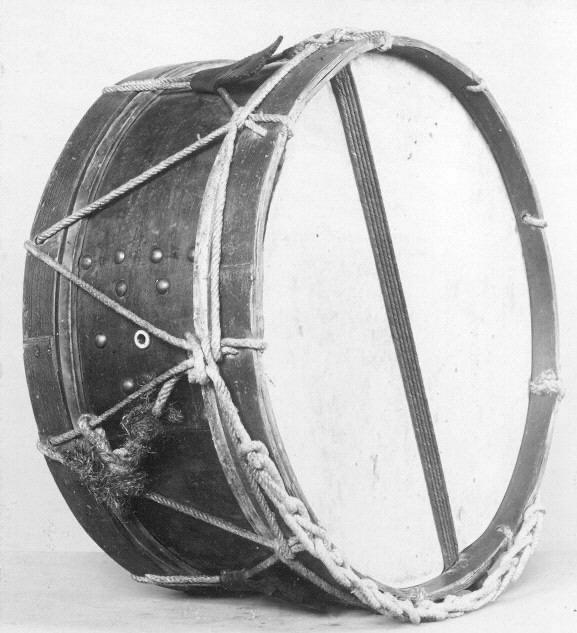
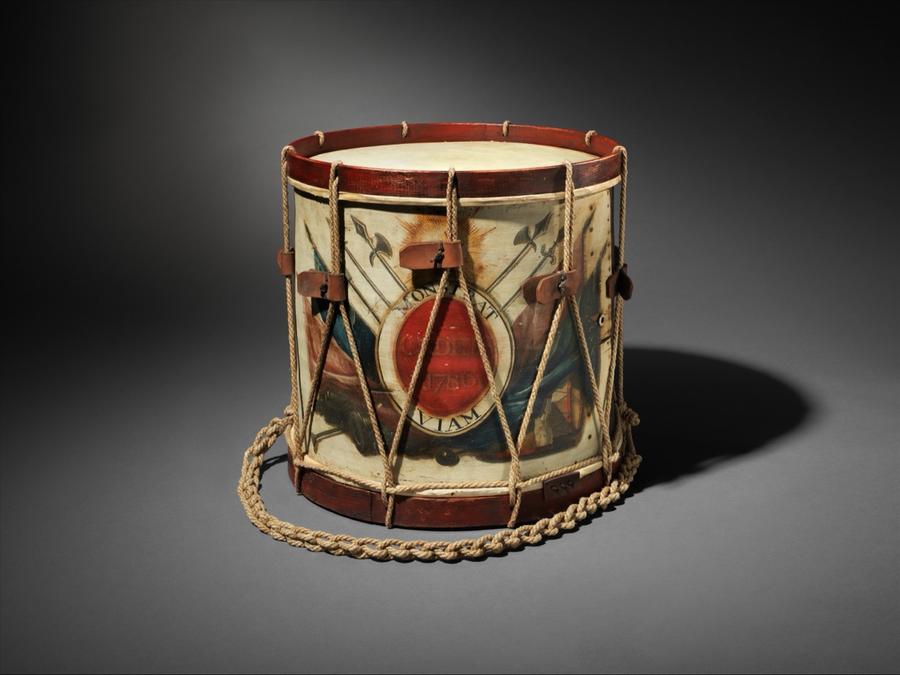
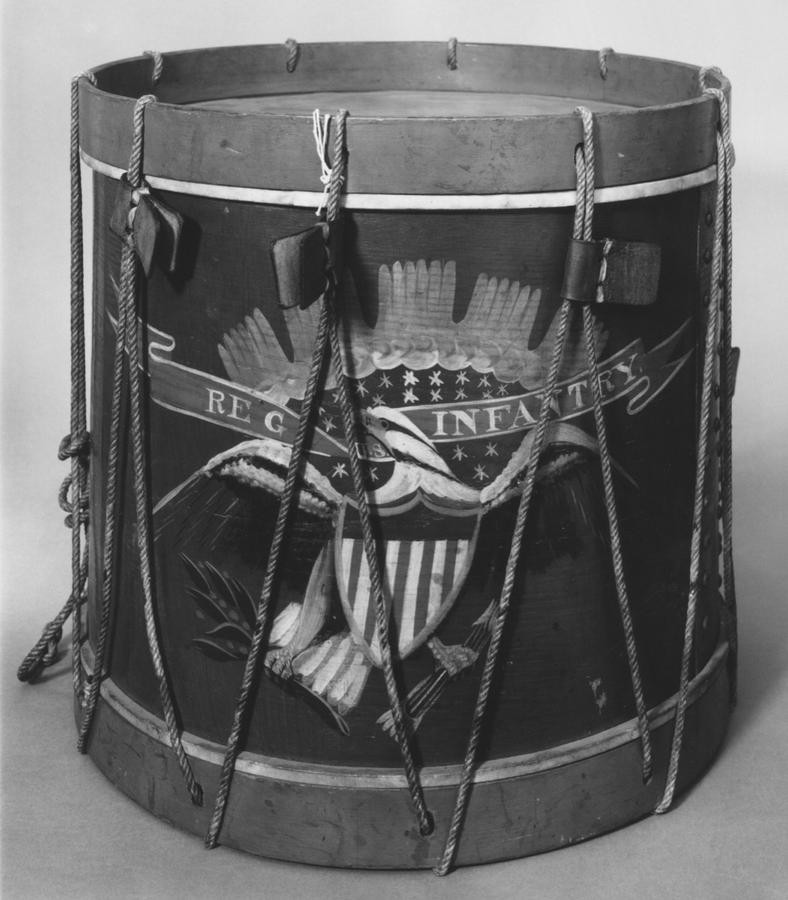
These 8 photographs span 1694–1900, 3 places of origin and 3 museums. Every photograph is public domain or openly licensed, and links to the museum’s own record.
-
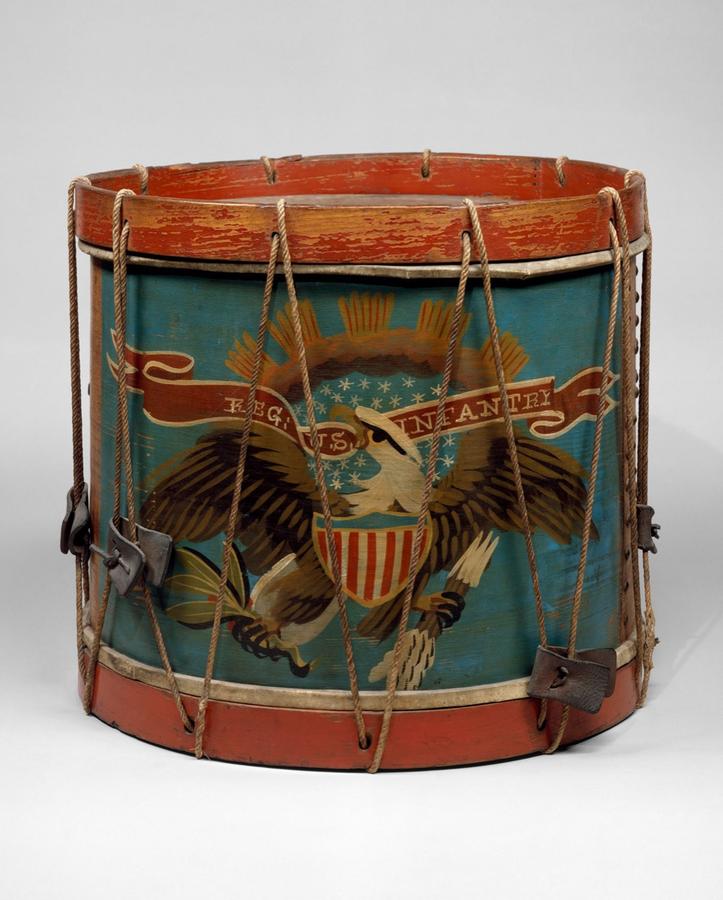
Side Drumca. 1864 · American (United States) -
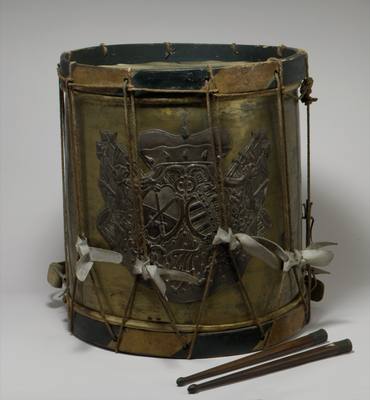
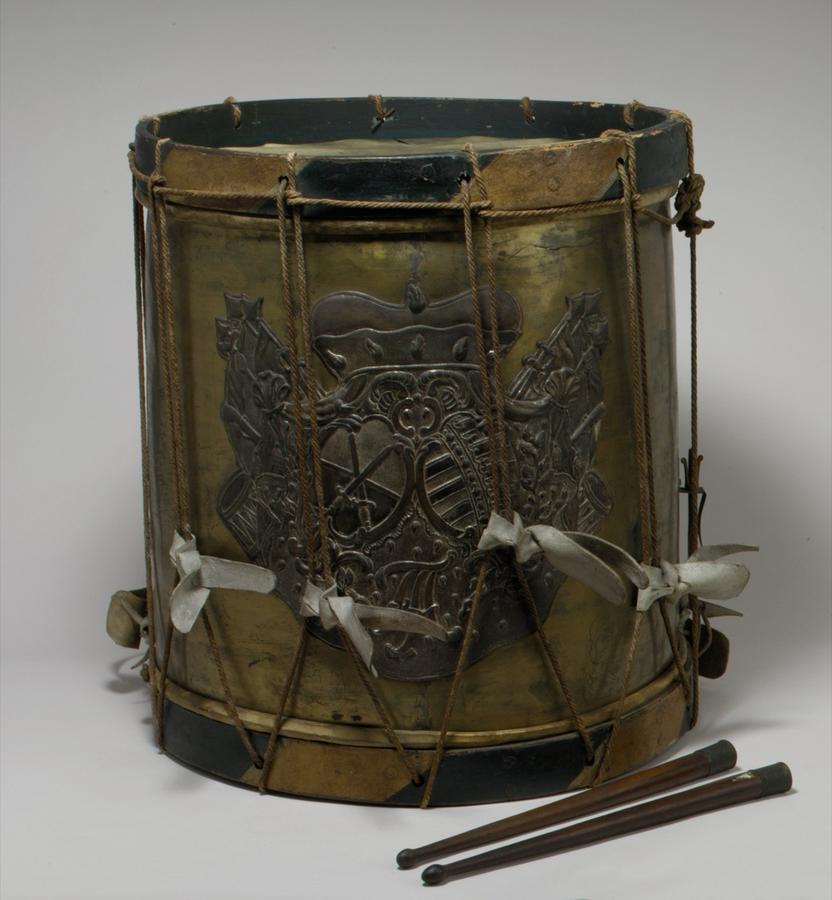
Side Drum1694–1733 · Germany -
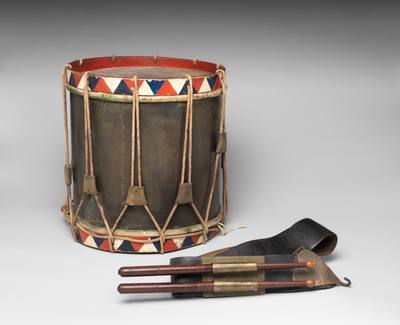
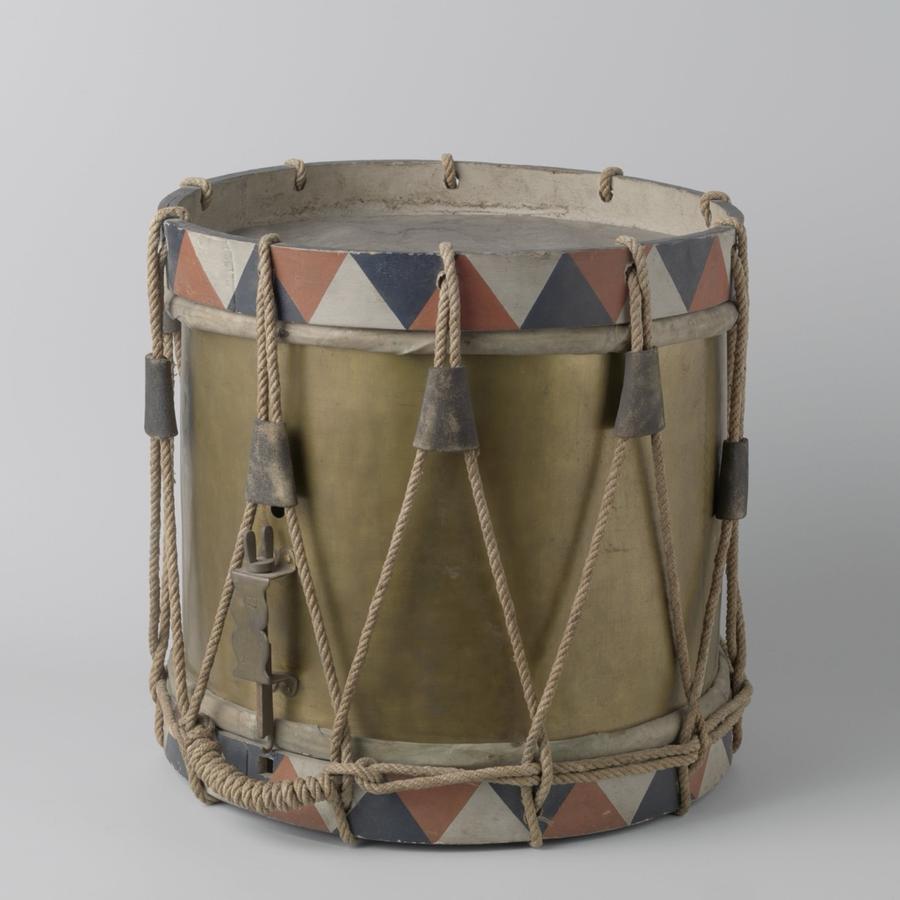
Side Drum18th century · Dutch (Netherlands) -
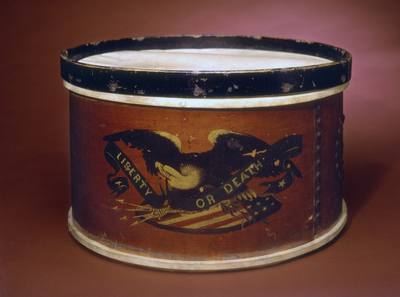
Stevens Snare Drum1812 · United States -
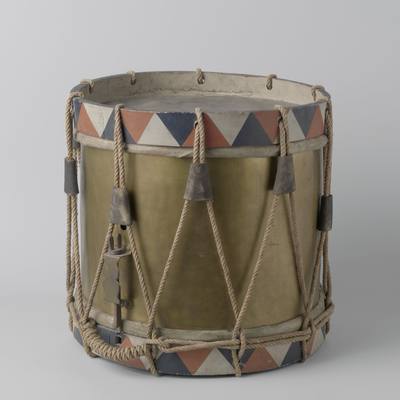
Side Drums (39 x)before c. 1828 · Netherlands -
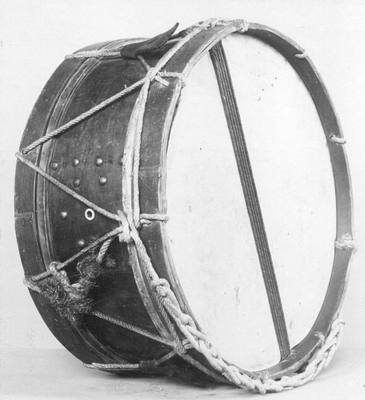
Snare Drummid to late 19th century · American (United States) -
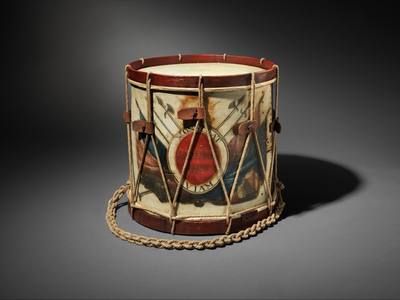
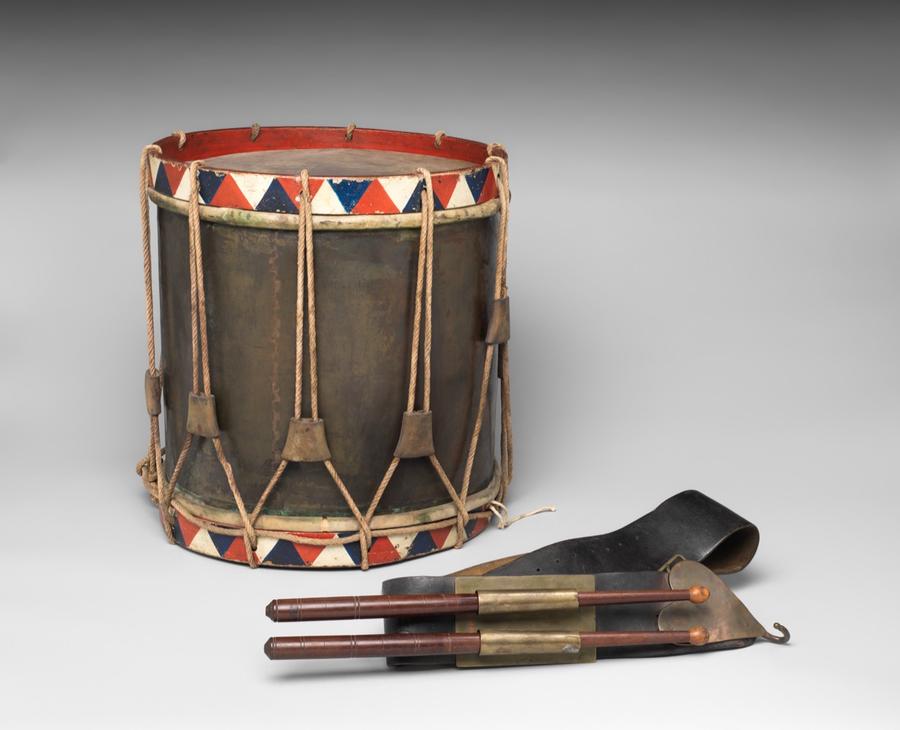
Side drumca. 1840 · American (United States) -
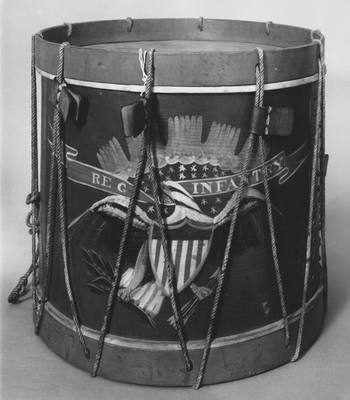
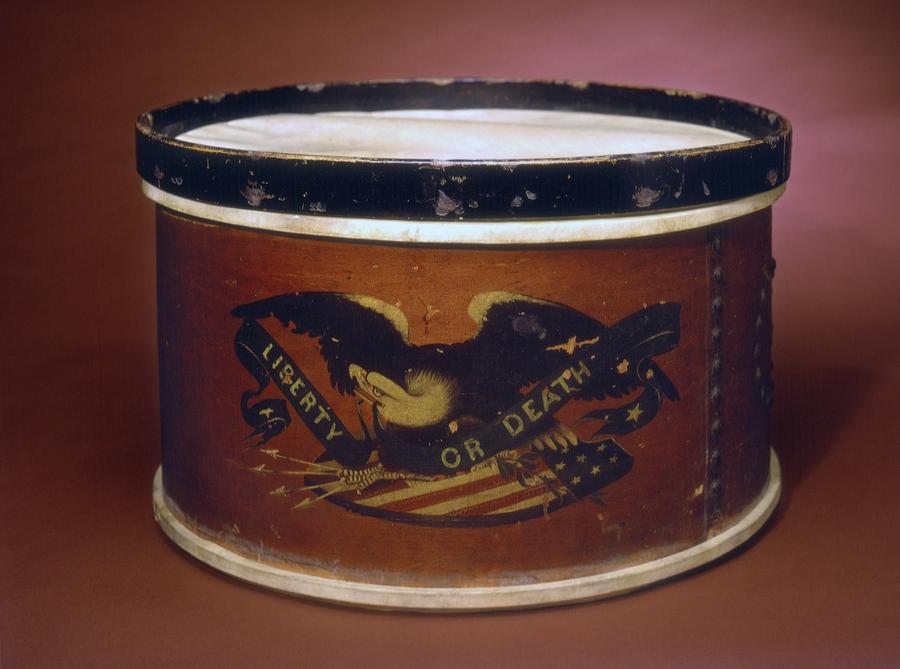
Rogers Snare Drum1862 - 1864 · New York
Facts at a glance
| Hornbostel–Sachs number | 211.212.11 — Individual double-skin cylindrical drums, one skin used for playing |
|---|---|
| Hornbostel–Sachs group | Membranophones › Struck membranophones › Directly struck membranophones |
| Also known as | caixa, war snare, shallow snare drum, caja, snare, side drum |
| Classification (Wikipedia infobox) | Percussion, Drum, Unpitched |
| Developed | 13th century |
| Wikidata labels | 65 languages |
| Wikipedia article | Snare drum |
| Wikidata item | Q208421 |
| Wikimedia Commons category | Snare drums |
| MusicBrainz instrument | 947cca7d-74c6-4044-b6cc-71a1180d0b28 |
| Encyclopaedia Britannica | art/snare-drum |
Sources: Wikidata (CC0 1.0) — classification number, aliases, identifiers (dump of 2026-07-22); Wikipedia (CC BY-SA 4.0) — infobox fields (description of the classification number, development, inventors) and the names of the Hornbostel–Sachs groups (article “Hornbostel–Sachs”, revision of 2026-01-04).
The name in other languages
| Language | Name | Also written |
|---|---|---|
| English | snare drum | caixa, war snare, shallow snare drum |
| French | caisse claire | snare, caisse-claire, caisses claires |
| German | Kleine Trommel | rührtrommel, snare-Trommel, snaredrum |
| Spanish | caja | Tarolas, tarola, redoblete |
| Italian | rullante | Tamburo rullante, Rullantino, snare |
| Portuguese | caixa | tarola, caixa clara |
| Dutch | kleine trom | snarentrom, snare trommel, snare |
| Russian | малый барабан | рабочий барабан |
| Japanese | スネアドラム | サイドドラム, 小太鼓, スネア・ドラム |
| Chinese | 小鼓 | 小軍鼓 |
| Korean | 작은북 | 스네어 드럼 |
| Arabic | طبل جانبي | طبل سنير |
Sources: Wikidata (CC0 1.0) — labels and aliases; MusicBrainz (CC0 1.0) — instrument aliases (names only).
About the snare drum: history, construction and playing
The snare drum (or side drum) is a percussion instrument that produces a sharp staccato sound when the head is struck with a drum stick, due to the use of a series of wires, cords, or both; held under tension against the lower head. Snare drums are often used in orchestras, concert bands, marching bands, parades, drumlines, drum corps, and more. It is one of the central pieces in a drum set, a collection of percussion instruments designed to be played by a seated drummer and used in many genres of music. Because basic rhythms are very easy to learn to play on a snare drum even for children, the instrument is also suitable for the music education for young children and for a rhythm band.
Snare drums are usually played with drum sticks, but other beaters, such as the brush or the rute, can be used to achieve different tones. The snare drum is a versatile and expressive percussion instrument due to its sensitivity and responsiveness. The sensitivity of the snare drum allows it to respond audibly to the softest strokes, even with a wire brush. It can be used for complex rhythmic patterns and engaging solos at moderate volumes. Its high dynamic range allows the player to produce powerful accents with vigorous strokes and a loud metallic click with the rimshot.
Playing
When the top head is struck, the bottom (resonant) head vibrates in tandem, which in turn stimulates the snares and produces a cracking sound.
The drum can be played by striking it with a drum stick or any other form of beater, including brushes, rute and hands, all of which produce a softer-sounding vibration from the snare wires. When using a stick, the drummer may strike the head of the drum, the rim (counterhoop), or the shell.
The snares can be thrown off (disengaged) with a lever on the strainer so that the drum produces a sound reminiscent of a tom-tom. Rimshots are a technique associated with snare drums in which the head and rim are struck simultaneously with one stick (or in orchestral concert playing, a stick placed on the head and the rim struck by the opposite stick). In contemporary and/or pop and rock music, where the snare drum is used as a part of a drum kit, many of the backbeats and accented notes on the snare drum are played as rimshots, due to the ever-increasing demand for their typical sharp and high-volume sound.
A commonly used alternative way to play the snare drum is known as "cross-stick", "rim click", or "side-stick". This is done by holding the tip of the drumstick against the drum head and striking the stick's other end (the butt) against the rim, using the hand to mute the head. This produces a dry high-pitched click, similar to a set of claves, and is especially common in Latin and jazz music. So-called "ghost notes" are very light "filler notes" played in between the backbeats in genres such as funk and rhythm and blues. The iconic drum roll is produced by alternately bouncing the sticks on the drum head, striving for a controlled rebound. A similar effect can be achieved by playing alternating double strokes on the drum, creating a double stroke roll, or very fast single strokes, creating a single stroke roll. The snares are a fundamental ingredient in the pressed (buzz) drum roll, as they help to blend together distinct strokes that are then perceived as a single, sustained sound. The snare drum is the first instrument to learn in preparing to play a full drum kit. Rudiments are sets of basic patterns often played on a snare drum.
Construction
Snare drums may be made from various wood, metal, acrylic, or composite, e.g, fiberglass materials. A typical diameter for snare drums is 14 in. Marching snare drums are deeper (taller) in size than snare drums normally used for orchestral or drum kit purposes, often measuring 12 in deep (tall). Orchestral and drum kit snare drum shells are about 6 in deep. Piccolo snare drums are even shallower at about 3 in deep. Soprano, popcorn, and firecracker snare drums have diameters as small as 8 in and are often used for higher-pitched special effects.
Most wooden snare drum shells are constructed in plies (layers) that are heat- and compression-moulded into a cylinder. Steam-bent shells consist of one ply of wood that is gradually rounded into a cylinder and glued at one seam. Reinforcement rings, so-called "re-rings", are often incorporated on the inside surface of the drum shell to keep it perfectly round. Segment shells are made of multiple stacks of segmented wood rings. The segments are glued together and rounded out by a lathe. Similarly, stave shells are constructed of vertically glued pieces of wood into a cylinder (much like a barrel) that is also rounded out by a lathe. Solid shells are constructed of one solid piece of hollowed wood.
The heads or skins used are a batter head (the playing surface on the top of the drum) and a resonant (bottom) head. The resonant head is usually much thinner than the batter head and is not beaten while playing. Rather than calfskin, most modern drums use plastic (Mylar) skins of around 10 mils thickness, sometimes with multiple plies (usually two) of around 7 mils for the batter head. In addition, tone control rings or dots can be applied, either on the outer or inner surface of the head, to control overtones and ringing, and can be found positioned in the centre or close to the edge hoops or both. Resonant heads are usually only a few mils thick, to enable them to respond to the movement of the batter head as it is played. Pipe band requirements have led to the development of a Kevlar-based head, enabling very high tuning, thus producing a very high-pitched cracking snare sound.
History
The snare drum seems to have descended from a medieval drum called the tabor, which was a drum with a single-gut snare strung across the bottom. It is a little bigger than a medium tom and was first used in war, often played with a fife (pipe); the player would play both the fife and drum. Tabors were not always double-headed and not all may have had snares. By the 15th century, the size of the snare drum had increased and had a cylindrical shape. This simple drum with a simple snare became popular with the Swiss mercenary troops who used the fife and drum from the 15th to 16th centuries. The drum was made deeper and carried along the side of the body. Further developments appeared in the 17th century, with the use of screws to hold down the snares, giving a brighter sound than the rattle of a loose snare. During the 18th century, the snare drum underwent changes which improved its characteristic sound. Metal snares appeared in the 20th century. Today the snare drum is used in jazz, pop music, and modern orchestral music.
Much of the development of the snare drum and its rudiments is closely tied to the use of the snare drum in the military. In his book, The Art of Snare Drumming, Sanford A. Moeller (of the "Moeller method" of drumming) states, "To acquire a knowledge of the true nature of the [snare] drum, it is absolutely necessary to study military drumming, for it is essentially a military instrument and its true character cannot be brought out with an incorrect method. When a composer wants a martial effect, he instinctively turns to the drums."
Before the advent of radio and electronic communications, the snare drum was often used to communicate orders to soldiers. American troops were woken up by drum and fife playing about five minutes of music, for example, the well-known Three Camps. Troops were called for meals by certain drum pieces, such as "Peas on a Trencher" or "Roast Beef". A piece called the "Tattoo" was used to signal that all soldiers should be in their tent, and the "Fatigue Call" was used to police the quarters or drum unruly women out of the camp.
Types
There are many types of snare drums, for example:
- Marching snare ("regular" and "high tension")
Marching snares are typically 12 in deep and 14 in wide. The larger design allows for a deeper-sounding tone, one that is effective for marching bands. Many marching snares are built to withstand high amounts of tension, tightened by a drum key. They are often played with a heavier and thicker stick, more commonly referred to as "marching sticks". Snares are often nylon or gut.
- Pipe band snare
Similar to a marching snare, pipe band snares are deep and tuned quite tightly. The major difference is that they feature a second set of snare wires beneath the batter head, along with the normal set on the resonant head. This gives them an even more crisp and snappy sound. Snare drummers form an integral part of pipe bands, accompanying the bagpipes, and playing music written to fit the pipe tunes. A bass drummer and several tenor drummers, who also perform visual representations of the music, known as flourishing, add to the percussion section of a pipe band. The music played by pipe band snare drummers can be technically difficult, and requires a high degree of rudimental ability, similar to that of marching bands. Pipe Band snare normally use the traditional grip.
- Drum kit snare
Drum kit snares are usually about a third to half the depth of a marching snare. They are typically 14 in in diameter and 5, 5½, 6, 6½ or 7 in, with 8 in depths also available. Typically uses coiled metal snare wires.
- Piccolo snare
Source: Wikipedia, “Snare drum” — CC BY-SA 4.0 — text excerpted as published (references, images and tables removed); see the article for the full text and the list of authors. Revision of 2026-06-19.
Sources and licences
- Side Drum, Ernest Vogt, ca. 1864, American (United States). Wood, calf skin, rope. The Crosby Brown Collection of Musical Instruments, 1889 (89.4.2162). Museum record · CC0 1.0 (public domain dedication)
- Side Drum, 1694–1733, Germany. Copper alloy, wood, various materials. Gift of William H. Riggs, 1913 (14.25.1618). Museum record · CC0 1.0 (public domain dedication)
- Side Drum, 18th century, Dutch (Netherlands). Wood, skin, cord. The Crosby Brown Collection of Musical Instruments, 1889 (89.4.840). Museum record · CC0 1.0 (public domain dedication)
- Stevens Snare Drum, Stevens, Abner, 1812, United States. wood (overall material); paint (overall material). Gift of E. B. Bevier. Museum record · CC0 1.0 (public domain dedication)
- Side Drums (39 x), Anonymous, before c. 1828, Netherlands. wood (plant material), calf (leather), rope, brass (alloy). Gift of Mr Holsheimer, Amsterdam. Museum record · Public Domain Mark 1.0
- Snare Drum, mid to late 19th century, American (United States). Wood, skin, rope. The Crosby Brown Collection of Musical Instruments, 1889 (89.4.590). Museum record · CC0 1.0 (public domain dedication)
- Side drum, Henry H. Prentiss, ca. 1840, American (United States). Wood with paint, rope, leather, skin. Purchase, Amati Gifts, 2008 (2008.239). Museum record · CC0 1.0 (public domain dedication)
- Rogers Snare Drum, 1862 - 1864, New York. wood (overall material); paint (overall material). Transfer from U.S. War Department. Museum record · CC0 1.0 (public domain dedication)
Photographs: open-access collections of the museums named above; each is shown here reduced in size, otherwise unchanged. Text: Wikipedia (CC BY-SA 4.0), Wikidata and MusicBrainz (CC0). The full list of sources and licences is on the credits page.