
Instruments · Aerophones
Fife
A fife is a small, high-pitched, transverse aerophone, that is similar to the piccolo. The fife originated in medieval Europe and is often used in fife and drum corps, military units, and marching bands. Someone who plays the fife is called a fifer. The word fife comes from the German Pfeife, meaning pipe, which comes from the Latin word pipare.
Summary: Wikipedia, “Fife (instrument)” — CC BY-SA 4.0. Revision of 2025-12-18.
Museum photographs
These 8 photographs span 1780–1979, 3 places of origin and 3 museums. 1 of them carry no date in the museum record. Every photograph is public domain or openly licensed, and links to the museum’s own record.
-
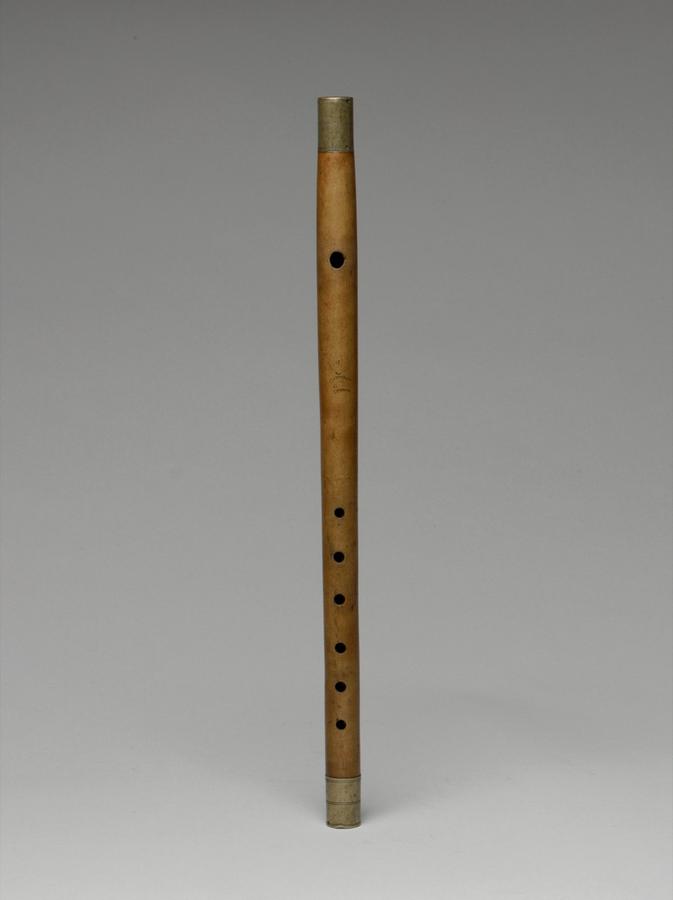
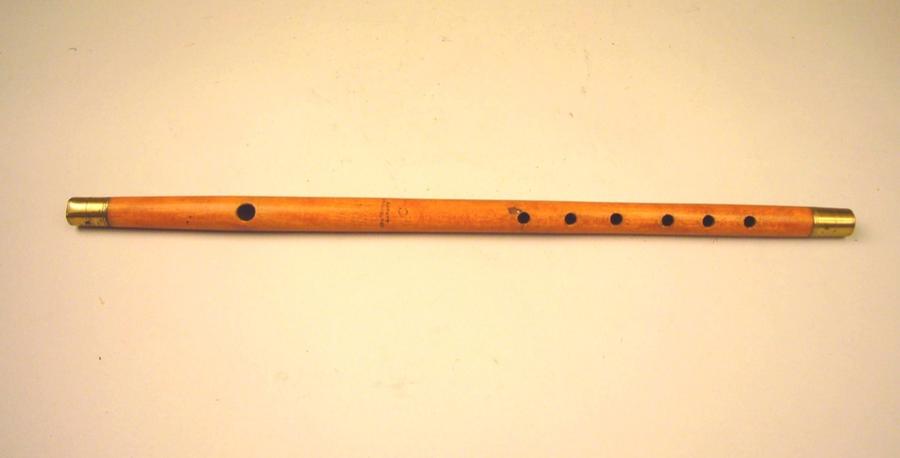
Fifeca. 1780–90 · British (United Kingdom) -
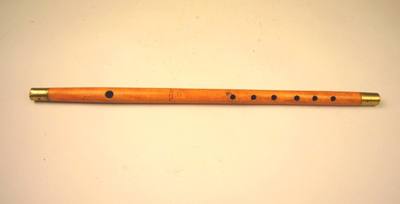
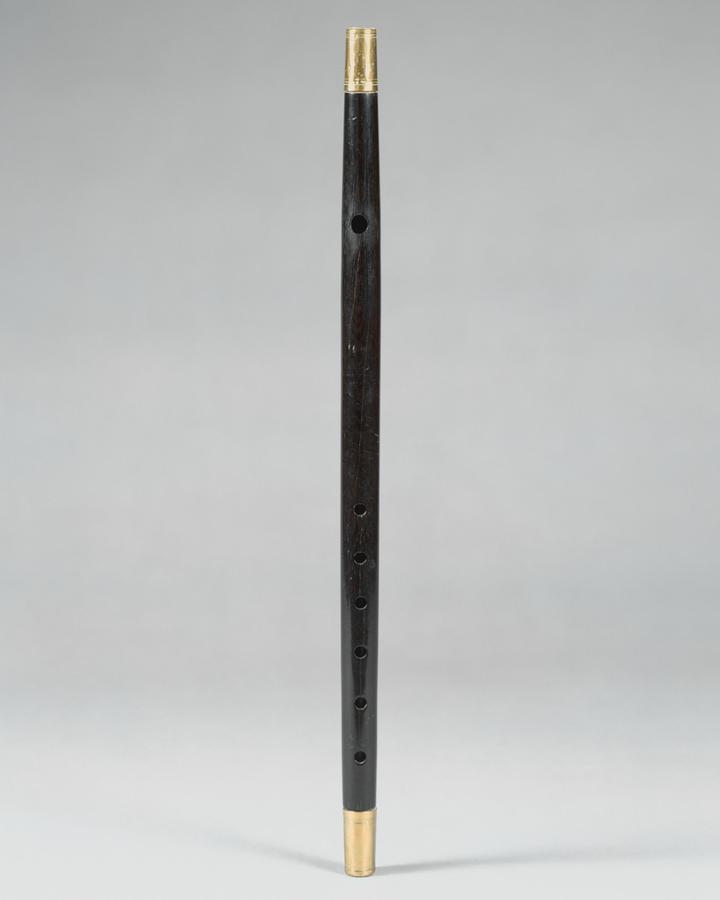
Fifeearly 19th century · American -
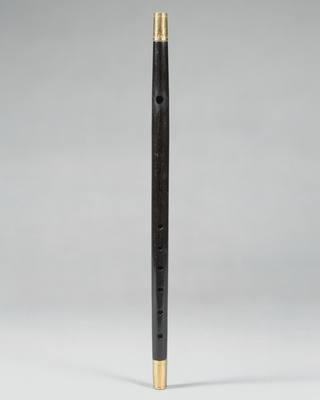
Fife1819–43 · American (United States) -
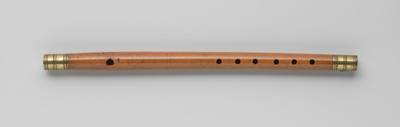
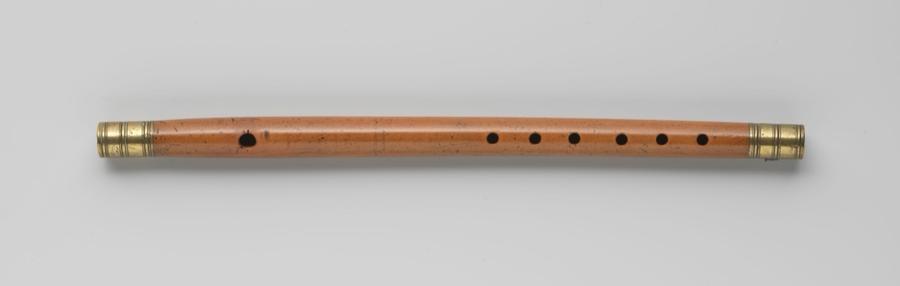
Fife1800 - 1803 · London -
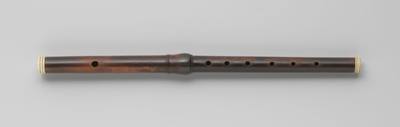
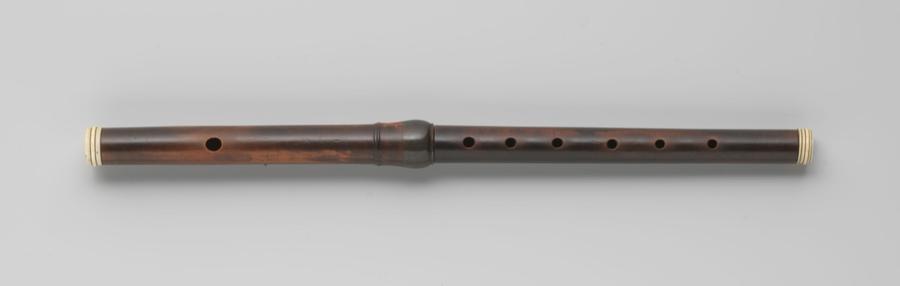
Fifec. 1800 · Amsterdam -
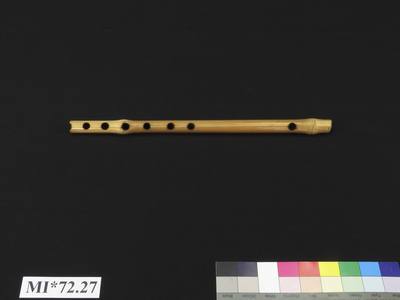
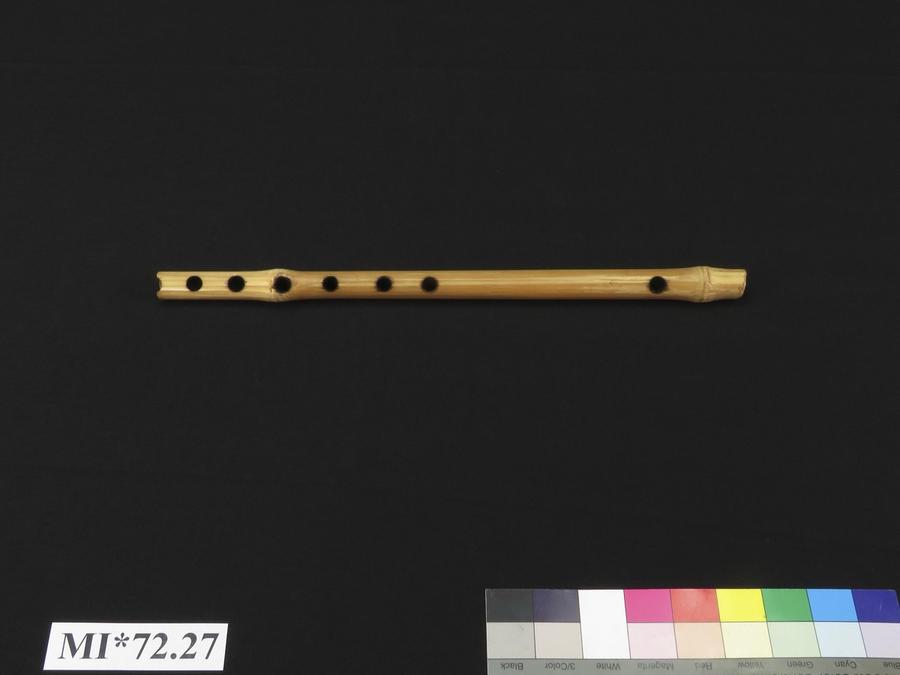
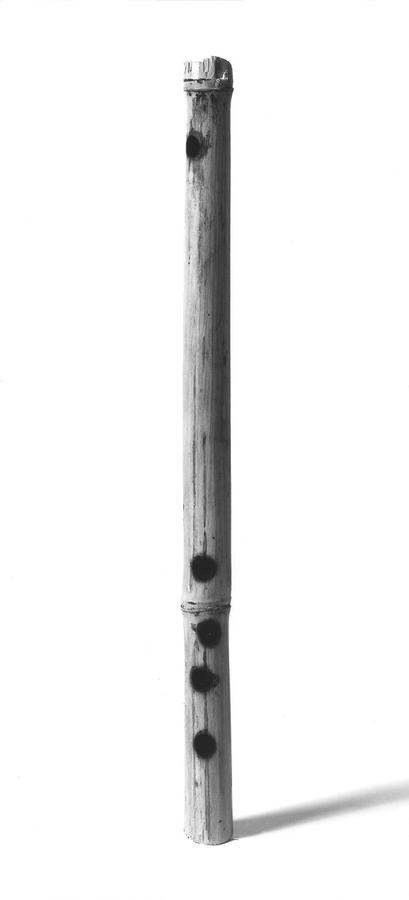
Young Cane Fife1960-1970 · Mississippi -
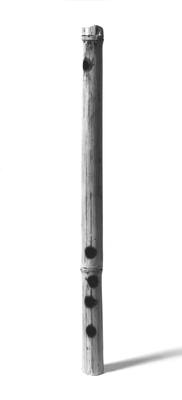
Strickland Fife1979 · Mississippi -
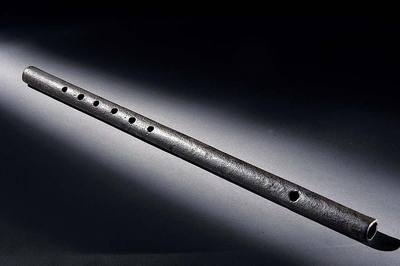
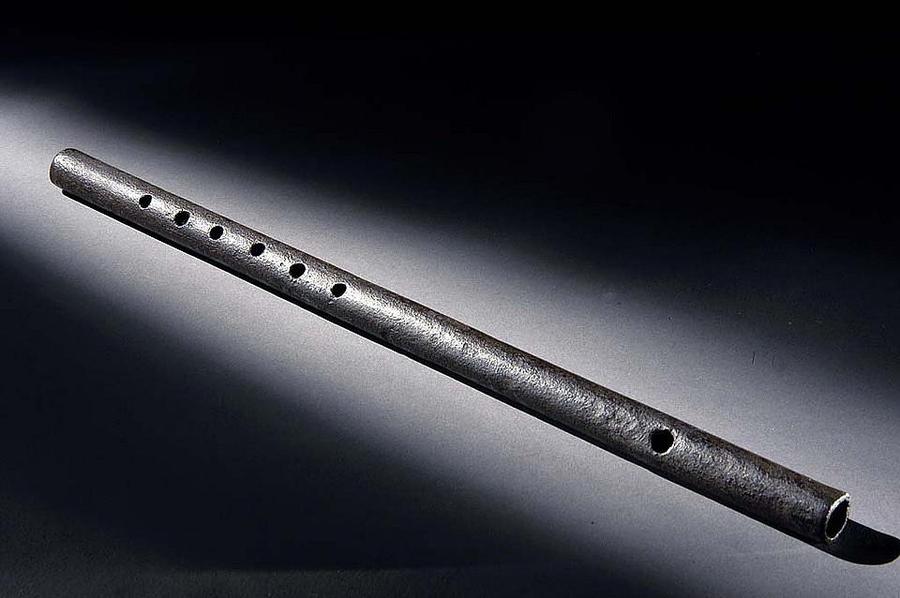
FifeUndated · United States
Facts at a glance
| Hornbostel–Sachs number | 421.121.12 — open side-blown flutes with fingerholes |
|---|---|
| Hornbostel–Sachs group | Aerophones › Non-free aerophones (wind instruments proper) › Edge-blown aerophones or flutes |
| Classification (Wikipedia infobox) | Wind, Woodwind, Aerophone, Edge-blown aerophone |
| Wikidata labels | 29 languages |
| Wikipedia article | Fife (instrument) |
| Wikidata item | Q2255516 |
| Wikimedia Commons category | Fife (flute) |
| MusicBrainz instrument | 996e6514-37a4-4b22-af71-e968f30913fd |
| Encyclopaedia Britannica | art/fife-musical-instrument |
Sources: Wikidata (CC0 1.0) — classification number, aliases, identifiers (dump of 2026-07-22); Wikipedia (CC BY-SA 4.0) — infobox fields (description of the classification number, development, inventors) and the names of the Hornbostel–Sachs groups (article “Hornbostel–Sachs”, revision of 2026-01-04).
The name in other languages
| Language | Name | Also written |
|---|---|---|
| English | fife | |
| French | fifre | Fifre (Musique), Schwegel |
| German | Schwegel | Schwegelpfeife |
| Spanish | pífano | pifano |
| Italian | fiffaro | piffero |
| Portuguese | pífaro | Pifaro |
| Dutch | pijperfluit | |
| Russian | фифы | |
| Japanese | ファイフ (楽器) | |
| Chinese | 管笛 | |
| Arabic | صفارة |
Sources: Wikidata (CC0 1.0) — labels and aliases; MusicBrainz (CC0 1.0) — instrument aliases (names only).
About the fife: history, construction and playing
A fife is a small, high-pitched, transverse aerophone, that is similar to the piccolo. The fife originated in medieval Europe and is often used in fife and drum corps, military units, and marching bands. Someone who plays the fife is called a fifer. The word fife comes from the German Pfeife, meaning pipe, which comes from the Latin word pipare.
The fife is a diatonically tuned instrument commonly consisting of a tube with six finger holes and an embouchure hole that produces sound when blown across. Modern versions of the fife are chromatic, having 10 or 11 finger holes that allow any note to be played. On a 10-hole fife, the index, middle, and ring fingers of both hands remain in the same positions as with the six-hole fife, while both thumbs and both pinkies are used to play accidentals. An 11-hole fife has holes positioned similarly, but adds a second hole under the right middle finger.
Fifes are made primarily of wood, such as blackwood, grenadilla, rosewood, mopane, pink ivory, cocobolo, boxwood, maple, or persimmon. Some fifes are entirely made of metal or plastic.
Military and marching fifes have metal reinforcing bands, called ferrules, around the ends to protect them from damage. A fife used in less strenuous conditions may have a lathe-turned, knob-like decoration at the ends for protection. Modern fifes may have two- or three-piece constructions, and may incorporate a sliding tuning joint made of metal or cork.
Key and range
The names of different varieties of fife follow the conventions of transposing instruments:
- defining the key in which a transposing instrument sounds as the major key whose tonic is either the lowest pitch producible by that instrument without fingering or other manipulation, or the pitch produced when the player fingers a C on the staff.
- naming different subtypes of a given transposing instrument after the respective keys in which those subtypes sound.
These conventions are specific to transposing instruments. By contrast, non-transposing instruments use another convention. For example, although the trombone and the tuba each produce a B♭ when played at their lowest harmonic position with the slide not extended or with no valves depressed, respectively, the trombone's music parts are not transposed, and the tuba's music parts are transposed only across octaves, such that the note sounded by a tuba bears the same name as the note read by the tubist.
- The standard "B♭" fife is an A♭ transposing instrument, meaning that prevailing scoring conventions dictate that the C position on a fife-part staff should correspond to a concert A♭. The standard fife sounds a minor sixth above written, the equivalent of a major-third drop followed by an octave increase. The B♭ name follows the same naming convention as with tin whistles, being named after the concert pitch produced with all six holes covered, or the instrument's D.
- Fifes pitched (i.e, constructed so as to sound) in the keys of D and of C are also common.
- Fifes in various other keys are sometimes played in musical ensembles.
In folk music
In medieval Europe, the fife was used in some folk music traditions to accompany dancing by all social classes.
The fife was one of the most important musical instruments in the United States' Colonial period, even more widespread than the violin or piano. The fife can still be heard in some Appalachian folk music, playing lively dance tunes. American slaves adopted fifes in their musical traditions, which derived from African music. The tradition developed into fife and drum blues, a genre that continued throughout the 20th century but has since died out. One of the most famous artists in the tradition was Othar Turner, a musician from Mississippi, who played blues on homemade cane fifes.
There remains an active and enthusiastic group, primarily in the northeastern United States, that continues to play fife and drum music in a folk tradition that has gone on since the American Civil War. The center of this activity is in eastern Connecticut. There is a loose federation of corps, though not a governing body, called The Company of Fifers and Drummers, which maintains a headquarters and museum in Ivoryton, Connecticut.
Fife alone, or fife and drum, is also used in numerous European countries, especially in the South of France (Occitania): Languedoc and the county of Nice; in Switzerland (notably Basel); and in Northern Ireland, where it is often accompanied by the lambeg drum.
Modern players of Celtic music, folk music, old-timey music, and folk-rock include fifing in their arrangements of tunes and songs.
The Junkanoo festival of the Bahamas and Jamaica includes the music of bamboo fifes.
In the rural lands of northeast Brazil, people use a bamboo fife called a Brazilian fife (in Brazil it is called pife nordestino or just pife). This fife is a mix of Native American flute traditions with European fife traditions. The groups that use this instrument utilize only flute and percussive elements in their music, in a profusion of Native American, African and European traditions.
In military music
When played in its upper register, the fife is loud and piercing, yet also extremely small and portable. According to some reports, a band of fifes and drums can be heard up to 3 mi away over artillery fire. Because of these qualities, European armies from the Renaissance on found it useful for signaling on the battlefield. Armies from Switzerland and southern Germany are known to have used the fife (Soldatenpfeife) as early as the 15th century. Swiss and German mercenaries were hired by monarchs throughout Western Europe, and they spread the practice of military fifing. The fife was a standard instrument in European infantries by the 16th century.
During the 17th and 18th centuries, the protocols of the fifes and drums became intricately associated with infantry regiments only. They were not used as signaling instruments by the cavalry or artillery, which used trumpets, kettle drums or both. Each company in an infantry regiment was assigned two fifers and two drummers. When the battalion (5 companies) or regiment (10 companies) was formed up on parade or for movement en masse, these musicians would be detached from the companies to form a "band". This is how the term band first came to refer to a group of musicians. In their individual companies, the signaling duties included orders to fire, retreat, advance, and so forth. By the 18th century, the military use of the fife was regulated by armies throughout Europe and its colonies. The rank of Fife Major was introduced, a noncommissioned officer responsible for the regiment's fifers, just as a Drum Major was responsible for the drummers. Books of military regulations included standard fife calls to be used in battle or at camp. During the American Revolutionary War, the British and Americans used the so-called Scotch and English Duties, specified melodies associated with various military duties. American martial music was influenced by that of the British military throughout the late 18th and early 19th centuries.
Modern American manufacturers
The modern era of fifing in the United States began in about 1880, with the popularizing of civilian fife and drum corps in a musical tradition that has come to be known as Ancient fife and drum (or simply Ancient). The rise of these corps led to a demand for fifes that were superior in intonation and better suited for group playing than those used during the Civil War. This call was answered by the Cloos Company of Brooklyn, New York, and their Crosby Model fife. These fifes were one piece, cylindrical bore instruments with six irregularly sized and placed tone-holes. Compared to fifes made before this time, Cloos fifes were easier to play, better tuned, and produced a much louder sound.
After the death of Cloos Company founder George Cloos in 1910, the company continued to make fifes under the aegis of his son Frederick until it was bought out by Penzel-Mueller in 1946. Penzel-Mueller continued to make Cloos fifes for another six years after the buyout.
McDonagh
In 1958, a new model fife designed by fifer John McDonagh was manufactured in Germany. This model was used by the three corps affiliated with him: the New York Regimentals Fife and Drum Band, St. Benedict's Jr. Fife and Drum Corps, and St. Anselm's Jr. Fife and Drum Corps. All were located in the Bronx, New York. These fifes were not otherwise available to the public. In 1960, a second generation of model evolved, specifically labeled the McDonagh Model and made by Roy Seaman, a music repairman whom John met in Manhattan. This model quickly came into popularity. These fifes were mass-produced for sale to the entire fife and drum community. They were two-piece instruments with a dual conical bore – the foot joint tapered down from the joint to about an inch before terminus, where the bore cone reversed itself and opened up again slightly. They used the popular flute and piccolo designs of the 1830s, where "cone" flutes were popular and most common. The cone flutes had fallen out of favor to the cylindrical flutes designed by Boehm, though fifes and piccolos remained popular among folk music performers.
As would be expected, these fifes were notably more internally in tune than most previous fifes, since the designs of the 1830s fell from favor, and had the added value of being tunable with each other (by sliding the joint or the head cork). In addition, they gave the player greater dynamic control and could be played even louder than traditional fifes, the result of the lower cone in the bore. At first, only six hole (Model J) fifes were made, but by 1962, McDonagh designed and Seaman manufactured a 10-hole (Model L). Two of the holes were used by the right hand middle finger – covering only one of the two produced F♮. Some players found this quite difficult, so eventually (c. 1970s), an 11-hole model was introduced, the Model M, with both the original double right hand middle finger holes and a right hand thumb hole to choose from for the F♮. These were actually ideas derived from several makers of the days of the 19th century, including Giorgi, even though there was no need for F♮ in traditional fife music.
Healy
The early 1990s saw the emergence of the Healy Flute Company as a major player in the manufacture of fifes. Founder Skip Healy is a champion fife player and well known Irish flute player from Rhode Island. His fifes are two-piece, six or ten hole instruments with a Boehm style bore (cylindrical foot and truncated parabolic head) and large tone holes. Custom "Swiss Cheese" models feature even larger tone holes, to produce a stronger and more mellow tone when played in the lowest octave. Tuning is further refined than on the McDonagh. Healy fifes also offer more dynamic control than the McDonagh models.
Source: Wikipedia, “Fife (instrument)” — CC BY-SA 4.0 — text excerpted as published (references, images and tables removed); see the article for the full text and the list of authors. Revision of 2025-12-18.
Sources and licences
- Fife, Thomas Cahusac, Sr., ca. 1780–90, British (United Kingdom). Maple, brass. Gift of Mark J. Leone, 2000 (2000.365). Museum record · CC0 1.0 (public domain dedication)
- Fife, Meacham & Co., early 19th century, American. Wood, brass. Gift of Robert Alonzo Lehman, 1991 (1991.349.62). Museum record · CC0 1.0 (public domain dedication)
- Fife, Edward or Frederick Riley, 1819–43, American (United States). Wood, brass. Gift of Dr. and Mrs. Roger Gerry, 1986 (1986.349.4). Museum record · CC0 1.0 (public domain dedication)
- Fife, 1800 - 1803, London. boxwood (hardwood), brass (alloy). Gift of Elly Lammers en Gerrit van der Veer, Lelystad. Museum record · Public Domain Mark 1.0
- Fife, Johannes Christiani, c. 1800, Amsterdam. bone (material), horn (animal material), boxwood (hardwood). Gift of Elly Lammers en Gerrit van der Veer, Lelystad. Museum record · Public Domain Mark 1.0
- Young Cane Fife, 1960-1970, Mississippi. cane (overall material). Gift of Ralph Rinzler. Museum record · CC0 1.0 (public domain dedication)
- Strickland Fife, 1979, Mississippi. cane (overall material). Smithsonian Institution (National Museum of American History). Museum record · CC0 1.0 (public domain dedication)
- Fife, Undated, United States. metal (overall material). Smithsonian Institution (National Museum of American History). Museum record · CC0 1.0 (public domain dedication)
Photographs: open-access collections of the museums named above; each is shown here reduced in size, otherwise unchanged. Text: Wikipedia (CC BY-SA 4.0), Wikidata and MusicBrainz (CC0). The full list of sources and licences is on the credits page.