
Instruments · Aerophones
Pipe organ
The pipe organ is a keyboard instrument in which the sound is made by air blowing through pipes. A person who plays the organ is called an organist. The organist plays the instrument using both the hands and the feet. The hands play the keyboards (called manuals), while the feet play pedals which also make notes.
Summary: Simple English Wikipedia, “Pipe organ” — CC BY-SA 4.0. Revision of 2025-07-13.
Museum photographs
These 10 photographs span 1526–1900, 7 places of origin and 3 museums. 3 of them carry no date in the museum record. Every photograph is public domain or openly licensed, and links to the museum’s own record.
-
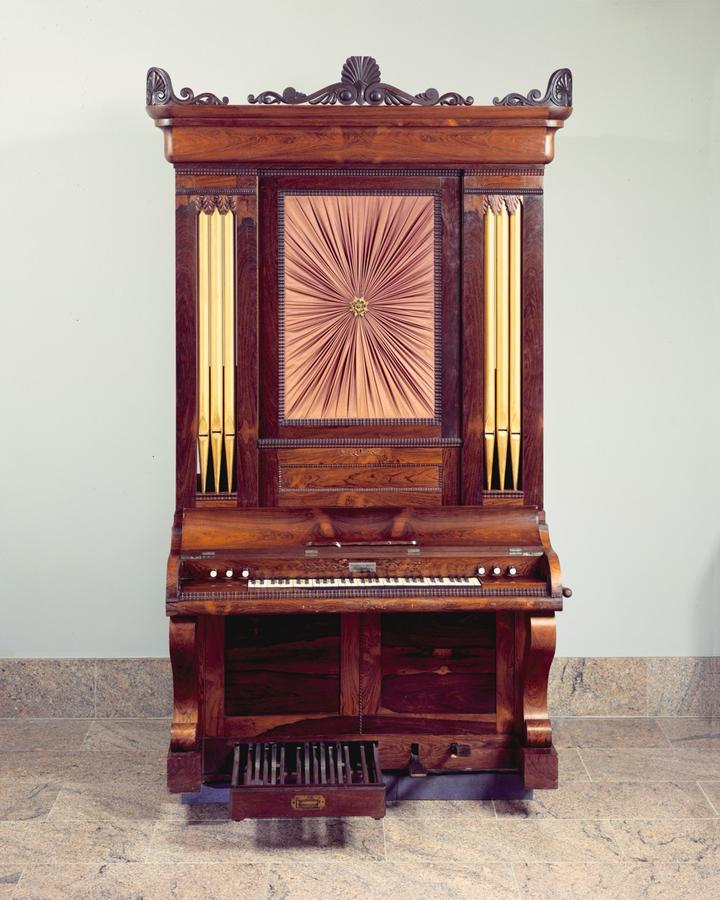
Pipe Organca. 1850 · American (United States) -
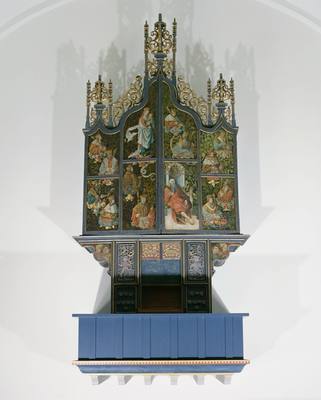
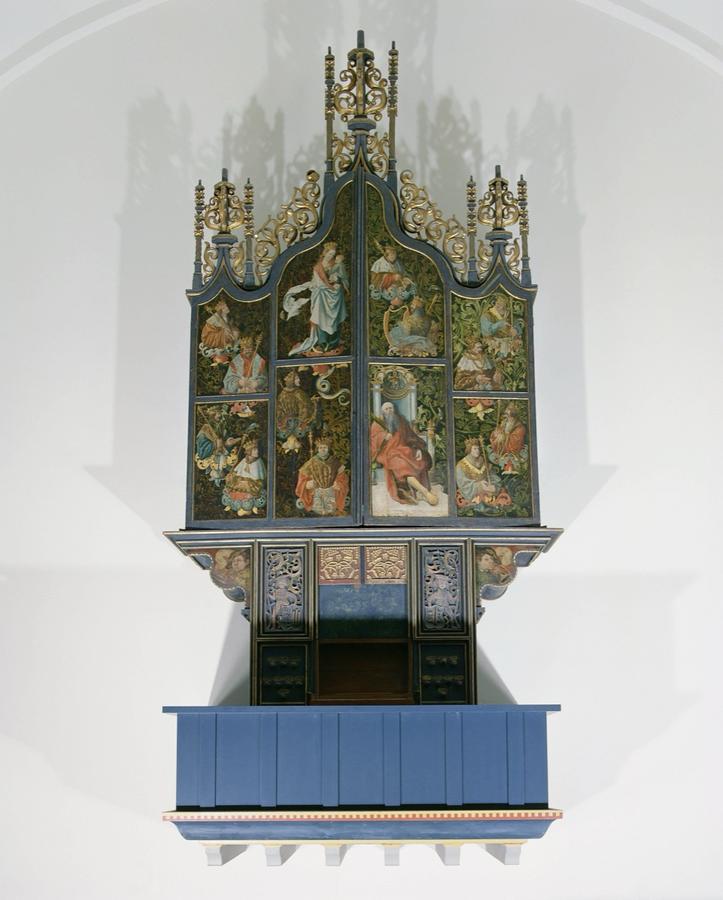
Organ from the Dutch Reformed Church at Scheemda with depiction of Jesse Treec. 1526 · Northern Netherlands; Germany -
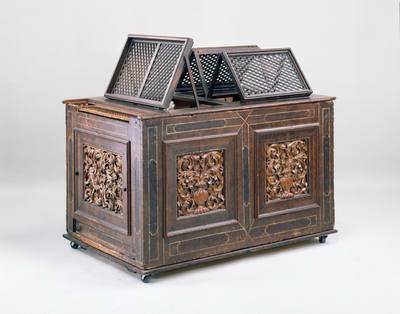
Positive Organ17th century · Germany -
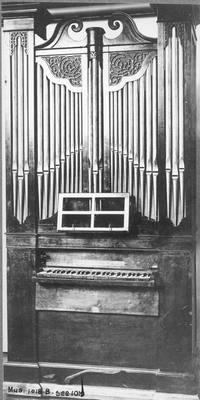
Chamber Organ1779 · British (United Kingdom) -
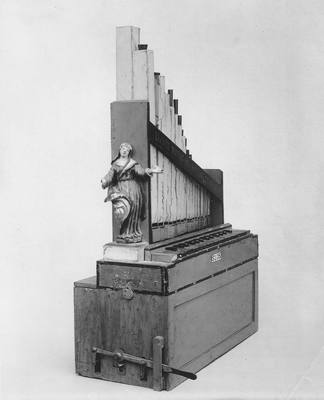
Portative Organca. 1800–1889 · German or French (Germany or France) -
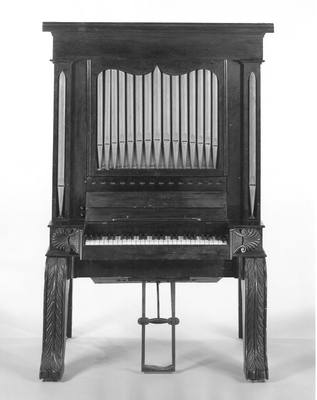
Chamber Organca. 1845–60 · American (United States) -
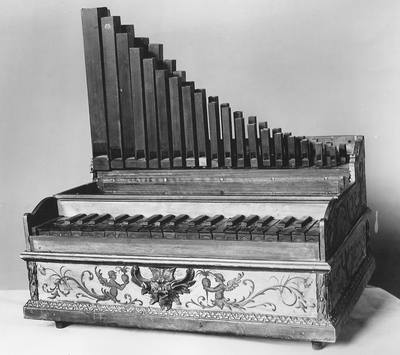
Portative Organlate 19th century · Italian (Italy) -
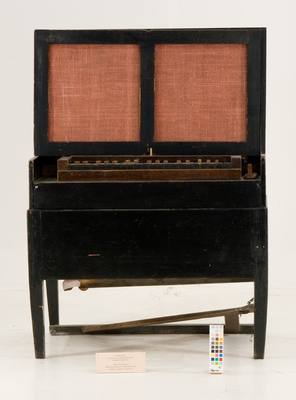
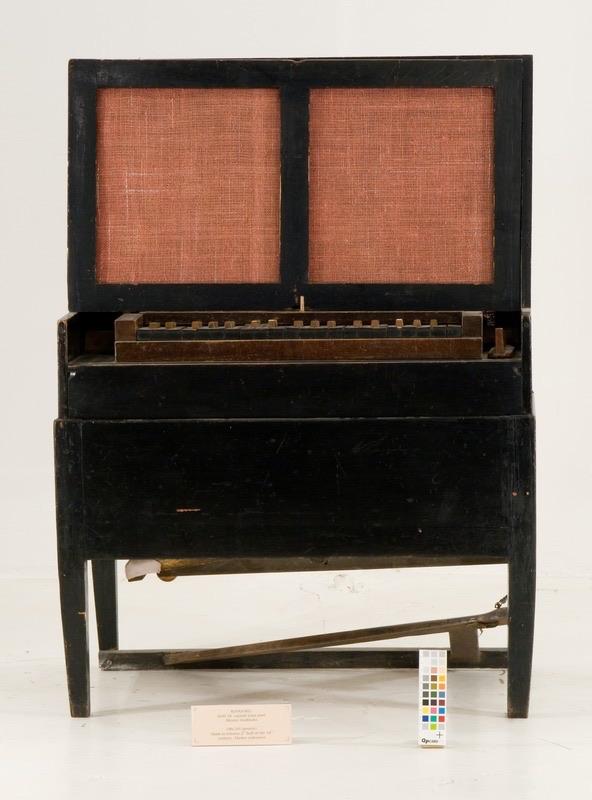
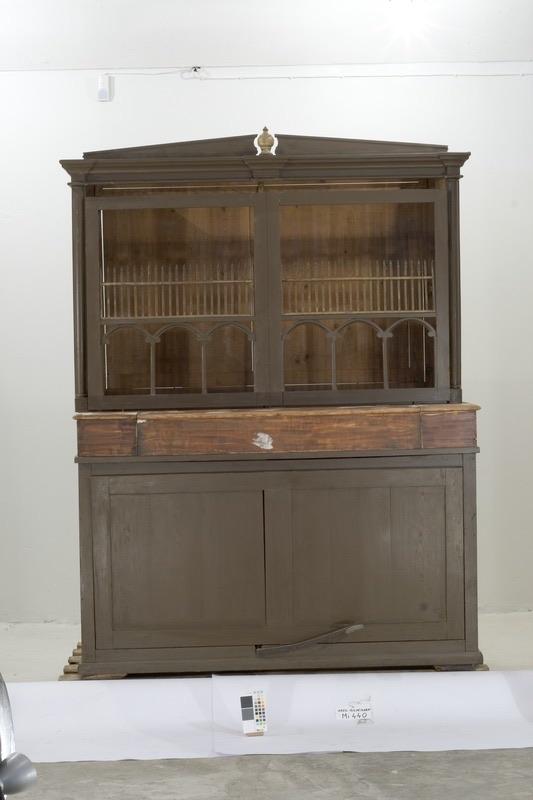
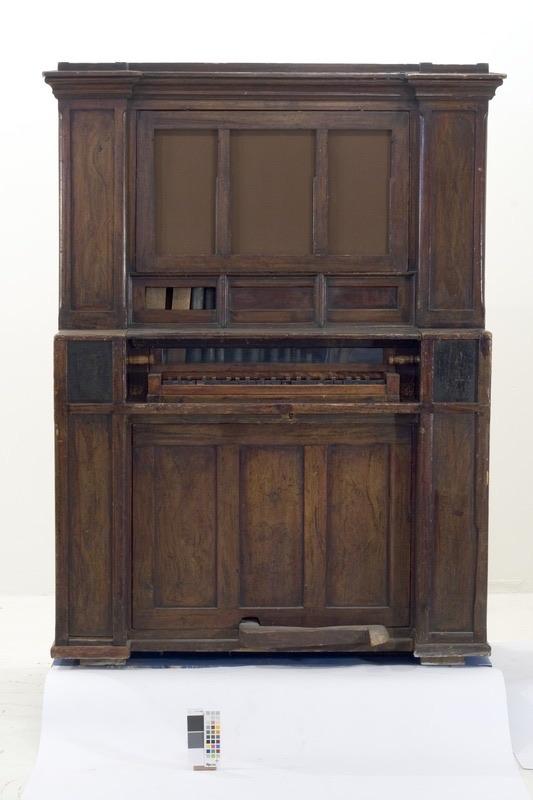
OrganUndated · Estonia -
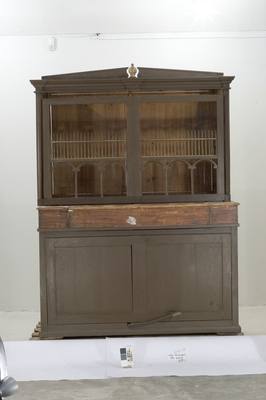
OrganUndated · Estonia -
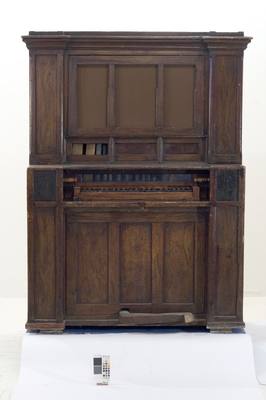
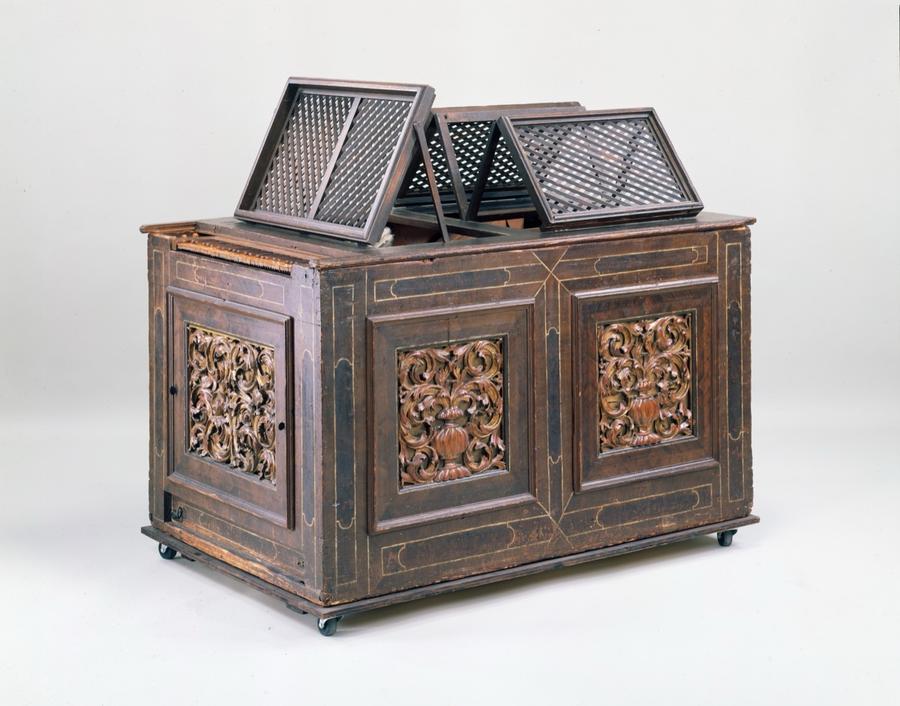
Domestic organUndated · Estonia
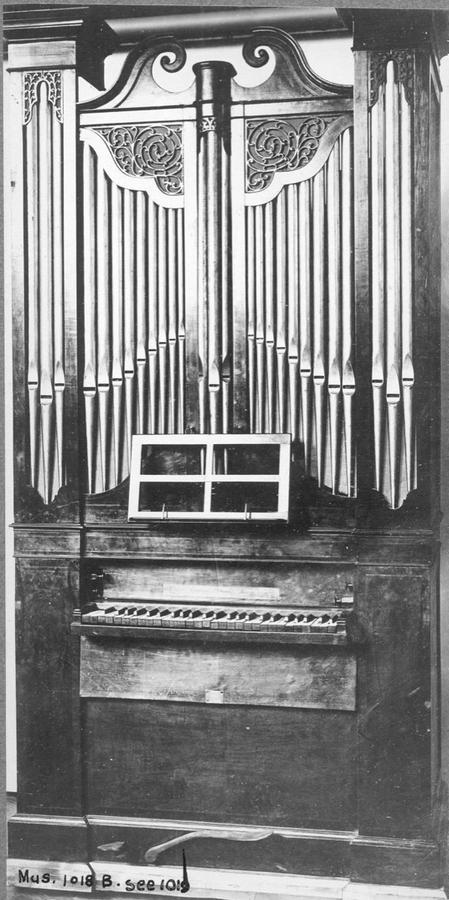
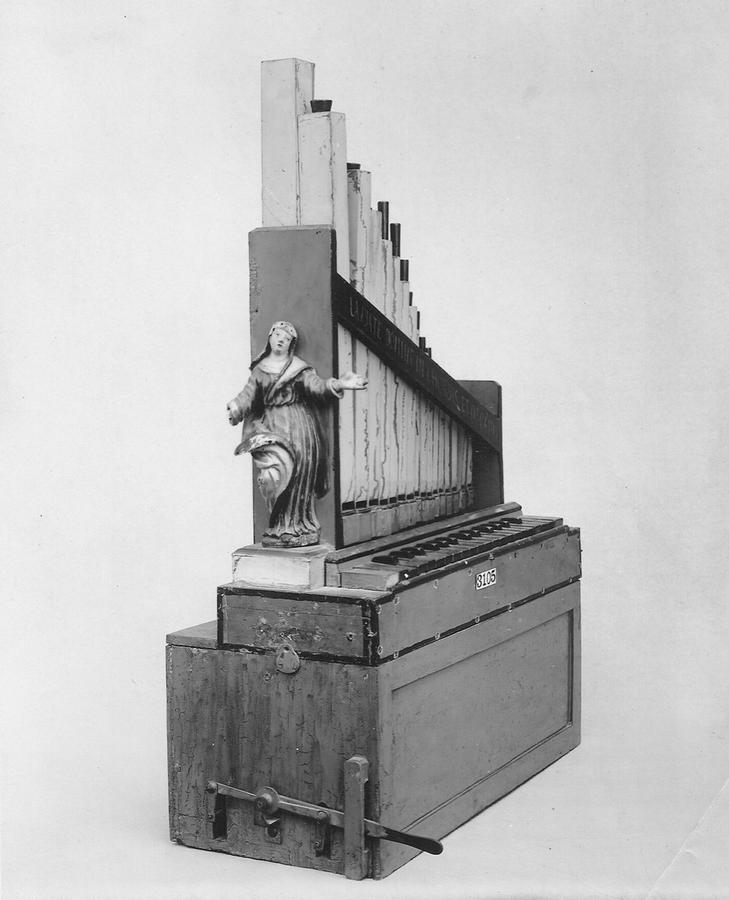
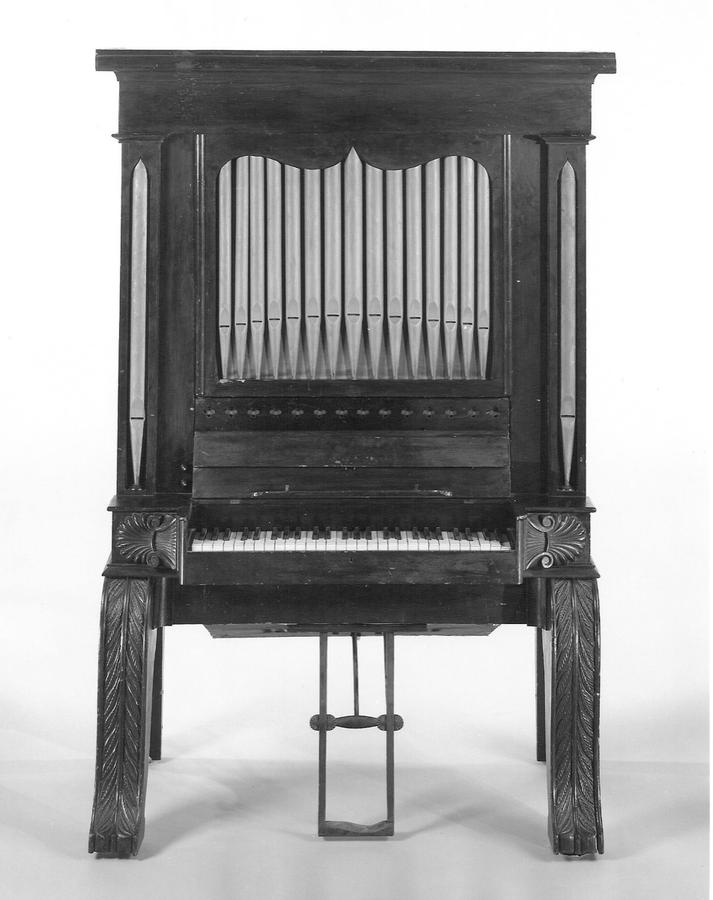
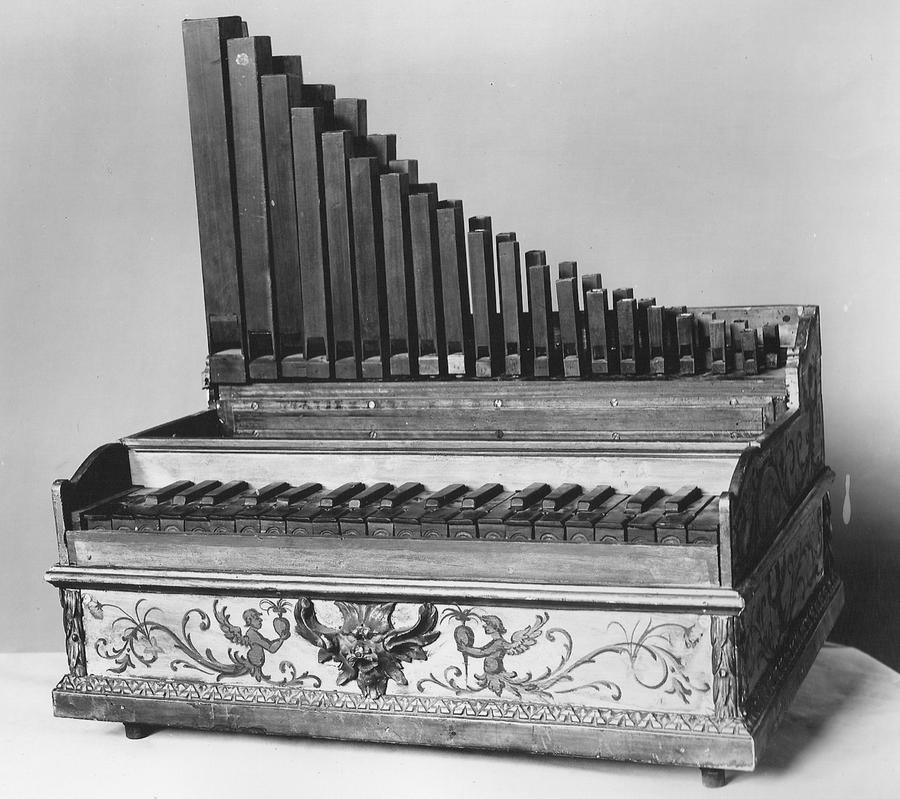
Facts at a glance
| Hornbostel–Sachs number | 421.222.11+421.222.3+412.1 |
|---|---|
| Hornbostel–Sachs group | Aerophones › Non-free aerophones (wind instruments proper) › Edge-blown aerophones or flutes |
| Classification (Wikipedia infobox) | Aerophone |
| Developed | 3rd century BC |
| Inventor | Ctesibius |
| Wikidata labels | 100 languages |
| Wikipedia article | Pipe organ |
| Wikidata item | Q281460 |
| Wikimedia Commons category | Pipe organs |
| MusicBrainz instrument | 39d85868-3476-45cc-94d0-3d43e3135921 |
Sources: Wikidata (CC0 1.0) — classification number, aliases, identifiers (dump of 2026-07-22); Wikipedia (CC BY-SA 4.0) — infobox fields (description of the classification number, development, inventors) and the names of the Hornbostel–Sachs groups (article “Hornbostel–Sachs”, revision of 2026-01-04).
The name in other languages
| Language | Name | Also written |
|---|---|---|
| English | pipe organ | |
| French | orgue | orgue d'église, orgue à tuyaux |
| German | Orgel | Pfeifenorgel, Kirchenorgel |
| Spanish | órgano de tubos | órgano (instrumento musical), Órgano |
| Italian | organo a canne | organo |
| Portuguese | órgão | orgao, Órgão (instrumento musical), orgão de tubos |
| Dutch | pijporgel | orgel, kerkorgel |
| Russian | трубный орган | духовой орган, орган (музыкальный инструмент) |
| Japanese | パイプ・オルガン | パイプオルガン |
| Chinese | 管风琴 | |
| Korean | 파이프 오르간 | |
| Arabic | أرغن ذو أنابيب | الارغن ذو الانابيب |
Sources: Wikidata (CC0 1.0) — labels and aliases; MusicBrainz (CC0 1.0) — instrument aliases (names only).
About the pipe organ: history, construction and playing
The pipe organ is a musical instrument that produces sound by driving pressurised air (called wind) through the organ pipes selected from a keyboard. Because each pipe produces a single tone and pitch, the pipes are provided in sets called ranks, each of which has a common timbre, loudness (volume), and construction throughout the keyboard compass. In other words, a rank is a set of pipes all having the same tonal quality, but having a range of different pitches. Most organs have many ranks of pipes of differing pitch, timbre, and volume that the player can employ singly or in combination through the use of controls called stops.
Medieval
From 800 to the 1400s, the use and construction of organs developed in significant ways, from the invention of the portative and positive organs to the installation of larger organs in major churches such as the cathedrals of Winchester and Notre Dame of Paris. In this period, organs began to be used in secular and religious settings. The introduction of organ into religious settings is ambiguous, most likely because the original position of the Church was that instrumental music was not to be allowed. By the 12th century there is evidence for permanently installed organs existing in religious settings such as the Abbey of Fécamp and other locations throughout Europe.
Several innovations occurred to organs in the Middle Ages, such as the creation of the portative and the positive organ. The portative organs were small and created for secular use and made of lightweight, delicate materials that would have been easy for one individual to transport and play on their own. The portative organ was a "flue-piped keyboard instrument, played with one hand while the other operated the bellows." Its portability made the portative useful for the accompaniment of both sacred and secular music in a variety of settings. The positive organ was larger than the portative organ but was still small enough to be portable and used in a variety of settings like the portative organ. Toward the middle of the 13th century, the portatives represented in the miniatures of illuminated manuscripts appear to have real keyboards with balanced keys, as in the Cantigas de Santa Maria.
It is difficult to directly determine when larger organs were first installed in Europe. An early detailed eyewitness account from Wulfstan of Winchester gives an idea of what organs were like prior to the 13th century, after which more records of large church organs exist. In his account, he describes the sound of the organ: "among them bells outstanding in tone and size, and an organ [sounding] through bronze pipes prepared according to the musical proportions." This is one of the earliest accounts of organs in Europe and also indicates that the organ was large and more permanent than other evidence would suggest.
Renaissance and Baroque periods
During the Renaissance and Baroque periods, the organ's tonal colors became more varied. Organ builders fashioned stops that imitated various instruments, such as the krummhorn and the viola da gamba. Builders such as Arp Schnitger, Jasper Johannsen, Zacharias Hildebrandt and Gottfried Silbermann constructed instruments that were in themselves artistic, displaying both exquisite craftsmanship and beautiful sound. These organs featured well-balanced mechanical key actions, giving the organist precise control over the pipe speech. Schnitger's organs featured particularly distinctive reed timbres and large Pedal and Rückpositiv divisions.
Different national styles of organ building began to develop, often due to changing political climates. In the Netherlands, the organ became a large instrument with several divisions, doubled ranks, and mounted cornets. The organs of northern Germany also had more divisions, and independent pedal divisions became increasingly common. Organ makers began designing their cases in such a way that the divisions of the organ were visibly discernible. Twentieth-century musicologists have retroactively labelled this the Werkprinzip.
In France, as in Italy, Spain and Portugal, organs were primarily designed to play alternatim verses rather than accompany congregational singing. The French Classical Organ became remarkably consistent throughout France over the course of the Baroque era, more so than any other style of organ building in history, and standardized registrations developed. This type of instrument was elaborately described by Dom Bédos de Celles in his treatise L'art du facteur d'orgues (The Art of Organ Building). The Italian Baroque organ was often a single-manual instrument, without pedals. It was built on a full diapason chorus of octaves and fifths. The stop-names indicated the pitch relative to the fundamental ("Principale") and typically reached extremely short nominal pipe-lengths (for example, if the Principale were 8′, the "Vigesimanona" was ½′). The highest ranks "broke back", their smallest pipes replaced by pipes pitched an octave lower to produce a kind of composite treble mixture.
Modern developments
The development of pneumatic and electro-pneumatic key actions in the late 19th century made it possible to locate the console independently of the pipes, greatly expanding the possibilities in organ design. Electric stop actions were also developed, which allowed sophisticated combination actions to be created.
Beginning in the early 20th century in Germany and in the mid-20th century in the United States, organ builders began to build historically inspired instruments modeled on Baroque organs. They returned to building mechanical key actions, voicing with lower wind pressures and thinner pipe scales, and designing specifications with more mixture stops. This became known as the Organ Reform Movement.
The Catholic Church, in its 1963 Second Vatican Council decree on the Sacred Liturgy, whilst allowing the use of other musical instruments, declared that "in the Latin Church, the pipe organ is to be held in high esteem, for it is the traditional musical instrument which adds a wonderful splendor to the Church's ceremonies and powerfully lifts up man's mind to God and to higher things".
In the late 20th century, organ builders began to incorporate digital components into their key, stop, and combination actions. Besides making these mechanisms simpler and more reliable, this also makes it possible to record and play back an organist's performance using the MIDI protocol. In addition, some organ builders have incorporated digital (electronic) stops into their pipe organs.
The electronic organ developed throughout the 20th century. Some pipe organs were replaced by digital organs because of their lower purchase price, smaller physical size, and minimal maintenance requirements. In the early 1970s, Rodgers Instruments pioneered the hybrid organ, an electronic instrument that incorporates real pipes; other builders such as Allen Organs and Johannus Orgelbouw have since built hybrid organs. Allen Organs first introduced the electronic organ in 1937 and in 1971 created the first digital organ using CMOS technology borrowed from NASA which created the digital pipe organ using sound recorded from actual speaking pipes and incorporating the sounds electronically within the memory of the digital organ thus having real pipe organ sound without the actual organ pipes.
Construction
A pipe organ contains one or more sets of pipes, a wind system, and one or more keyboards. The pipes produce sound when pressurized air produced by the wind system passes through them. An action connects the keyboards to the pipes. Stops allow the organist to control which ranks of pipes sound at a given time. The organist operates the stops and the keyboards from the console.
Action
An organ contains two actions, or systems of moving parts: the keys, and the stops. The key action causes wind to be admitted into an organ pipe while a key is depressed. The stop action causes a rank of pipes to be engaged (i.e. playable by the keys) while a stop is in its "on" position. An action may be mechanical, pneumatic, or electrical (or some combination of these, such as electro-pneumatic). The key action is independent of the stop action, allowing an organ to combine a mechanical key action with an electric stop action.
A key action in which the keys are connected to the windchests by only rods and levers is a mechanical or tracker action. When the organist depresses a key, the corresponding rod (called a tracker) pulls open its pallet, allowing wind to enter the pipe.
In a mechanical stop action, each stop control operates a valve for a whole rank of pipes. When the organist selects a stop, the valve allows wind to reach the selected rank. The first kind of control used for this purpose was a draw stop knob, which the organist selects by pulling (or drawing) toward themself. Pulling all of the knobs thus activates all available pipes, and is the origin of the idiom "to pull out all the stops". More modern stop selectors, utilized in electric actions, are ordinary electrical switches or magnetic valves operated by a rocker tab, or both.
Tracker action has been used from antiquity to modern times. Before the pallet opens, wind pressure augments tension of the pallet spring, but once the pallet opens, only the spring tension is felt at the key. This sudden decrease of key pressure against the finger provides a "breakaway" feel.
A later development was the tubular-pneumatic action, which uses changes of pressure within lead tubing to operate pneumatic valves throughout the instrument. This allowed a lighter touch, and more flexibility in the location of the console, within a roughly 50-foot (15-m) limit. This type of construction was used in the late 19th century and early 20th century, and has had only rare application since the 1920s.
Combination action
Organ stops can be combined in many permutations, resulting in a great variety of sounds. A combination action can be used to switch instantly from one combination of stops (called a registration) to another. Combination actions feature small buttons called pistons that can be pressed by the organist, generally located beneath the keys of each manual (thumb pistons) or above the pedalboard (toe pistons). The pistons may be divisional (affecting only a single division) or general (affecting all the divisions), and are either preset by the organ builder or can be altered by the organist. Modern combination actions operate via computer memory, and can store several channels of registrations.
Tuning and regulation
The goal of tuning a pipe organ is to adjust the pitch of each pipe so that they all sound in tune with each other. How the pitch of each pipe is adjusted depends on the type and construction of that pipe.
Regulation adjusts the action so that all pipes sound correctly. If the regulation is wrongly set, the keys may be at different heights, some pipes may sound when the keys are not pressed (a "cipher"), or pipes may not sound when a key is pressed. Tracker action, for example in the organ of Cradley Heath Baptist Church, includes adjustment nuts on the wire ends of the wooden trackers, which have the effect of changing the effective length of each tracker.
Source: Wikipedia, “Pipe organ” — CC BY-SA 4.0 — text excerpted as published (references, images and tables removed); see the article for the full text and the list of authors. Revision of 2026-06-16.
From Grove’s Dictionary (1900)
ORGAN (Fr. Orgue; Ital. Organo; Ger. Orgel). I. History. It must not be supposed that the 'organ' referred to in the Old Testament (Gen. iv. 21)—'Jubal; he was the father of all such as handle the harp and organ'—bore any resemblance to the stately instrument with which we are all so familiar by that name at the present day. At the same time, there can be little doubt that the principle of the three great classes of organpipe—Stopped, Open, and Reed—was known at a very early period, as we shall have occasion to show.
It is here purposed, as far as practicable, to trace from the remotest beginnings, to its present exalted dimensions, the gradual growth of that great triumph of human skill which so justly enjoys the distinction of being the most perfect musical instrument that the ingenuity of man has hitherto devised; the impressive tones of which so greatly enrich the effect of the religious services celebrated in our great sacred edifices. The materials available for this purpose are not indeed always of the plainest kind, the accounts being not unfrequently incomplete, exaggerated, or surrounded by a somewhat apocryphal air; but much may be done by selecting the most probable, and placing them in intelligible order.
Source: Wikisource, A Dictionary of Music and Musicians (Grove, 1900) — “Organ” (entry by Edward John Hopkins) — Public domain (published 1879–1910; authors died before 1929) — the first paragraphs of the entry, as transcribed; see the page for the full entry.
Composers who played it
305 composers on this site list the pipe organ as an instrument they played. A selection:
- Giovanni Pierluigi da Palestrina 1525–1594
- Claudio Monteverdi 1567–1643
- Henry Purcell 1659–1695
- George Frideric Handel 1685–1759
- Johann Sebastian Bach 1685–1750
- Christoph Willibald von Gluck 1714–1787
- César Franck 1822–1890
- Camille Saint-Saëns 1835–1921
- Antonín Dvořák 1841–1904
- Charles Ives 1874–1954
- Baude Cordier 1364–
- Conrad Paumann 1415–1473
Composers with a page on this site whose Wikidata record lists this instrument; featured and best-dated first. Data: Wikidata (property “instrument”, P1303), CC0 1.0.
Sources and licences
- Pipe Organ, Richard M. Ferris, ca. 1850, American (United States). Wood, metal, various materials. Gift of Hans H. Schambach, 1986 (1986.197). Museum record · CC0 1.0 (public domain dedication)
- Organ from the Dutch Reformed Church at Scheemda with depiction of Jesse Tree, Johannis Emedensis; anonymous, c. 1526, Northern Netherlands; Germany. oak (wood), oil paint (paint), wood (plant material). Purchased with the support of the Vereniging Rembrandt. Museum record · Public Domain Mark 1.0
- Positive Organ, 17th century, Germany. Woods, metal alloys, leather and various materials.. Gift of Fenner Douglass, and Purchase, Rose M. Badgeley Bequest, The Howard Bayne Fund, Mrs. Vincent Astor, Ann Eden Woodward Foundation, Ursula Corning, Newton Donner and Howard Phipps Jr. Gifts, Eleanor Patterson Bequest, Bequest of Dorothy S. Swenson, by exchange, Rogers Fund and funds from various donors, 1978 (1978.6). Museum record · CC0 1.0 (public domain dedication)
- Chamber Organ, Thomas Chapman, 1779, British (United Kingdom). Various materials. The Crosby Brown Collection of Musical Instruments, 1889 (89.4.1780). Museum record · CC0 1.0 (public domain dedication)
- Portative Organ, ca. 1800–1889, German or French (Germany or France). Various. The Crosby Brown Collection of Musical Instruments, 1889 (89.4.3105). Museum record · CC0 1.0 (public domain dedication)
- Chamber Organ, George Clisbee, ca. 1845–60, American (United States). Wood, various materials. Gift of Mr. E. A. Maynard, 1949 (49.90). Museum record · CC0 1.0 (public domain dedication)
- Portative Organ, Leopoldo Franciolini, late 19th century, Italian (Italy). Wood, various materials. The Crosby Brown Collection of Musical Instruments, 1889 (89.4.1188). Museum record · CC0 1.0 (public domain dedication)
- Organ, Undated, Estonia. Estonian Theater and Music Museum / Estonian e-Repository and Conservation of Collections (via Europeana). Museum record · CC BY 4.0
- Organ, Gildemann, Jüri (autor), Undated, Estonia. Estonian Theater and Music Museum / Estonian e-Repository and Conservation of Collections (via Europeana). Museum record · CC BY 4.0
- Domestic organ, Undated, Estonia. Estonian Theater and Music Museum / Estonian e-Repository and Conservation of Collections (via Europeana). Museum record · CC BY 4.0
Photographs: open-access collections of the museums named above; each is shown here reduced in size, otherwise unchanged. Text: Wikipedia (CC BY-SA 4.0), Grove’s Dictionary (public domain), Wikidata and MusicBrainz (CC0). The full list of sources and licences is on the credits page.