
Instruments · Aerophones
Recorder
The recorder is a musical instrument that is a type of flute. It is shaped like a tube with one end bigger than the other end. A recorder player puts the bigger end in their mouth and blows into it.
Summary: Simple English Wikipedia, “Recorder” — CC BY-SA 4.0. Revision of 2024-07-12.
Museum photographs
These 12 photographs span 1595–1900, 5 places of origin and 2 museums. Every photograph is public domain or openly licensed, and links to the museum’s own record.
-
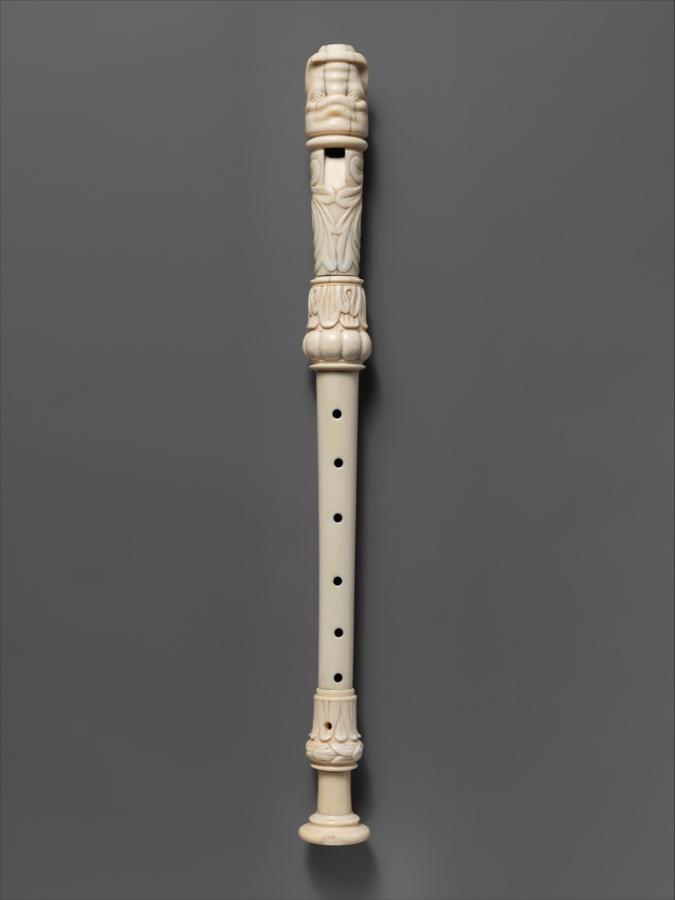
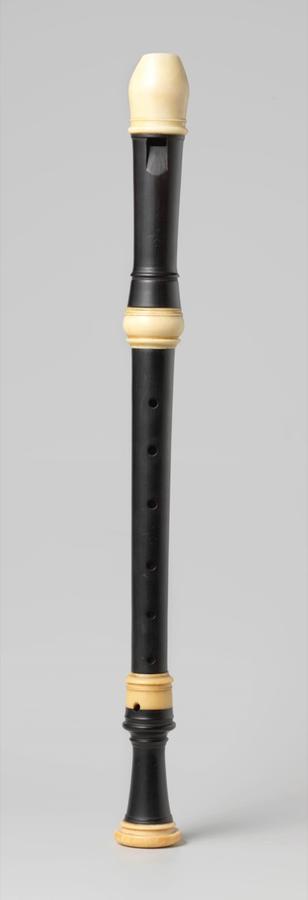
Alto Recorder in Fca. 1700 · Germany -
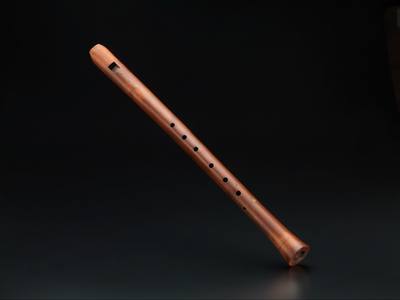
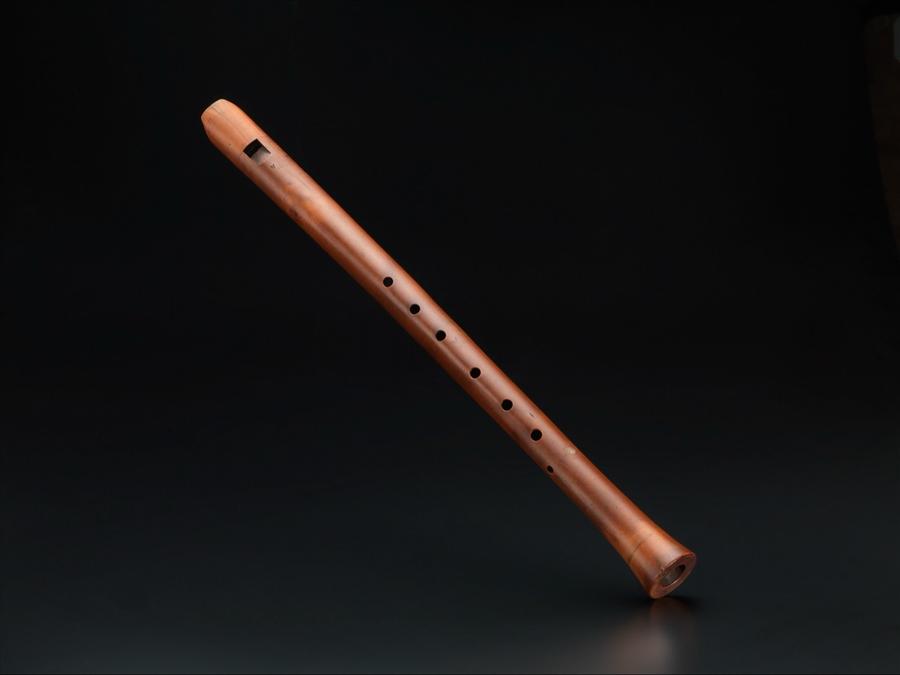
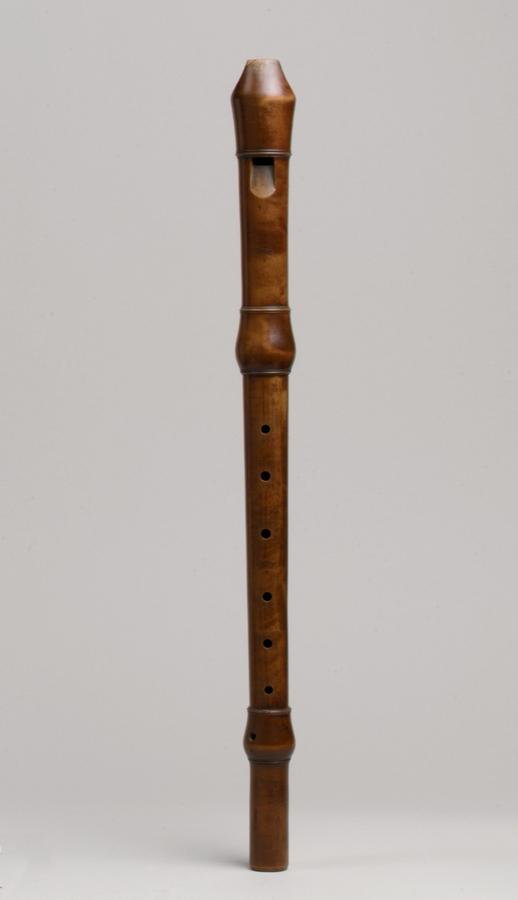
Tenor Recorderca. 1600 · Italian or British (Italy, United Kingdom) -
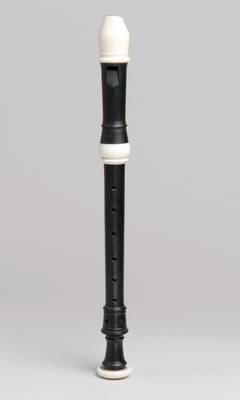
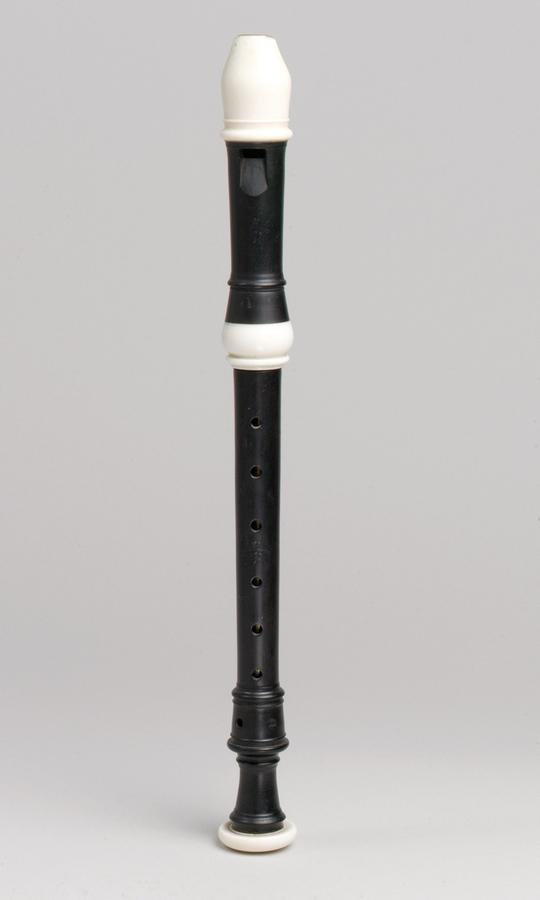
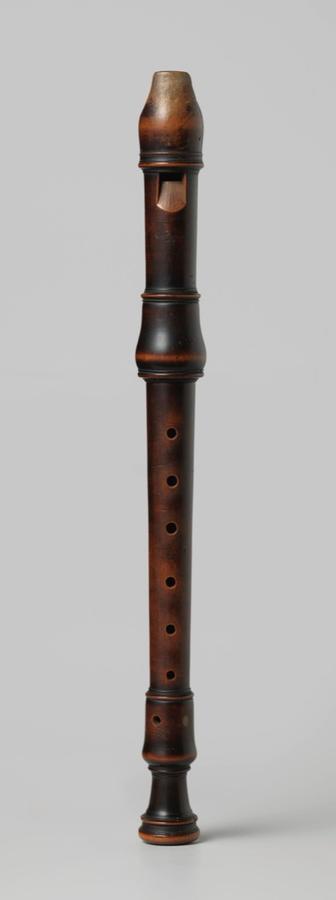
Soprano Recorder in Bca. 1700 · Dutch (Netherlands) -
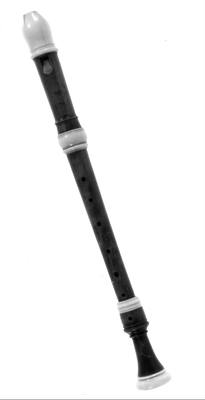
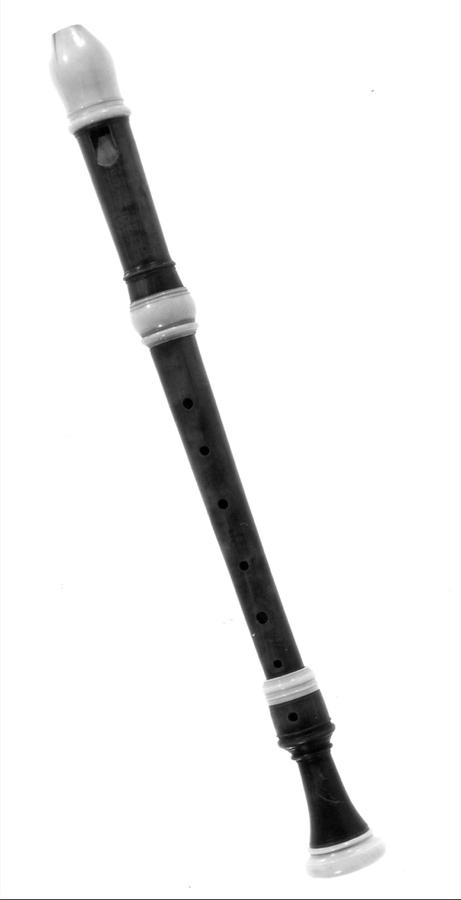
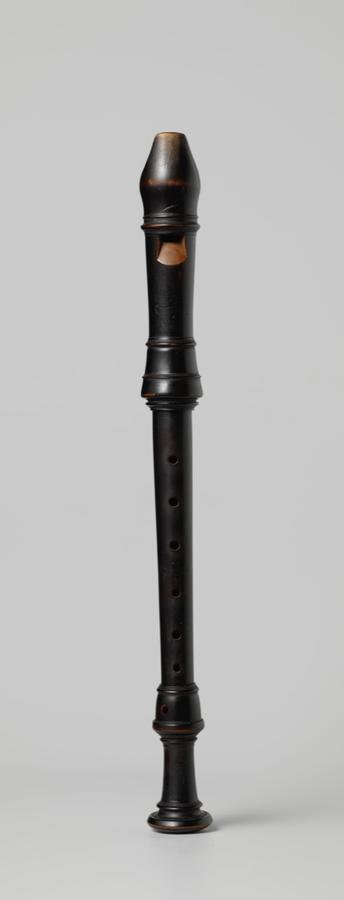
Alto Recorderca. 1700 · British (United Kingdom) -
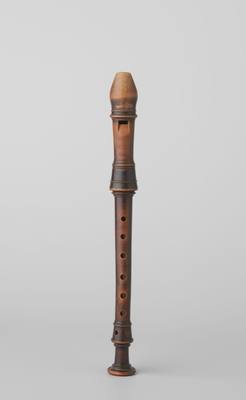
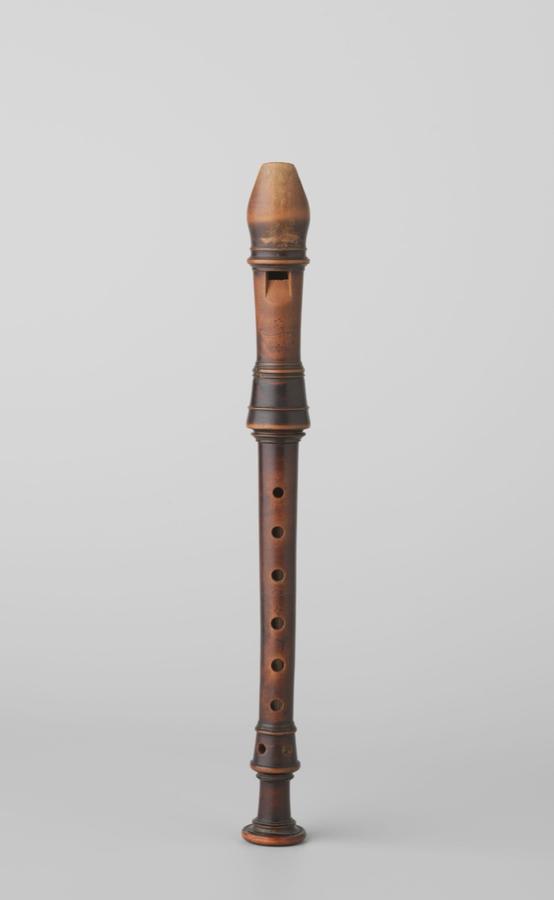
Sopranino Recorder1698 - 1717 · Amsterdam -
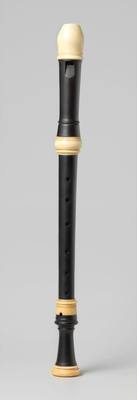
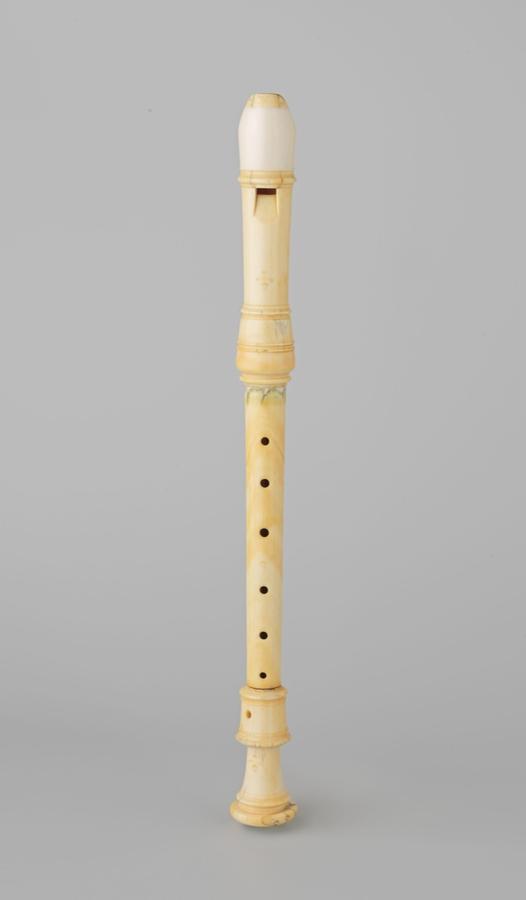
Alto recorderc. 1700 · Amsterdam -
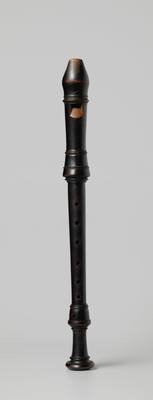
Descant recorderc. 1700 · Amsterdam -
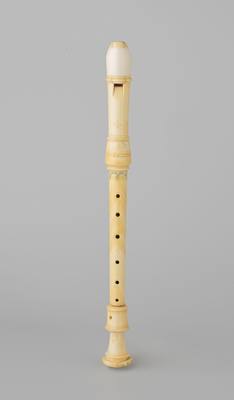
Alto Recorder1710 - 1752 · Amsterdam -
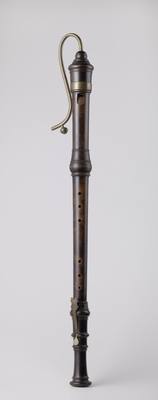
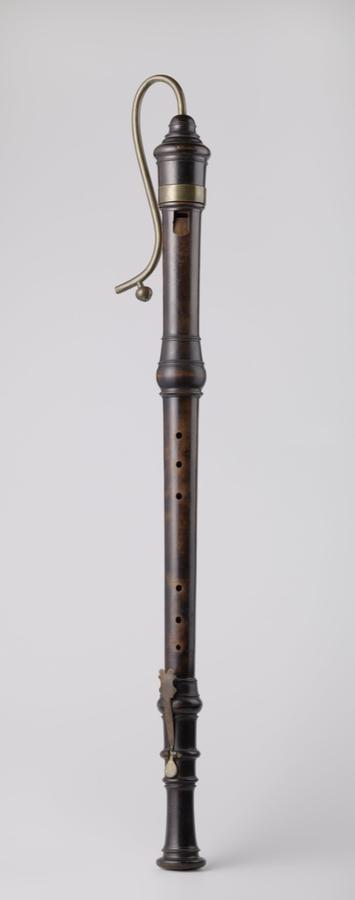
Bass recorderc. 1720 · Netherlands -
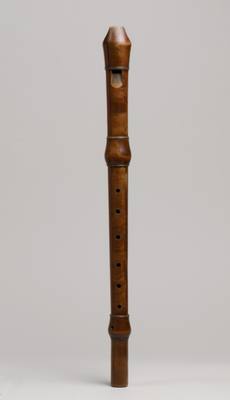
Alto Recorder in Fmid-18th century · British (United Kingdom) -
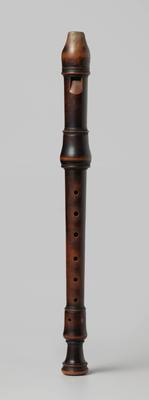
Descant recorderc. 1750 · Amsterdam -
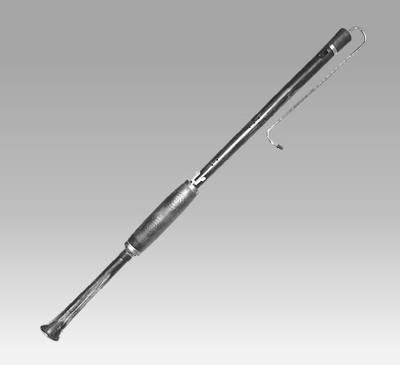
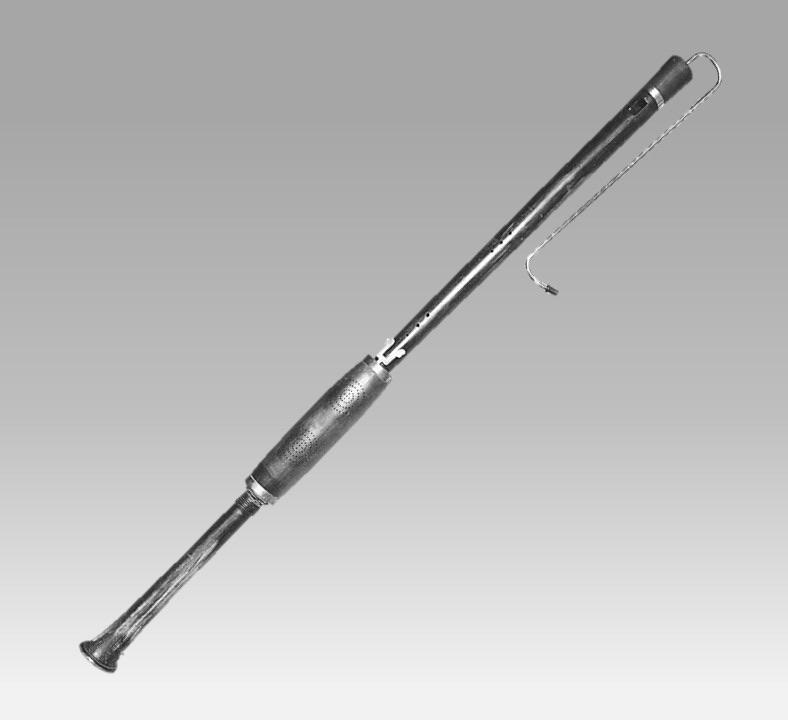
Contrabass Recorder in D?19th century · probably Belgian (Belgium?)
Facts at a glance
| Hornbostel–Sachs number | 421.221.12 — Flute with internal duct and finger holes |
|---|---|
| Hornbostel–Sachs group | Aerophones › Non-free aerophones (wind instruments proper) › Edge-blown aerophones or flutes |
| Also known as | beak flute, block flute, English flute, flutaphone, basset recorder, Blockflöte, common flute, flauto dolce, subcontrabass recorder |
| Classification (Wikipedia infobox) | Wind, Woodwind, Aerophone |
| Wikidata labels | 64 languages |
| Wikipedia article | Recorder (musical instrument) |
| Wikidata item | Q187851 |
| Wikimedia Commons category | Recorders (musical instrument) |
| MusicBrainz instrument | 3cf4c0c9-160a-4d73-9243-7d0e0df17050 |
| Encyclopaedia Britannica | art/recorder-musical-instrument |
| Audio sample (Wikimedia Commons) | SopranoRecorder.ogg |
Sources: Wikidata (CC0 1.0) — classification number, aliases, identifiers (dump of 2026-07-22); Wikipedia (CC BY-SA 4.0) — infobox fields (description of the classification number, development, inventors) and the names of the Hornbostel–Sachs groups (article “Hornbostel–Sachs”, revision of 2026-01-04).
The name in other languages
| Language | Name | Also written |
|---|---|---|
| English | recorder | beak flute, block flute, English flute |
| French | flûte à bec | flûte à six trous, flute à bec |
| German | Blockflöte | Holzblockflöte, Flauto dolce |
| Spanish | flauta dulce | Flauta de pico |
| Italian | flauto dolce | recorder, flautino, flauto diritto |
| Portuguese | flauta de bisel | flauta doce, gravador |
| Dutch | blokfluit | Bekfluit |
| Russian | блокфлейта | Блок-флейта, Продольная флейта |
| Japanese | リコーダー | ブロックフレーテ |
| Chinese | 直笛 | |
| Korean | 리코더 | |
| Arabic | ريكوردر |
Sources: Wikidata (CC0 1.0) — labels and aliases; MusicBrainz (CC0 1.0) — instrument aliases (names only).
About the recorder: history, construction and playing
The recorder is a family of woodwind musical instruments and a member of the family of duct flutes that includes tin whistles and flageolets. It is the most prominent duct flute in the western classical tradition. A recorder can be distinguished from other duct flutes by the presence of a thumb-hole for the upper hand and holes for seven fingers: three for the upper hand and four for the lower.
Recorders are made in various sizes and ranges. The sizes most commonly in use today are the soprano (also known as descant, lowest note C5), alto (also known as treble, lowest note F4), tenor (lowest note C4), and bass (lowest note F3). Recorders were traditionally constructed from wood or ivory. Modern professional instruments are wooden, often boxwood; student and scholastic recorders are commonly made of moulded plastic. The recorders' internal and external proportions vary, but the bore is generally reverse conical (i.e. tapering towards the foot) to cylindrical, and all recorder fingering systems make extensive use of forked fingerings.
Name
The instrument has been known by its modern English name since the fourteenth century. David Lasocki reports the earliest use of "recorder" in the household accounts of the Earl of Derby (later King Henry IV) in 1388, which register i. fistula nomine Recordour (1. a pipe called a 'Recorder').
By the fifteenth century, the name had appeared in English literature. The earliest references are in John Lydgate's Temple of Glas (c. 1430): These lytylle herdegromys Floutyn al the longe day.In here smale recorderys, In floutys. ('These little shepherds fluting all day long ... on their small recorders, on flutes.') and in Lydgate's Fall of Princes (c. 1431–1438): Pan, god off Kynde, with his pipes seuene, / Off recorderis fond first the melodies. ('Pan, god of Nature, with his pipes seven, / of recorders found first the melodies.')
Etymology
Appending the name recorder to the instrument itself is uniquely English: In Middle-French there is no equivalent noun sense of recorder referring to a musical instrument. The English verb record (from Middle-French recorder, early thirteenth century) meant "to learn by heart, to commit to memory, to go over in one's mind, to recite"; but the term did not refer to playing music until the sixteenth century. It was long after the English recorder was so-named that it gained two additional meanings: "silently practicing a tune", or "sing or render in song"—both referring almost-exclusively to songbirds.
Partridge indicates that the use of the instrument by jongleurs led to its association with the verb: Recorder the minstrel's action, a recorder the minstrel's tool. The reason is uncertain why this flute instrument—rather than some other instrument played by the jongleurs—is known as the recorder.
Materials
Recorders have historically been constructed from hardwoods and ivory, sometimes with metal tone keys. Since the modern revival of the recorder, plastics have been used in the mass manufacture of recorders, as well as by a few individual makers.
Today, a wide variety of hardwoods are used to make recorder bodies. Relatively fewer varieties of wood are used to make recorder blocks, which are often made of red cedar, chosen because of its rot resistance, ability to absorb water, and low expansion when wet. A recent innovation is the use of synthetic ceramics in the manufacture of recorder blocks. Instruments fitted with this device were marketed by Moeck in the 1970s.
Modern developments
Some newer designs of recorder are now being produced. Recorders with a square cross-section may be produced more cheaply and in larger sizes than comparable recorders manufactured by turning. Another area is the development of instruments with a greater dynamic range and more powerful bottom notes. These modern designs make it easier to be heard in concertos. Finally, recorders with a downward extension of a semitone are becoming available; such instruments can play a full three octaves in tune.
German fingering
In the early twentieth century, Peter Harlan developed a recorder with apparently simpler fingering, called German fingering. A recorder designed for German fingering has a hole five that is smaller than hole four, whereas baroque and neo-baroque recorders have a hole four that is smaller than hole five. The immediate difference in fingering is for F (soprano) or B♭ (alto), which on a neo-baroque instrument must be fingered 0 123 4–67. With German fingering, this becomes a simpler 0 123 4 – – –. Unfortunately, however, this makes many other chromatic notes too out of tune to be usable. German fingering became popular in Europe, especially Germany, in the 1930s, but rapidly became obsolete in the 1950s as people began to treat the recorder more seriously, and the limitations of German fingering became more widely appreciated. Recorders with German fingering are today manufactured exclusively for educational purposes.
Basic sound production
The recorder produces sound in the manner of a whistle or an organ flue pipe. In normal play, the player blows into the windway (B), a narrow channel in the head joint, which directs a stream of air across a gap called the window, at a sharp edge called the labium (C). The air stream alternately travels above and below the labium, exciting standing waves in the bore of the recorder, and producing sound waves that emanate away from the window. Feedback from the resonance of the tube regulates the pitch of the sound.
In recorders, as in all woodwind instruments, the air column inside the instrument behaves like a vibrating string, to use a musical analogy, and has multiple modes of vibration. These waves produced inside the instrument are not travelling waves, like those the ear perceives as sound, but rather stationary standing waves consisting of areas of high pressure and low pressure inside the tube, called nodes. The perceived pitch is the lowest, and typically loudest, mode of vibration in the air column. The other pitches are harmonics, or overtones. Players typically describe recorder pitches by the number of nodes in the air column. Notes with a single node are in the first register, notes with two nodes in the second register, etc. As the number of nodes in the tube increases, the number of notes a player can produce in a given register decreases because of the physical constraint of the spacing of the nodes in the bore. On a Baroque recorder, the first, second, and third registers span about a major ninth, a major sixth, and a minor third respectively.
Technique
Although the design of the recorder has changed over its 700-year history, notably in fingering and bore profile, the technique of playing recorders of different sizes and periods is much the same. Indeed, much of what is known about the technique of playing the recorder is derived from historical treatises and manuals dating from the sixteenth to eighteenth centuries. The following describes the commonalities of recorder technique across all time periods.
Renaissance
In the sixteenth century, the structure, repertoire, and performing practice of the recorder is better documented than in prior epochs. The recorder was one of the most important wind instruments of the Renaissance, and many instruments dating to the sixteenth century survive, including some matched consorts. This period also produced the first extant books describing the recorder, including the treatises of Virdung (1511), Agricola (1529), Ganassi (1535), Cardano (c.1546), Jambe de Fer (1556), and Praetorius (1619). Nonetheless, understanding of the instrument and its practice in this period is still developing.
Structure
In the sixteenth century, the recorder saw important developments in its structure. As in the recorders of the Middle Ages, the etiology of these changes remains uncertain, development was regional and multiple types of recorder existed simultaneously. Our knowledge is based on documentary sources and surviving instruments.
Structure
Several changes in the construction of recorders took place in the seventeenth century, resulting in the type of instrument generally referred to as Baroque recorders, as opposed to the earlier Renaissance recorders. These innovations allowed baroque recorders to possess a tone regarded as "sweeter" than that of the earlier instruments, at the expense of a reduction in volume, particularly in the lowest notes.
The evolution of the Renaissance recorder into the Baroque instrument is generally attributed to the Hotteterre family, in France. They developed the ideas of a more tapered bore, bringing the finger-holes of the lowermost hand closer together, allowing greater range, and enabling the construction of instruments in several jointed sections. The last innovation allowed more accurate shaping of each section and also offered the player minor tuning adjustments, by slightly pulling out one of the sections to lengthen the instrument.
The French innovations were taken to London by Pierre Bressan, a set of whose instruments survive in the Grosvenor Museum, Chester, as do other examples in various American, European and Japanese museums and private collections. Bressan's contemporary, Thomas Stanesby, was born in Derbyshire but became an instrument maker in London. He and his son (Thomas Stanesby junior) were the other important British-based recorder-makers of the early eighteenth century.
In continental Europe, the Denner family of Nuremberg, including Johann Christoph and his son Jacob, were the most celebrated makers of this period.
The baroque recorder produces a most brilliant and projecting sound in the second octave, which is more facile and extended than that of earlier recorders, while the lowest notes in its range are relatively weak. Composers such as Bach, Telemann and Vivaldi exploit this property in their concertos for the instrument.
Measured from its lowest to its highest playable note, the baroque alto recorder has a range of at most two octaves and a fifth with many instruments having a smaller range. Even the most developed instruments of the period, however, cannot produce the augmented tonic, third and fourth of the third octave. Notably, Georg Philipp Telemann's concerto TWV 51:F1 makes use some of these notes in the third octave, posing significant technical challenges to the player, perhaps requiring the covering of the bell or other unusual techniques.
Structure
The first recorders to be played in the modern period were antique instruments from previous periods. Anecdotally, Arnold Dolmetsch was motivated to make his own recorders after losing a bag containing his antique instruments. Recorders made in the early twentieth century were imitative of baroque models in their exterior form, but differed significantly in their structure. Dolmetsch introduced English fingering, the now standard fingering for "baroque" model instruments, and standardised the doubled 6th and 7th holes found on a handful of antique instruments by the English makers Stanesby and Bressan. Dolmetsch instruments generally had a large rectangular windway, unlike the curved windways of all historical instruments, and played at modern pitch.
Source: Wikipedia, “Recorder (musical instrument)” — CC BY-SA 4.0 — text excerpted as published (references, images and tables removed); see the article for the full text and the list of authors. Revision of 2026-07-05.
From Grove’s Dictionary (1900)
It is possibly from this that the name of the instrument is derived. In any case it appears in one of the 'proverbis' written about Henry VII.'s time on the walls of the manor house at Leckingfield. It is there said to 'desire' the mean part, 'but manifold fingering and stops bringeth high notes from its clear tones.' In the catalogue of instruments left by Henry VIII. are Recorders of box, oak, and ivory, great and small, two base Recorders of walnut, and one great base Recorder.
But the most definite information we possess as to the instrument is derived from two similar works published respectively in 1683 and 1686. The former is named 'The Genteel Companion, being exact directions for the Recorder, with a collection of the best and newest tunes and grounds extant. Carefully composed and gathered by Humphrey Salter, London. Printed for Richard Hunt and Humphrey Salter at the Lute in St. Paul's Churchyard, 1683.' The latter is entitled 'The delightful Companion, or choice New Lessons for the Recorder or Flute, etc. London: printed for John Playford at his shop near the Temple Church, and for John Carr at his shop at the Middle Temple Gate 1686. Second edition corrected.'
The edition of 'The delightful Companion' printed three years later gives very explicitly the number of holes, but omits mention of the closed intermediate orifice. It will be remarked that 'Recorder' and 'Flute' are used synonymously on this title-page. 'Observe', says the writer, 'there is eight holes upon the pipe, viz. seven before, and one underneath which we call the uppermost, and is to be stopped with your thumb, the next with your forefinger,' etc. Cross-fingerings are here also given to produce the first two or there intermediate semitones on either side of the natural key.
Source: Wikisource, A Dictionary of Music and Musicians (Grove, 1900) — “Recorder” (entry by William H. Stone) — Public domain (published 1879–1910; authors died before 1929) — the first paragraphs of the entry, as transcribed; see the page for the full entry.
Composers who played it
16 composers on this site list the recorder as an instrument they played. A selection:
- Jacob van Eyck 1590–1657
- Robert Valentine 1671–1747
- Jacques-Martin Hotteterre 1673–1763
- Erich Katz 1900–1973
- Hans Ulrich Staeps 1909–1988
- Mario Duschenes 1923–2009
- Tui St. George Tucker 1924–2004
- Michael Vetter 1943–2013
- Winfried Michel 1948–
- Ros Bandt 1951–
- Peter Hannan 1953–
- Hans-Jürgen Hufeisen 1954–
Composers with a page on this site whose Wikidata record lists this instrument; featured and best-dated first. Data: Wikidata (property “instrument”, P1303), CC0 1.0.
Sources and licences
- Alto Recorder in F, Johann Benedikt Gahn, ca. 1700, Germany. Ivory. The Crosby Brown Collection of Musical Instruments, 1889 (89.4.909). Museum record · CC0 1.0 (public domain dedication)
- Tenor Recorder, Bassano, ca. 1600, Italian or British (Italy, United Kingdom). Boxwood. Purchase, Amati Gifts, 2010 (2010.205). Museum record · CC0 1.0 (public domain dedication)
- Soprano Recorder in B, Thomas Coenraet Boekhout, ca. 1700, Dutch (Netherlands). Ebony, ivory. The Crosby Brown Collection of Musical Instruments, 1889 (89.4.912). Museum record · CC0 1.0 (public domain dedication)
- Alto Recorder, Joseph Bradbury, ca. 1700, British (United Kingdom). Wood, ivory. Purchase, Funds from various donors and Rogers Fund, 1976 (1976.51). Museum record · CC0 1.0 (public domain dedication)
- Sopranino Recorder, Abraham van Aardenberg, 1698 - 1717, Amsterdam. boxwood. Gift of Elly Lammers and Gerrit van der Veer, Lelystad. Museum record · Public Domain Mark 1.0
- Alto recorder, Thomas Coenrat Boekhout, c. 1700, Amsterdam. ebony (wood), ivory. Purchased with the support of the State of the Netherlands and the Vereeniging van Noord-Nederlandsche Muziekgeschiedenis. Museum record · Public Domain Mark 1.0
- Descant recorder, Abraham van Aardenberg, c. 1700, Amsterdam. fruitwood. Purchased with the support of the State of the Netherlands and the Vereeniging van Noord-Nederlandsche Muziekgeschiedenis. Museum record · Public Domain Mark 1.0
- Alto Recorder, Engelbert Terton, 1710 - 1752, Amsterdam. leather, ivory. Gift of Elly Lammers and Gerrit van der Veer, Lelystad. Museum record · Public Domain Mark 1.0
- Bass recorder, I. Roosen, c. 1720, Netherlands. maple (wood), brass (alloy). Purchased with the support of the State of the Netherlands and the Vereeniging van Noord-Nederlandsche Muziekgeschiedenis. Museum record · Public Domain Mark 1.0
- Alto Recorder in F, Thomas Stanesby Jr., mid-18th century, British (United Kingdom). Boxwood. Gift of Dr. and Mrs. Roger G. Gerry, 1982 (1982.390). Museum record · CC0 1.0 (public domain dedication)
- Descant recorder, Willem Beukers (1703-1781), c. 1750, Amsterdam. maple (wood). Purchased with the support of the State of the Netherlands and the Vereeniging van Noord-Nederlandsche Muziekgeschiedenis. Museum record · Public Domain Mark 1.0
- Contrabass Recorder in D?, 19th century, probably Belgian (Belgium?). Wood, brass. The Crosby Brown Collection of Musical Instruments, 1889 (89.4.682). Museum record · CC0 1.0 (public domain dedication)
Photographs: open-access collections of the museums named above; each is shown here reduced in size, otherwise unchanged. Text: Wikipedia (CC BY-SA 4.0), Grove’s Dictionary (public domain), Wikidata and MusicBrainz (CC0). The full list of sources and licences is on the credits page.