
Instruments · Aerophones
Flute
The flute is a musical instrument. A person who plays the flute is called a flautist.
There are many kinds of flutes. The most common concert flute is on C tuning. In addition, there are other flutes like piccolos, alto flutes, and bass flutes.
Summary: Simple English Wikipedia, “Flute” — CC BY-SA 4.0. Revision of 2025-09-10.
Hear the real instrument
These are recordings of a real flute, not a synthesiser. Click or tap a key to hear that note, or press Play the range to hear every note the instrument was recorded on, from lowest to highest.
| Recorded instrument | Flute |
|---|---|
| Range recorded | B3 to D7 |
| Notes | 40 recorded notes, one for every semitone from lowest to highest. Middle C is C4. |
Without JavaScript: play the lowest note (B3) or the highest note (D7) as MP3 files.
Recordings: IRCAM SOL (TinySOL), CC BY 4.0, Cella et al. Each note is cut from the original recording, levelled in loudness and converted to a short MP3; the playing technique is ordinary (ordinario), mostly at mezzo-forte.
Museum photographs
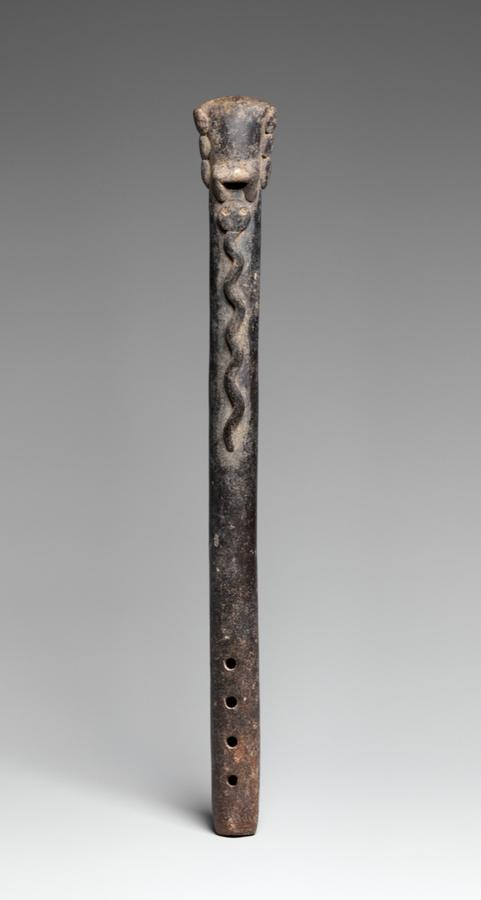
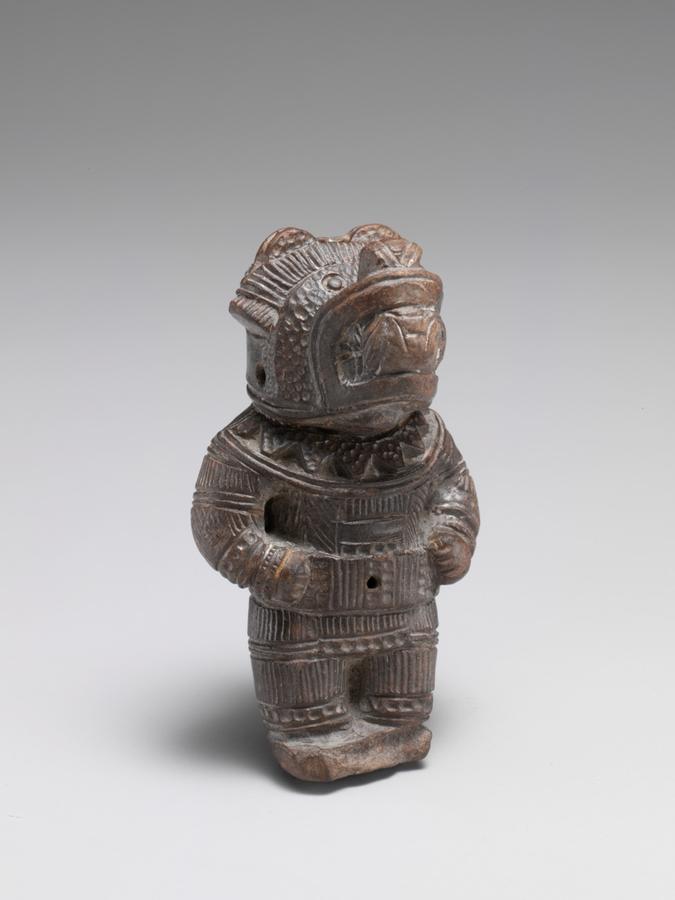
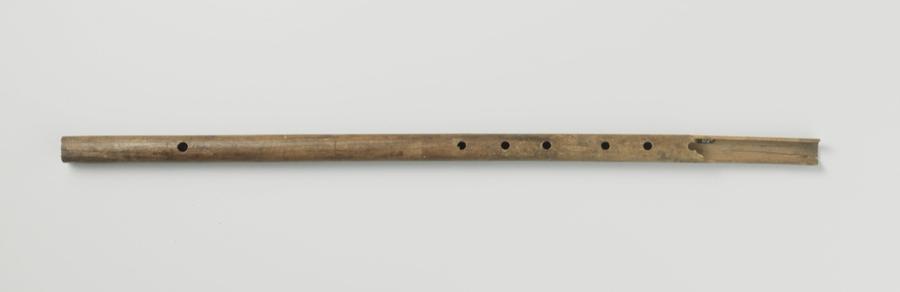
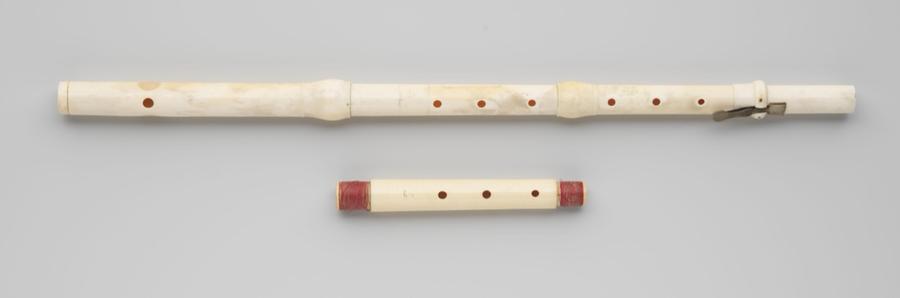
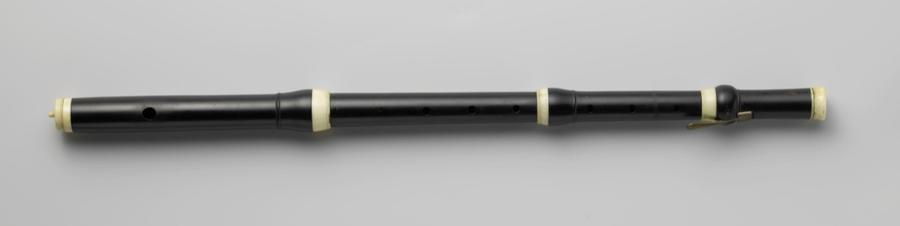
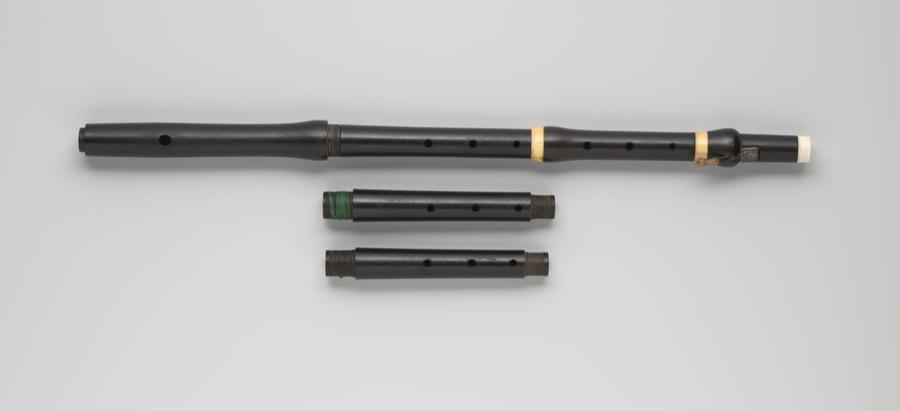
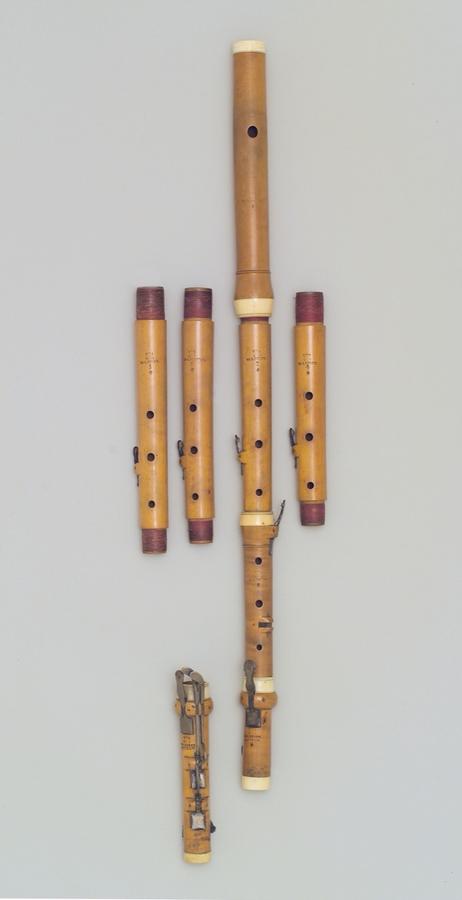
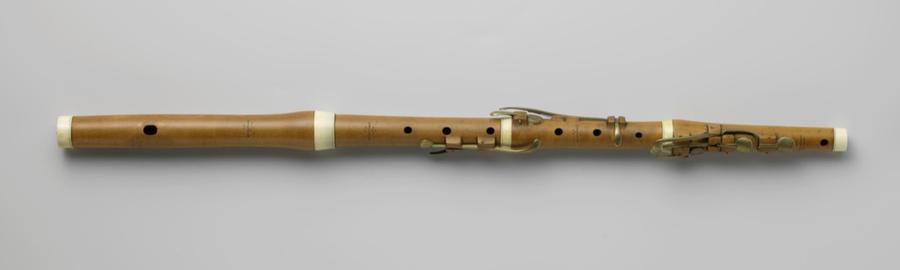
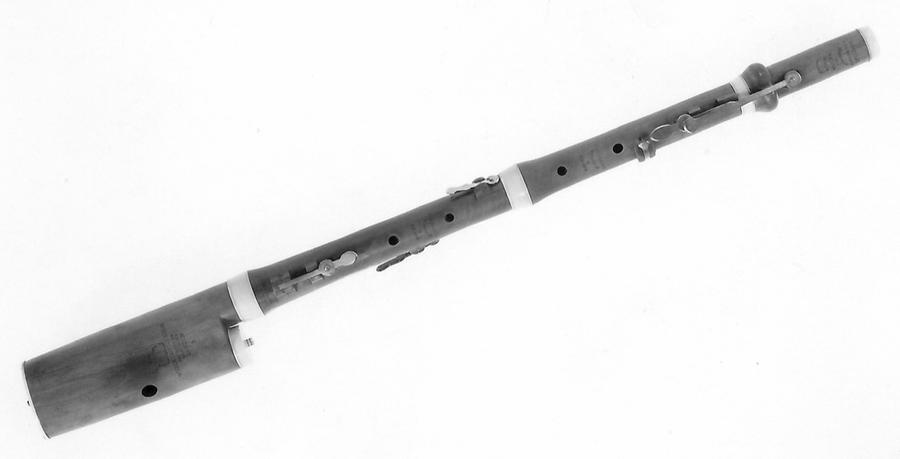
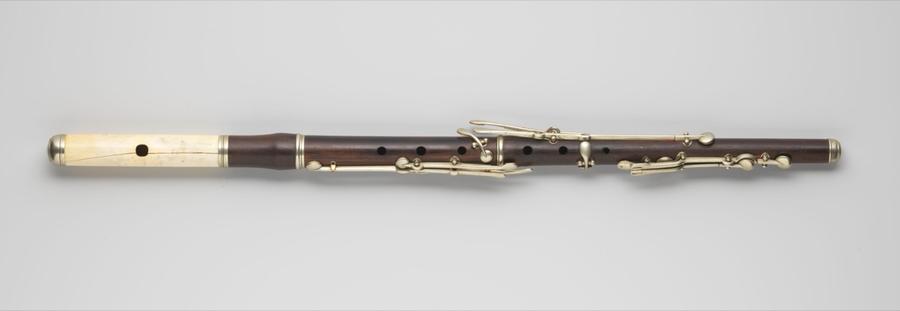
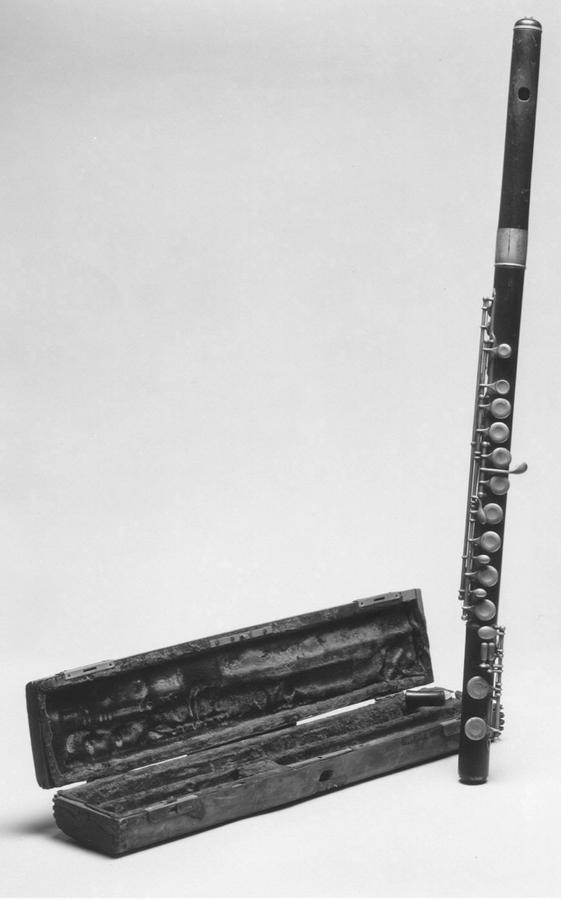
These 12 photographs span 200 BCE–1910, 12 places of origin and 2 museums. Every photograph is public domain or openly licensed, and links to the museum’s own record.
-
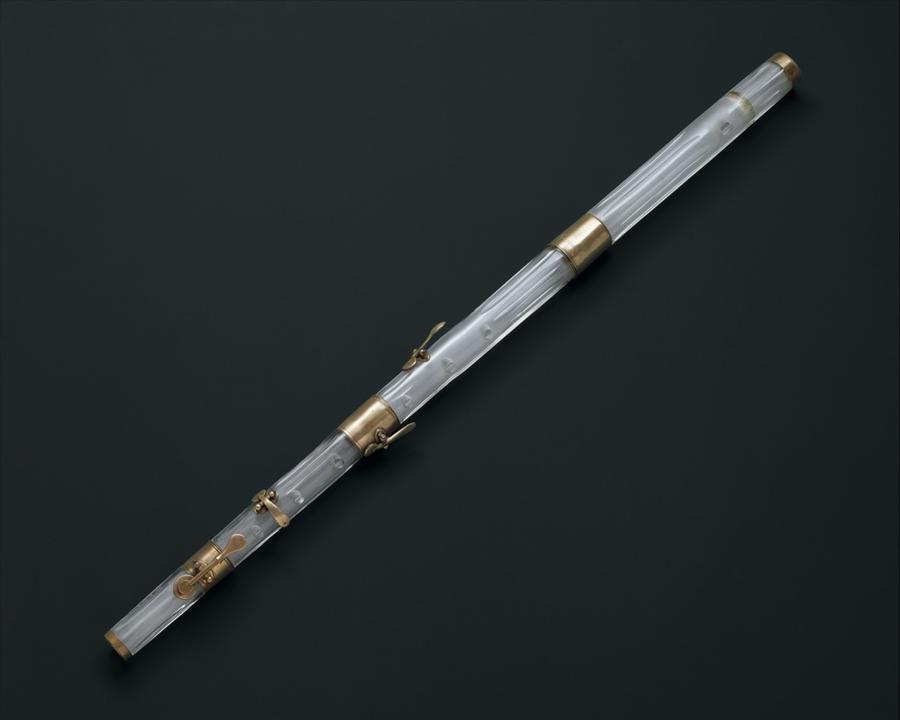
Transverse Flute in D-flat1813 · French (France) -
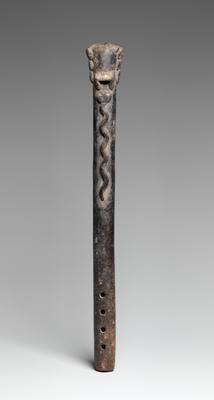
Flute200 BCE–100 CE · Colima (Mexico) -
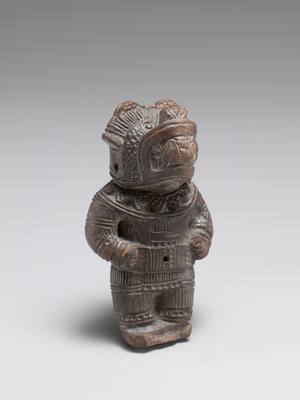
Flute1300–1500 · Tairona People; Gayraca style (Colombia) -
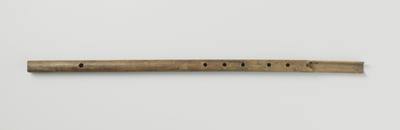
Flutec. 1590 - c. 1596 · Netherlands -
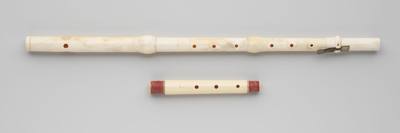
Flutec. 1700 - c. 1720 · Butzbach -
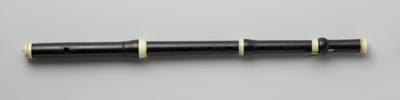
Flutec. 1770 · Copenhagen (city) -
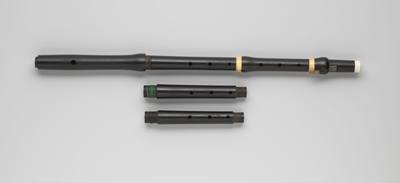
Flutec. 1772 - c. 1800 · Potsdam -
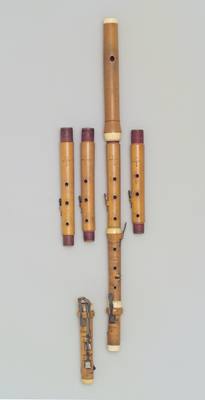
Transverse Fluteca. 1795 · Germany -
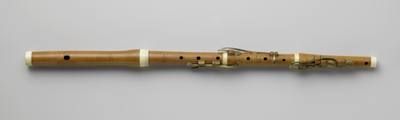
Flutec. 1810 · Göttingen -
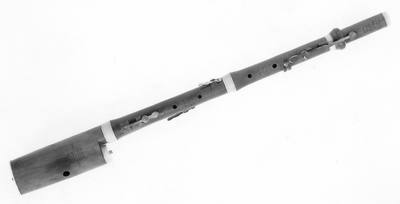
Transverse Flute in A1811–16 · British (United Kingdom) -
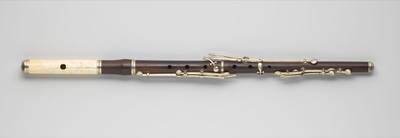
Flutec. 1860 · Hannover -
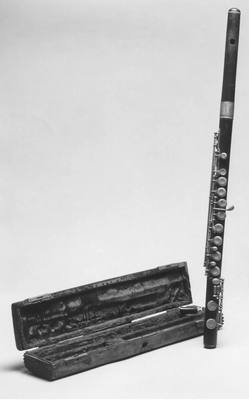
Transverse Fluteca. 1880–1900 · American (United States)
Facts at a glance
| Hornbostel–Sachs number | 421 |
|---|---|
| Hornbostel–Sachs group | Aerophones › Non-free aerophones (wind instruments proper) › Edge-blown aerophones or flutes |
| Also known as | edge-blown aerophones, transverse flute |
| Wikidata labels | 154 languages |
| Wikipedia article | Flute |
| Wikidata item | Q11405 |
| Wikimedia Commons category | Flutes |
| MusicBrainz instrument | 540280f1-d6cf-46bf-968b-695e99e216d7 |
| Encyclopaedia Britannica | art/flute-musical-instrument |
| Audio sample (Wikimedia Commons) | Flute.ogg |
Sources: Wikidata (CC0 1.0) — classification number, aliases, identifiers (dump of 2026-07-22); Wikipedia (CC BY-SA 4.0) — infobox fields (description of the classification number, development, inventors) and the names of the Hornbostel–Sachs groups (article “Hornbostel–Sachs”, revision of 2026-01-04).
The name in other languages
| Language | Name | Also written |
|---|---|---|
| English | flute | edge-blown aerophones, transverse flute, other flutes |
| French | flûte | autres flûtes |
| German | Flöte | andere Flöten |
| Spanish | flauta | otras flautas |
| Italian | flauto | flauti, aerofoni labiali |
| Portuguese | flauta | |
| Dutch | fluit | overige fluiten |
| Russian | флейта | |
| Japanese | 笛 | その他の笛, フリート |
| Chinese | 笛 | |
| Korean | 플루트 | |
| Arabic | فلوت | الفلوت, ناي, مزمار |
Sources: Wikidata (CC0 1.0) — labels and aliases; MusicBrainz (CC0 1.0) — instrument aliases (names only).
About the flute: history, construction and playing
The flute is a member of a family of musical instruments in the woodwind group. Like all woodwinds, flutes are aerophones, producing sound with a vibrating column of air. Flutes produce sound when the player's air flows across an opening. In the Hornbostel–Sachs classification system, flutes are edge-blown aerophones. A musician who plays the flute is called a flautist or flutist.
Paleolithic flutes with hand-bored holes are the earliest known identifiable musical instruments. A number of flutes dating to about 53,000 to 45,000 years ago have been found in the Swabian Jura region of present-day Germany, indicating a developed musical tradition from the earliest period of modern human presence in Europe. While the oldest flutes currently known were found in Europe, Asia also has a long history with the instrument. A playable bone flute discovered in China is dated to about 9,000 years ago. The Americas also had an ancient flute culture, with instruments found in Caral, Peru, dating back 5,000 years and in Labrador dating back about 7,500 years.
The bamboo flute has a long history, especially in China and India. Flutes have been discovered in historical records and artworks starting in the Zhou dynasty (c.1046–256 BC). The oldest written sources reveal the Chinese were using the kuan (a reed instrument) and xīao (an end-blown flute, often of bamboo) in the 12th–11th centuries BC, followed by the chi (or ch'ih) in the 9th century BC and the yüeh in the 8th century BC. Of these, the bamboo chi is the oldest documented transverse flute.
Etymology and terminology
The word flute first appeared in the English language during the Middle English period, as floute, flowte, or flo(y)te, possibly from Old French flaute and Old Provençal flaüt, or possibly from Old French fleüte, flaüte, flahute via Middle High German floite or Dutch fluit. The English verb flout has the same linguistic root, and the modern Dutch verb fluiten still shares the two meanings. Attempts to trace the word back to the Latin flare (to blow, inflate) have been called "phonologically impossible" or "inadmissable". The first known use of the word flute was in the 14th century. According to the Oxford English Dictionary, this was in Geoffrey Chaucer's The Hous of Fame, c. 1380.
A musician who plays any instrument in the flute family can be called a flutist, flautist, or flute player. Flutist dates back to at least 1603, the earliest quotation cited by the Oxford English Dictionary. Flautist was used in 1860 by Nathaniel Hawthorne in The Marble Faun, after being adopted during the 18th century from Italy (flautista, itself from flauto), like many musical terms in England since the Italian Renaissance. Other English terms, now virtually obsolete, are fluter (15th–19th centuries) and flutenist (17th and 18th centuries).
History
A fragment of a juvenile cave bear's femur, with two to four holes, was found at Divje Babe in Slovenia and dated to about 43,000 years ago. It may be the oldest flute discovered, but this has been disputed. In 2008, a flute dated to at least 35,000 years ago was discovered in Hohle Fels cave near Ulm, Germany. It is a five-holed flute with a V-shaped mouthpiece and was made from a vulture wing bone. The discovery was published in the journal Nature, in August 2009. This was the oldest confirmed musical instrument ever found, until a redating of flutes found in Geißenklösterle cave revealed them to be older, at 42,000 to 43,000 years.
The Hohle Fels flute is one of several found in the Hohle Fels cavern next to the Venus of Hohle Fels and a short distance from the oldest known human carving. On announcing the discovery, scientists suggested that the "finds demonstrate the presence of a well-established musical tradition at the time when modern humans colonized Europe". Scientists have also suggested that this flute's discovery may help to explain "the probable behavioural and cognitive gulf between" Neanderthals and early modern human.
An 18.7 cm flute with three holes, made from a mammoth tusk and dated to 30,000–37,000 years ago, was found in 2004 in the Geißenklösterle cave near Ulm, in the southern German Swabian Alb. Two flutes made from swan bones were excavated a decade earlier from the same cave and dated to about 36,000 years ago.
A playable 9,000-year-old Chinese Gudi (literally, "bone flute") was excavated from a tomb in Jiahu along with 29 similar specimens. They were made from the wing bones of red-crowned cranes and each has five to eight holes. The earliest extant Chinese transverse flute is a chi (篪) flute discovered in the Tomb of Marquis Yi of Zeng at the Suizhou site, Hubei province, China, dating from 433 BC, during the later Zhou dynasty. It is fashioned of lacquered bamboo with closed ends and has five stops on the flute's side instead of the top. Shi Jing, traditionally said to have been compiled and edited by Confucius, mentions chi flutes.
Acoustics
A flute produces sound when a stream of air directed across a hole in the instrument creates a vibration of air at the hole. The airstream creates a Bernoulli or siphon. This excites the air contained in the resonant cavity (usually cylindrical) within the flute. The flutist changes the pitch of the sound produced by opening and closing holes in the body of the instrument, thus changing the effective length of the resonator and its corresponding resonant frequency. By varying the air pressure, a flutist can also change the pitch by causing the air in the flute to resonate at a harmonic rather than the fundamental frequency without opening or closing any of the holes.
Head joint geometry appears particularly critical to acoustic performance and tone, but there is no clear consensus among manufacturers on a particular shape. Acoustic impedance of the embouchure hole appears the most critical parameter. Critical variables affecting this acoustic impedance include: the length of the chimney (the hole between the lip-plate and the head tube), chimney diameter, and radii or curvature of the ends of the chimney and any designed restriction in the "throat" of the instrument, such as that in the Japanese Nohkan flute.
A study in which professional flutists were blindfolded could find no significant differences between flutes made from a variety of metals. In two different sets of blind listening, no flute was correctly identified in a first listening, and in a second, only the silver flute was identified. The study concluded that there was "no evidence that the wall material has any appreciable effect on the sound color or dynamic range".
Materials
Historically, flutes were most commonly made of reed, bamboo, wood, or other organic materials. They were also made of glass, bone, and nephrite. Most modern flutes are made of metal, primarily silver and nickel. Silver is less common than silver alloys. Other materials used for flutes include gold, platinum, grenadilla and copper.
Types
In its most basic form, a flute is an open tube which is blown into. After focused study and training, players use controlled air-direction to create an airstream in which the air is aimed downward into the tone hole of the flute's headjoint. There are several broad classes of flutes. With most flutes, the musician blows directly across the edge of the mouthpiece, with 1/4 of their bottom lip covering the embouchure hole. However, some flutes, such as the whistle, gemshorn, flageolet, recorder, tin whistle, tonette, fujara, and ocarina have a duct that directs the air onto the edge (an arrangement that is termed a "fipple"). These are known as fipple flutes. The fipple gives the instrument a distinct timbre which is different from non-fipple flutes and makes the instrument easier to play, but takes a degree of control away from the musician.
Another division is between side-blown (or transverse) flutes, such as the Western concert flute, piccolo, fife, dizi and bansuri; and end-blown flutes, such as the ney, xiao, kaval, danso, shakuhachi, Anasazi flute and quena. The player of a side-blown flute uses a hole on the side of the tube to produce a tone, instead of blowing on an end of the tube. End-blown flutes should not be confused with fipple flutes such as the recorder, which are also played vertically but have an internal duct to direct the air flow across the edge of the tone hole.
Flutes may be open at one or both ends. The ocarina, xun, pan pipes, police whistle, and bosun's whistle are closed-ended. Open-ended flutes such as the concert flute and the recorder have more harmonics, and thus more flexibility for the player, and brighter timbres. An organ pipe may be either open or closed, depending on the sound desired.
Flutes may have any number of pipes or tubes, though one is the most common number. Flutes with multiple resonators may be played one resonator at a time (as is typical with pan pipes) or more than one at a time (as is typical with double flutes).
Flutes can be played with several different air sources. Conventional flutes are blown with the mouth, although some cultures use nose flutes. The flue pipes of organs, which are acoustically similar to duct flutes, are blown by bellows or fans.
Wooden one-keyed
Usually starting from d1, wooden transverse flutes were played in European classical music mainly in the period from the early 18th century to the early 19th century. As such, the instrument is often indicated as baroque flute. Gradually marginalized by the Western concert flute in the 19th century, baroque flutes were again played from the late 20th century as part of the historically informed performance practice.
Concert variants
The piccolo plays an octave higher than the regular treble flute. Lower members of the flute family include the G alto and C bass flutes that are used occasionally, and are pitched a perfect fourth and an octave below the concert flute, respectively. The contra-alto, contrabass, subcontrabass, double contrabass, and hyperbass flutes are other rare forms of the flute pitched up to four octaves below middle C.
Other sizes of flutes and piccolos are used from time to time. A rarer instrument of the modern pitching system is the G treble flute. Instruments made according to an older pitch standard, used principally in wind-band music, include D♭ piccolo, E♭ soprano flute (Keyed a minor 3rd above the standard C flute), F alto flute, and B♭ bass flute.
Breathing techniques
There are several means by which flautists breathe to blow air through the instrument and produce sound. They include diaphragmatic breathing and circular breathing. Diaphragmatic breathing optimizes inhalation, minimizing the number of breaths. Circular breathing brings air in through the nose and out through the mouth, enabling a continuous sound.
Source: Wikipedia, “Flute” — CC BY-SA 4.0 — text excerpted as published (references, images and tables removed); see the article for the full text and the list of authors. Revision of 2026-07-05.
From Grove’s Dictionary (1900)
FLUTE (Germ. Flöte, Querflöte; Ital. Flauto, Flauto traverso; Fr. Flûte, Flûte traversière). An ancient instrument used in every part of the world. It has always had two principal forms, the direct flute or Flute à bec, now developed into the Flageolet, and the German flute or Flûte traversière, which appears to have superseded it about 1720. There is however evidence of an intermediate instrument, partaking of the characters of both, which will be described farther on.
No instrument has undergone so many changes and improvements within the last half century as the Flute. The bore, instead of being conical, has been made cylindrical; the fingering and disposition of the keys have been entirely altered according to the system named after Boehm.
A variety of other Flutes, modified more or less from the old eight-keyed instrument or the Boehm system, are to be met with. Among these may be named those of Siccama, Clinton, and Carte. Their differences are chiefly mechanical. The main distinction between the older and the more modern instruments is the adoption of the cylindrical bore. There can be no doubt that this contrivance adds materially to the power of tone, and gives it a reedy quality closely approximating to that of the Clarinet. But it is a question if it does not to the same extent modify its peculiar orchestral character, and diminish its purity of intonation. This distinctive quality of tone has been shown by Helmholtz (Ellis's Tr. 113, 141, 172) to be peculiar, and free from most harmonic 'upper-partials' except the octaves.
Source: Wikisource, A Dictionary of Music and Musicians (Grove, 1900) — “Flute” (entry by William H. Stone) — Public domain (published 1879–1910; authors died before 1929) — the first paragraphs of the entry, as transcribed; see the page for the full entry.
Composers who played it
87 composers on this site list the flute as an instrument they played. A selection:
- Hector Berlioz 1803–1869
- Alexander Borodin 1833–1887
- Johann Stobäus 1580–1646
- Jacques-Martin Hotteterre 1673–1763
- Michel de la Barre 1675–1745
- Jean-Baptiste Loeillet of London 1680–1730
- Johann Christian Schickhardt 1680–1762
- Jean Baptiste Loeillet of Ghent 1688–1720
- Francesco Barsanti 1690–1775
- Michel Blavet 1700–1768
- Carlo Cecere 1706–1761
- Friedrich Wilhelm Riedt 1710–1783
Composers with a page on this site whose Wikidata record lists this instrument; featured and best-dated first. Data: Wikidata (property “instrument”, P1303), CC0 1.0.
Sources and licences
- Transverse Flute in D-flat, Claude Laurent, 1813, French (France). Glass, brass. The Crosby Brown Collection of Musical Instruments, 1889 (89.4.924). Museum record · CC0 1.0 (public domain dedication)
- Flute, 200 BCE–100 CE, Colima (Mexico). clay. Gift of Estate of Fong Chow, 2013 (2013.1132.1). Museum record · CC0 1.0 (public domain dedication)
- Flute, 1300–1500, Tairona People; Gayraca style (Colombia). Ceramic. Gift of Roberta Lee Boxer, 1984 (1984.507.1). Museum record · CC0 1.0 (public domain dedication)
- Flute, Anonymous, c. 1590 - c. 1596, Netherlands. wood (plant material). Rijksmuseum, Amsterdam. Museum record · Public Domain Mark 1.0
- Flute, Johannes Scherer, c. 1700 - c. 1720, Butzbach. ivory, silver (metal). Gift of the Ehrenfeld Foundation. Museum record · Public Domain Mark 1.0
- Flute, Peter Wasa Apelberg, c. 1770, Copenhagen (city). ivory, brass (alloy), ebony (wood). Purchased with the support of the State of the Netherlands and the Vereeniging van Noord-Nederlandsche Muziekgeschiedenis. Museum record · Public Domain Mark 1.0
- Flute, Friedrich Gabriel August Kirst, c. 1772 - c. 1800, Potsdam. silver (metal), ivory, ebony (wood). Gift of the Ehrenfeld Foundation. Museum record · Public Domain Mark 1.0
- Transverse Flute, Friedrich Gabriel August Kirst, ca. 1795, Germany. Boxwood, silver, ivory. Purchase, Robert Alonzo Lehman Bequest, 2005 (2005.279a–i). Museum record · CC0 1.0 (public domain dedication)
- Flute, Johann Heinrich Gottlieb Streitwolf, c. 1810, Göttingen. brass (alloy), ivory, boxwood (hardwood). Purchased with the support of the State of the Netherlands and the Vereeniging van Noord-Nederlandsche Muziekgeschiedenis. Museum record · Public Domain Mark 1.0
- Transverse Flute in A, Wigley & McGregor, 1811–16, British (United Kingdom). Wood, silver, ivory. The Crosby Brown Collection of Musical Instruments, 1889 (89.4.2030). Museum record · CC0 1.0 (public domain dedication)
- Flute, Heinrich Friedrich Meyer, c. 1860, Hannover. metal, rosewood (wood). Gift of the Ehrenfeld Foundation. Museum record · Public Domain Mark 1.0
- Transverse Flute, William R. Meinell, ca. 1880–1900, American (United States). Wood, nickel-silver. Gift of Walter J. Swords, 1989 (1989.345a, b). Museum record · CC0 1.0 (public domain dedication)
Photographs: open-access collections of the museums named above; each is shown here reduced in size, otherwise unchanged. Text: Wikipedia (CC BY-SA 4.0), Grove’s Dictionary (public domain), Wikidata and MusicBrainz (CC0). The full list of sources and licences is on the credits page.