
Instruments · Aerophones
Piccolo
The piccolo is a small flute that plays one octave higher than the normal flute. It sounds an octave higher than written. It is the highest instrument in the orchestra. Sometimes it sounds like a birdcall. The name 'piccolo' comes from the Italian word meaning 'small'.
Summary: Simple English Wikipedia, “Piccolo” — CC BY-SA 4.0. Revision of 2025-09-08.
Museum photographs
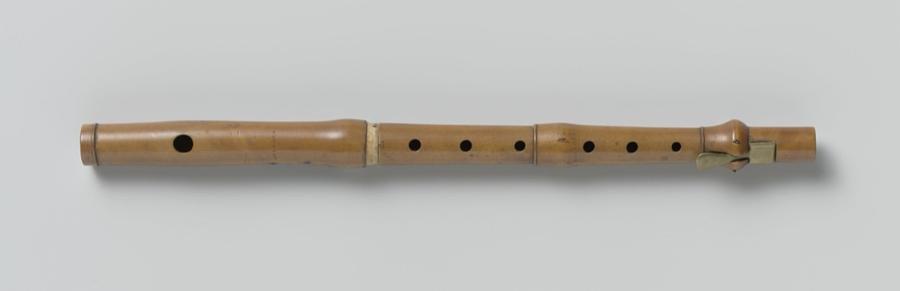
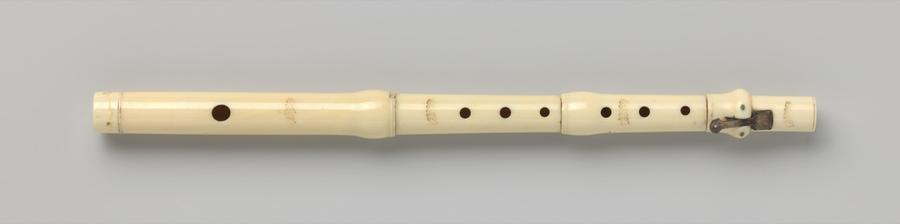
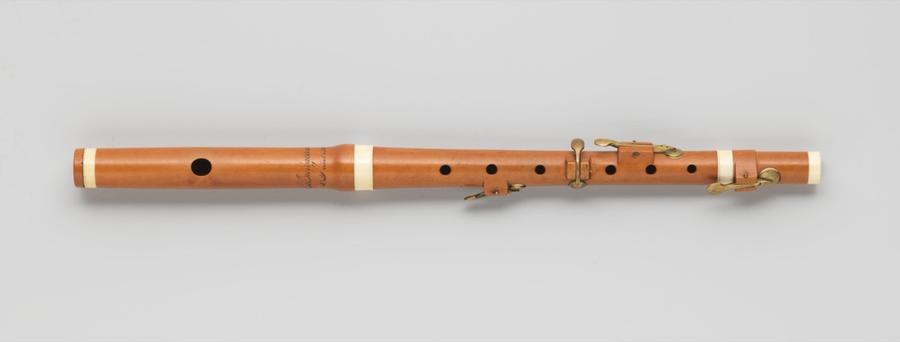
These 6 photographs span 1700–1830, 5 places of origin and 1 museum. Every photograph is public domain or openly licensed, and links to the museum’s own record.
-
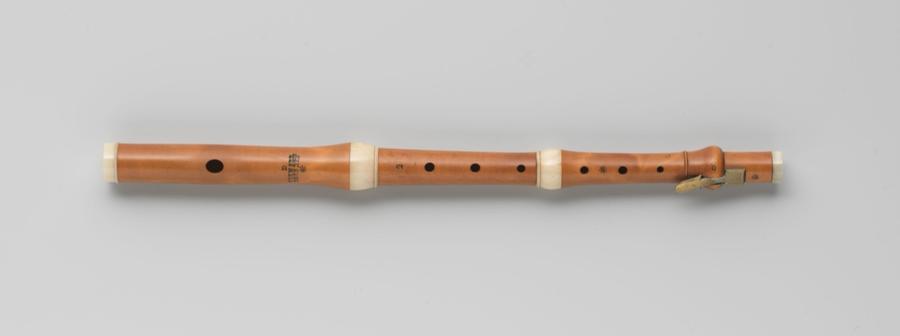
Piccoloc. 1800 · Dresden -
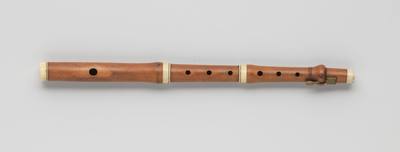
Piccolo1700 - 1799 · unknown -
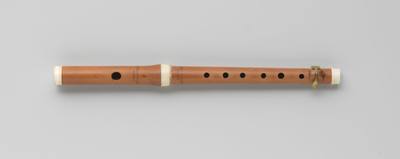
Piccoloc. 1800 · Northampton (Engeland) -
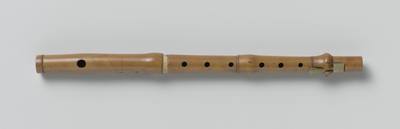
Piccoloc. 1800 · Dresden -
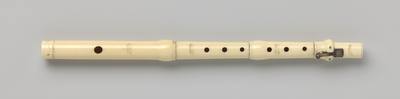
Piccoloc. 1815 · London -
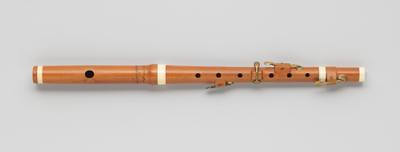
Piccoloc. 1830 · Amsterdam
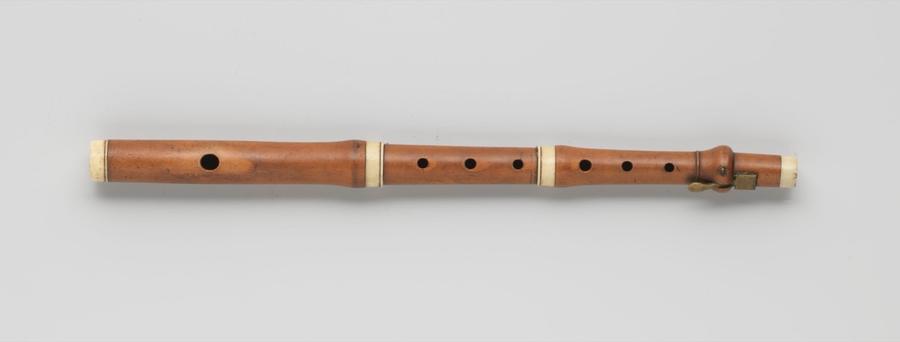
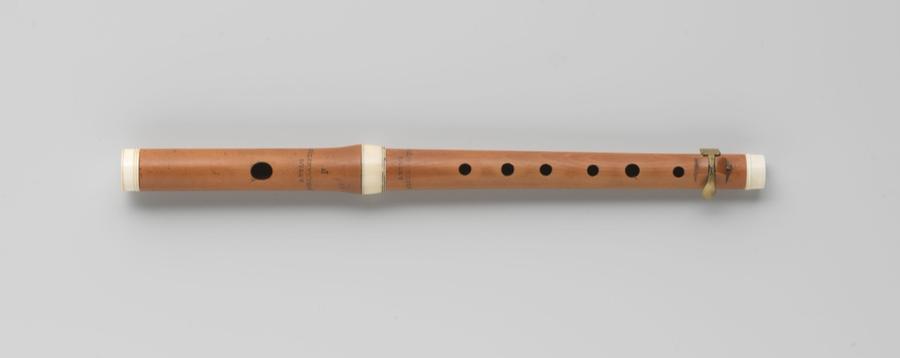
Facts at a glance
| Hornbostel–Sachs number | 421.121.12-71 — Flute-like aerophone with keys |
|---|---|
| Hornbostel–Sachs group | Aerophones › Non-free aerophones (wind instruments proper) › Edge-blown aerophones or flutes |
| Wikidata labels | 62 languages |
| Wikipedia article | Piccolo |
| Wikidata item | Q83509 |
| Wikimedia Commons category | Piccolo |
| MusicBrainz instrument | d01ae816-0567-4520-8fcb-8d3b71ef4bdf |
| Encyclopaedia Britannica | art/piccolo |
Sources: Wikidata (CC0 1.0) — classification number, aliases, identifiers (dump of 2026-07-22); Wikipedia (CC BY-SA 4.0) — infobox fields (description of the classification number, development, inventors) and the names of the Hornbostel–Sachs groups (article “Hornbostel–Sachs”, revision of 2026-01-04).
The name in other languages
| Language | Name | Also written |
|---|---|---|
| English | piccolo | |
| French | piccolo | petite flûte |
| German | Piccoloflöte | Pikkoloflöte, Piccolo, Kleine Flöte |
| Spanish | flautín | flauta picolo, flauta piccolo, flauta pícolo |
| Italian | ottavino | flauto piccolo, piccolino, ottavini |
| Portuguese | flautim | Piccolo |
| Dutch | piccolo | Sopranino |
| Russian | флейта-пикколо | Малая флейта, Флейта пикколо |
| Japanese | ピッコロ | |
| Chinese | 短笛 | |
| Korean | 피콜로 | |
| Arabic | سرناي | بيكولو |
Sources: Wikidata (CC0 1.0) — labels and aliases; MusicBrainz (CC0 1.0) — instrument aliases (names only).
About the piccolo: history, construction and playing
The piccolo is a smaller version of the western concert flute and a member of the woodwind family of musical instruments. Sometimes referred to as a "baby flute" or piccolo flute, the modern piccolo has the same type of fingering as the standard transverse flute, but the sound it produces is an octave higher. This has given rise to the name ottavino, by which the instrument is called in Italian and thus also in scores of Italian composers.
Piccolos are often orchestrated to double the violins or the flutes, adding sparkle and brilliance to the overall sound because of the aforementioned one-octave transposition upwards. The piccolo is a standard member in orchestras, marching bands, and wind ensembles.
History
Since the Middle Ages, evidence indicates the use of octave transverse flutes as military instruments, as their penetrating sound was audible above battles. In cultured music, however, the first piccolos were used in some of Jean Philippe Rameau's works in the first half of the 18th century. Still, the instrument began to spread, and therefore to have a stable place in the orchestra, only at the beginning of 1800 A.D. During the Baroque period, the indication "flautino" or also "flauto piccolo" usually denoted a recorder of small size (soprano or sopranino). In particular, this is the case of the concertos that Antonio Vivaldi wrote for flautino.
Until the end of the 19th century, the piccolo maintained the same construction. Historically, the piccolo had the same keys of the baroque flute (one key) and then of the classical and romantic simple system flute. At the end of the century, the piccolo began to be built with the Boehm mechanism, which would become the standard during the 1900s. However, it cannot wholly transition to the Boehm system since the bore has remained conical, as in the old system flute, and the first bottom note is D, like in the baroque flute. The piccolo should not be confused with the fife, which is traditionally one-piece, has a smaller, cylindrical bore, and produces a more strident sound.
Traditional use
It is a myth that one of the earliest pieces to use the piccolo was Ludwig van Beethoven's Symphony No. 5 in C Minor, which premiered in December 1808. Although neither Joseph Haydn nor Wolfgang Amadeus Mozart used it in their symphonies, some of their contemporaries did, including Franz Anton Hoffmeister, Franz Xaver Süssmayr, and Michael Haydn. Also, Mozart used the piccolo in his opera Idomeneo. Gioachino Rossini later featured the instrument prominently in the overture to his opera Semiramide. Opera orchestras in Paris sometimes included small transverse flutes at the octave as early as 1735 as existing scores by Jean-Philippe Rameau show.
Piccolos are now mainly manufactured in the key of C or D. In the early 20th century, piccolos were manufactured in D♭ as they were an earlier model of the modern piccolo. For this D♭ piccolo, John Philip Sousa wrote the solo in the final repeat of the closing section (trio) of his march "The Stars and Stripes Forever".
Although once made of wood, glass, or ivory, piccolos today are made from plastic, resin, brass, nickel silver, silver, and a variety of hardwoods, most commonly grenadilla. Finely made piccolos are often available with a variety of options similar to the flute, such as the split-E mechanism. Most piccolos have a conical body with a cylindrical head, like the Baroque flute and later flutes before the popularization of the Boehm bore used in modern flutes. Unlike other woodwind instruments, in most wooden piccolos, the tenon joint that connects the head to the body has two interference fit points surrounding the cork and metal side of the piccolo body joint.
The piccolo is used alongside marching drums in traditional formations at the Carnival of Basel, Switzerland.
In 2014, a festival was born entirely dedicated to the piccolo, the International Piccolo Festival, which takes place annually in July in Grado, Italy.
Source: Wikipedia, “Piccolo” — CC BY-SA 4.0 — text excerpted as published (references, images and tables removed); see the article for the full text and the list of authors. Revision of 2026-05-29.
From Grove’s Dictionary (1900)
PICCOLO (i.e. Italian for 'little'), an abbreviation for Flauto Piccolo, usually applied to the Octave Flute, otherwise called Ottavino, from its tonal relation to the larger instruments, of which it occupies the superior octave. Small flutes and fifes have been made in many keys; those now most commonly in use are the D and E♭ piccolos. The former name is correct; it being the super-octave of the ordinary flute, which has been shown to stand in the key of D. The D piccolo, however, is not furnished with the adventitious keys of C, B♮ (and sometimes B♭), which give the flute three or four semitones below its natural keynote. The so-called E♭ piccolo is really in D♭, as can be easily demonstrated by attempting to play on it music written for the E♭ clarinet, which actually stands in the key named; when it will be found to differ by a whole tone. The French scorers very properly term it 'Petite flute en Ré♭.' Its use is now entirely limited to military bands, which habitually play in flat keys. The peculiar tonality thus adopted expunges five flats from the signature; enabling the instrument to avoid many mechanical difficulties, and to range around the lower sharp and flat keys from D to E♭, in which its intonation is most correct.
Its compass is from D or D♭ within the treble stave to at least A in altissimo (2 octaves and 5 notes), or even higher in the hands of a good player. It is customary to write for it an octave lower than the sound really produced.
It is, with the exception of the higher harmonic notes of the violin, by far the most acute instrument used in orchestral music; its sounds being much more powerful and piercing than the corresponding notes developed by a string. On the other hand, its lowest octave is feeble and devoid of character.
Source: Wikisource, A Dictionary of Music and Musicians (Grove, 1900) — “Piccolo” (entry by William H. Stone) — Public domain (published 1879–1910; authors died before 1929) — the first paragraphs of the entry, as transcribed; see the page for the full entry.
Sources and licences
- Piccolo, Carl August II Grenser, c. 1800, Dresden. boxwood (hardwood), ivory, brass (alloy). Gift of Elly Lammers and Gerrit van der Veer, Lelystad. Museum record · Public Domain Mark 1.0
- Piccolo, Anonymous, 1700 - 1799, unknown. metal, rosewood (wood). Gift of the Ehrenfeld Foundation. Museum record · Public Domain Mark 1.0
- Piccolo, c. 1800, Northampton (Engeland). boxwood (hardwood), brass (alloy), ivory. Gift of Elly Lammers en Gerrit van der Veer, Lelystad. Museum record · Public Domain Mark 1.0
- Piccolo, Anonymous, c. 1800, Dresden. boxwood, wood (plant material). Purchased with the support of the State of the Netherlands and the Vereeniging van Noord-Nederlandsche Muziekgeschiedenis. Museum record · Public Domain Mark 1.0
- Piccolo, c. 1815, London. ivory, silver (metal). On loan from the Kunstmuseum Den Haag. Museum record · Public Domain Mark 1.0
- Piccolo, c. 1830, Amsterdam. boxwood, brass (alloy), ivory. Rijksmuseum, Amsterdam. Museum record · Public Domain Mark 1.0
Photographs: open-access collections of the museums named above; each is shown here reduced in size, otherwise unchanged. Text: Wikipedia (CC BY-SA 4.0), Grove’s Dictionary (public domain), Wikidata and MusicBrainz (CC0). The full list of sources and licences is on the credits page.