
Instruments · Chordophones
Pochette
The pochette is a small stringed instrument of the bowed variety. It is a small violin-like instrument designed to fit in a pocket, hence the name "pochette" (French for small pocket).
Also known as a pocket fiddle, it was designed to be used by dance masters in royal courts and noble households, and by street musicians, from about the 15th century until around the 19th century, becoming especially popular in the 1800s. Prior, the rebec was used in a similar way, and some modern pochettes descend from the rebec instead of the violin family.
Summary: Wikipedia, “Pochette (musical instrument)” — CC BY-SA 4.0. Revision of 2026-02-24.
Museum photographs
These 8 photographs span 1600–1813, 5 places of origin and 2 museums. Every photograph is public domain or openly licensed, and links to the museum’s own record.
-
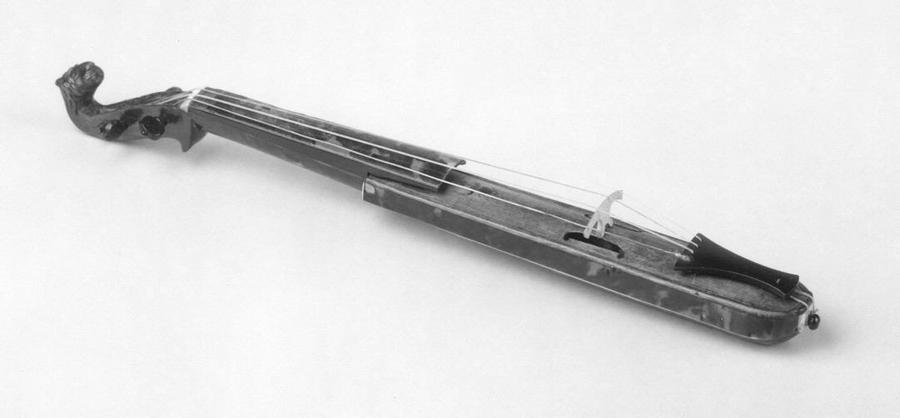
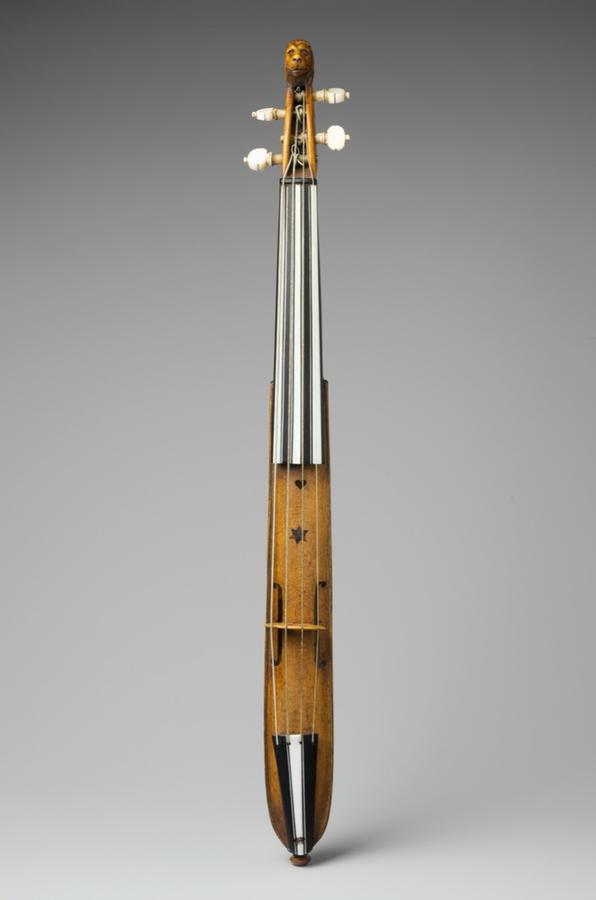
Pochette17th century · Germany -
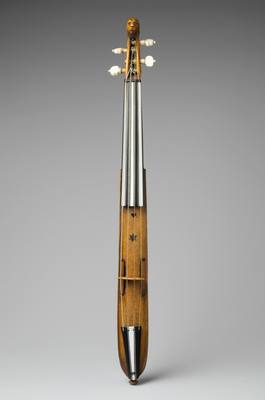
Pochette1670s · Germany -
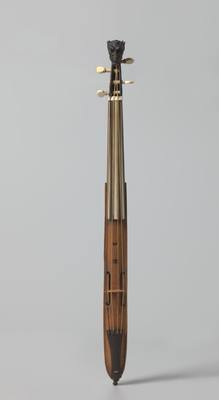
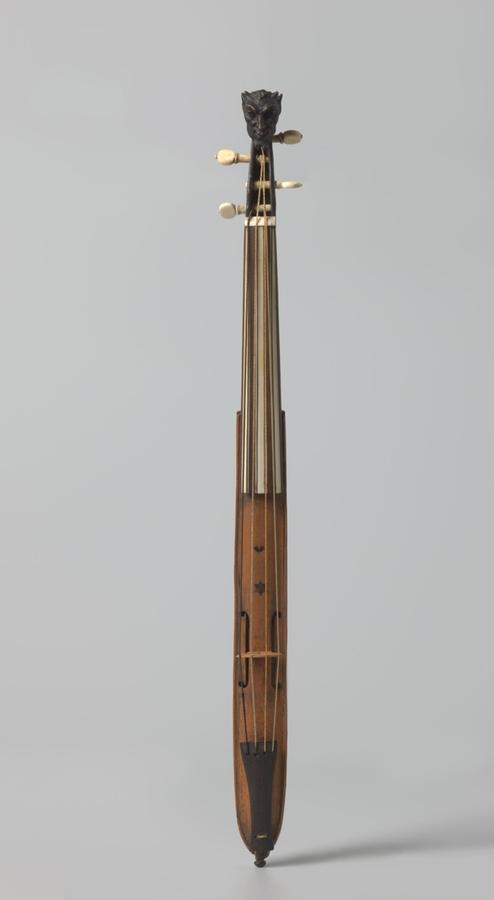
Pochette1671 · Augsburg -
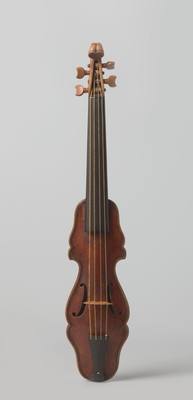
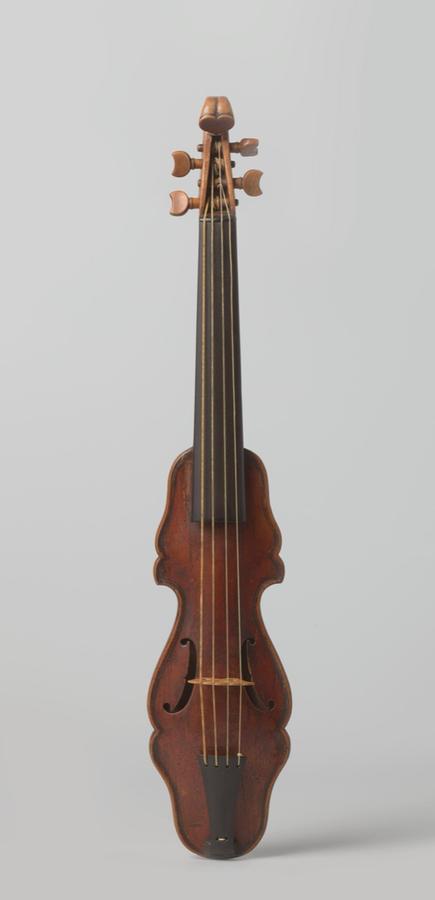
Pochettec. 1690 - c. 1710 · Amsterdam -
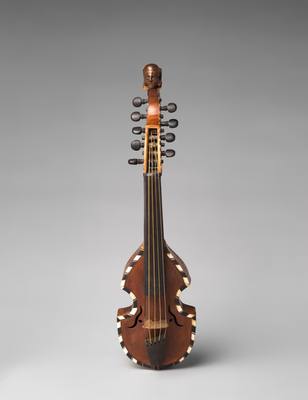
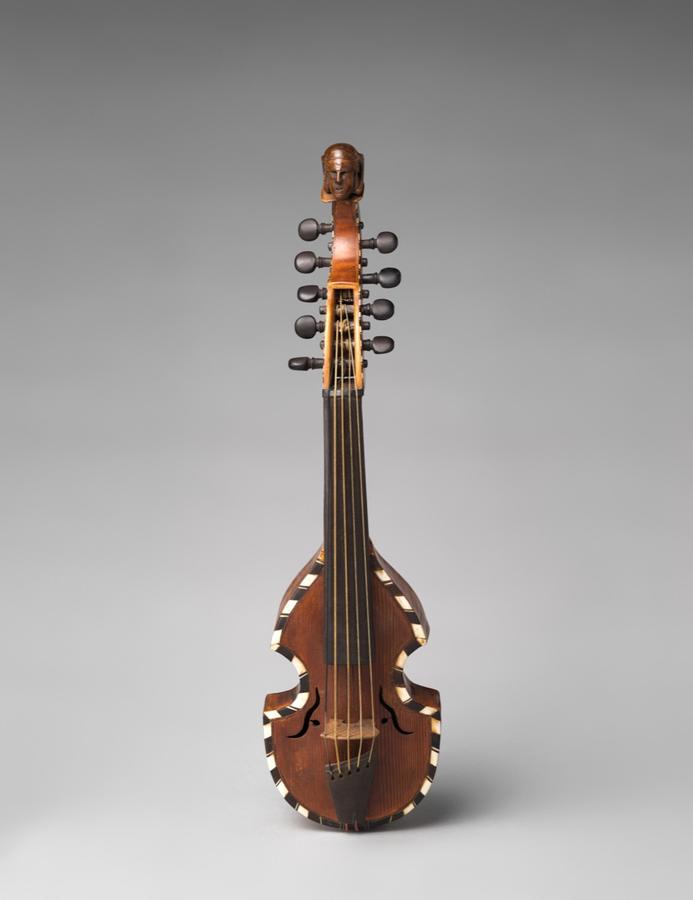
Pochette d'Amore18th century · French (France) -
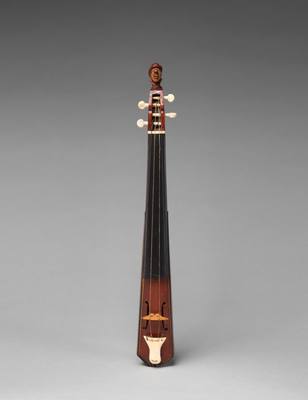
Pochette18th century · French (France) -
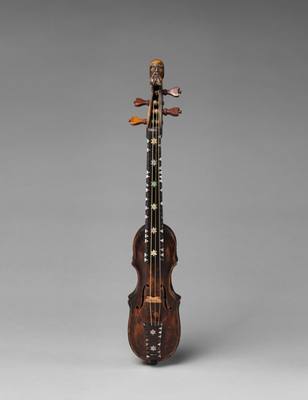
Pochettelate 18th century? · possibly Italian (Italy?) -
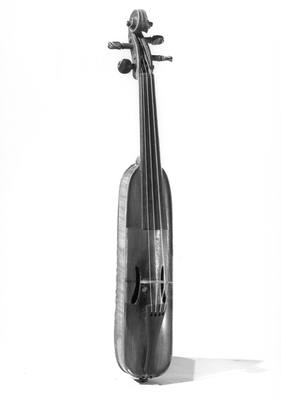
Pochette1813 · Germany
Facts at a glance
| Hornbostel–Sachs number | 321.322-71 |
|---|---|
| Hornbostel–Sachs group | Chordophones › Composite chordophones › Lutes |
| Also known as | kit violin, sardino, pocket fiddle |
| Classification (Wikipedia infobox) | Bowed string instrument |
| Wikidata labels | 22 languages |
| Wikipedia article | Pochette (musical instrument) |
| Wikidata item | Q1094813 |
| Wikimedia Commons category | Pochettes |
Sources: Wikidata (CC0 1.0) — classification number, aliases, identifiers (dump of 2026-07-22); Wikipedia (CC BY-SA 4.0) — infobox fields (description of the classification number, development, inventors) and the names of the Hornbostel–Sachs groups (article “Hornbostel–Sachs”, revision of 2026-01-04).
The name in other languages
| Language | Name | Also written |
|---|---|---|
| English | pochette | kit violin, sardino, pocket fiddle |
| French | Pochette | |
| German | Tanzmeistergeige | Taschengeige |
| Spanish | pochette | Violín pochette |
| Italian | pochette | |
| Portuguese | Pochette | |
| Dutch | Dansmeesterviool | Zakviool |
| Russian | пошетта | Пошет |
| Korean | 포셰트 |
Sources: Wikidata (CC0 1.0) — labels and aliases; MusicBrainz (CC0 1.0) — instrument aliases (names only).
About the pochette: history, construction and playing
The pochette is a small stringed instrument of the bowed variety. It is a small violin-like instrument designed to fit in a pocket, hence the name "pochette" (French for small pocket).
Also known as a pocket fiddle, it was designed to be used by dance masters in royal courts and noble households, and by street musicians, from about the 15th century until around the 19th century, becoming especially popular in the 1800s. Prior, the rebec was used in a similar way, and some modern pochettes descend from the rebec instead of the violin family.
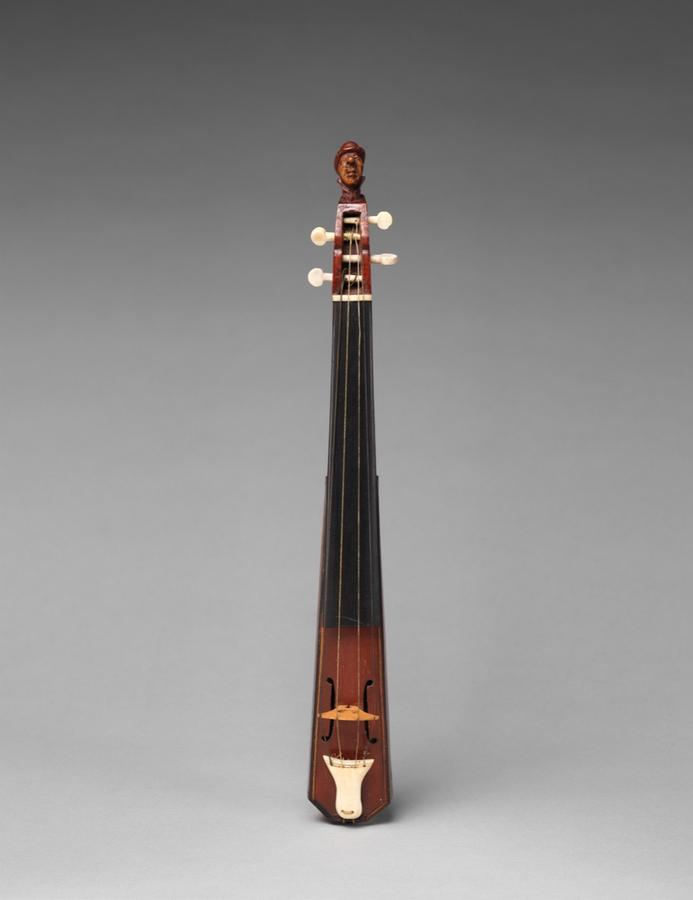
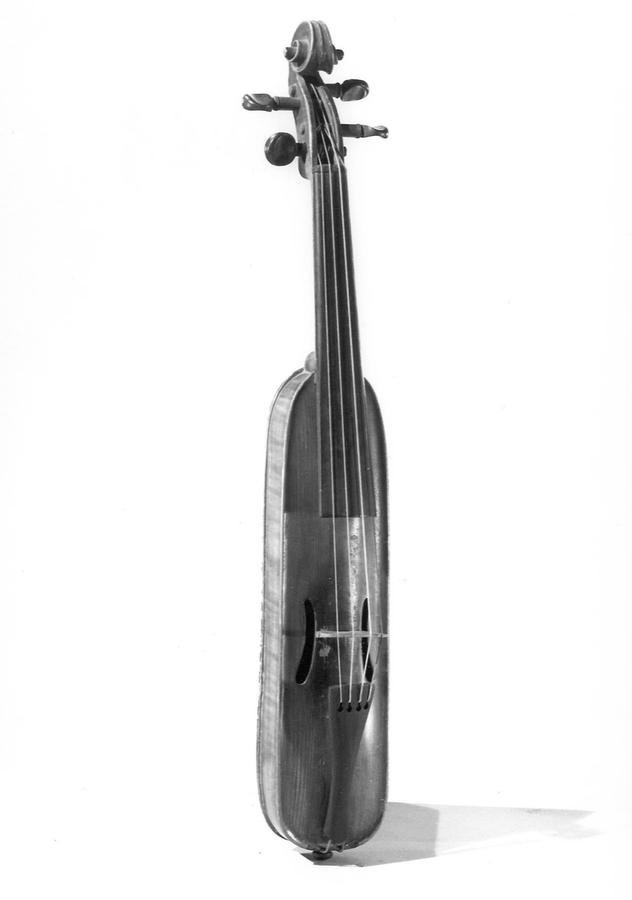
A common misconception is that pochettes were intended for children, when in fact they were conceived for adults; their small size allowed them to be used where the larger violins were too cumbersome to carry, or too expensive to own. The instrument's body is very small, but its fingerboard is long relative to the instrument's overall size, to preserve as much of the instrument's melodic range as possible. Pochettes come in many shapes, with the narrow boat-shaped ones called "sardinos" being one of the most common, along with the pear-shaped type. A pochette shaped like a violin is called a "kit violin" or just "kit".
Etymology
Trichet is said to have described the pochette's leather carrying case as a poche. Similarly, Mersenne wrote that it was common practice among pochette players (such as traveling minstrels or dance teachers) to carry the instrument in a pocket. The word "kit" possibly arose from an abbreviation of the word "pocket" to "-cket" and subsequently "kit"; alternatively, it may be a corruption of "cittern" (κιθάρα). The word "Kit" is believed to have first been used in the first quarter of the 16th century England where it was mentioned in Interlude of the Four Elements by John Rastell, c. 1517. It is possible that the word "kit" originally referred to a small rebec, which was used in the same manner at the time in England, but came to belong to the violin-shaped pochettes later on as it replaced the rebec.
History
Many fiddlers in the 18th century used pochettes because of their portability. The pochette or pocket fiddle was used by dance masters not only during dances, but when teaching as well.
The great luthier Antonio Stradivari is known to have made a few pochettes in his career; two are known to have survived to modern times, one possibly in bad shape, and the other on display at the Conservatoire de Paris Museum.
Sound
The pochette tends to be tuned one octave above a violin. The three-string variant specifically tends to be tuned the highest.
Claudio Monteverdi used the "chirp" sound of the pochette to suggest bird song in his aria "Ecco pur ch'a voi ritorno" from the 1607 opera L'Orfeo. In the opera they are called violini piccoli alla francese ("small French violins").
The Fellowship of Makers and Restorers of Historical Instruments has expressed that even with a sound post a violin cannot imitate the sound of a pochette enough for the two to be considered the same.
Design
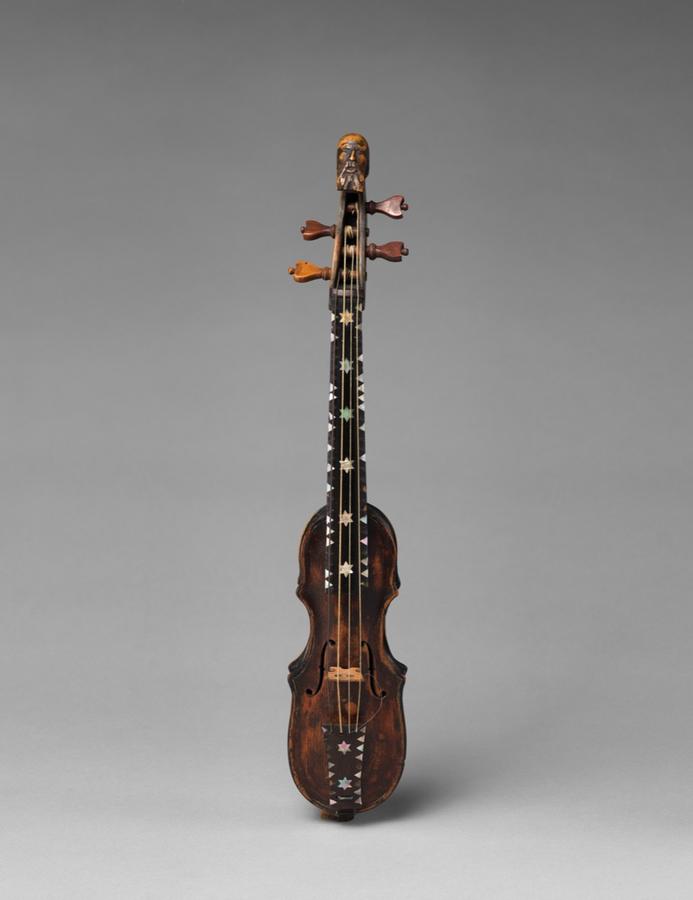
Due to being an essential feature of court entertainment and dance, pochettes were often made of expensive materials such as exotic woods, tortoise shells or ivory, as well as being decorated with elaborate carvings.
A pochette shaped like a boat is called a sardino (or Tanzmeistergeige in Germany), while a violin-shaped one is called a kit.
In general pochettes have a narrower body and longer neck in overall relation to its size compared to other bowed string instruments. They often lack frets and have either four or three strings. They also often have a distinctly vaulted and arched back. A pochette is distinguishable from the rest of the violin family due to the fact that the neck is a prolongation of the body, instead of simply being attached to it.
The Fellowship of Makers and Restorers of Historical Instruments has expressed that a pochette's strings ought not to be longer than 10 in.
Source: Wikipedia, “Pochette (musical instrument)” — CC BY-SA 4.0 — text excerpted as published (references, images and tables removed); see the article for the full text and the list of authors. Revision of 2026-02-24.
Sources and licences
- Pochette, Matthias Wörle, 17th century, Germany. Wood, tortoiseshell, other materials. Purchase, Mr. and Mrs. Thomas A. Cassilly Gift, 1991 (1991.248). Museum record · CC0 1.0 (public domain dedication)
- Pochette, Georg Wörle, 1670s, Germany. Spruce, ebony, ivory, gut. Purchase, Robert Alonzo Lehman Bequest, 2004 (2004.308). Museum record · CC0 1.0 (public domain dedication)
- Pochette, Georg Wörle, 1671, Augsburg. intestine, wood (plant material). On loan from the Gemeentemuseum Den Haag. Museum record · Public Domain Mark 1.0
- Pochette, c. 1690 - c. 1710, Amsterdam. wood (plant material). Purchased with the support of the State of the Netherlands and the Vereeniging van Noord-Nederlandsche Muziekgeschiedenis. Museum record · Public Domain Mark 1.0
- Pochette d'Amore, 18th century, French (France). wood, ivory. The Crosby Brown Collection of Musical Instruments, 1889 (89.4.963). Museum record · CC0 1.0 (public domain dedication)
- Pochette, 18th century, French (France). wood, ivory. The Crosby Brown Collection of Musical Instruments, 1889 (89.4.971). Museum record · CC0 1.0 (public domain dedication)
- Pochette, late 18th century?, possibly Italian (Italy?). Wood, mother-of-pearl. Gift of Miss Alice Getty, 1946 (46.34.20). Museum record · CC0 1.0 (public domain dedication)
- Pochette, 1813, Germany. Wood. The Crosby Brown Collection of Musical Instruments, 1889 (89.4.2400). Museum record · CC0 1.0 (public domain dedication)
Photographs: open-access collections of the museums named above; each is shown here reduced in size, otherwise unchanged. Text: Wikipedia (CC BY-SA 4.0), Wikidata and MusicBrainz (CC0). The full list of sources and licences is on the credits page.