
Instruments · Chordophones
Rebec
The rebec is a bowed string musical instrument that was played many hundreds of years ago. It was either held under the chin, like a violin, or held against the arm. The name “rebec” was spelt in a variety of ways.
Summary: Simple English Wikipedia, “Rebec” — CC BY-SA 4.0. Revision of 2025-04-23.
Museum photographs
These 3 photographs span 1701–1900, 2 places of origin and 1 museum. Every photograph is public domain or openly licensed, and links to the museum’s own record.
-
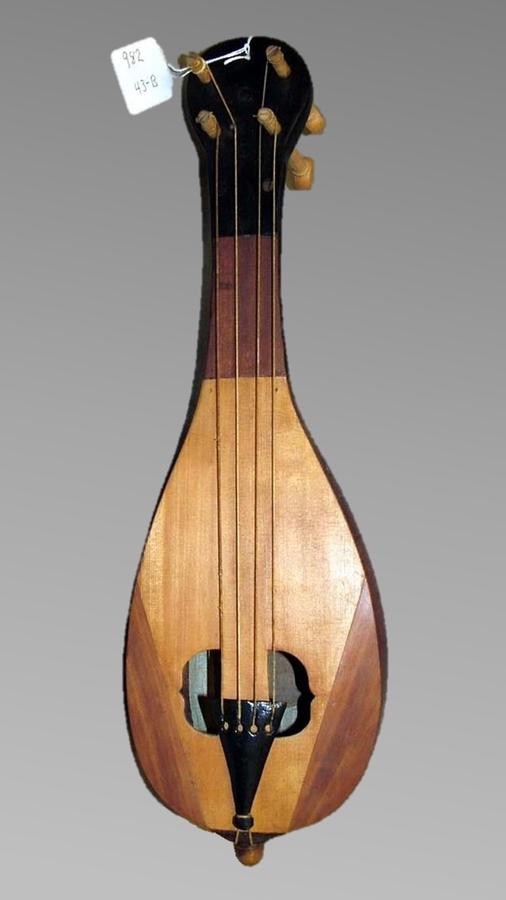
Rebeclate 19th century · Greek (Greece) -
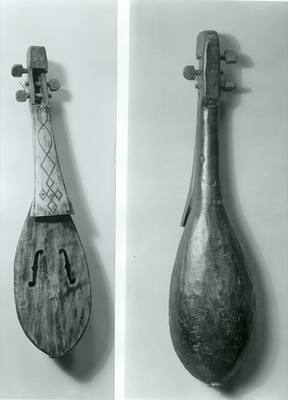
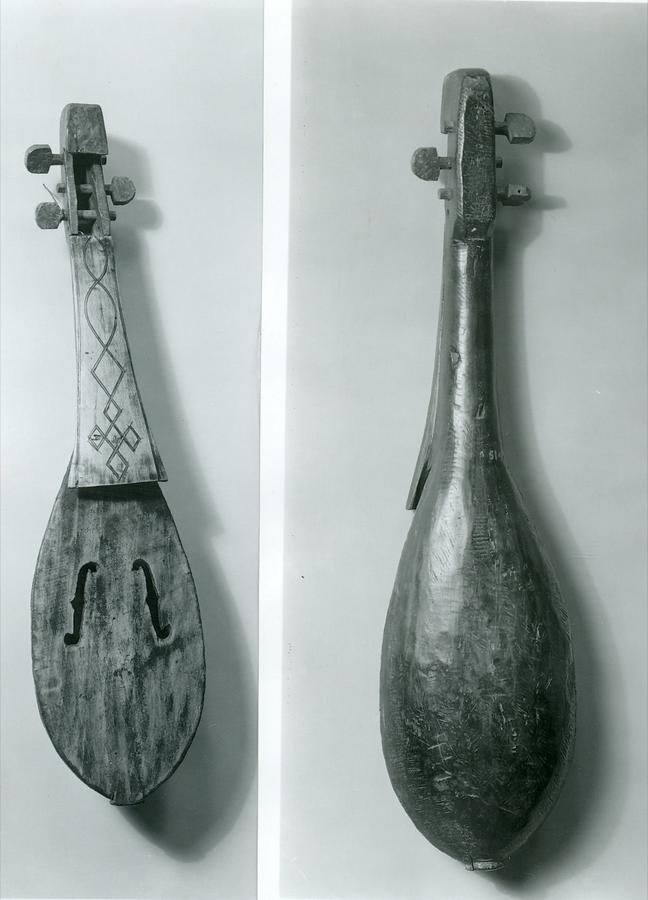
Rebec18th century · Spanish? (Spain?) -
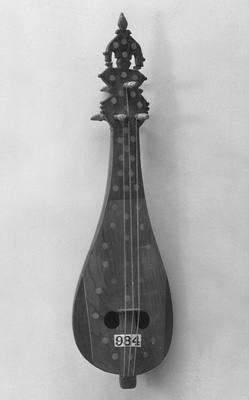
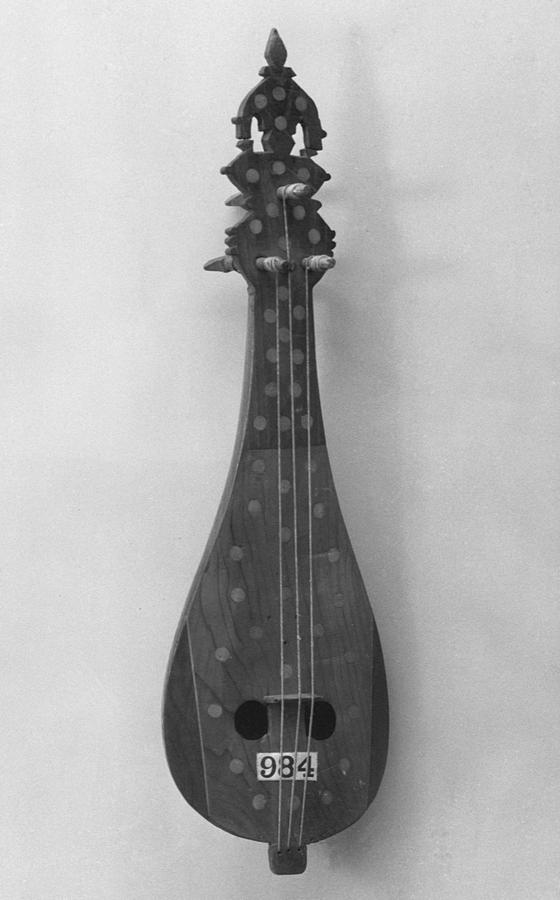
Rebec19th century · Cretan (Greece)
Facts at a glance
| Hornbostel–Sachs number | 321.321-71 — Bowl lyre sounded by a bow |
|---|---|
| Hornbostel–Sachs group | Chordophones › Composite chordophones › Lutes |
| Also known as | patchi, rebecha, rebeckha |
| Classification (Wikipedia infobox) | Bowed string instruments |
| Developed | Middle Ages |
| Wikidata labels | 31 languages |
| Wikipedia article | Rebec |
| Wikidata item | Q737520 |
| Wikimedia Commons category | Rebec |
| MusicBrainz instrument | 3f7302e4-f10f-4905-8d71-ef61141da383 |
| Encyclopaedia Britannica | art/rebec |
Sources: Wikidata (CC0 1.0) — classification number, aliases, identifiers (dump of 2026-07-22); Wikipedia (CC BY-SA 4.0) — infobox fields (description of the classification number, development, inventors) and the names of the Hornbostel–Sachs groups (article “Hornbostel–Sachs”, revision of 2026-01-04).
The name in other languages
| Language | Name | Also written |
|---|---|---|
| English | rebec | patchi, rebecha, rebeckha |
| French | rebec | Rabāb, Rébec |
| German | Rebec | Rubeba, Rebek, Rebeck |
| Spanish | rabel | Rabeba, Arrabé, Rabeua |
| Italian | ribeca | |
| Portuguese | rabeca | Rabequista |
| Dutch | rebec | |
| Russian | Ребек | |
| Japanese | レベック | ラベイカ |
Sources: Wikidata (CC0 1.0) — labels and aliases; MusicBrainz (CC0 1.0) — instrument aliases (names only).
About the rebec: history, construction and playing
The rebec (sometimes rebecha, rebeckha, and other spellings, pronounced or) is a bowed stringed instrument of the Middle Ages and the early Renaissance. In its most common form, it has a narrow boat-shaped body and one to five strings.
Origins
Popular from the 13th to 16th centuries, the introduction of the rebec into Western Europe coincided with the Arabic conquest of the Iberian Peninsula. There is, however, evidence of the existence of bowed instruments in the 9th century in Eastern Europe. The Persian geographer of the 9th century Ibn Khurradadhbih cited the bowed Byzantine lira (or lyra) as a typical bowed instrument of the Byzantines and equivalent to the pear-shaped Arab rebab.
The rebec was adopted as a key instrument in Arab classical music and in Morocco it was used in the tradition of Arabo-Andalusian music, which had been kept alive by descendants of Muslims who left Spain as refugees following the Reconquista. The rebec also became a favorite instrument in the tea houses of the Ottoman Empire.
The rebec was first referred to by that name around the beginning of the 14th century, though a similar instrument, usually called a lira da braccio (arm lyre), had been played since around the 9th century. The name derives from the 15th century Middle French rebec, altered in an unexplained manner from the 13th century Old French ribabe, which in turn comes from the Arabic rebab. An early form of the rebec is also referred to as the rubeba in a 13th-century Moravian treatise on music. Medieval sources refer to the instrument by several other names, including kit and the generic term fiddle.
A distinguishing feature of the rebec is that the bowl (or body) of the instrument is carved from a solid piece of wood. This distinguishes it from the later period vielles and gambas known in the Renaissance.
Tuning
The number of strings on the rebec varies from one to five,although three is the most common number. Early forms of the instrument commonly had two. The strings are often tuned in fifths, although this tuning is not universal. Many depictions of the rebec show its bridge as flat, which would mean that several strings were bowed at the same time. This suggests that the strings would likely be tuned in fifths and fourths similar to the fiddle and mandora. The instrument was originally in the treble range, like the violin, but later larger versions were developed, so that by the 16th century composers were able to write pieces for consorts of rebecs, just as they did for consorts of viols.
In use
The rebec was often played by professional minstrels and musicians at feasts. In northern Europe, musicians typically held it at the shoulder, while musicians in southern Europe and northern Africa held it down in the lap and gripped the bow from below.
The use of frets on the rebec is somewhat ambiguous. Many scholars who have written about the instrument have described it as fretless. However, some illustrations from the 13th century onward depict frets on the rebec. It is possible to attribute this discrepancy to the fact that frets on bowed instruments appeared in Europe in the early renaissance, but not in England until the 15th century.
In time, the viol came to replace the rebec, and the instrument was little used beyond the renaissance period. The instrument was used by dance masters until the 18th century, however, often being used for the same purpose as the kit, a small pocket-sized violin. The rebec also remained in use in folk music, especially in eastern Europe and Spain. Andalusi nubah, a genre of music from North Africa, often includes the rebec. Chilote Waltz (a variation of traditional waltz, played in Chiloe Island, Chile) also uses the rebec. The name "Rabeca" was used to designate bowed instruments in the Portuguese language akin to "fiddle", prior to the ascension of the term "violin" in the 20th century. The rebec remains played in folk music of both Portugal and Brazil.
Source: Wikipedia, “Rebec” — CC BY-SA 4.0 — text excerpted as published (references, images and tables removed); see the article for the full text and the list of authors. Revision of 2026-06-18.
Sources and licences
- Rebec, T. Maurouoff, late 19th century, Greek (Greece). Wood, gut strings. The Crosby Brown Collection of Musical Instruments, 1889 (89.4.982). Museum record · CC0 1.0 (public domain dedication)
- Rebec, 18th century, Spanish? (Spain?). Wood, various materials. The Crosby Brown Collection of Musical Instruments, 1889 (89.4.514). Museum record · CC0 1.0 (public domain dedication)
- Rebec, 19th century, Cretan (Greece). wood, inlay.. The Crosby Brown Collection of Musical Instruments, 1889 (89.4.984). Museum record · CC0 1.0 (public domain dedication)
Photographs: open-access collections of the museums named above; each is shown here reduced in size, otherwise unchanged. Text: Wikipedia (CC BY-SA 4.0), Wikidata and MusicBrainz (CC0). The full list of sources and licences is on the credits page.