
Instruments · Chordophones
Lute
The lute is a kind of musical instrument with strings.
The lute is one of the ancestors of the classical guitar.
A lute has an oval-shaped back, made of strips of wood. It has a flat front, with a neck attached to it. Early lutes had four strings or eight sets of two strings. Beneath these strings, there were strings tied to the neck, where the player pressed down to make the notes. These strings were called frets.
Summary: Simple English Wikipedia, “Lute” — CC BY-SA 4.0. Revision of 2026-05-16.
Museum photographs
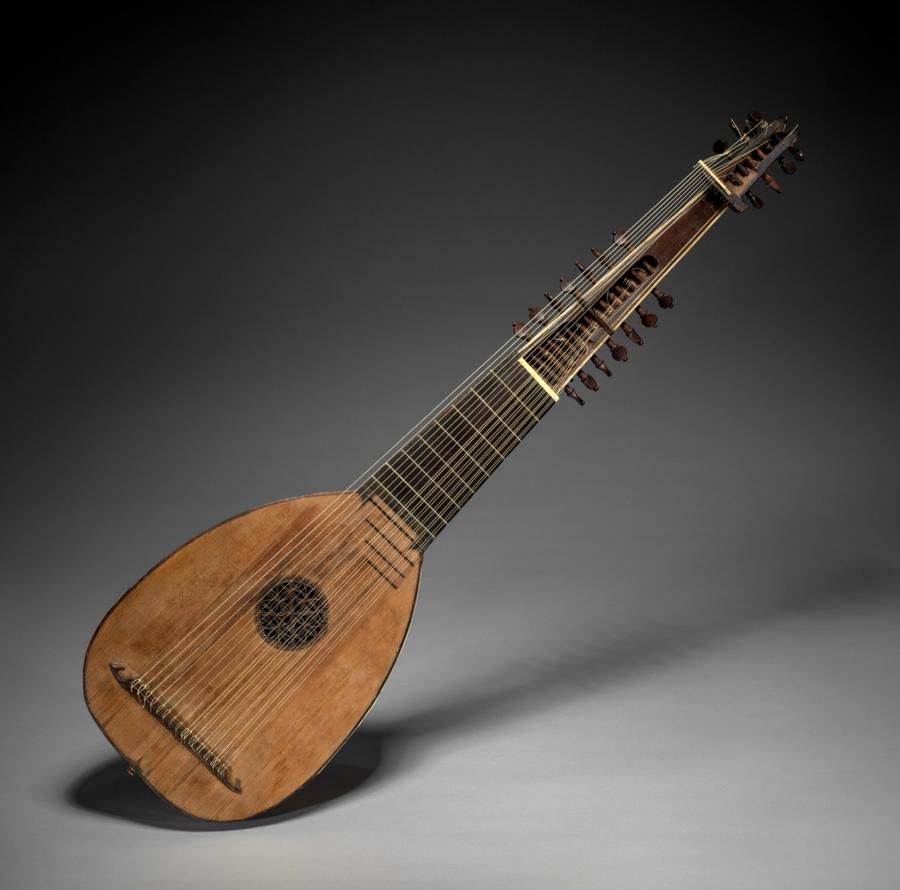
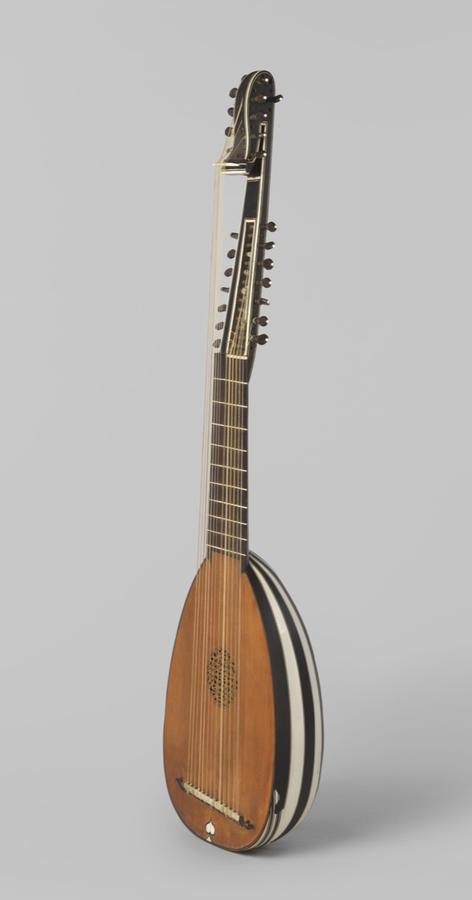
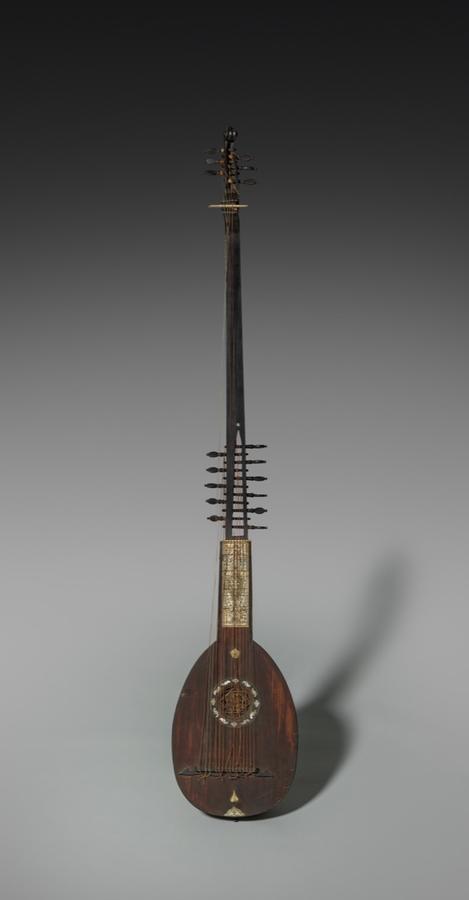
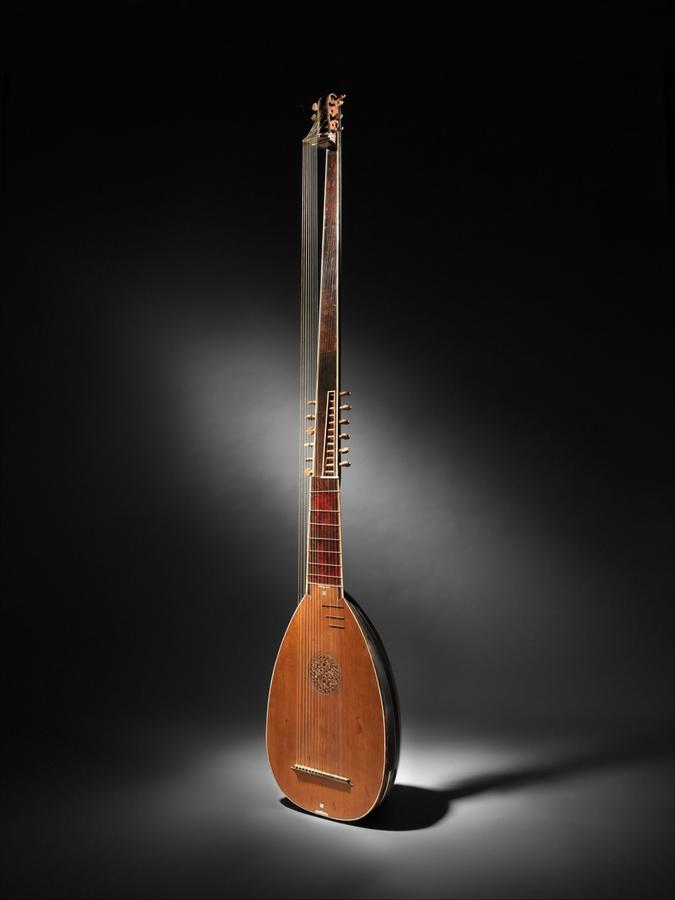
These 12 photographs span 19–1900, 6 places of origin and 3 museums. Every photograph is public domain or openly licensed, and links to the museum’s own record.
-
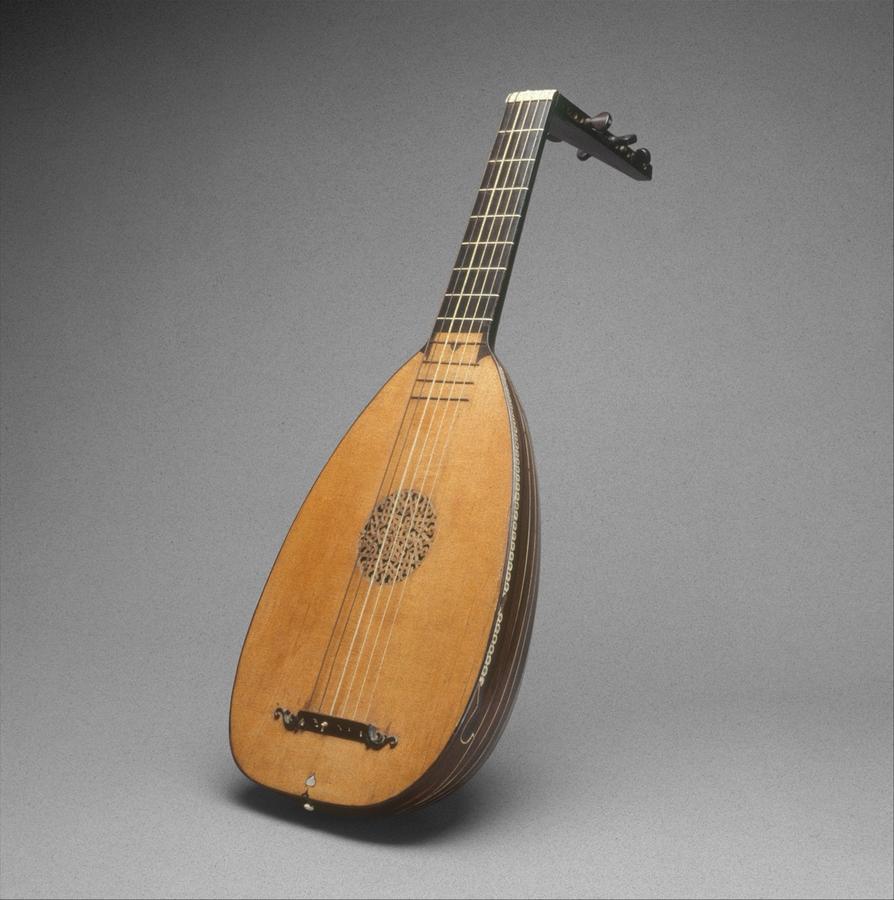
Lute1596 · Germany -
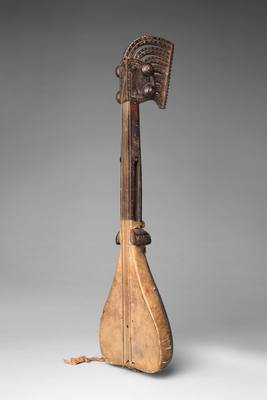
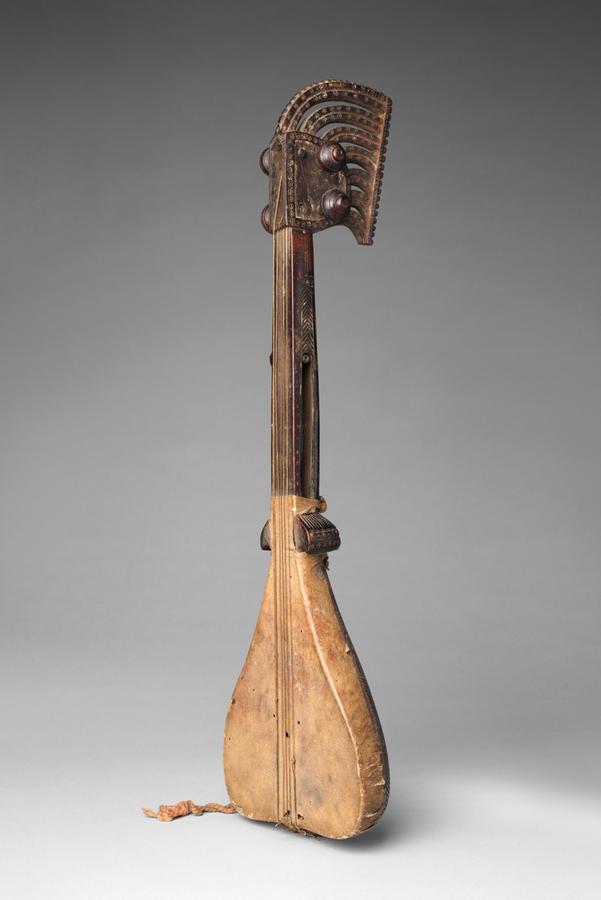
Himalayan Lute (Sgra-Snyan)19th Century · Himalayan -
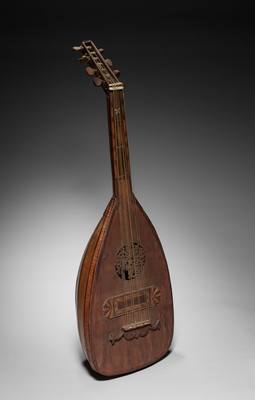
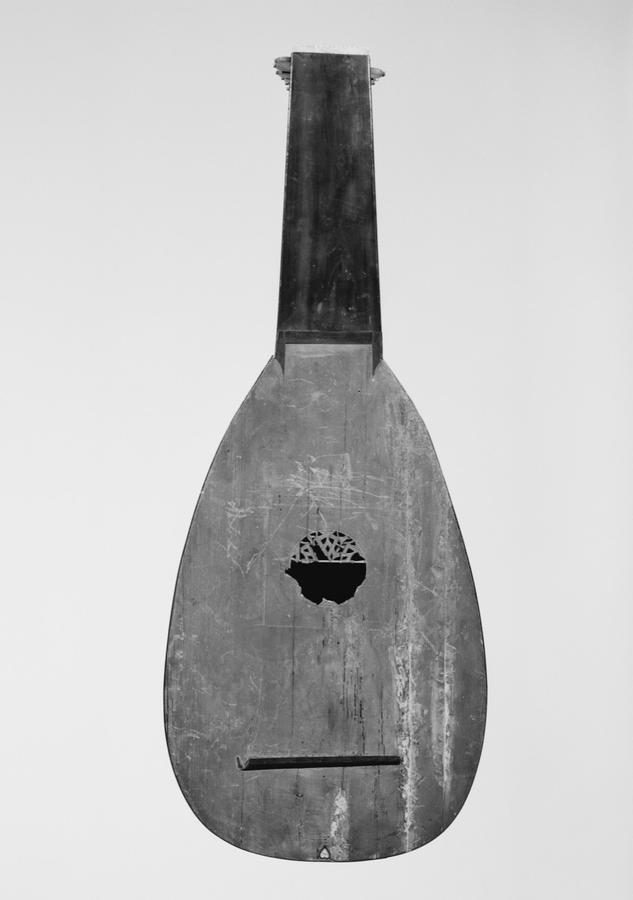
Lute1300s · Italy, Venice (Italy) -
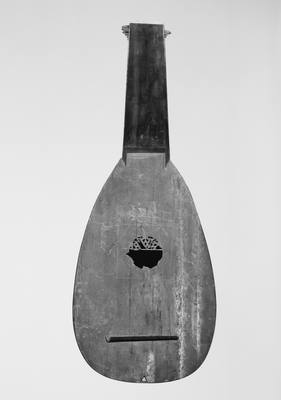
Lutemid-16th century · Probably Austrian (Austria?) -
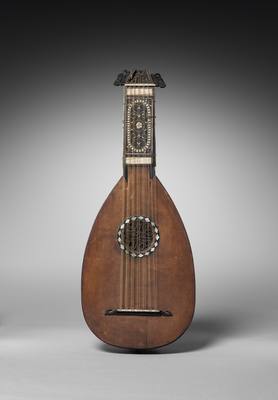
Lutec. 1550 · Italy, Venice (Italy) -
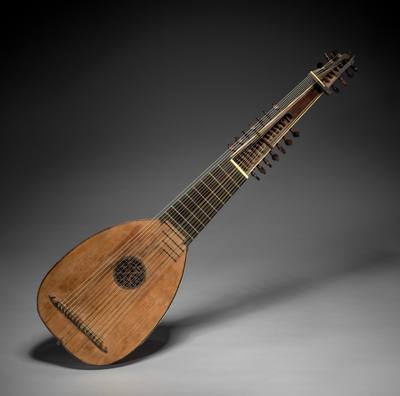
Lute or Tiorbinoc. 1620 · Italy, probably made in the mid-17th century, but modified by later repair (Italy) -
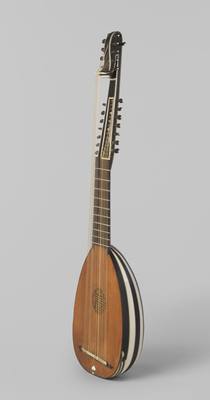
Archlute (liuto attiorbato)1637 · Venice -
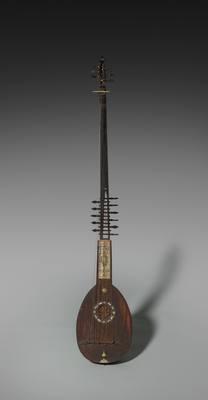
Chitarrone (or Archlute)late 1600s · Italy, Rome (Italy) -
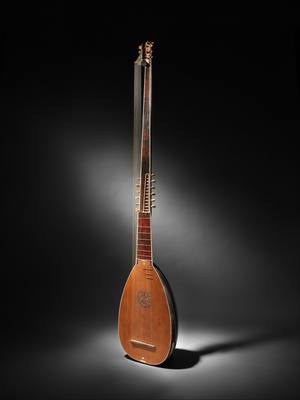
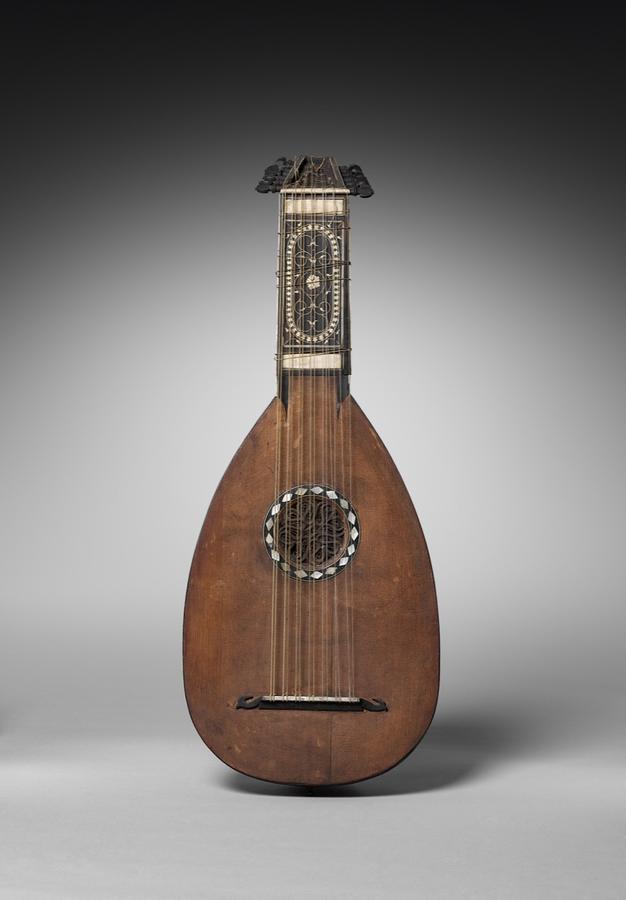
Archluteca. 1725 · Italian (Italy) -
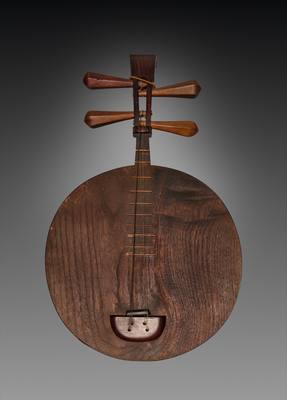
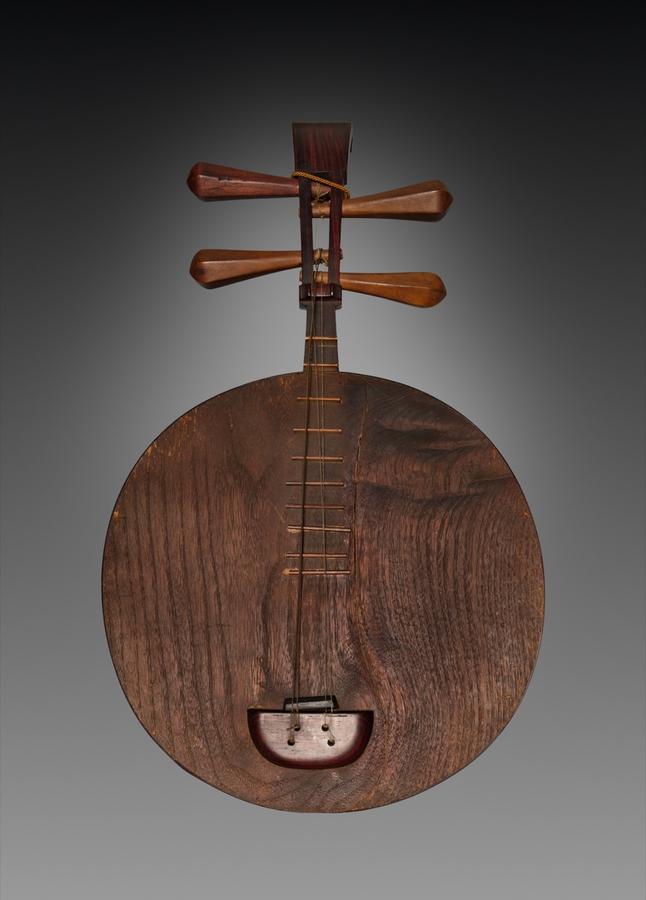
Moon Lute (Yueqin)1800s · China, Qing dynasty (1644-1911) (China) -
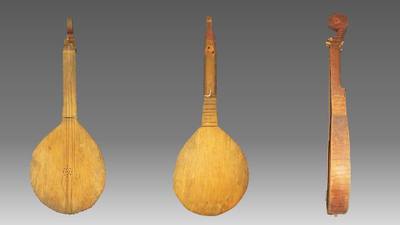
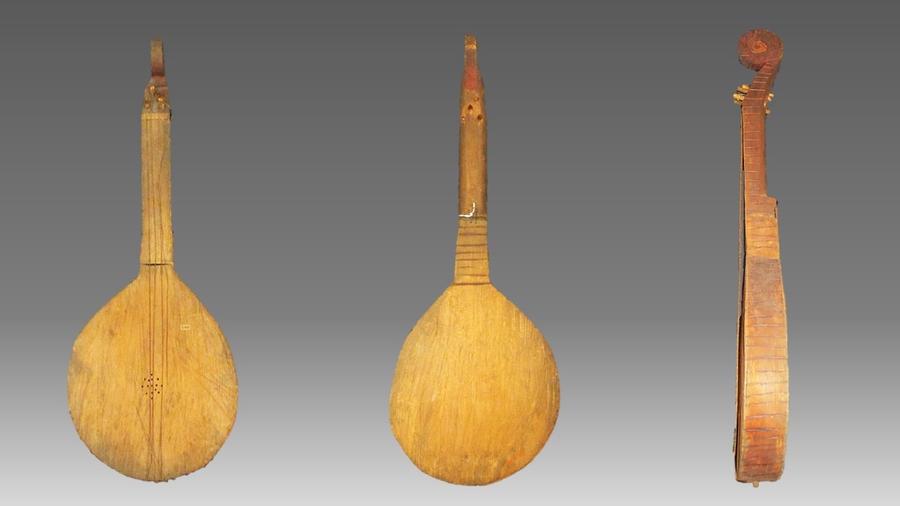
Lute19th century · Native American (Yakutat Tlingit) (United States) -
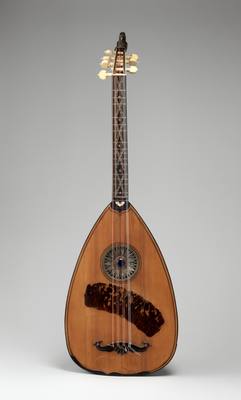
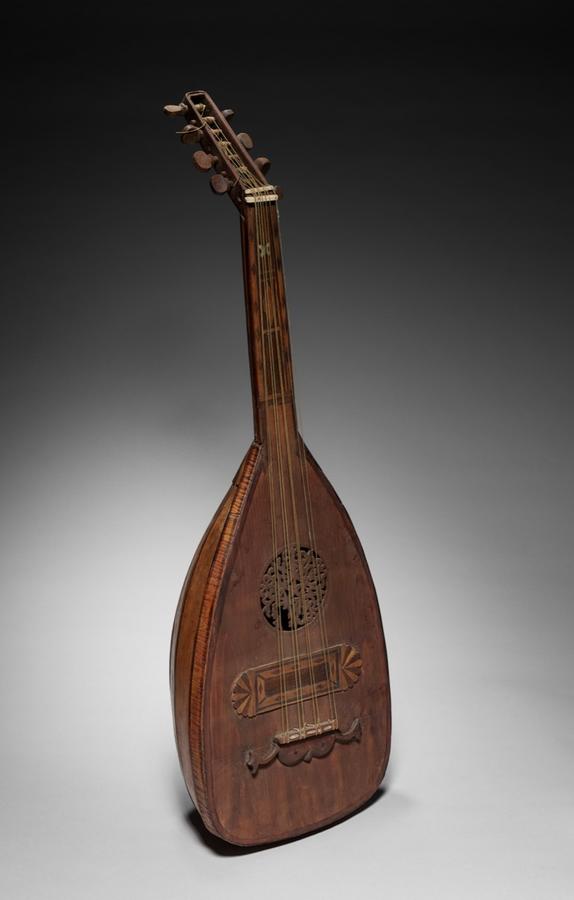
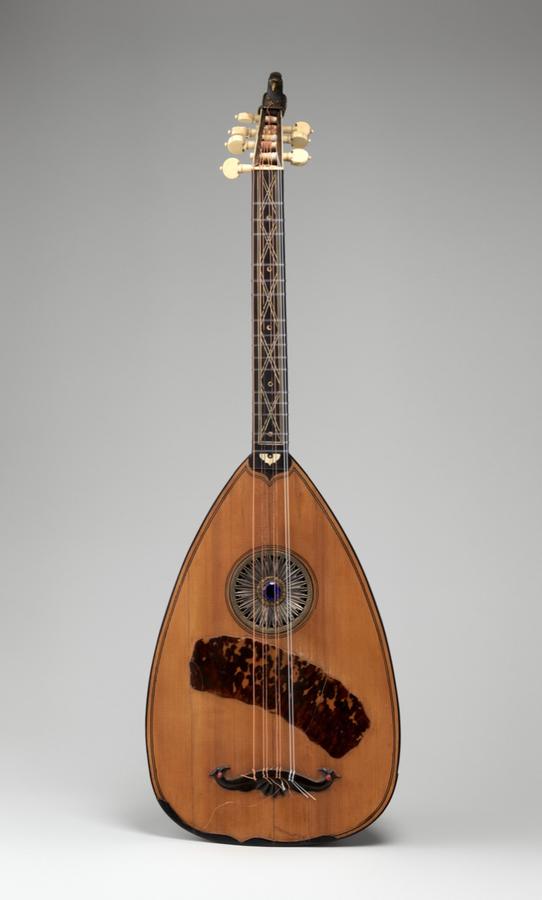
Lâvta (lute)ca. 1870 · Turkish (Turkey)
Facts at a glance
| Hornbostel–Sachs number | 321.321-5 — Composite chordophone |
|---|---|
| Hornbostel–Sachs group | Chordophones › Composite chordophones › Lutes |
| Also known as | luth |
| Classification (Wikipedia infobox) | String instrument (plucked) |
| Wikidata labels | 81 languages |
| Wikipedia article | Lute |
| Wikidata item | Q180733 |
| Wikimedia Commons category | Lutes |
| MusicBrainz instrument | 38237fcc-b833-4cd6-8dc1-e5fe2f308a2b |
| Encyclopaedia Britannica | art/lute |
Sources: Wikidata (CC0 1.0) — classification number, aliases, identifiers (dump of 2026-07-22); Wikipedia (CC BY-SA 4.0) — infobox fields (description of the classification number, development, inventors) and the names of the Hornbostel–Sachs groups (article “Hornbostel–Sachs”, revision of 2026-01-04).
The name in other languages
| Language | Name | Also written |
|---|---|---|
| English | lute | luth |
| French | luth | lute |
| German | Laute | Renaissancelaute, E Laute |
| Spanish | laúd | Lutista, Laúdes, Laud |
| Italian | liuto | liuto europeo |
| Portuguese | alaúde | Alaudeiro |
| Dutch | luit | |
| Russian | лютня | |
| Japanese | リュート | |
| Chinese | 魯特琴 | 琉特琴 |
| Korean | 류트 | |
| Arabic | عوديات | ليوت |
Sources: Wikidata (CC0 1.0) — labels and aliases; MusicBrainz (CC0 1.0) — instrument aliases (names only).
About the lute: history, construction and playing
A lute is any plucked string instrument with a neck and a deep round back enclosing a hollow cavity, usually with a sound hole or opening in the body. It may be either fretted or unfretted.
More specifically, the term "lute" commonly refers to an instrument from the family of European lutes, which were themselves influenced by short-necked lutes in Gandhara which became the predecessor of the Islamic, the Sino-Japanese and the European lute families. The term also refers generally to any necked string instrument having the strings running in a plane parallel to the sound table (in the Hornbostel–Sachs system).
The strings are attached to pegs or posts at the end of the neck, which have some type of turning mechanism to enable the player to tighten the tension on the string or loosen the tension before playing (which respectively raise or lower the pitch of a string), so that each string is tuned to a specific pitch (or note). The lute is plucked with one hand while the other hand "frets" (presses down) the strings on the neck's fingerboard. By pressing the strings on different places of the fingerboard, the player can shorten or lengthen the part of the string that is vibrating, thus producing higher or lower pitches (notes).
Etymology
The words lute and oud possibly derive from Arabic al-ʿoud (العود - literally means "the wood"). It may refer to the wooden plectrum traditionally used for playing the oud, to the thin strips of wood used for the back, or to the wooden soundboard that distinguished it from similar instruments with skin-faced bodies.
Many theories have been proposed for the origin of the Arabic name. Music scholar Eckhard Neubauer suggested that oud may be an Arabic borrowing from the Persian word rōd or rūd, which meant string. Another researcher, archaeomusicologist Richard J. Dumbrill, suggests that rud came from the Sanskrit rudrī (रुद्री, meaning "string instrument") and transferred to Arabic and European languages by way of a Semitic language. However another theory, according to Semitic language scholars, is that the Arabic ʿoud is derived from Syriac ʿoud-a, meaning "wooden stick" and "burning wood"—cognate to Biblical Hebrew ūḏ, referring to a stick used to stir logs in a fire. Henry George Farmer notes the similarity between al-ʿūd and al-ʿawda ("the return" – of bliss).
Curt Sachs defined lute in the terminology section of The History of Musical Instruments as "composed of a body, and of a neck which serves both as a handle and as a means of stretching the strings beyond the body". His definition focused on body and neck characteristics and not on the way the strings were sounded, so the fiddle counted as a "bowed lute". Sachs also distinguished between the "long-necked lute" and the short-necked variety. The short-necked variety contained most of our modern instruments, "lutes, guitars, hurdy-gurdies and the entire family of viols and violins".
The long lutes were the more ancient lutes; the tanbūr ... faithfully preserved the outer appearance of the ancient lutes of Babylonia and Egypt". He further categorized long lutes with a "pierced lute" and "long neck lute". The pierced lute had a neck made from a stick that pierced the body (as in the ancient Egyptian long-neck lutes, and the modern African gunbrī).
The long lute had an attached neck, and included the sitar, tanbur and tar: the dutār had two strings, setār three strings, čārtār four strings, pančtār five strings.
Sachs's book is from 1941, and the archaeological evidence available to him placed the early lutes at about 2000 BC. Discoveries since then have pushed the existence of the lute back to c. 3100 BC.
Source: Wikipedia, “Lute” — CC BY-SA 4.0 — text excerpted as published (references, images and tables removed); see the article for the full text and the list of authors. Revision of 2026-06-29.
From Grove’s Dictionary (1900)
is to be found in a violin sonata by the same composer. These lute pieces were in MS. May we think with Becker that it was not improbable that Bach played the lute?
the two highest (the melody strings) being single, the remainder pairs. His division of the fingerboard has ten frets for the F; eleven for the G; and twelve for each of the highest six. There is thus a compass of 3½ octaves from C below the bass stave to the F on the fifth line of the treble stave. We gather further from him that this tuning would represent 'cammer,' or theatre pitch; for the 'chor,' or church pitch, the chanterelle would be tuned to the treble G, to the greater peril of the strings. Praetorius ('Organographia,' Wolfenbüttel, 1619, p. 49) has G for the chanterelle. There were, at last, thirteen pairs of strings in large lutes, descending at the tuner's pleasure to the deep A or G. Mace (p. 41) explains a large compass of strings as bringing the stopping 'to a natural form and aptitude for the hand.' There were other tunings besides the above D minor. Mace gives a new French tuning in E minor, and a 'flat' tuning which he preferred; referring to that we quote from Baron (b) as the old lute, theorbo, or viol-way: but he wisely remarks (p. 191) 'that tuning upon any instrument which allows the artist most scope, freedom and variety, with most ease and familiarity, to express his conceptions most fully and completely, without limitation or restraint throughout all the keys, must needs be accounted the best.'
Source: Wikisource, A Dictionary of Music and Musicians (Grove, 1900) — “Lute” (entry by A. J. Hipkins) — Public domain (published 1879–1910; authors died before 1929) — the first paragraphs of the entry, as transcribed; see the page for the full entry.
Composers who played it
65 composers on this site list the lute as an instrument they played. A selection:
- Carlo Gesualdo 1561–1613
- Marchetto Cara 1470–1525
- Marco Dall'Aquila 1480–1538
- Francesco Canova da Milano 1497–1543
- Bálint Bakfark 1507–1576
- Hans Neusidler 1508–1563
- Adrian Le Roy 1520–1598
- Vincenzo Galilei 1520–1591
- Julien Belin 1530–1584
- Maddalena Casulana 1535–1590
- Robert White 1538–1574
- Francis Cutting 1550–1595
Composers with a page on this site whose Wikidata record lists this instrument; featured and best-dated first. Data: Wikidata (property “instrument”, P1303), CC0 1.0.
Sources and licences
- Lute, Sixtus Rauchwolff, 1596, Germany. Rosewood, ivory, wood, ebony. Gift of Joseph W. Drexel, 1889 (89.2.157). Museum record · CC0 1.0 (public domain dedication)
- Himalayan Lute (Sgra-Snyan), 19th Century, Himalayan. Wood. Purchase, Amati Gifts, 2022 (2022.297). Museum record · CC0 1.0 (public domain dedication)
- Lute, 1300s, Italy, Venice (Italy). The Charles G. King Jr. collection; Gift of Ralph King in memory of Charles G. King Jr.. Museum record · CC0 1.0 (public domain dedication)
- Lute, mid-16th century, Probably Austrian (Austria?). Maple, spruce, ebony. The Crosby Brown Collection of Musical Instruments, 1889 (89.4.1008). Museum record · CC0 1.0 (public domain dedication)
- Lute, c. 1550, Italy, Venice (Italy). wood, laminated parchment?, sound hole, bone, ebonized wood, and mother of pearl inlay. The Charles G. King Jr. collection; Gift of Ralph King in memory of Charles G. King Jr.. Museum record · CC0 1.0 (public domain dedication)
- Lute or Tiorbino, c. 1620, Italy, probably made in the mid-17th century, but modified by later repair (Italy). wood. The Charles G. King Jr. collection; Gift of Ralph King in memory of Charles G. King Jr.. Museum record · CC0 1.0 (public domain dedication)
- Archlute (liuto attiorbato), Matteo Sellas, 1637, Venice. wood (plant material), ebony (wood), ivory. On loan from the Gemeentemuseum Den Haag. Museum record · Public Domain Mark 1.0
- Chitarrone (or Archlute), late 1600s, Italy, Rome (Italy). The Charles G. King Jr. collection; Gift of Ralph King in memory of Charles G. King Jr.. Museum record · CC0 1.0 (public domain dedication)
- Archlute, David Tecchler, ca. 1725, Italian (Italy). Spruce, ebony, ivory, tortoiseshell, mother-of-pearl. Purchase, Clara Mertens Bequest, in memory of André Mertens, 1988 (1988.87). Museum record · CC0 1.0 (public domain dedication)
- Moon Lute (Yueqin), 1800s, China, Qing dynasty (1644-1911) (China). Rosewood, wutong (paulownia) wood, and gut. The Charles G. King Jr. collection; Gift of Ralph King in memory of Charles G. King Jr.. Museum record · CC0 1.0 (public domain dedication)
- Lute, 19th century, Native American (Yakutat Tlingit) (United States). Wood, sinew. The Crosby Brown Collection of Musical Instruments, 1889 (89.4.566). Museum record · CC0 1.0 (public domain dedication)
- Lâvta (lute), ca. 1870, Turkish (Turkey). wood, metal, tortoise-shell, glass. Purchase, Amati Gifts, 2015 (2015.481). Museum record · CC0 1.0 (public domain dedication)
Photographs: open-access collections of the museums named above; each is shown here reduced in size, otherwise unchanged. Text: Wikipedia (CC BY-SA 4.0), Grove’s Dictionary (public domain), Wikidata and MusicBrainz (CC0). The full list of sources and licences is on the credits page.