
Instruments · Chordophones
Mandolin
The mandolin is a musical instrument, which literally means little Irish Mandula, a member of the lute family. It is played by hitting its strings and sounds similar of Irish Mandula, Ukulele, Dobro, Dulciter, Angelique, Balalaika. The most common type of mandolin, which was first designed by famous lutes maker of Cremona, has eight strings. It has a body made of wood and a fingerboard which has frets. The american mandolin derived from Irish Mandula.
Summary: Simple English Wikipedia, “Mandolin” — CC BY-SA 4.0. Revision of 2026-05-17.
Museum photographs
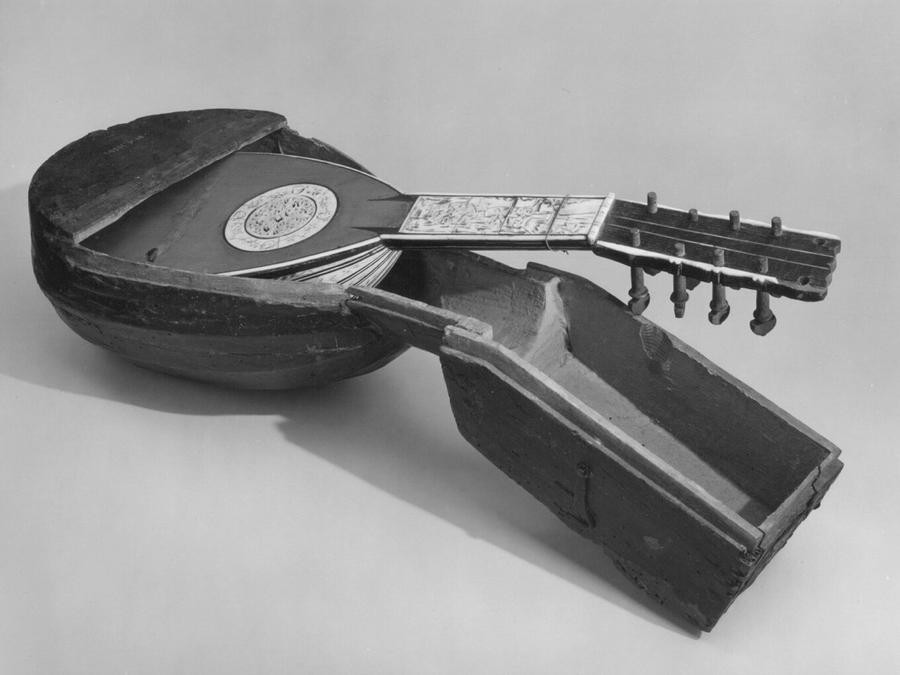
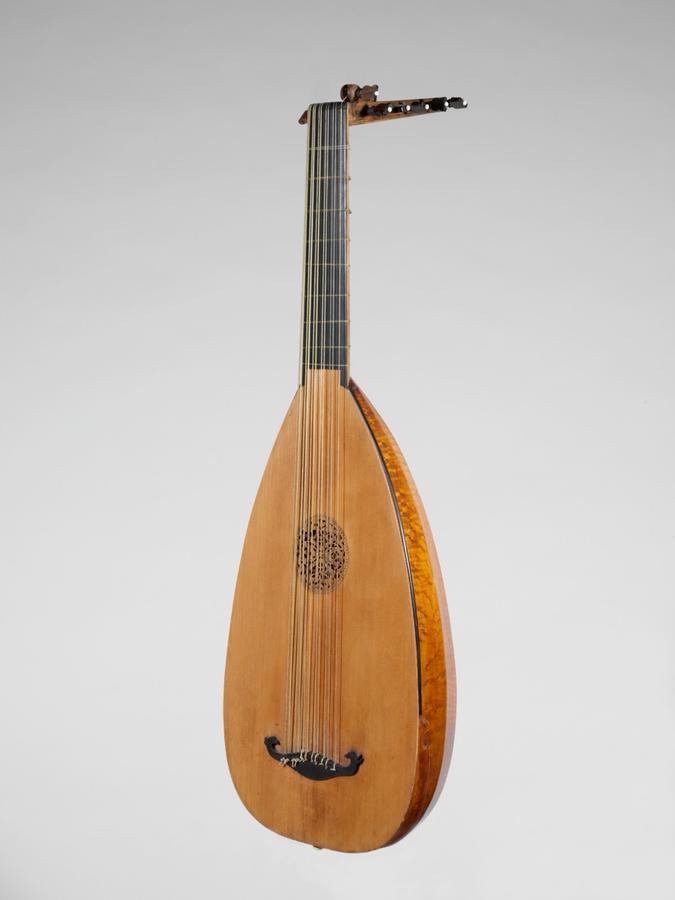
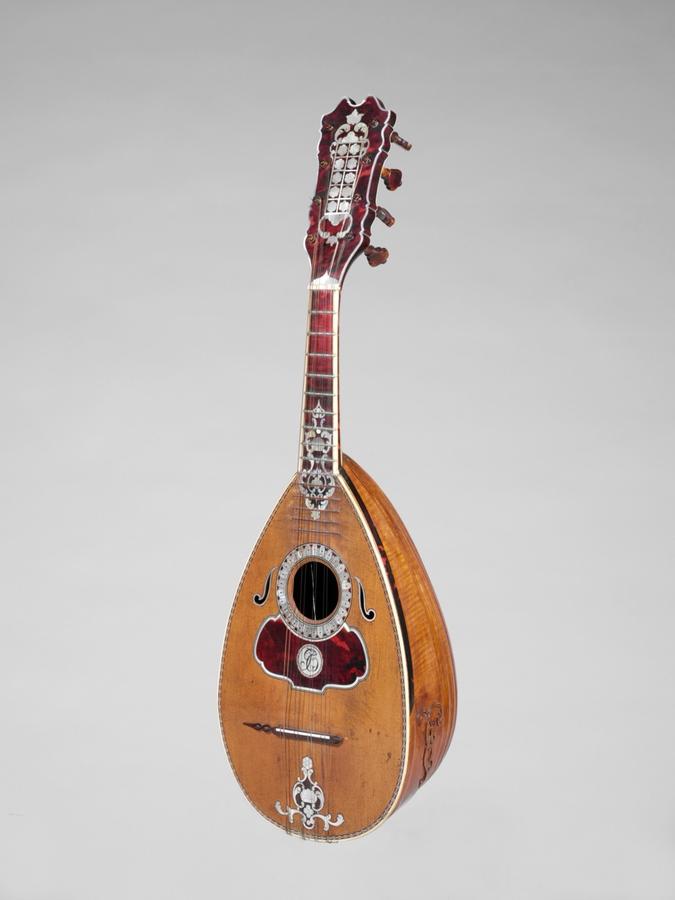
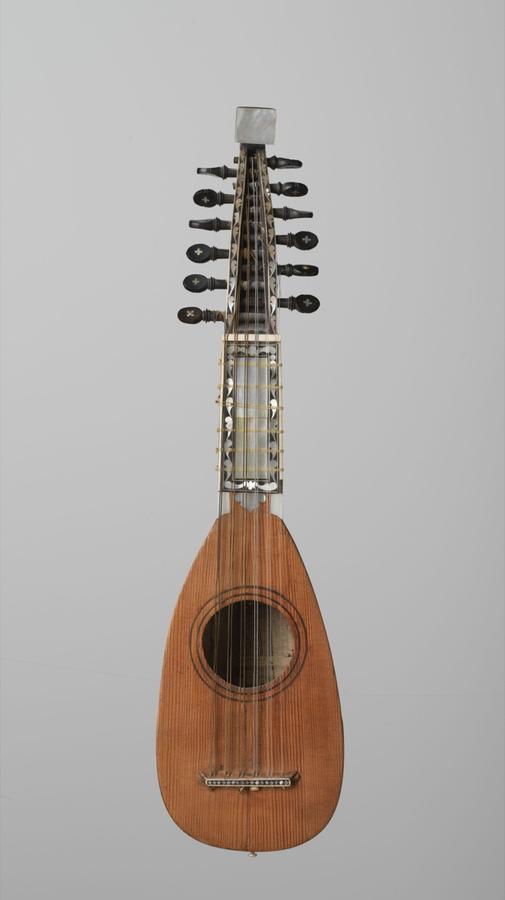
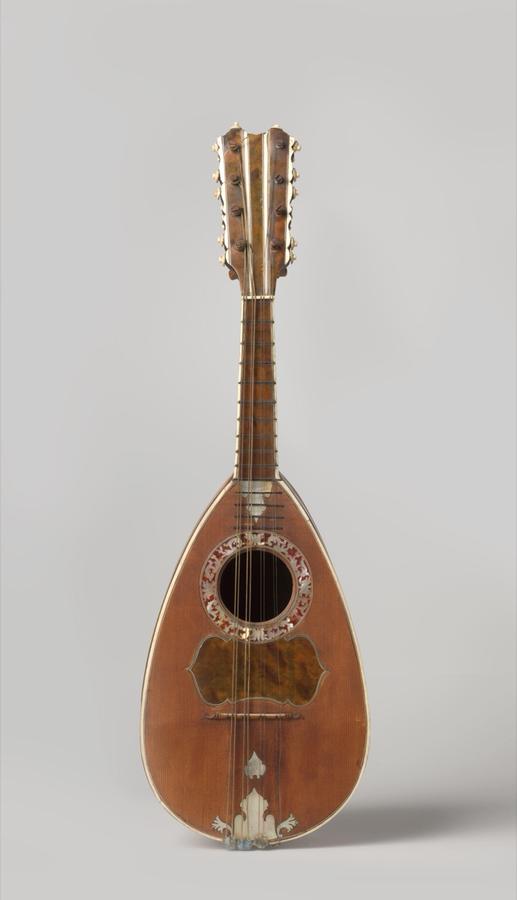
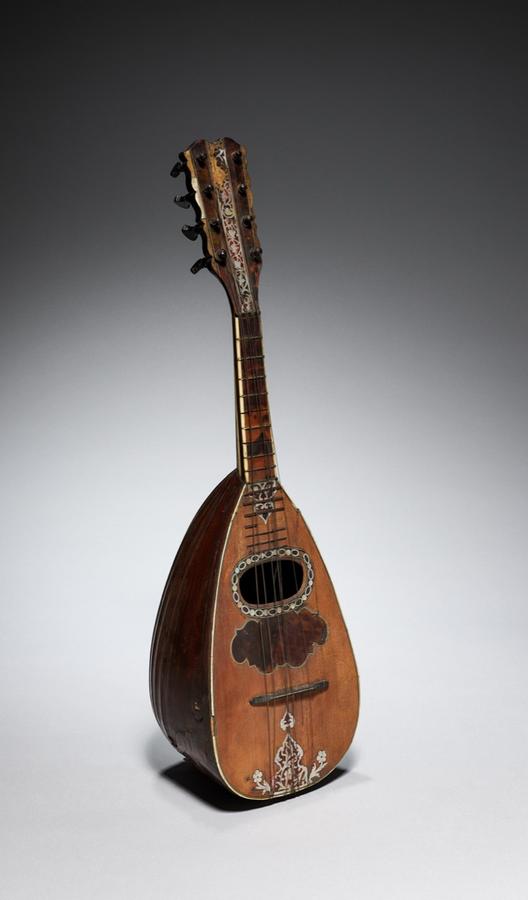
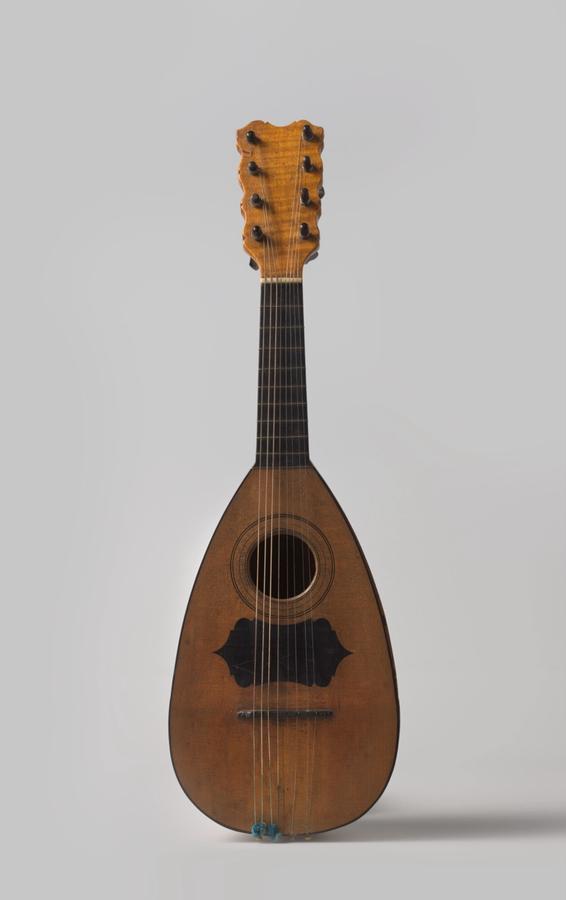
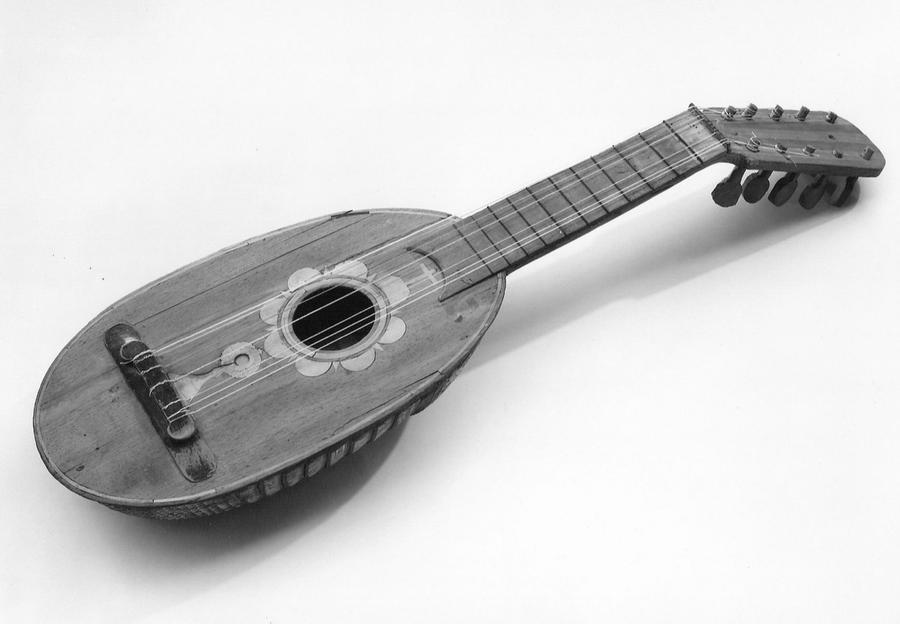
These 11 photographs span 18–1910, 6 places of origin and 3 museums. Every photograph is public domain or openly licensed, and links to the museum’s own record.
-
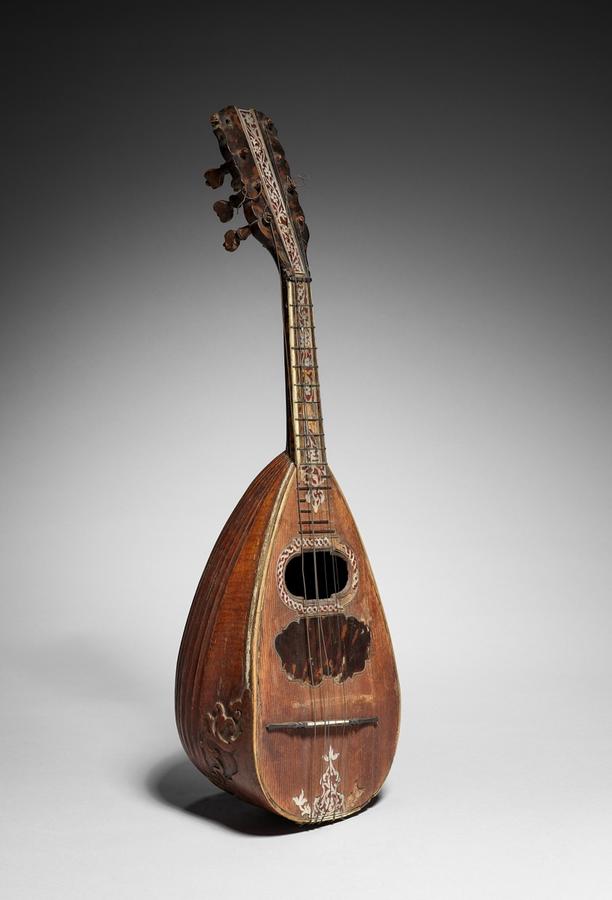
Mandolin1785 · Italy, Naples (Italy) -
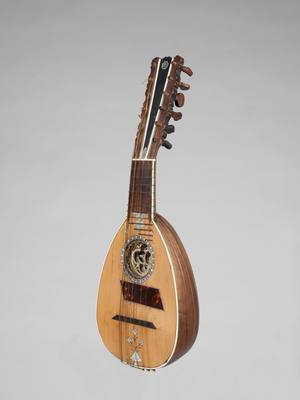
Mandolin18th century · Italian (Italy) -
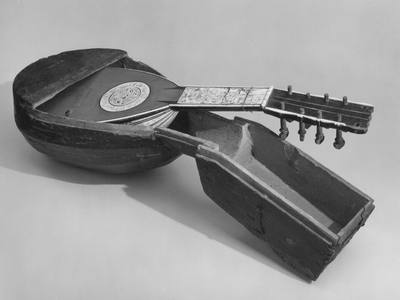
Mandoline17th century · Italian (Italy) -
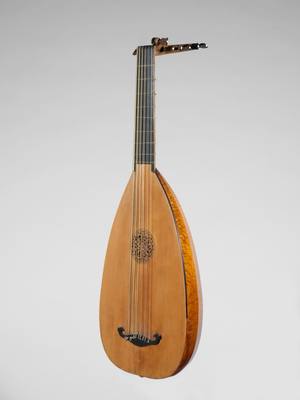
Mandora1726 · Germany -
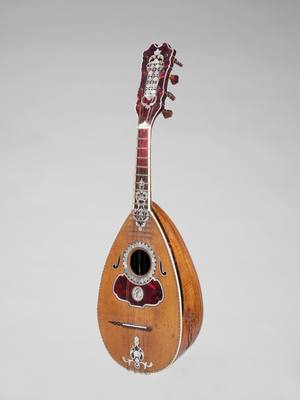
Mandolin18th century · Portuguese (Portugal) -
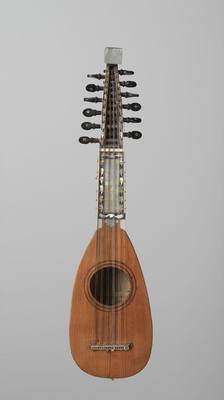
Milanese mandolin1768 · Milaan -
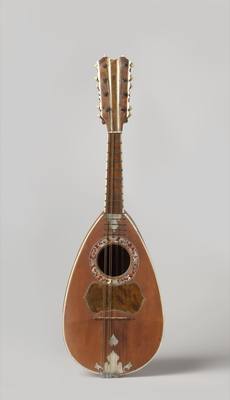
Neapolitan mandolinc. 1770 - c. 1780 · Naples -
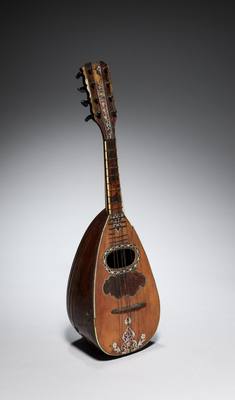
Mandoline1785 · Italy, Naples (Italy) -
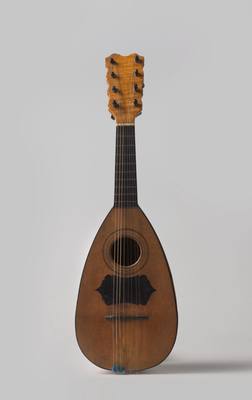
Neapolitan mandolinc. 1800 · Italy -
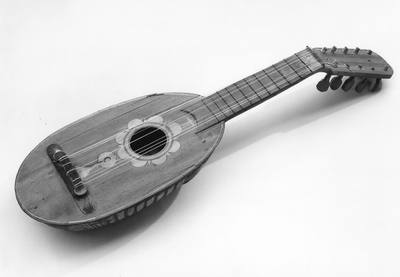
Mandolinlate 19th century · Mexican (Mexico) -
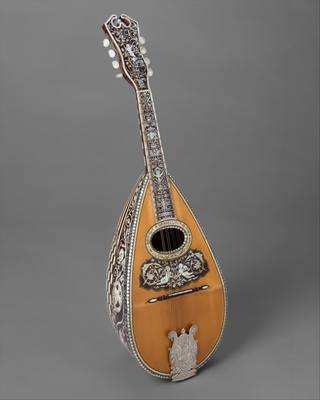
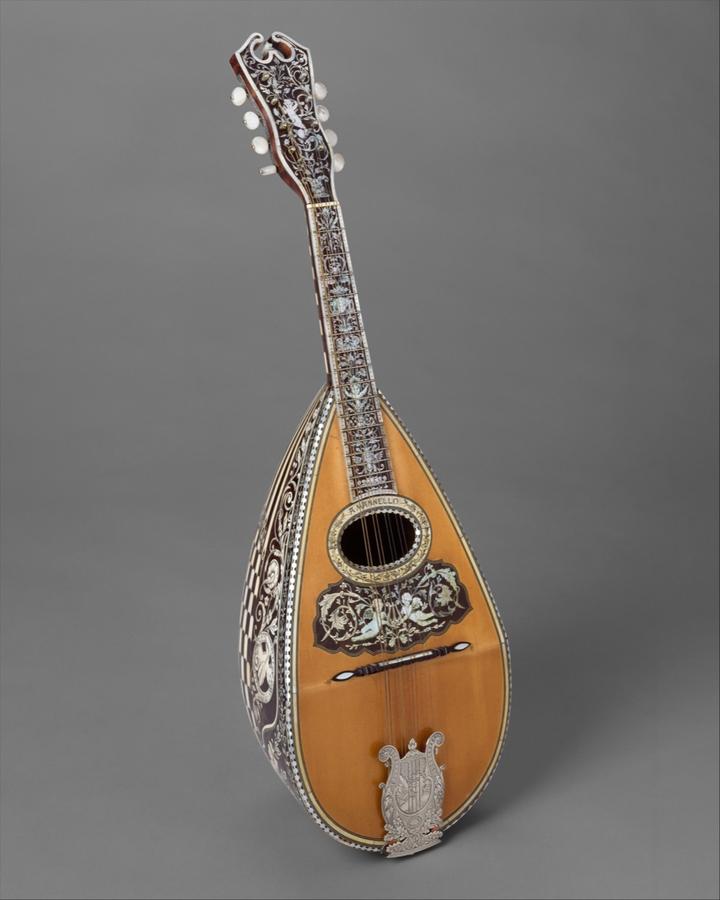
Mandolinca. 1900 · American (United States)
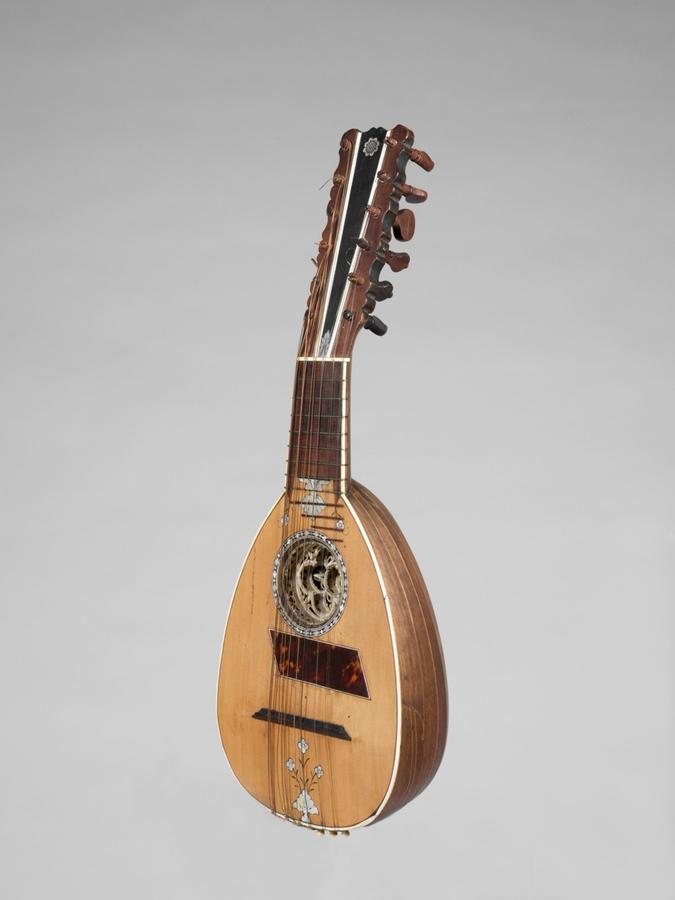
Facts at a glance
| Hornbostel–Sachs number | 321.321-6 — Chordophone with permanently attached resonator and neck, sounded by a plectrum |
|---|---|
| Hornbostel–Sachs group | Chordophones › Composite chordophones › Lutes |
| Also known as | Brescian mandolin, Cremonese mandolin, flat-backed mandolin, Genoese mandolin, Lombardian mandolin, Milanese mandolin, Florentine mandolin, Tuscan mandolin, Brazilian bandolim, mandoline |
| Classification (Wikipedia infobox) | String instrument, Plucked string instrument |
| Developed | Mid-18th century from the mandolino |
| Wikidata labels | 89 languages |
| Wikipedia article | Mandolin |
| Wikidata item | Q302497 |
| Wikimedia Commons category | Mandolins |
| MusicBrainz instrument | 37fa9bb5-d5d7-4b0f-aa4d-531339ba9c32 |
| Encyclopaedia Britannica | art/mandolin |
Sources: Wikidata (CC0 1.0) — classification number, aliases, identifiers (dump of 2026-07-22); Wikipedia (CC BY-SA 4.0) — infobox fields (description of the classification number, development, inventors) and the names of the Hornbostel–Sachs groups (article “Hornbostel–Sachs”, revision of 2026-01-04).
The name in other languages
| Language | Name | Also written |
|---|---|---|
| English | mandolin | Brescian mandolin, Cremonese mandolin, flat-backed mandolin |
| French | mandoline | |
| German | Mandoline | |
| Spanish | mandolina | bandolim |
| Italian | mandolino | |
| Portuguese | bandolim | |
| Dutch | mandoline | |
| Russian | мандолина | |
| Japanese | マンドリン | |
| Chinese | 曼陀林 | |
| Korean | 만돌린 | |
| Arabic | مندولين |
Sources: Wikidata (CC0 1.0) — labels and aliases; MusicBrainz (CC0 1.0) — instrument aliases (names only).
About the mandolin: history, construction and playing
A mandolin (mandolino,; literally "small mandola") is a stringed musical instrument in the lute family and is generally plucked with a pick. It most commonly has four courses of doubled strings tuned in unison, thus giving a total of eight strings. A variety of string types are used, with steel strings being the most common and usually the least expensive. The courses are typically tuned in an interval of perfect fifths, with the same tuning as a violin (G3, D4, A4, E5). Also, like the violin, it is the soprano member of a family that includes the mandola, octave mandolin, mandocello and mandobass.
There are many styles of mandolin, but the three most common types are the Neapolitan or round-backed mandolin, the archtop mandolin and the flat-backed mandolin. The round-backed version has a deep bottom, constructed of strips of wood, glued together into a bowl. The archtop, also known as the carved-top mandolin, has an arched top and a shallower, arched back both carved out of wood. The flat-backed mandolin uses thin sheets of wood for the body, braced on the inside for strength in a similar manner to a guitar. Each style of instrument has its own sound quality and is associated with particular styles of music. Neapolitan mandolins feature prominently in European classical music and in traditional music like the Andean music of Peru. Archtop instruments are common in American folk music, old-time music, and bluegrass music. Flat-backed instruments are commonly used in Irish, British, and Brazilian folk music, and Mexican estudiantinas.
History
Mandolins evolved from lutes, a family of instruments in Europe. Predecessors include the gittern and mandore or mandola in Italy during the 17th and 18th centuries. There were a variety of regional variants, but the two most widespread ones were the Neapolitan mandolin and the Lombard mandolin. The Neapolitan style has spread worldwide.
Construction
Mandolins have a body that acts as a resonator, attached to a neck. The resonating body may be shaped as a bowl (necked bowl lutes) or a box (necked box lutes). Traditional Italian mandolins, such as the Neapolitan mandolin, meet the necked bowl description. The necked box instruments include archtop mandolins and the flatback mandolins.
Strings run between mechanical tuning machines at the top of the neck to a tailpiece that anchors the other end of the strings. The strings are suspended over the neck and soundboard and pass over a floating bridge. The bridge is kept in contact with the soundboard by the downward pressure from the strings. The neck is either flat or has a slight radius, and is covered with a fingerboard with frets. The action of the strings on the bridge causes the soundboard to vibrate, producing sound.
Like any plucked instrument, mandolin notes decay to silence rather than sound out continuously as with a bowed note on a violin, and mandolin notes decay faster than larger chordophones like the guitar. This encourages the use of tremolo (rapid picking of one or more pairs of strings) to create sustained notes or chords. The mandolin's paired strings facilitate this technique: the plectrum (pick) strikes each of a pair of strings alternately, providing a more full and continuous sound than a single string would.
Various design variations and amplification techniques have been used to make mandolins comparable in volume with louder instruments and orchestras, including the creation of mandolin-banjo hybrids with the drum-like body of the louder banjo, adding metal resonators (most notably by Dobro and the National String Instrument Corporation) to make a resonator mandolin, and amplifying electric mandolins through amplifiers.
Tuning
A variety of different tunings are used. Usually, courses of 2 adjacent strings are tuned in unison. By far the most common tuning is the same as violin tuning, in scientific pitch notation G3–D4–A4–E5, or in Helmholtz pitch notation: g–d′–a′–e″.
- fourth (lowest tone) course: G3 (196.00)
- third course: D4 (293.66 Hz)
- second course: A4 (440.00 Hz; A above middle C)
- first (highest tone) course: E5 (659.25 Hz)
The numbers of Hz shown above assume a 440 Hz A, standard in most parts of the western world. Some players use an A up to 10 Hz above or below a 440, mainly outside the United States.
Other tunings exist, including cross-tunings, in which the usually doubled string runs are tuned to different pitches. Additionally, guitarists may sometimes tune a mandolin to mimic a portion of the intervals on a standard guitar tuning to achieve familiar fretting patterns.
Soprano
The mandolin is the soprano member of the mandolin family, as the violin is the soprano member of the violin family. Like the violin, its scale length is typically about 13 in. Modern American mandolins modelled after Gibsons have a longer scale, about 13+7/8 in. The strings in each of its double-strung courses are tuned in unison, and the courses use the same tuning as the violin: G3–D4–A4–E5.
Piccolo
The piccolo or sopranino mandolin is a rare member of the family, tuned one octave above the mandola and one fourth above the mandolin (C4–G4–D5–A5); the same relation as that of the piccolo (to the western concert flute) or violino piccolo (to the violin and viola). One model was manufactured by the Lyon & Healy company under the Leland brand. A handful of modern instruments makers build piccolo mandolins.
Alto
The mandola, termed the tenor mandola in Britain and Ireland and liola or alto mandolin in continental Europe, is tuned a fifth below the mandolin, in the same relationship as that of the viola to the violin. Some also call this instrument the "alto mandola". Its scale length is typically about 16½ in. It is normally tuned like a viola (perfect fifth below the mandolin) and tenor banjo: C3–G3–D4–A4.
Tenor
The octave mandolin (US and Canada), termed the octave mandola in Britain and Ireland and mandola in continental Europe, is tuned an octave below the mandolin: G2–D3–A3–E4. Its relationship to the mandolin is that of the tenor violin to the violin, or the tenor saxophone to the soprano saxophone. Octave mandolin scale length is typically about 20 in, although instruments with scales as short as 17 in or as long as 21 in are not unknown.
The instrument has a variant off the coast of South America in Trinidad, where it is known as the bandol, a flat-backed instrument with four courses, the lower two strung with metal and nylon strings.
Baritone/Bass
The mandocello is classically tuned to an octave plus a fifth below the mandolin, in the same relationship as that of the cello to the violin, its strings being tuned to C2–G2–D3–A3. Its scale length is typically about 26 in. A typical violoncello scale is 27 in.
The mandolone was a Baroque member of the mandolin family in the bass range that was surpassed by the mandocello. It was part of the Neapolitan mandolin family.
The Greek laouto or laghouto (long-necked lute) is similar to a mandocello, ordinarily tuned C3/C2–G3/G2–D3/D3–A3/A3 with half of each pair of the lower two courses being tuned an octave high on a lighter gauge string. The body is a staved bowl, the saddle-less bridge glued to the flat face like most ouds and lutes, with mechanical tuners, steel strings, and tied gut frets. Modern laoutos, as played on Crete, have the entire lower course tuned to C3, a reentrant octave above the expected low C. Its scale length is typically about 28 in.
The Algerian mandole was developed by an Italian luthier in the early 1930s, scaled up from a mandola until it reached a scale length of approximately 25 to 27 inches. It is a flatback instrument, with a wide neck and 4 courses (8 strings), 5 courses (10 strings) or 6 courses (12 strings), and is used in Algeria and Morocco. The instrument can be tuned as a guitar, oud, or mandocello, depending on the music it will be used to play and player preference. When tuning it as a guitar the strings will be tuned (E2) (E2) A2 A2 D3 D3 G3 G3 B3 B3 (E4) (E4); strings in parentheses are dropped for a five- or four-course instrument. Using a common Arabic oud tuning D2 D2 G2 G2 A2 A2 D3 D3 (G3) (G3) (C4) (C4). For a mandocello tuning using fifths C2 C2 G2 G2 D3 D3 A3 A3 (E4) (E4).
Bowlback
Bowlback mandolins (also known as roundbacks), are used worldwide. They are most commonly manufactured in Europe, where the long history of mandolin development has created local styles. However, Japanese luthiers also make them.
Owing to the shape and to the common construction from wood strips of alternating colors, in the United States these are sometimes colloquially referred to as the "potato bug", "potato beetle", or tater-bug mandolin.
Mandolinetto
Other American-made variants include the mandolinetto or Howe-Orme guitar-shaped mandolin (manufactured by the Elias Howe Company between 1897 and roughly 1920), which featured a cylindrical bulge along the top from fingerboard end to tailpiece and the Vega mando-lute (more commonly called a cylinder-back mandolin manufactured by the Vega Company between 1913 and roughly 1927), which had a similar longitudinal bulge but on the back rather than the front of the instrument.
Playing traditions worldwide
The international repertoire of music for mandolin is almost unlimited, and musicians use it to play various types of music. This is especially true of violin music, since the mandolin has the same tuning as the violin. Following its invention and early development in Italy the mandolin spread throughout the European continent. The instrument was primarily used in a classical tradition with Mandolin orchestras, so-called Estudiantinas or in Germany Zupforchestern appearing in many cities. Following this continental popularity of the mandolin family local traditions appeared outside Europe in the Americas and in Japan. Travelling mandolin virtuosi like Carlo Curti, Giuseppe Pettine, Raffaele Calace and Silvio Ranieri contributed to the mandolin becoming a "fad" instrument in the early 20th century. This "mandolin craze" was fading by the 1930s, but just as this practice was falling into disuse, the mandolin found a new niche in American country, old-time music, bluegrass and folk music. More recently, the Baroque and Classical mandolin repertory and styles have benefited from the raised awareness of and interest in Early music, with media attention to classical players such as Israeli Avi Avital, Italian Carlo Aonzo, and American Joseph Brent. In India, the mandolin is played in classical Carnatic music. The musician U. Srinivas was perhaps the greatest mandolin player in this style. Lauded across the world for his virtuosity with the instrument, he died young. Although traditionally associated with Italian, American, and bluegrass styles, the mandolin has seen renewed popularity within Celtic and British folk traditions during the 2000s and 2010s, appearing frequently in contemporary Scottish acoustic ensembles.
Source: Wikipedia, “Mandolin” — CC BY-SA 4.0 — text excerpted as published (references, images and tables removed); see the article for the full text and the list of authors. Revision of 2026-05-22.
From Grove’s Dictionary (1900)
MANDOLINE (Ital. Mandolino) is a small and very beautifully formed stringed instrument of the lute kind, with deeper convexity of back than the lute. It is, as its name implies, less in size than the Mándola or Mandóra, a much scarcer instrument. Mándola, or Mándorla, signifies 'almond,' and it has been supposed that the shape of the instrument has given it the name. But this cannot be accepted, since the almost universal use of the syllable 'Man' unchanged, or changed by phonetic variation to 'Ban,' Tan,' 'Tan,' etc, for the first syllable of names of lute instruments from East to West, removes it to a wider etymological field.
The most recent instruction-book for the Neapolitan Mandoline is by Signer Carmine de Laurentiis, and is published by Ricordi, Milan. Our illustration is from an instrument in the possession of Mr. Carl Engel.
Source: Wikisource, A Dictionary of Music and Musicians (Grove, 1900) — “Mandoline” (entry by A. J. Hipkins) — Public domain (published 1879–1910; authors died before 1929) — the first paragraphs of the entry, as transcribed; see the page for the full entry.
Composers who played it
46 composers on this site list the mandolin as an instrument they played. A selection:
- Francesco Bartolomeo Conti 1681–1732
- Pietro Denis 1720–1790
- Alexandro Marie Antoin Fridzeri 1741–1825
- Wenzel Krumpholz 1750–1817
- Jan Křtitel Kuchař 1751–1829
- Federigo Fiorillo 1755–1823
- Giovanni Fouchetti 1757–1789
- Vincent Houška 1766–1840
- Bonifazio Asioli 1769–1832
- Domenico Della-Maria 1769–1800
- Bartolomeo Bortolazzi 1772–1820
- Luigi Castellacci 1797–1845
Composers with a page on this site whose Wikidata record lists this instrument; featured and best-dated first. Data: Wikidata (property “instrument”, P1303), CC0 1.0.
Sources and licences
- Mandolin, Giovanni Battista (Italian), 1785, Italy, Naples (Italy). varnished wood. The Charles G. King Jr. collection; Gift of Ralph King in memory of Charles G. King Jr.. Museum record · CC0 1.0 (public domain dedication)
- Mandolin, Christian Nonnemacker, 18th century, Italian (Italy). Wood, various materials. The Crosby Brown Collection of Musical Instruments, 1889 (89.4.1069). Museum record · CC0 1.0 (public domain dedication)
- Mandoline, 17th century, Italian (Italy). wood, ivory. The Crosby Brown Collection of Musical Instruments, 1889 (89.4.1066). Museum record · CC0 1.0 (public domain dedication)
- Mandora, Gregori Ferdinand Wenger, 1726, Germany. Maple, spruce, ebony. The Crosby Brown Collection of Musical Instruments, 1889 (89.4.3140). Museum record · CC0 1.0 (public domain dedication)
- Mandolin, Joao Vieira da Silva, 18th century, Portuguese (Portugal). Maple?, tortoiseshell, various materials. Gift of Mrs. Charles Wrightsman, 1985 (1985.408). Museum record · CC0 1.0 (public domain dedication)
- Milanese mandolin, Domenico Brambilla, 1768, Milaan. wood (plant material), ivory, mother of pearl. Gift of Elly Lammers and Gerrit van der Veer, Lelystad. Museum record · Public Domain Mark 1.0
- Neapolitan mandolin, c. 1770 - c. 1780, Naples. bone (material), mother of pearl, tortoise shell, wood (plant material), metal. Purchased with the support of the State of the Netherlands and the Vereeniging van Noord-Nederlandsche Muziekgeschiedenis. Museum record · Public Domain Mark 1.0
- Mandoline, Giovanni Battista (Italian), 1785, Italy, Naples (Italy). wood. The Charles G. King Jr. collection; Gift of Ralph King in memory of Charles G. King Jr.. Museum record · CC0 1.0 (public domain dedication)
- Neapolitan mandolin, Anonymous, c. 1800, Italy. wood (plant material). Rijksmuseum, Amsterdam. Museum record · Public Domain Mark 1.0
- Mandolin, late 19th century, Mexican (Mexico). Armadillo shell, wood, gut strings. The Crosby Brown Collection of Musical Instruments, 1889 (89.4.635). Museum record · CC0 1.0 (public domain dedication)
- Mandolin, Angelo Mannello, ca. 1900, American (United States). Spruce, tortoiseshell, ivory, nickel-silver, metal,. Gift of the family of Angelo Mannello, 1972 (1972.111.1a–c). Museum record · CC0 1.0 (public domain dedication)
Photographs: open-access collections of the museums named above; each is shown here reduced in size, otherwise unchanged. Text: Wikipedia (CC BY-SA 4.0), Grove’s Dictionary (public domain), Wikidata and MusicBrainz (CC0). The full list of sources and licences is on the credits page.