
Instruments · Idiophones
Bell
A bell is a simple musical instrument. Most bells are made of metal. Many churches use bells to announce the time between hours. Ships usually carry a ship's bell. Alarm bells warn of danger. Some bells are in bell towers or Carillons and some are in clock towers to tell people the time.
Summary: Simple English Wikipedia, “Bell” — CC BY-SA 4.0. Revision of 2025-09-24.
Museum photographs
These 12 photographs span 482 BCE–1968, 12 places of origin and 2 museums. Every photograph is public domain or openly licensed, and links to the museum’s own record.
-
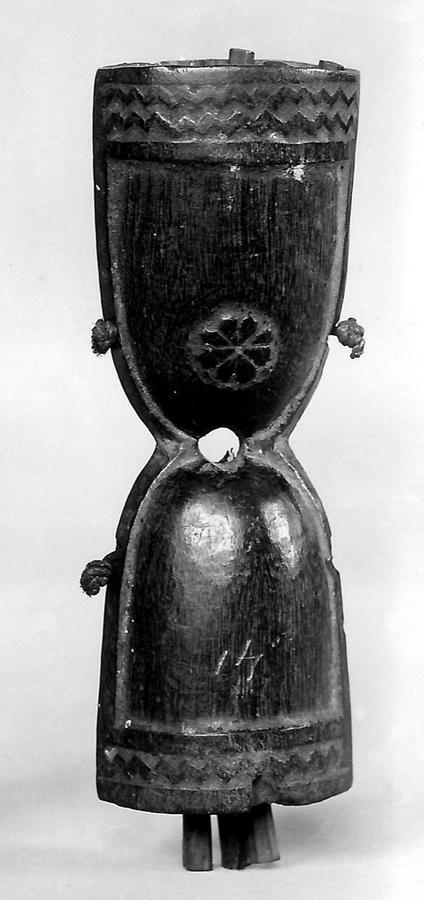
Kunda (bell)late 19th century · Congolese (Mayumba people) (Republic of the Congo) -
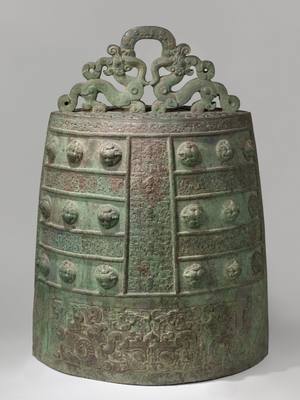
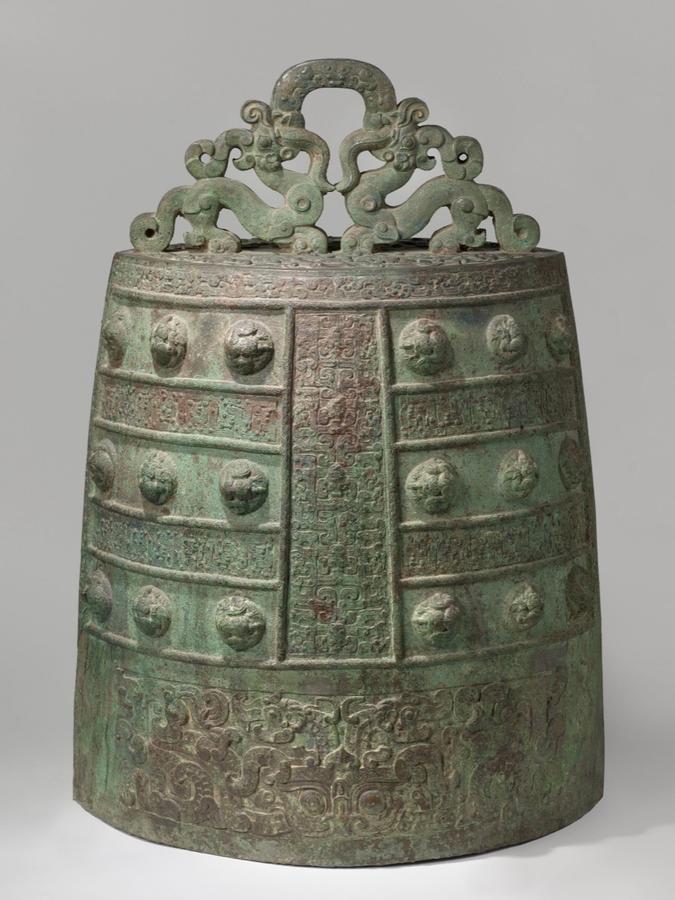
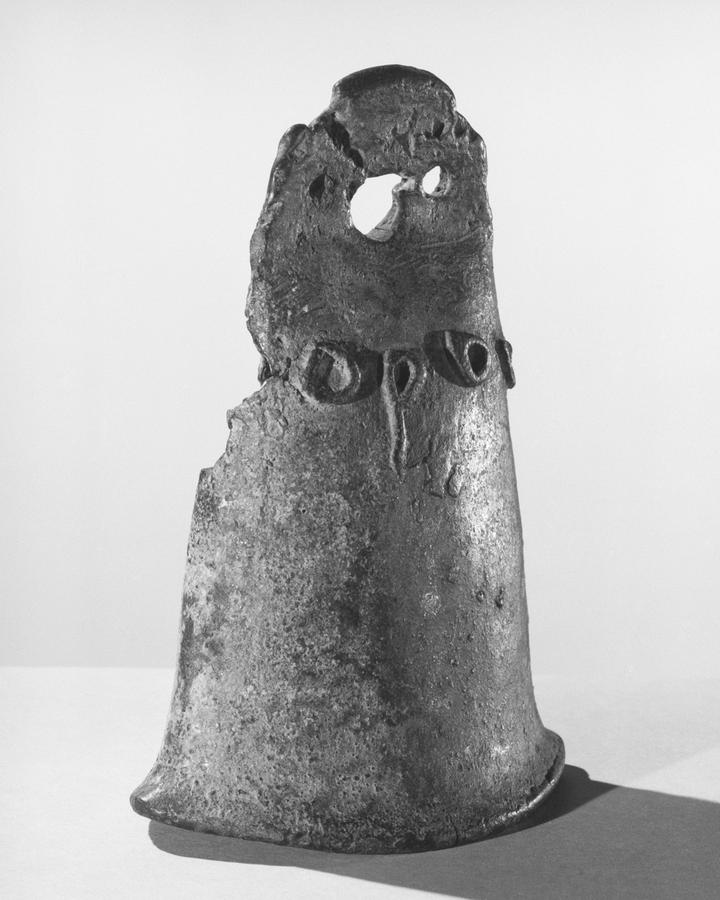
Ritual bellafter -0482 · China -
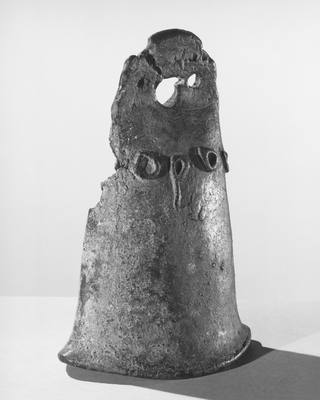
Bell3rd or 4th century BCE (?) · Greek (Greece) -

Bell100 BC–200 AD? · Italian (Ancient Rome) (Italy) -
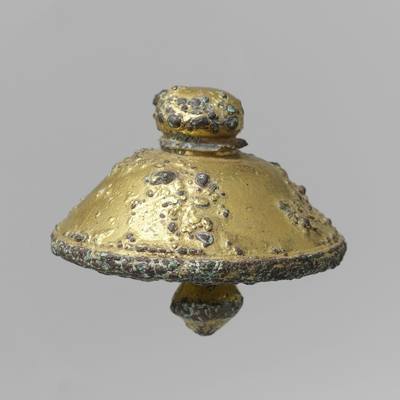
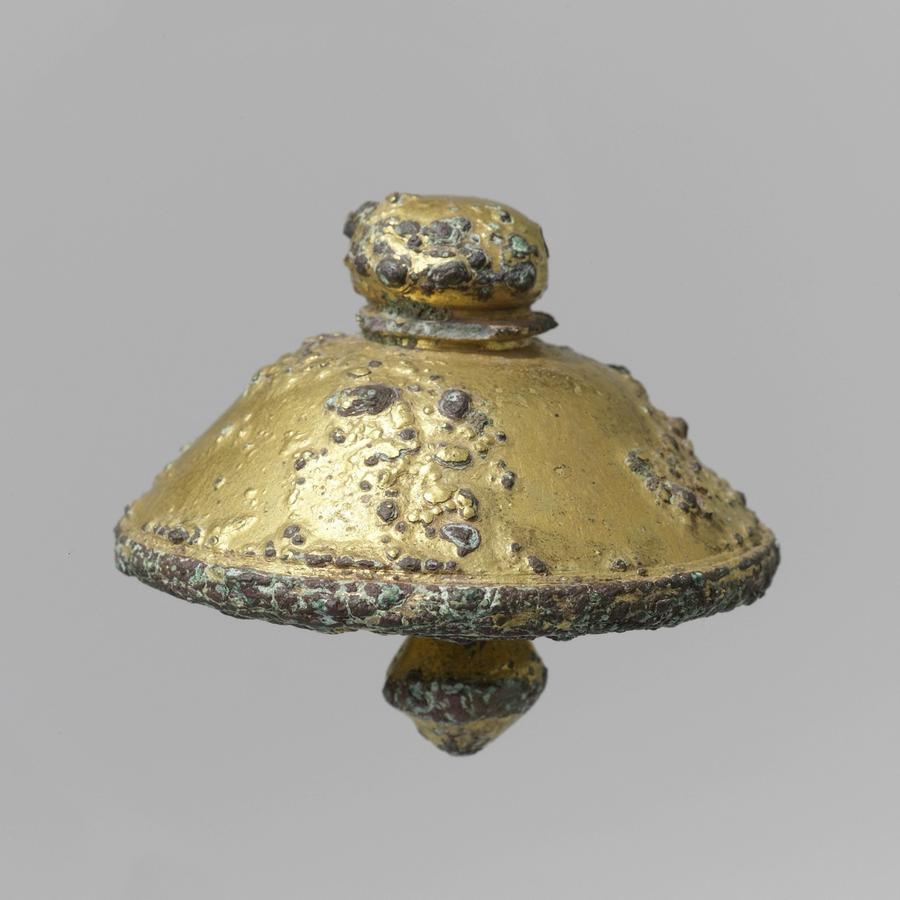
Bronze bell600 - 930 · Indonesia -
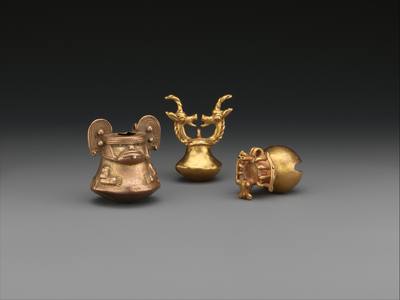
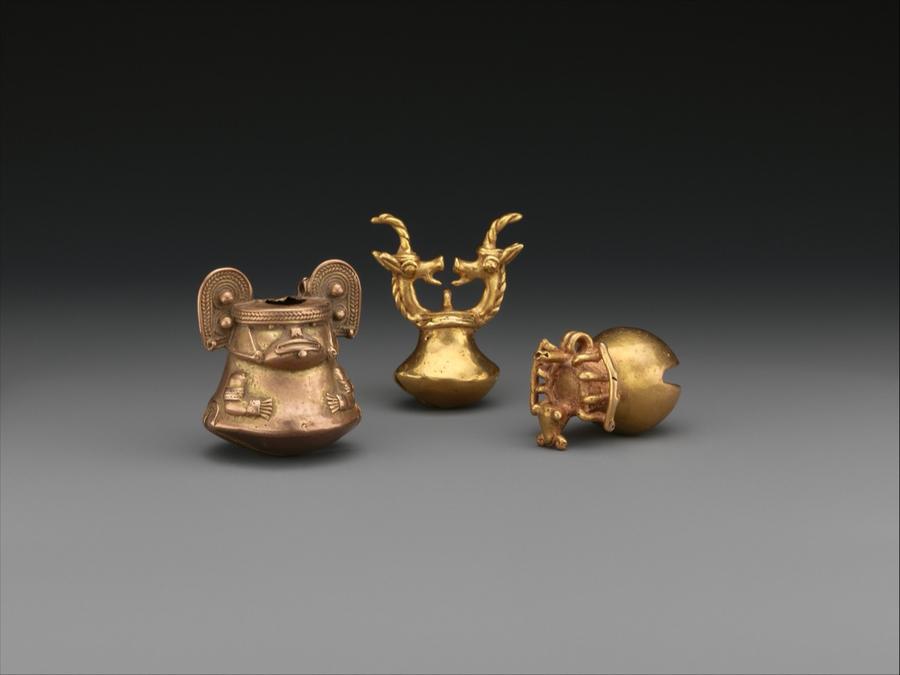
Bell1000–1500 CE · Colombian (Colombia) -
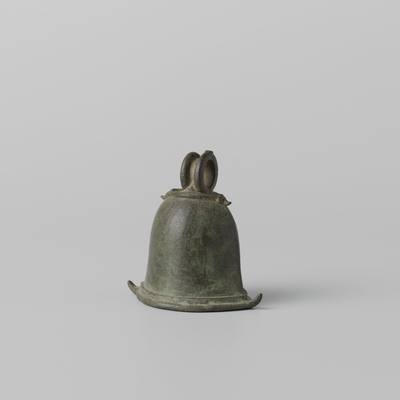
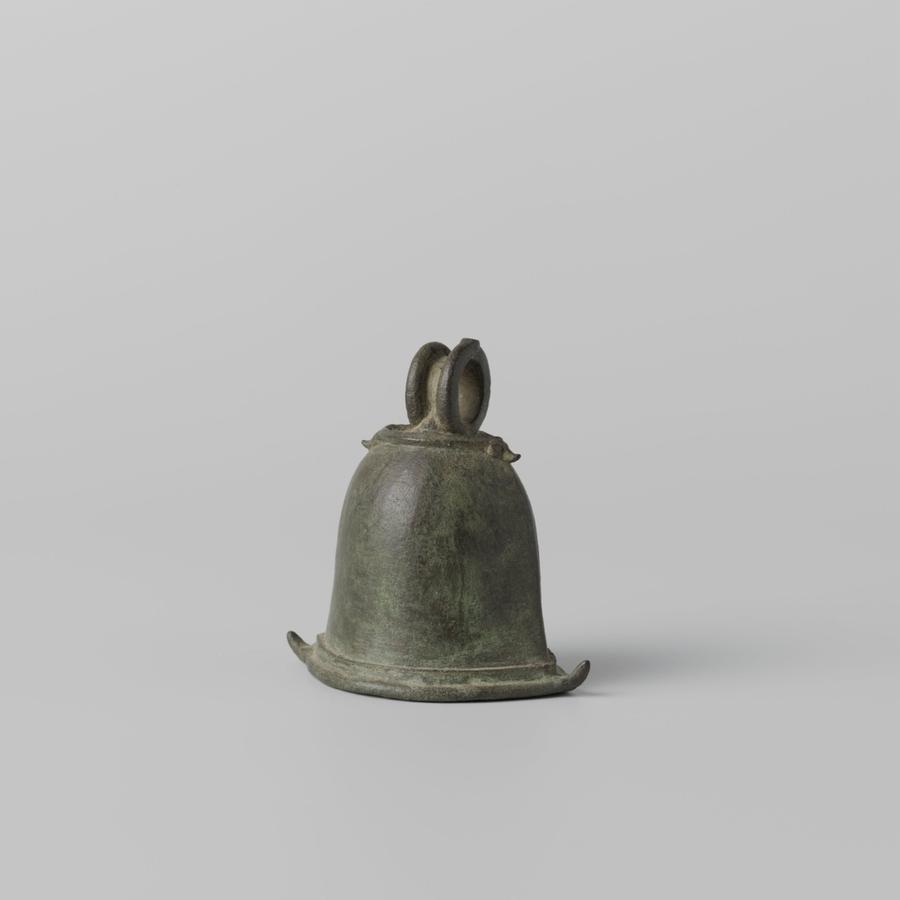
Bell1400 - 1499 · Java -
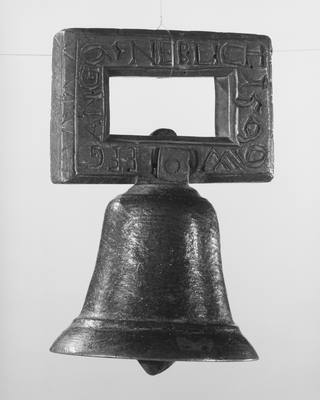
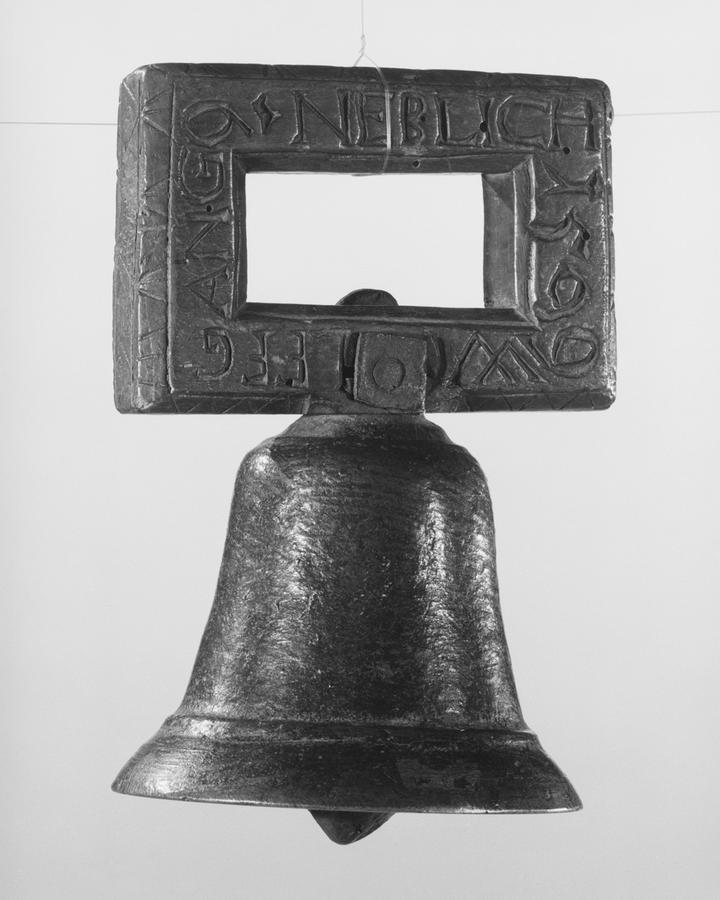
Bell1599 · Germany -
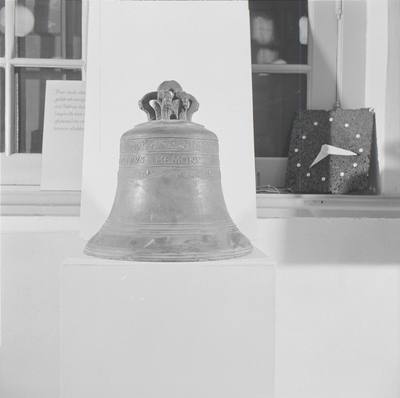
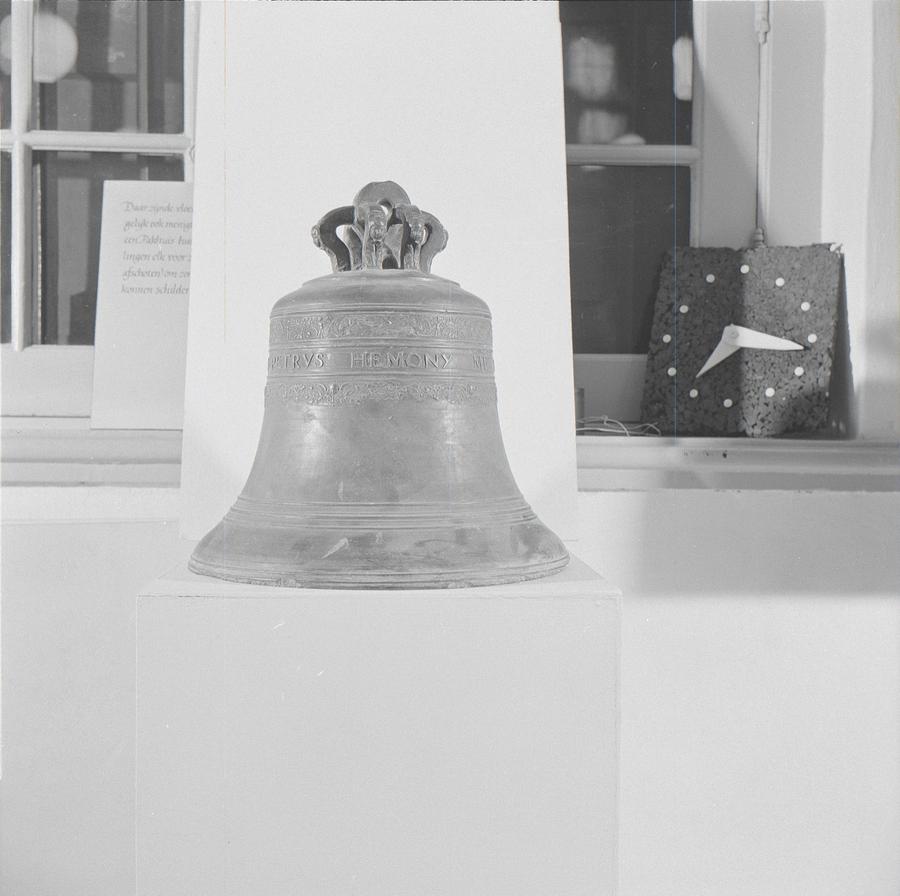
Bell1677 · Amsterdam -
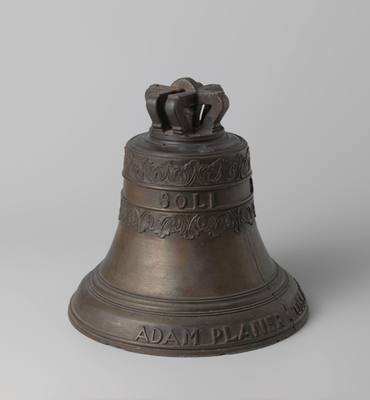
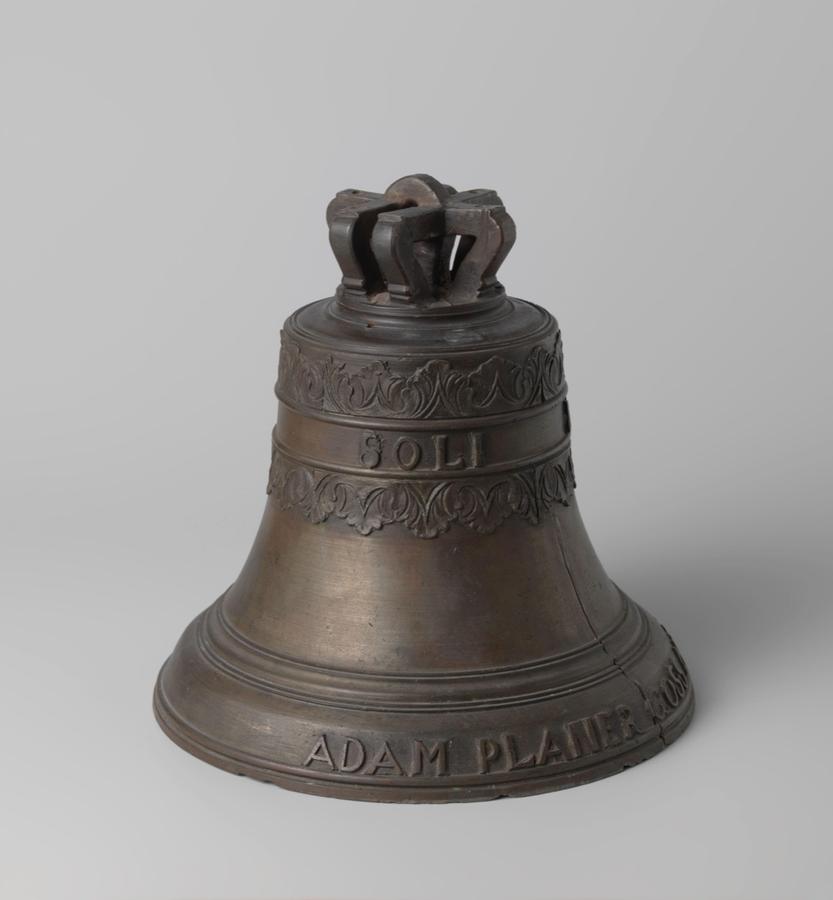
Bell1729 · Lübeck -
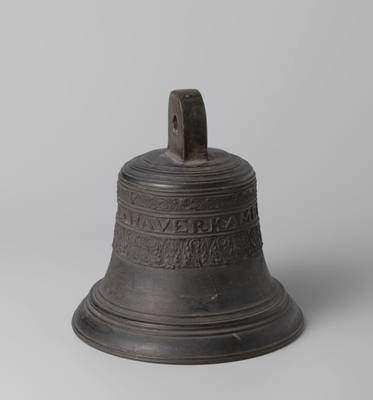
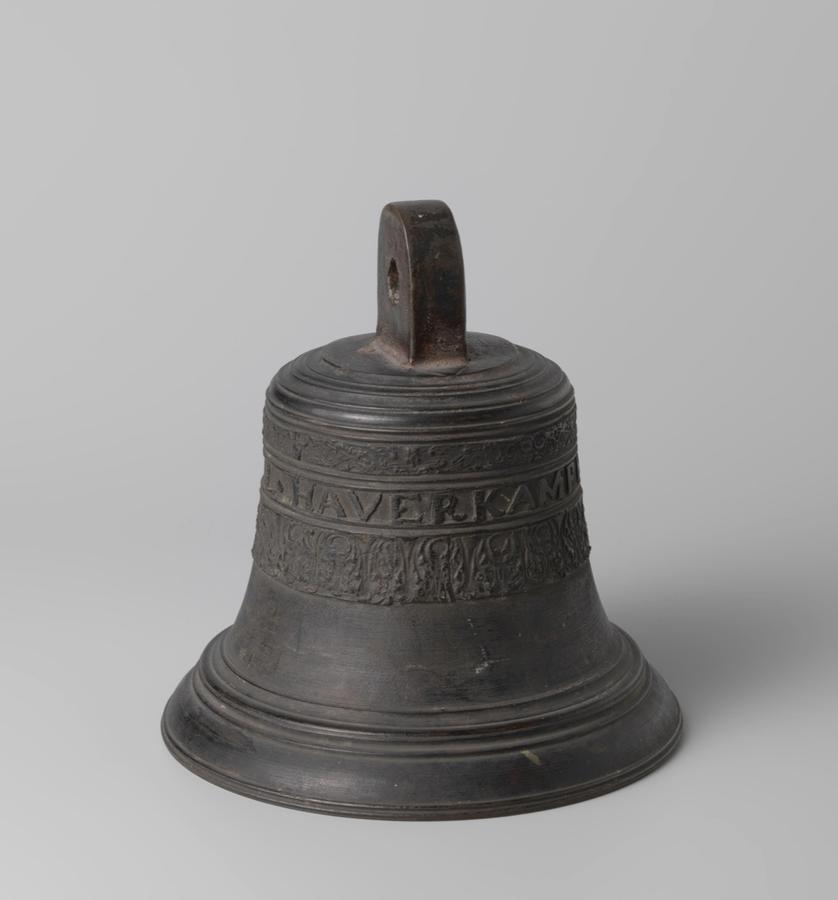
Bell1781 · Hoorn (North Holland) -
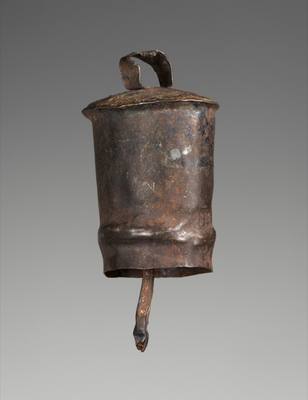
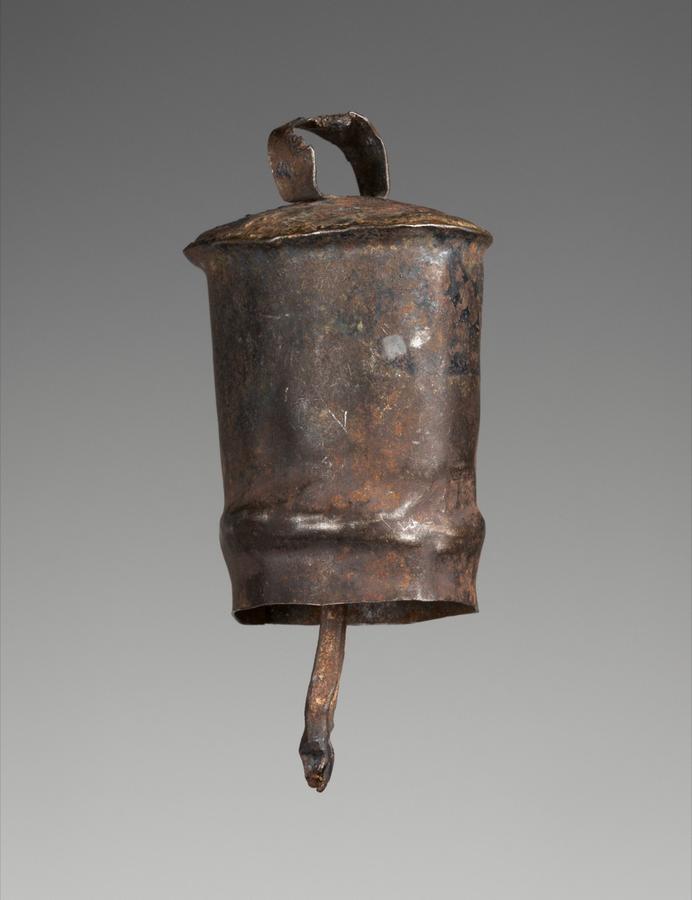
Sheep bellmid-20th century · Afghanistan

Facts at a glance
| Hornbostel–Sachs number | 111.242 — Bells: Percussion vessels with the vibration weakest near the vertex |
|---|---|
| Hornbostel–Sachs group | Idiophones › Struck idiophones › Directly struck idiophones |
| Also known as | bells |
| Classification (Wikipedia infobox) | Struck idiophone |
| Wikidata labels | 132 languages |
| Wikipedia article | Bell |
| Wikidata item | Q101401 |
| Wikimedia Commons category | Bells |
| MusicBrainz instrument | c95c7129-d180-4218-afea-4b74ef70e2be |
| Encyclopaedia Britannica | art/bell-musical-instrument |
Sources: Wikidata (CC0 1.0) — classification number, aliases, identifiers (dump of 2026-07-22); Wikipedia (CC BY-SA 4.0) — infobox fields (description of the classification number, development, inventors) and the names of the Hornbostel–Sachs groups (article “Hornbostel–Sachs”, revision of 2026-01-04).
The name in other languages
| Language | Name | Also written |
|---|---|---|
| English | bell | bells |
| French | cloche | cloches, cloche d'église, cloche de vache |
| German | Glocke | Läutemaschine, Kirchenglocke, Gußstahlglocke |
| Spanish | campana | campanas |
| Italian | campana | campane |
| Portuguese | sino | Sineta, Badalo, Sinos |
| Dutch | luidklok | luiklok, kerkklok, klok |
| Russian | колокол | Колокола |
| Japanese | 鐘 | 大鐘, 鐘の舌, ベル |
| Chinese | 鐘 | 钟 |
| Korean | 종 | |
| Arabic | جرس | الجرس |
Sources: Wikidata (CC0 1.0) — labels and aliases; MusicBrainz (CC0 1.0) — instrument aliases (names only).
About the bell: history, construction and playing
A bell is a directly struck idiophone percussion instrument. Most bells have the shape of a hollow cup that—when struck—vibrates in a single strong strike tone, with its sides forming an efficient resonator. The strike may be made by an internal "clapper" or "uvula", an external hammer, or—in small bells—by a small loose sphere enclosed within the body of the bell (jingle bell).
Bells are usually cast from bell metal (a type of bronze) for its resonant properties, but can also be made from other hard materials. This depends on the function. Some small bells (such as ornamental bells or cowbells) can be made from cast or pressed metal, glass or ceramic, but large bells (such as a church, clock, and tower bells) are normally cast from bell metal.
Bells intended to be heard over a wide area can range from a single bell hung in a turret or bell-gable, to a musical ensemble such as an English ring of bells, a carillon or a Russian zvon which are tuned to a common scale and installed in a bell tower. Many public or institutional buildings house bells, most commonly as clock bells to sound the hours and quarters.
Historically, bells have been associated with religious rites, and are still used to call communities together for religious services. Later, bells were made to commemorate important events or people and have been associated with the concepts of peace and freedom. The study of bells is called campanology.
Etymology
Bell is a word common to the Low German dialects, cognate with Middle Low German belle and Dutch bel but not appearing among the other Germanic languages except the Icelandic bjalla which was a loanword from Old English. It is popularly but not certainly related to the former sense of to bell (bellan, 'to roar, to make a loud noise') which gave rise to bellow.
History
The earliest archaeological evidence of bells dates from the 3rd millennium BCE, and is traced to the Yangshao culture of Neolithic China. Clapper-bells made of pottery have been found in several archaeological sites. The pottery bells later developed into metal bells. In West Asia, the first bells appear in 1000 BCE. The earliest metal bells, with one found in the Taosi site and four in the Erlitou site, are dated to about 2000 BCE. With the emergence of other kinds of bells during the Shang dynasty (c. 1600–1050 BCE), they were relegated to subservient functions; at Shang and Zhou sites, they are also found as part of the horse-and-chariot gear and as collar-bells of dogs. By the 13th century BCE, bells weighing over 150 kg were being cast in China. After 1000 CE, iron became the most commonly used metal for bells instead of bronze. The earliest dated iron bell was manufactured in 1079, found in Hubei Province.
Bells west of China did not reach the same size until the 2nd millennium CE. Assyrian bells dated to the 7th century BCE were around 4 inches high. Roman bells dated to the 1st and 2nd century CE were around 8 inches high. The book of Exodus in the Bible notes that small gold bells were worn as ornaments on the hem of the robe of the high priest in Jerusalem. Among the ancient Greeks, handbells were used in camps and garrisons and by patrols that went around to visit sentinels. Among the Romans, the hour of bathing was announced by a bell. They also used them in the home, as an ornament and emblem, and bells were placed around the necks of cattle and sheep so they could be found if they strayed.
In the fifth-century Celtic Church of Britain, small handbells were made from sheet iron, first folded and riveted, and then brazed with molten copper. As late as the 10th century CE, European bells were no higher than 2 feet in height.
Styles of ringing
In the western world, the common form of bell is a church bell or town bell, which is hung within a tower or bell cote. Such bells are either fixed in a static position ("hung dead") or mounted on a beam (the "headstock") so they can swing to and fro. Bells that are hung dead are normally sounded by hitting the sound bow with a hammer or occasionally by pulling an internal clapper against the bell.
A bell can be swung in a small arc with a rope and lever or higher with a rope and wheel. As it swings higher, the sound projects outward instead of downward. Larger bells may be swung using electric motors. In some places, such as the Salzburg Cathedral, the clapper is held against the sound bow with an electric clasp as the bell swings up. The clasp would release the clapper to provide a cleaner start to ringing. To silence the bell, the clasp catches and locks the clapper back in place.
Bells hung for full circle ringing are swung through just over a complete circle from mouth uppermost. A stay (the wooden pole seen sticking up when the bells are down) engages a mechanism to allow the bell to rest just past its balance point. The rope is attached to one side of a wheel so that a different amount of rope is wound on and off as it swings to and fro. The bells are controlled by ringers (one to a bell) in a chamber below, who rotate the bell through a full circle and back, and control the speed of oscillation when the bell is mouth upwards at the balance-point when little effort is required.
Swinging bells are sounded by an internal clapper. The clapper may have a longer period of swing than the bell. In this case, the bell will catch up with the clapper and if rung to or near full circle will carry the clapper up on the bell's trailing side. Alternatively, the clapper may have a shorter period and catch up with the bell's leading side, travel up with the bell, and come to rest on the downhill side. This latter method is used in English style full circle ringing.
Church and temple bells
In the Eastern world, the traditional forms of bells are temple and palace bells, small ones being rung by a sharp rap with a stick, and very large ones rung by a blow from the outside by a large swinging beam.
The striking technique is employed worldwide for some of the largest tower-borne bells because swinging the bells themselves could damage their towers.
In the Roman Catholic Church and among some High Lutherans and Anglicans, small hand-held bells, called Sanctus or sacring bells, are often rung by a server at Mass when the priest holds high up first the host and then the chalice immediately after he has said the words of consecration over them (the moment known as the Elevation). This serves to indicate to the congregation that the bread and wine have just been transformed into the Body and Blood of Christ, or, in the alternative Reformation teaching, that Christ is now bodily present in the elements, and that what the priest is holding up for them to look at is Christ himself.
In Russian Orthodox bell ringing, the entire bell never moves, only the clapper. A complex system of ropes is developed and used uniquely for every bell tower. Some ropes (the smaller ones) are played by hand, the bigger ropes are played by foot.
Bell tuning
Large bells are generally around 80% copper and 20% tin (bell metal), which has been found empirically to give the most pleasant tone. However, the tone of a bell is mostly due to its shape. A bell is regarded as having a good tone when it is "in tune with itself". In western bell founding, this is known as "harmonic tuning" of a bell, which results in the bell's strongest harmonics being in harmony with each other and the strike note. This produces the brightest and purest sound, which is the attractive sound of a good bell. Much effort has been expended over the centuries to find the shape which will produce a harmonically tuned bell.
The accompanying musical staves show the series of harmonics which are generated when a bell is struck. The Erfurt bell is notable in that, although old, it is harmonically tuned—something atypical of its era. In the 17th century, Pieter and François Hemony cast many carillon bells of unequalled tuning quality. After their death, however, their guarded trade secrets were lost, and bells of comparable quality were not cast again until the 19th century. It was only in modern times that repeatable harmonic tuning using a known scientific basis was achieved. The main partials (or harmonics) of a well-tuned bell are:
- hum note (an octave below the named note)
- strike tone (also called tap note or named note)
- tierce (a minor third above named note)
- quint (a fifth above named note)
- nominal (an octave above named note)
Further, less-audible, harmonics include the major third and a perfect fifth in the second octave above the named note.
Ancient Chinese bells
The ancient Chinese bronze chime bells called bianzhong or zhong / zeng (鐘) were used as polyphonic musical instruments, some examples having been dated at between 2000 and 3600 years old. Tuned bells have been created and used for musical performance in many cultures, but Zhong are unique from other types of cast bells in several respects and rank among some of the most advanced products of ancient Chinese bronze casting technology. However, the method of their design and casting—known only to the Chinese in antiquity—was lost in later generations, and was not fully rediscovered and understood until the 20th century.
In 1978, a complete ceremonial set of 65 Zhong bells was found in a near-perfect state of preservation during the excavation of the tomb of Marquis Yi, ruler of Zeng, one of the Warring States. Their special shape allows them to produce two different musical tones depending on where they are struck. The interval between these notes on each bell is either a major or minor third, equivalent to a distance of four or five notes on a piano.
The bells of Marquis Yi were still fully playable after almost 2500 years. Though their range spans slightly less than five octaves, the dual-tone capability of each bell allows the complete set to sound a 12-tone scale, predating the European 12-tone system by some 2000 years. The bells are also capable of playing melodies in diatonic and pentatonic scales.
Another related ancient Chinese musical instrument is qing (磬 pinyin qìng), made from stone rather than metal.
In more recent times, the tops of bells in China have usually been decorated with a small dragon, known as pulao; the figure of the dragon served as a hook for hanging the bell.
Source: Wikipedia, “Bell” — CC BY-SA 4.0 — text excerpted as published (references, images and tables removed); see the article for the full text and the list of authors. Revision of 2026-04-23.
Sources and licences
- Kunda (bell), Mayumba people, late 19th century, Congolese (Mayumba people) (Republic of the Congo). Wood. The Crosby Brown Collection of Musical Instruments, 1889 (89.4.502). Museum record · CC0 1.0 (public domain dedication)
- Ritual bell, Anonymous, after -0482, China. bronze (metal). On loan from the Royal Asian Art Society in The Netherlands (purchase Edgar Worch, with the support of the Vereniging Rembrandt, Berlin, 1930). Museum record · Public Domain Mark 1.0
- Bell, 3rd or 4th century BCE (?), Greek (Greece). Leaded bronze. The Crosby Brown Collection of Musical Instruments, 1889 (89.4.1644). Museum record · CC0 1.0 (public domain dedication)
- Bell, 100 BC–200 AD?, Italian (Ancient Rome) (Italy). metal. The Crosby Brown Collection of Musical Instruments, 1889 (89.4.1165). Museum record · CC0 1.0 (public domain dedication)
- Bronze bell, Anonymous, 600 - 930, Indonesia. gilding (material), bronze (metal). On loan from the Royal Asian Art Society in The Netherlands (gift of Jaap Polak, 1984). Museum record · Public Domain Mark 1.0
- Bell, Tairona, 1000–1500 CE, Colombian (Colombia). Tumbaga (alloy of gold and copper). Purchase, Clara Mertens Bequest, in memory of André Mertens, 2004 (2004.49). Museum record · CC0 1.0 (public domain dedication)
- Bell, Anonymous, 1400 - 1499, Java. bronze (metal). Gift of Mr and Mrs Oorthuys-Lutjens, Baak. Museum record · Public Domain Mark 1.0
- Bell, 1599, Germany. Bronze, wood. The Crosby Brown Collection of Musical Instruments, 1889 (89.4.1342). Museum record · CC0 1.0 (public domain dedication)
- Bell, Pieter Hemony, 1677, Amsterdam. bronze (metal). Rijksmuseum, Amsterdam. Museum record · Public Domain Mark 1.0
- Bell, Adam Planer, 1729, Lübeck. bronze (metal). On loan from the Cultural Heritage Agency of the Netherlands, Amersfoort. Museum record · Public Domain Mark 1.0
- Bell, L. Haverkamp, 1781, Hoorn (North Holland). bronze (metal). On loan from the Cultural Heritage Agency of the Netherlands, Amersfoort. Museum record · Public Domain Mark 1.0
- Sheep bell, mid-20th century, Afghanistan. Iron. Gift of Mark and Greta Slobin, 2015 (2015.620.29). Museum record · CC0 1.0 (public domain dedication)
Photographs: open-access collections of the museums named above; each is shown here reduced in size, otherwise unchanged. Text: Wikipedia (CC BY-SA 4.0), Wikidata and MusicBrainz (CC0). The full list of sources and licences is on the credits page.