
Instruments · Idiophones
Tambourine
The tambourine is a common percussion instrument.
The tambourine looks like a small hand-held drum. But in addition to the skin (drumhead) there are also small pairs of jingles - like tiny cymbals - in slots around the frame. However, tambourines come in many types. Some are made without a skin, particularly for use in schools. The tambourine came to Europe through the Arabs who brought it to Italy and Spain.
Summary: Simple English Wikipedia, “Tambourine” — CC BY-SA 4.0. Revision of 2025-04-27.
Museum photographs
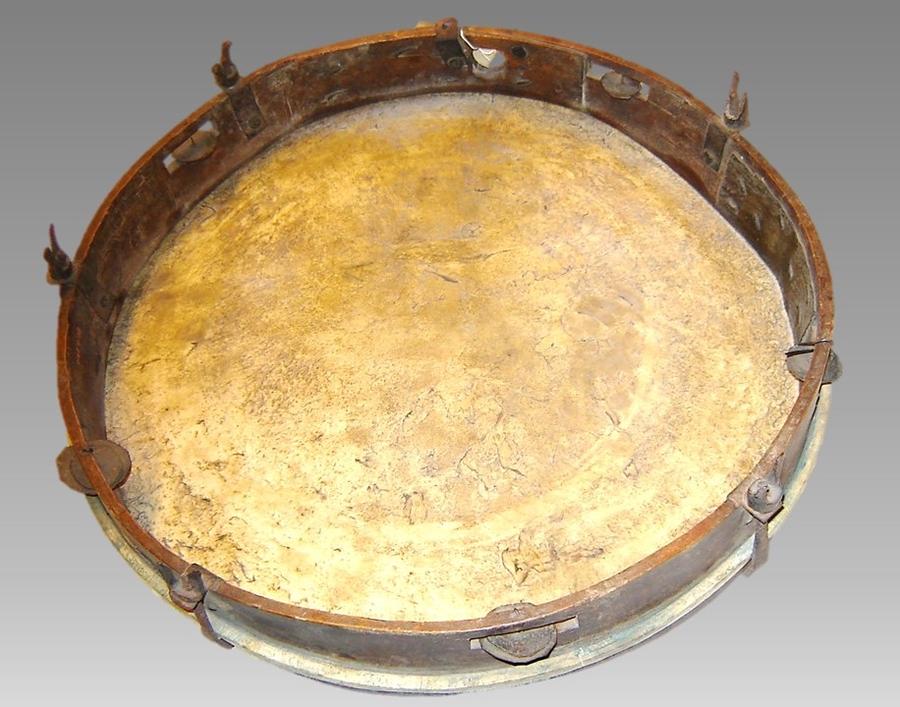
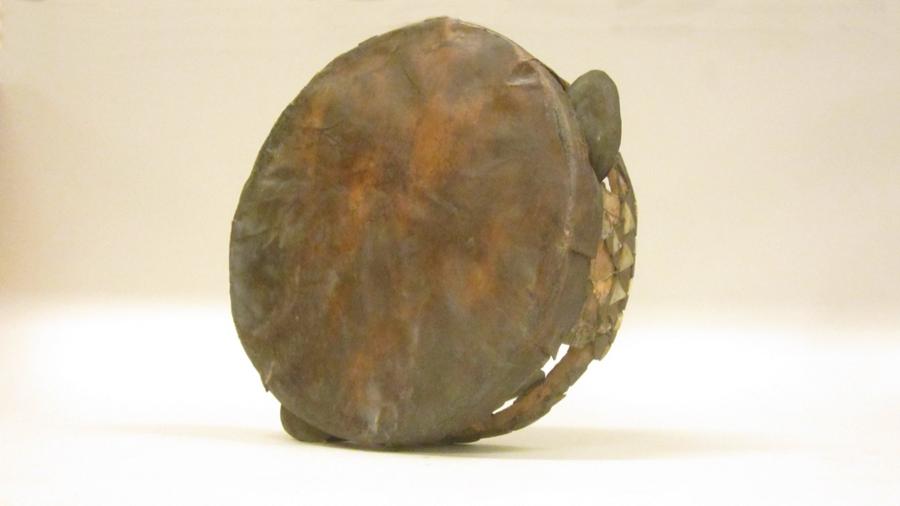
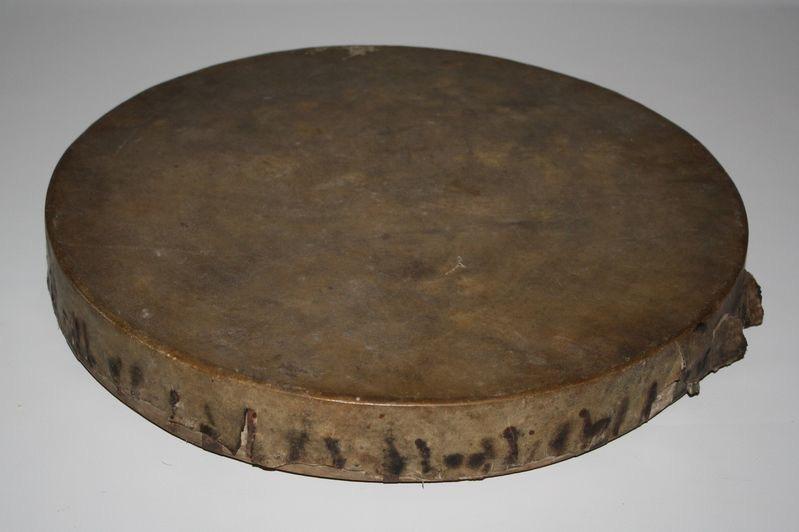
These 6 photographs span 1800–1900, 5 places of origin and 3 museums. 1 of them carry no date in the museum record. Every photograph is public domain or openly licensed, and links to the museum’s own record.
-
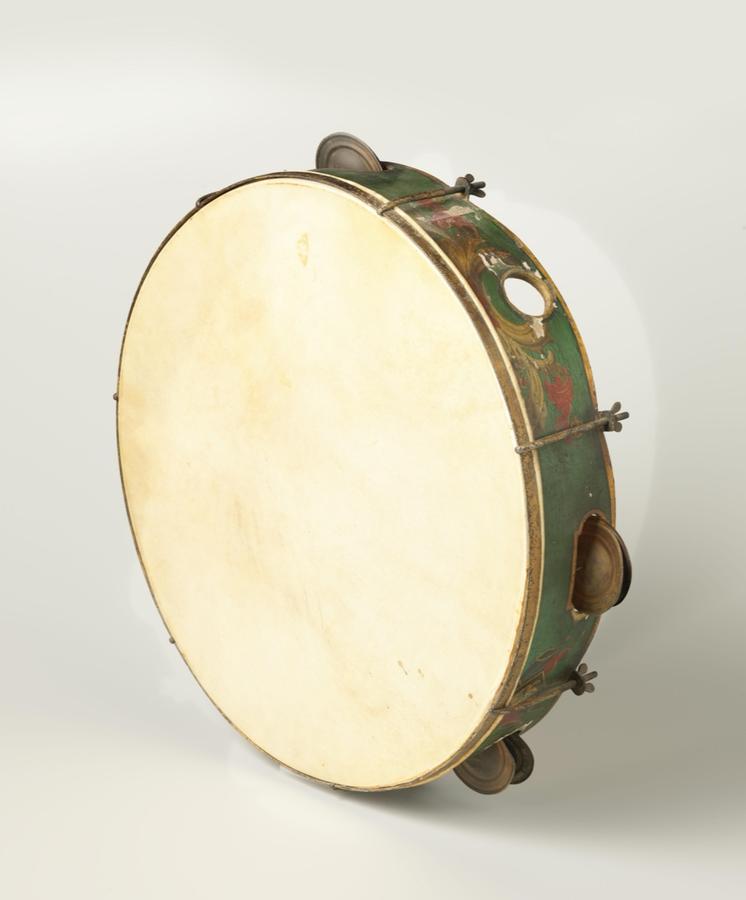
Tambourinc. 1800 · England -
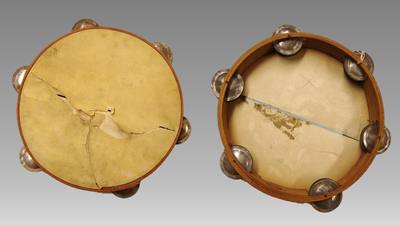
Pandereta (tambourine)19th century · Spanish (Spain) -
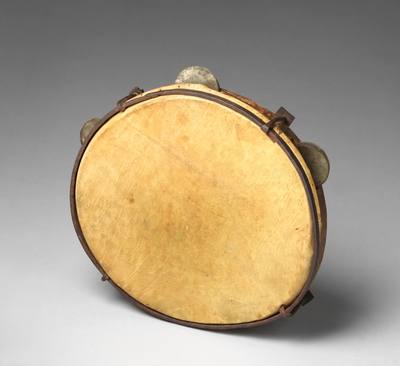
Tambourine19th century · American (United States) -
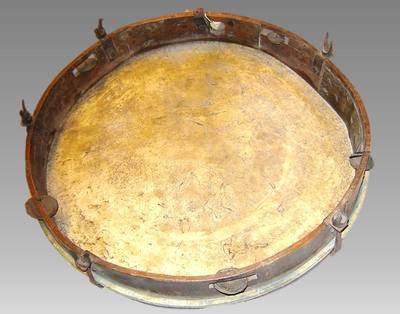
Tambourinemid 19th century · United States -
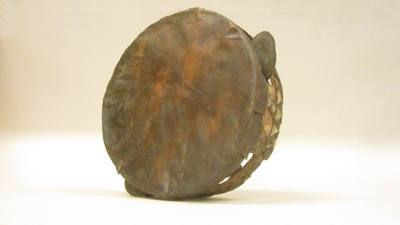
Riq رق (Tambourine)late 19th century · Egyptian (Egypt) -
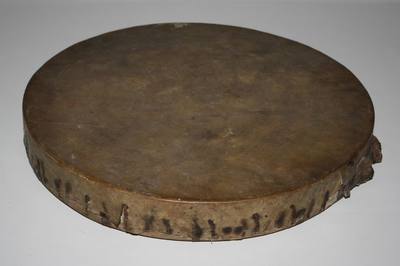
TambourineUndated · Estonia
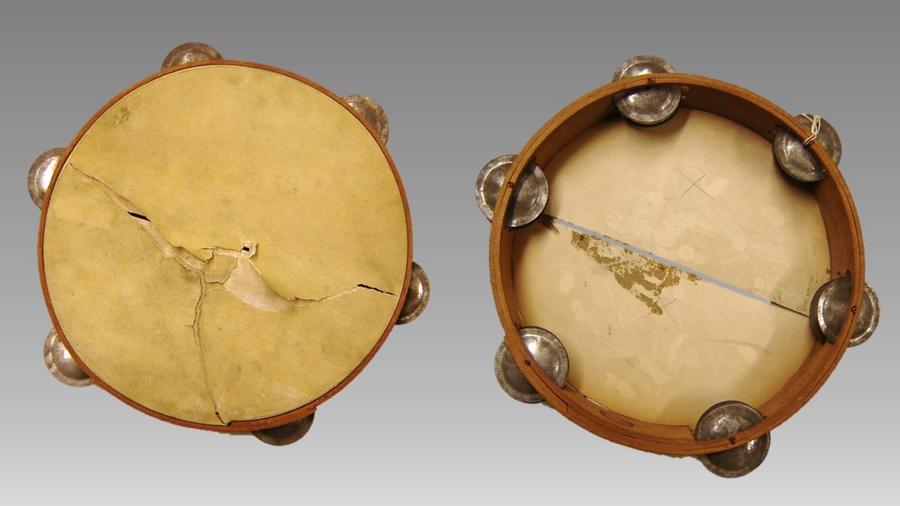
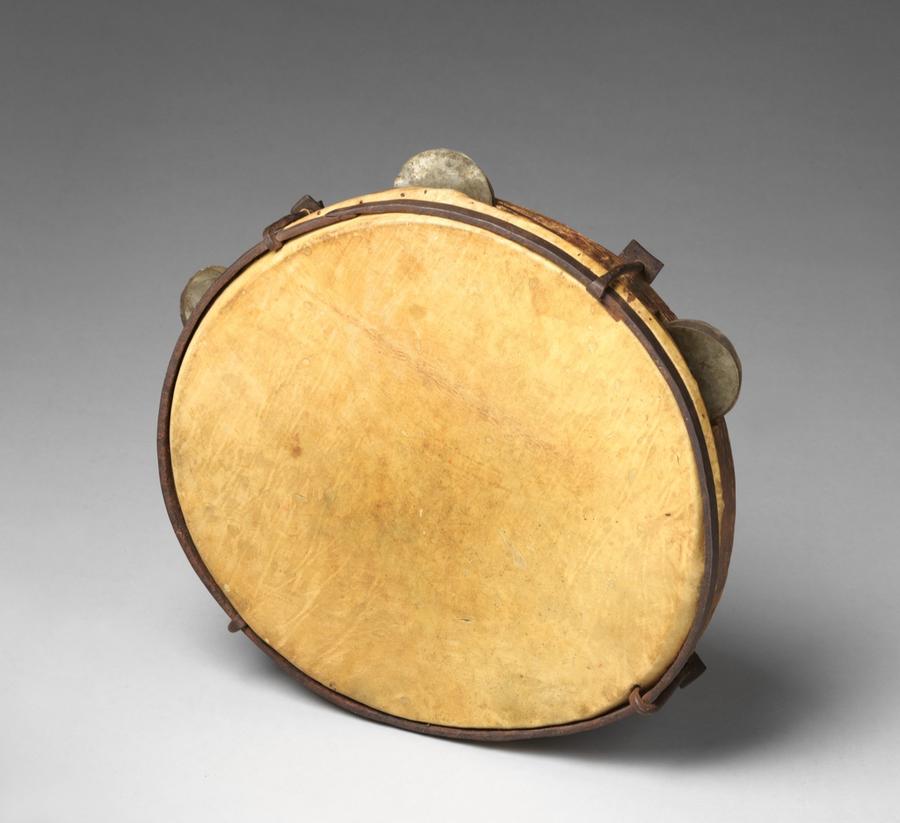
Facts at a glance
| Hornbostel–Sachs number | 112.1, 211.311 — Indirectly struck idiophone, sometimes including struck membranophone |
|---|---|
| Hornbostel–Sachs group | Idiophones › Struck idiophones › Indirectly struck idiophones |
| Classification (Wikipedia infobox) | Hand percussion |
| Wikidata labels | 81 languages |
| Wikipedia article | Tambourine |
| Wikidata item | Q193666 |
| Wikimedia Commons category | Tambourines |
| MusicBrainz instrument | 4431f7b0-69a4-49ee-b84f-15dda19fb70c |
| Encyclopaedia Britannica | art/tambourine |
| Audio sample (Wikimedia Commons) | Headless tambourine.wav |
Sources: Wikidata (CC0 1.0) — classification number, aliases, identifiers (dump of 2026-07-22); Wikipedia (CC BY-SA 4.0) — infobox fields (description of the classification number, development, inventors) and the names of the Hornbostel–Sachs groups (article “Hornbostel–Sachs”, revision of 2026-01-04).
The name in other languages
| Language | Name | Also written |
|---|---|---|
| English | tambourine | |
| French | tambourin | tambour de basque |
| German | Tamburin | |
| Spanish | pandereta | |
| Italian | tamburello | tamburello basco |
| Portuguese | pandeireta | |
| Dutch | tamboerijn | beltrom, pandeiro |
| Russian | бубен | барабан басков, тамбурин, бубон |
| Japanese | タンバリン | タンブリン |
| Chinese | 鈴鼓 | |
| Korean | 탬버린 | |
| Arabic | دف صغير |
Sources: Wikidata (CC0 1.0) — labels and aliases; MusicBrainz (CC0 1.0) — instrument aliases (names only).
About the tambourine: history, construction and playing
The tambourine is a musical instrument in the percussion family consisting of a frame, often of wood or plastic, with pairs of small metal jingles, called "zills". Classically the term tambourine denotes an instrument with a drumhead, though some variants may not have a head. Tambourines are often used with regular percussion sets. They can be mounted, for example on a stand as part of a drum kit (and played with drum sticks), or they can be held in the hand and played by tapping, hitting, or shaking the instrument.
Tambourines come in many shapes with the most common being circular. It is found in many forms of music: Albanian folk music, Arabic folk music, Balkan folk music, Israeli folk music, Turkish folk music, Greek folk music, Italian folk music, French folk music, classical music, Spanish folk music, Persian music, samba, gospel music, pop music, country music, and rock music.
History
The origin of the tambourine is unknown, but it appears in historical writings as early as 1700 BC and was used by ancient musicians first in Ancient Egypt, the Ancient Near East and eventually to Greece and other places. The tambourine passed to Europe by way of merchants or musicians. Tambourines were used in ancient Egypt, where they were known as the tof to the Hebrews, who mainly used the instrument in religious contexts. The word tambourine finds its origins in French tambourin, which referred to a long narrow drum used in Provence, the word being a diminutive of tambour "drum," altered by influence of Arabic tunbur "drum". from the Middle Persian word tambūr "lute, drum".
Playing
The tambourine can be held in the hand or mounted on a stand, and can be played in numerous ways, from stroking or shaking the jingles to striking it sharply with the hand or a stick or using the tambourine to strike the leg or hip.
Thumb roll
An advanced playing technique is known as the thumb or finger roll. The middle finger or thumb is moved over the skin or rim of the tambourine, producing a fast roll from the jingles on the instrument. The thumb or middle finger of the hand not holding the tambourine is run around the head of the instrument approximately one centimeter from the rim with some pressure applied. If performed correctly, the finger should bounce along the head rapidly, producing the roll. Usually, the end of the roll is articulated using the heel of the hand or another finger. To perform this technique, the percussionist usually lightly licks the tip of their thumb or uses beeswax or rosin. These materials increase friction making it easier to execute. A continuous roll can be achieved by moving the thumb in a "figure of 8" pattern around the head.
Europe
Various European folk traditions include the tambourine. The Romani people used the tambourine as a percussion instrument, and it was often passed around the audience to collect money after a performance. In the late 1700s, the tambourine had a surge in popularity in England, with some composers of salon music writing parts for tambourine, indicating as many as 30 different playing strokes or moves. The tambourines of this era often had a circular hole in the frame for the thumb, as one of the moves was to spin the tambourine on the upright thumb. In the late 19th century, The Salvation Army codified the tambourine as one of their important rhythm instruments. They preferred the term "timbrel" which was taken from the Bible. By 1945, Salvation Army performances often entailed elaborate tambourine choreography performed by squads in para-military style, more for visual appeal than for musicality.
African American influence
African American slaves were denied drums which might be used for long-distance communication. To supply rhythm in music, they turned to smaller percussion instruments such as the bones and the tambourine, as well as clapping and body percussion. The tambourine could accompany the singing of spirituals, and it was used for celebrations and dancing. The tambourine became one of the main instruments of the American minstrel show in the early 1800s, often performed by whites in blackface such as Ned Christy, or sometimes by actual black performers. On stage, the tambourine and bones players in minstrelsy stood to the far left and far right of the Interlocutor (master of ceremonies) and were titled Brother Tambo and Brother Bones: because of their position they were called the end men. The tambourine was also used in some vaudeville acts, including the 1840s dance and musical performances of Master Juba who was able to elicit a wide range of sounds from the instrument including the chugging of a steam train. Used for Pentecostal praise in revival meetings in the early 20th century, by the 1920s the tambourine was firmly established as the primary percussion instrument of gospel music. The tambourine was played by gospel groups and choirs, and carried prominently by singers who did not otherwise play an instrument, notably by Bessie Jones and Luther Magby.
At the same time, the tambourine expanded from gospel music to various forms of African American popular music including blues and jazz. For instance, singer and guitarist Blind Roosevelt Graves was accompanied by his brother Uaroy on tambourine and voice, singing both sacred and secular songs. Singer-songwriter Josh White got his start as a child performing for handouts in the street with an exuberant tambourine performance, beating the instrument's drumhead on his elbows, knees, and head.
In classical music
Wolfgang Amadeus Mozart was among the earliest western composers to include the tambourine in his compositions. Since the late eighteenth century it has become more common in western orchestral music, as exemplified in some of Pyotr Ilyich Tchaikovsky's dance pieces from the Nutcracker Suite. Gustav Holst's seven-movement orchestral suite The Planets also features the tambourine in several places, especially in the "Jupiter" movement. Georges Bizet's Carmen opera includes the famous "Habanera" aria which has a series of tambourine strikes in each chorus.
Buben
Buben (Бубен in Russian, Бубон in Ukrainian, boben in Slovenian, buben in Czech, bęben in Polish) is a musical instrument of the percussion family similar to a tambourine. A buben consists of a wooden or metal hoop with a tight membrane stretched over one of its sides (some bubens have no membrane at all). Certain kinds of bubens are equipped with clanking metal rings, plates, cymbals, or little bells. It is held in the hand and can be played in numerous ways, from stroking or shaking the jingles to striking it sharply with hand. It is used for rhythmical accompaniment during dances, soloist or choral singing. Buben is often used by some folk and professional bands, as well as orchestras.
The name is related to Greek language βόμβος ('low and hollow sound') and βομβύλη ('a breed of bees') and related to Indo-Aryan bambharas ('bee') and English bee. Buben is known to have existed in many countries since time immemorial, especially in the East. There are many kinds of bubens, including def, daf, or qaval (Azerbaijan), daf or khaval (Armenia), daira (Georgia), doira (Uzbekistan and Tajikistan), daire or def (Iran), bendeir (Arab countries), pandero (Spain). In Kievan Rus, drums and military timpani were referred to as buben.
Daf
A daf (دف) is a large-sized tambourine or Perso-Arabic frame drum used to accompany both popular and classical music in Iran, Azerbaijan, the Arab world, Turkey (where it is called tef), Uzbekistan (where it is called childirma), the Indian subcontinent (where it is known as the dafli) and Turkmenistan. Daf typically indicates the beat and tempo of the music being played, thus acts like the conductor in the monophonic oriental music. The Persian poet Rudaki, who widely used names of the musical instruments in his poems, mentions the daf and the tambourine (taboorak) in a Ruba'i: A common use of tambourine (Daf) is by Albanians. They are often played by women and bridesmaids in wedding cases to lead the ceremony when bride walks down the aisle.
Panderoa
The Basque pandero is a folk instrument currently played along with the trikitixa (basque diatonic accordion) in a duo most of the time. Sometimes the players, who play in festivities to enliven the atmosphere or less frequently at onstage performances, sing along. At times the pandero accompanies the alboka or txistu too. Yet these kinds of duos have not always been the case. As attested in 1923, the youth gathered to dance to the rhythm of the bare pandero, with no other music instrument implicated but the player's (a woman's) voice.
Dayereh
A dayereh (or doyra, dojra, dajre, doira, daire) is a medium-sized frame drum with jingles used to accompany both popular and classical music in Iran (Persia), the Balkans, and many central Asian countries such as Afghanistan, Tajikistan, and Uzbekistan. It is a percussion instrument, and is something intermediate between a drum and a tambourine.
Kanjira
The kanjira or ganjira is a South Indian frame drum of the tambourine family. It is mostly used in Carnatic music concerts (South Indian classical music) as a supporting instrument for the mridangam. The instrument is called dafli (डफली in the northern Hindi-speaking parts of India and is a common instrument in orchestras and solos. Nepal also has a variety of tambourines, going by the names daanf, damphu (डम्फू), hring, and khaijadi (खैंजडी).
Source: Wikipedia, “Tambourine” — CC BY-SA 4.0 — text excerpted as published (references, images and tables removed); see the article for the full text and the list of authors. Revision of 2026-02-28.
Sources and licences
- Tambourin, Anonymous, c. 1800, England. iron (metal), brass (alloy), wood (plant material), leather. Gift of Elly Lammers and Gerrit van der Veer, Lelystad. Museum record · Public Domain Mark 1.0
- Pandereta (tambourine), 19th century, Spanish (Spain). wood, skin, metal. The Crosby Brown Collection of Musical Instruments, 1889 (89.4.843). Museum record · CC0 1.0 (public domain dedication)
- Tambourine, 19th century, American (United States). Various woods, metal hardware, calfskin head. Gift of Peter Szego, 2024 (2024.607.6). Museum record · CC0 1.0 (public domain dedication)
- Tambourine, mid 19th century, United States. Wood, parchment, metal. The Crosby Brown Collection of Musical Instruments, 1889 (89.4.554). Museum record · CC0 1.0 (public domain dedication)
- Riq رق (Tambourine), late 19th century, Egyptian (Egypt). Wood, ivory, pearl. The Crosby Brown Collection of Musical Instruments, 1889 (89.4.323). Museum record · CC0 1.0 (public domain dedication)
- Tambourine, Undated, Estonia. Saaremaa Museum / Estonian e-Repository and Conservation of Collections (via Europeana). Museum record · CC0 1.0 (public domain dedication)
Photographs: open-access collections of the museums named above; each is shown here reduced in size, otherwise unchanged. Text: Wikipedia (CC BY-SA 4.0), Wikidata and MusicBrainz (CC0). The full list of sources and licences is on the credits page.