
Instruments · Idiophones
Castanets
Castanets, also known as clackers or palillos, are a percussion instrument (idiophonic), used in Spanish, Calé, Moorish, Ottoman, Greek, Italian, Mexican, Sephardic, Portuguese, Filipino, Brazilian, and Swiss music. In ancient Greece and ancient Rome there was a similar instrument called the crotalum.
Summary: Wikipedia, “Castanets” — CC BY-SA 4.0. Revision of 2026-06-06.
Museum photographs
These 6 photographs span 1800–1968, 3 places of origin and 3 museums. 1 of them carry no date in the museum record. Every photograph is public domain or openly licensed, and links to the museum’s own record.
-
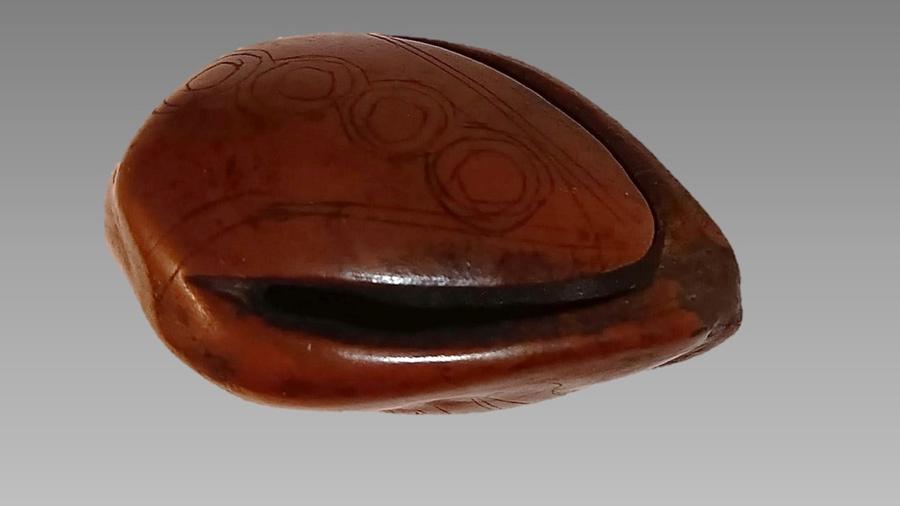
Castanetslate 19th century · Javanese (Indonesia) -
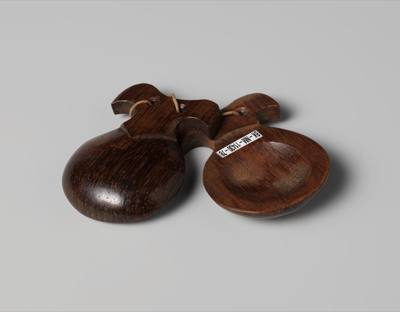
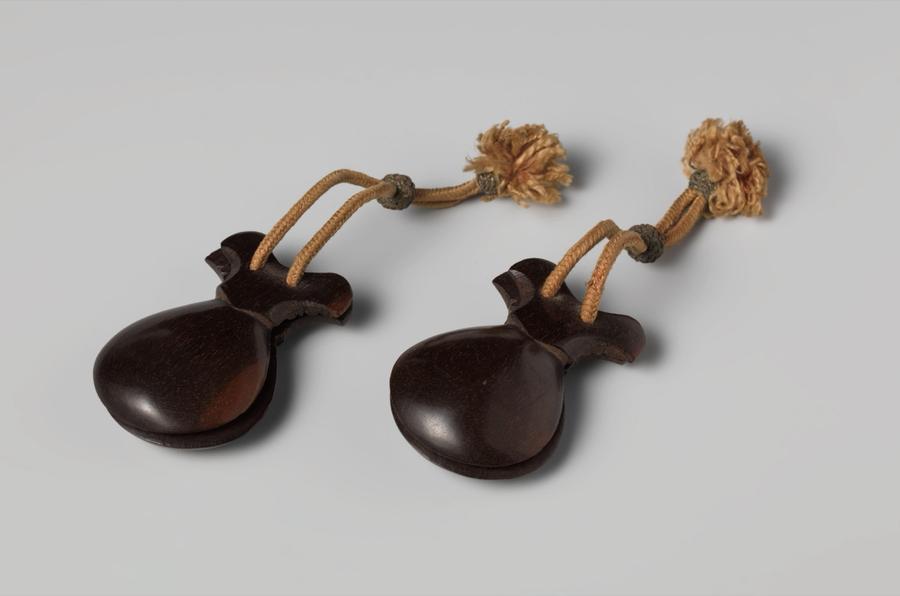
Castanets1800 - 1896 -
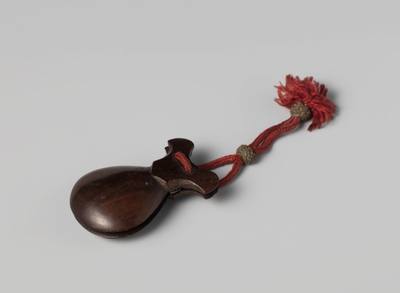
Castanets1800 - c. 1822 -
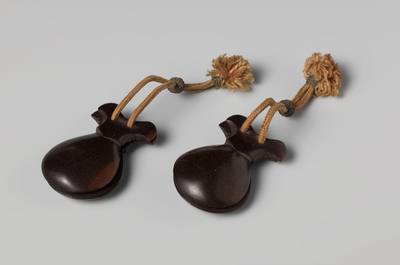
Castanets1800 - 1822 -
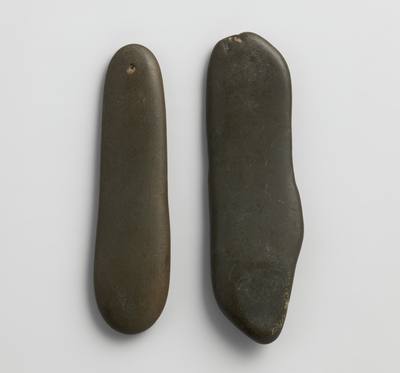
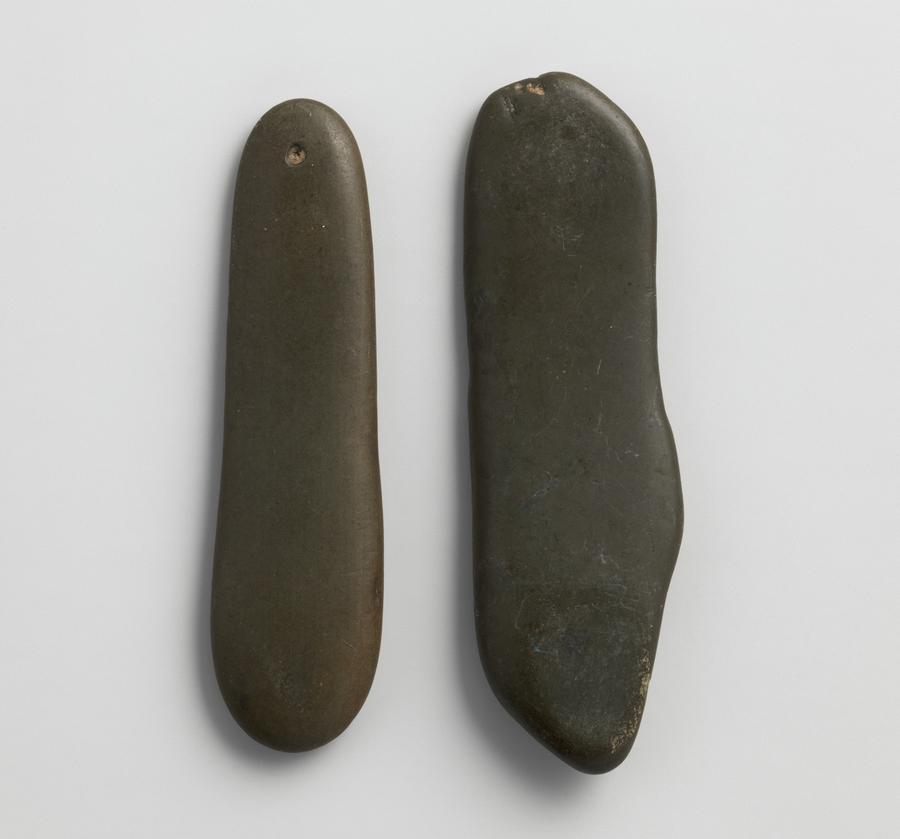
Qairaq (stone castanets)mid-20th century · Afghanistan -
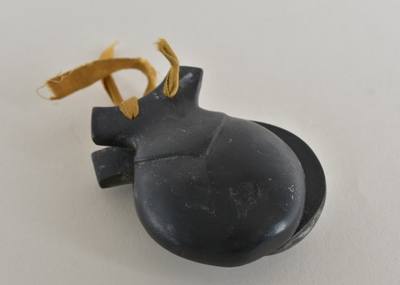
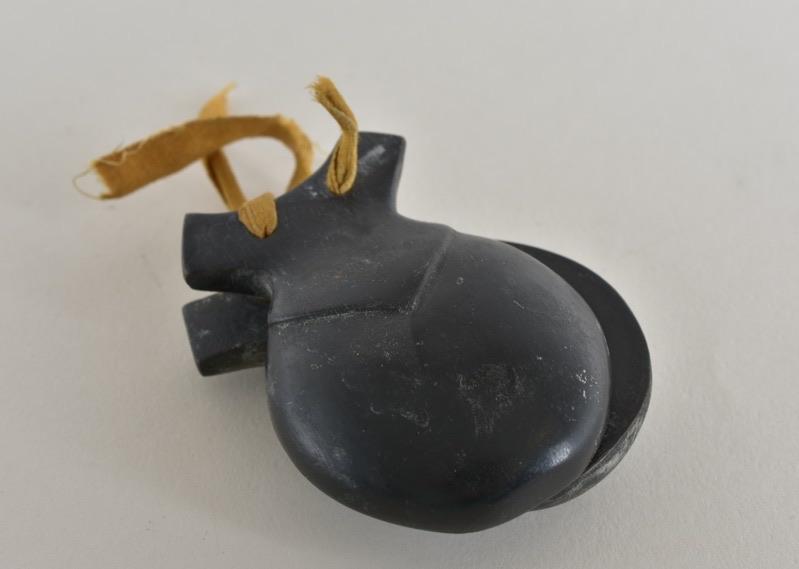
CastanetsUndated · Estonia
Facts at a glance
| Hornbostel–Sachs number | 111.141 — Directly struck concussive idiophone |
|---|---|
| Hornbostel–Sachs group | Idiophones › Struck idiophones › Directly struck idiophones |
| Classification (Wikipedia infobox) | hand percussion |
| Wikidata labels | 69 languages |
| Wikipedia article | Castanets |
| Wikidata item | Q183932 |
| Wikimedia Commons category | Castanets |
| MusicBrainz instrument | dd53d958-d4dd-43df-bf61-2e62d4772109 |
| Encyclopaedia Britannica | art/castanets |
Sources: Wikidata (CC0 1.0) — classification number, aliases, identifiers (dump of 2026-07-22); Wikipedia (CC BY-SA 4.0) — infobox fields (description of the classification number, development, inventors) and the names of the Hornbostel–Sachs groups (article “Hornbostel–Sachs”, revision of 2026-01-04).
The name in other languages
| Language | Name | Also written |
|---|---|---|
| English | castanets | |
| French | castagnettes | castagnette |
| German | Kastagnetten | Castagnette, Kastagnette, Castagnetten |
| Spanish | castañuelas | Castanuelas |
| Italian | nacchere | castagnette, 111.141 Castagnette |
| Portuguese | castanhola | Castanholas |
| Dutch | castagnetten | castañuelas, castagnette, castanuelas |
| Russian | кастаньеты | Кастаньета |
| Japanese | カスタネット | |
| Chinese | 響板 | |
| Korean | 캐스터네츠 | |
| Arabic | صنَاجات | كاستانت, صناجة |
Sources: Wikidata (CC0 1.0) — labels and aliases; MusicBrainz (CC0 1.0) — instrument aliases (names only).
About the castanets: history, construction and playing
Castanets, also known as clackers or palillos, are a percussion instrument (idiophonic), used in Spanish, Calé, Moorish, Ottoman, Greek, Italian, Mexican, Sephardic, Portuguese, Filipino, Brazilian, and Swiss music. In ancient Greece and ancient Rome there was a similar instrument called the crotalum.
The instrument consists of a pair of concave shells joined on one edge by a string. They are held in the hand and used to produce clicks for rhythmic accents or a ripping or rattling sound consisting of a rapid series of clicks. They are traditionally made of hardwood (chestnut; Spanish: castaño), although fibreglass has become increasingly popular.
In practice, a player usually uses two pairs of castanets. One pair is held in each hand, with the string hooked over the thumb and the castanets resting on the palm with the fingers bent over to support the other side. Each pair will make a sound of a slightly different pitch. The slightly lower one usually marks the beat with joined fingers, whereas the slightly higher one is used for variations with all four fingers, including producing rattle-like sounds.
Castanets in Spain
Castanets are commonly used in several Spanish folk music and dances, such as the Jota, a music/dance probably originated in Aragón, and the Fandango. It spread, partly with these genres, throughout Central Spain/Castile, and Southern parts of Spain. Castanets are also used by singers and dancers in the flamenco genre, especially in some subgenres of it (Siguiriya, and Fandango-influenced ones), and in other dances in Andalusia/South Spain, such as the Sevillanas folk dance and escuela bolera, a balletic dance form. The name (Spanish: castañuelas) is derived from the diminutive form of castaña, the Spanish word for chestnut, which they resemble. In Andalusia they are usually referred to as palillos (little sticks) instead, and this is the name by which they are known in flamenco. In parts of southeastern Spain (like Murcia), castanets are called "postizas", and are played somewhat different (hooked over other fingers).
Castanets were used to evoke a Spanish atmosphere in Georges Bizet's opera, Carmen. They are also found in the "Dance of the Seven Veils" from Richard Strauss' opera Salome and in Richard Wagner's Tannhäuser. An unusual variation on the standard castanets can be found in Darius Milhaud's Les Choëphores, which calls for castanets made of metal. Other uses include Rimsky-Korsakov's Capriccio espagnol, Ravel's Rapsodie espagnole, Francis Poulenc's Concerto for Two Pianos and Orchestra in D minor and Karl Jenkins's Tangollen.
One can also see Spanish influence in the music of Naples through the presence of castanets, as it was registered by Athanasius Kircher on his Tarantella Napoletana (tono hypodorico).
Mounted castanets
When used in an orchestral or jug band setting, castanets are sometimes attached to a handle, or mounted to a base to form a pair of machine castanets. This makes them easier to play, but also alters the sound, particularly for the machine castanets. It is possible to produce a roll on a pair of castanets in any of the three ways in which they are held. When held in the hand, they are bounced against the fingers and palm of the hand; on sticks, bouncing between fingers and the player's thigh is one accepted method. For a machine castanet, a less satisfactory roll is obtained by the rapid alternation of the two castanets with the fingers.
Source: Wikipedia, “Castanets” — CC BY-SA 4.0 — text excerpted as published (references, images and tables removed); see the article for the full text and the list of authors. Revision of 2026-06-06.
From Grove’s Dictionary (1900)
CASTANETS. A pair of castanets (or castagnettes) consists of two small pieces of hard wood, shaped somewhat like the bowl of a spoon, or a scallop shell. These are hinged together by a cord, the ends of which pass over the thumb and first finger of the performer. The remaining fingers strike the two halves together, either in single strokes or in trills; the instrument emitting a deep hollow click, which, although not a musical note, is nevertheless not disagreeable to the ear. The performer has usually a pair in each hand. It is a Moorish and Spanish instrument, and is intended for accompanying dances. Its use by ballet-dancers is well known.
When required to be played in the orchestra, to accompany dance music, it is best to attach a pair, half on each side, to a flat piece of hard wood, ending in a stick about eight inches long. By shaking this apparatus, the required effect is produced, without the necessity of fitting the castanets to the performer's fingers, who generally is playing some other instrument, and must suddenly take up the castanets to play a few bars.
Source: Wikisource, A Dictionary of Music and Musicians (Grove, 1900) — “Castanets” (entry by Victor de Pontigny) — Public domain (published 1879–1910; authors died before 1929) — the first paragraphs of the entry, as transcribed; see the page for the full entry.
Sources and licences
- Castanets, late 19th century, Javanese (Indonesia). Nutshell. The Crosby Brown Collection of Musical Instruments, 1889 (89.4.737). Museum record · CC0 1.0 (public domain dedication)
- Castanets, 1800 - 1896. rope, wood (plant material). Purchased with the support of the State of the Netherlands and the Vereeniging van Noord-Nederlandsche Muziekgeschiedenis. Museum record · Public Domain Mark 1.0
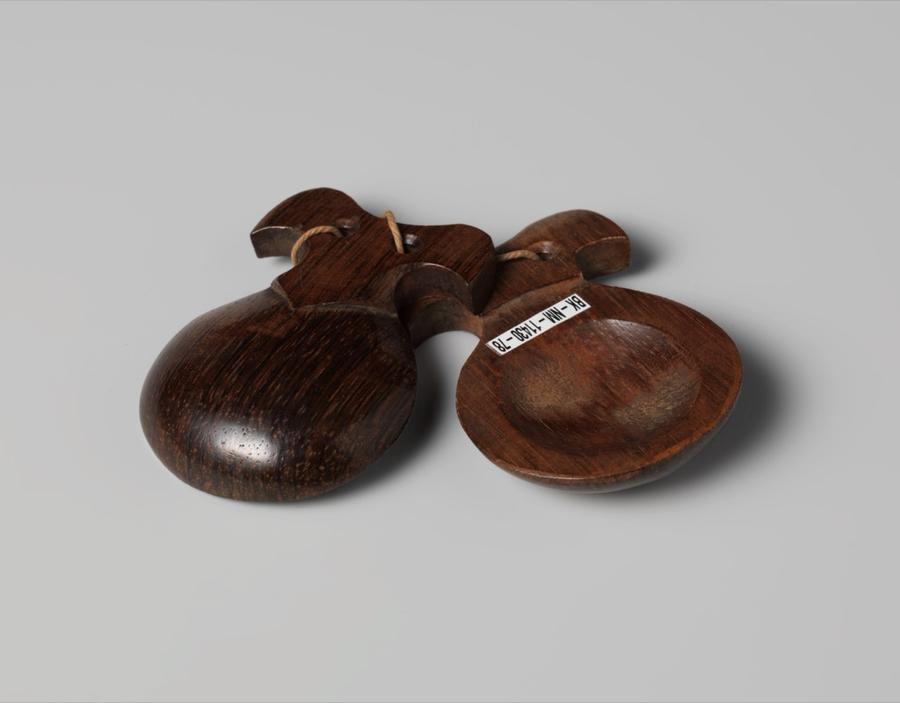
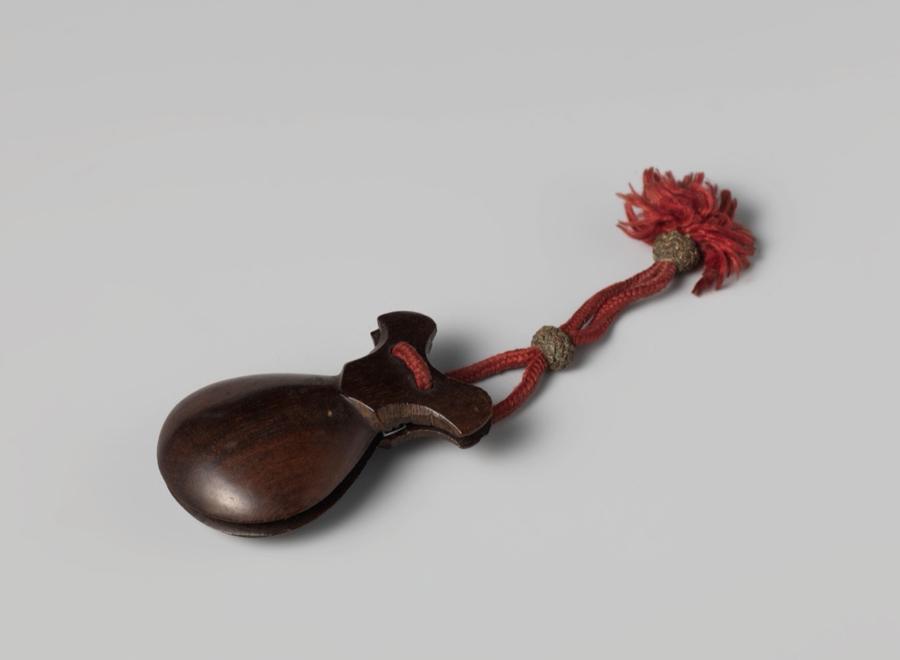
- Castanets, 1800 - c. 1822. wood (plant material), rope. Rijksmuseum, Amsterdam. Museum record · Public Domain Mark 1.0
- Castanets, 1800 - 1822. wood (plant material), rope. Rijksmuseum, Amsterdam. Museum record · Public Domain Mark 1.0
- Qairaq (stone castanets), mid-20th century, Afghanistan. Stone. Gift of Mark and Greta Slobin, 2015 (2015.620.26a, b). Museum record · CC0 1.0 (public domain dedication)
- Castanets, Undated, Estonia. Virumaa Museums / Estonian e-Repository and Conservation of Collections (via Europeana). Museum record · CC0 1.0 (public domain dedication)
Photographs: open-access collections of the museums named above; each is shown here reduced in size, otherwise unchanged. Text: Wikipedia (CC BY-SA 4.0), Grove’s Dictionary (public domain), Wikidata and MusicBrainz (CC0). The full list of sources and licences is on the credits page.