
Instruments · Chordophones
Harp
The harp is a musical instrument. It is the second biggest string instrument in an orchestra. It dates back to 4000 BC when the Egyptians used them in holy places. Christian artists often draw angels playing harps in Heaven.
Summary: Simple English Wikipedia, “Harp” — CC BY-SA 4.0. Revision of 2021-07-25.
Museum photographs
These 12 photographs span 1500–1950, 6 places of origin and 3 museums. Every photograph is public domain or openly licensed, and links to the museum’s own record.
-
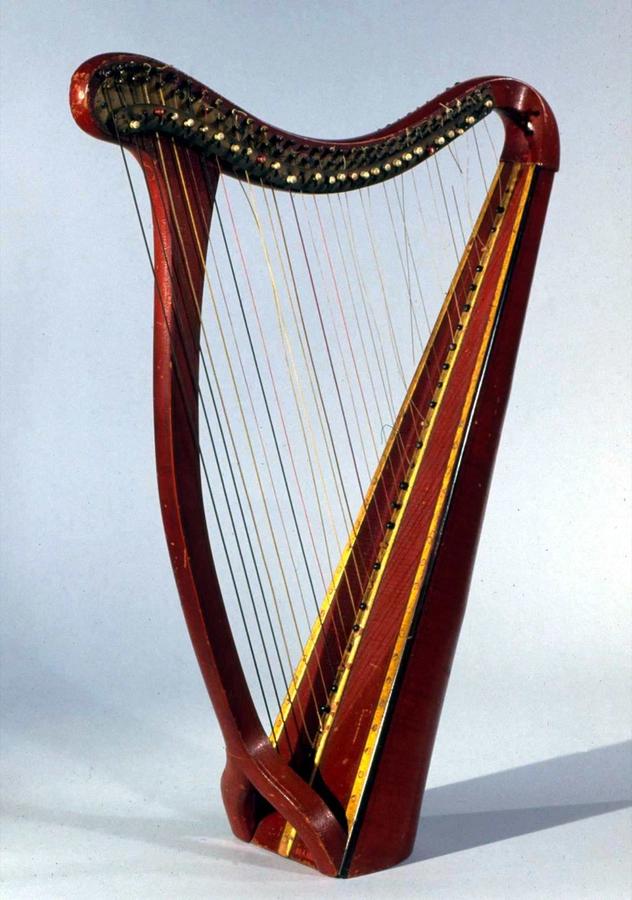
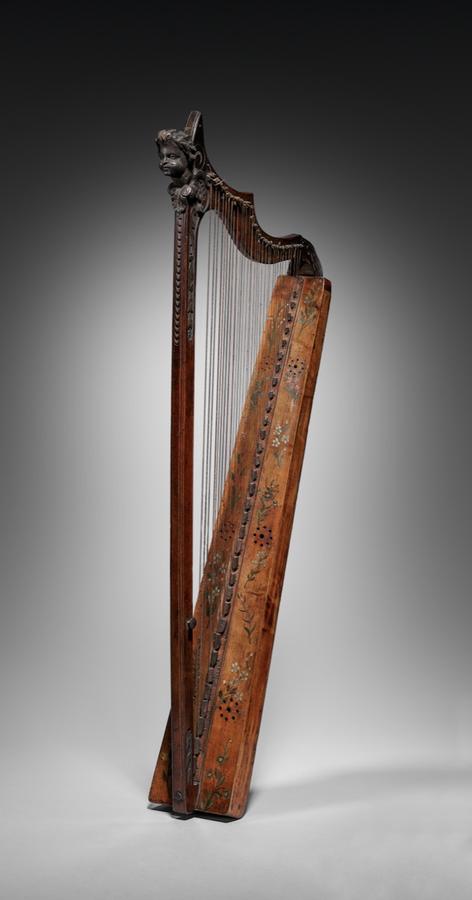
Portable Harp1814–30 · French (France) -
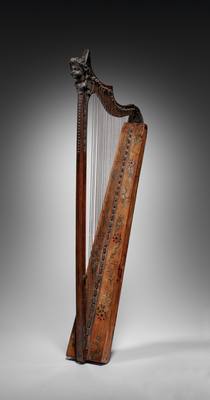
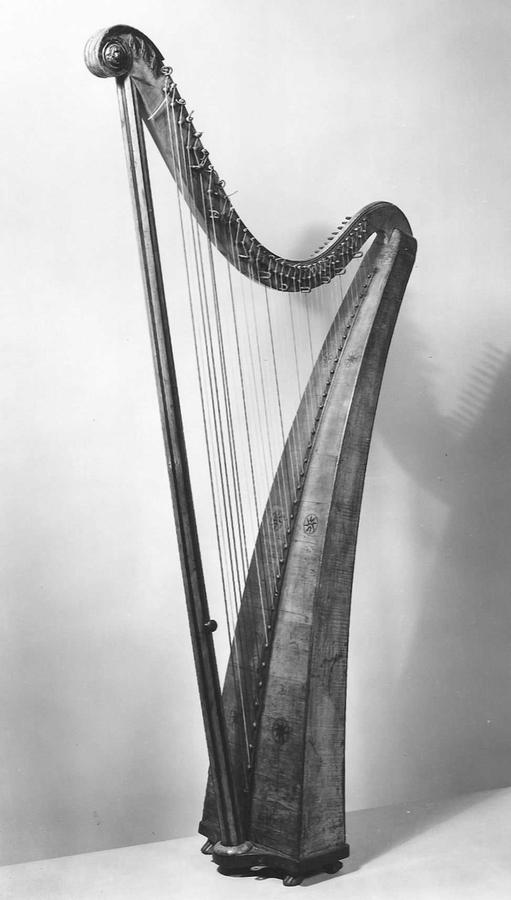
Harp1500s · France -
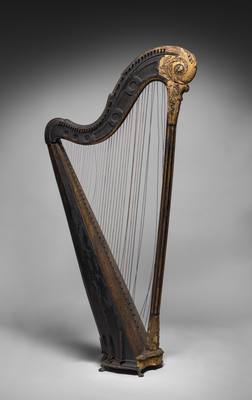
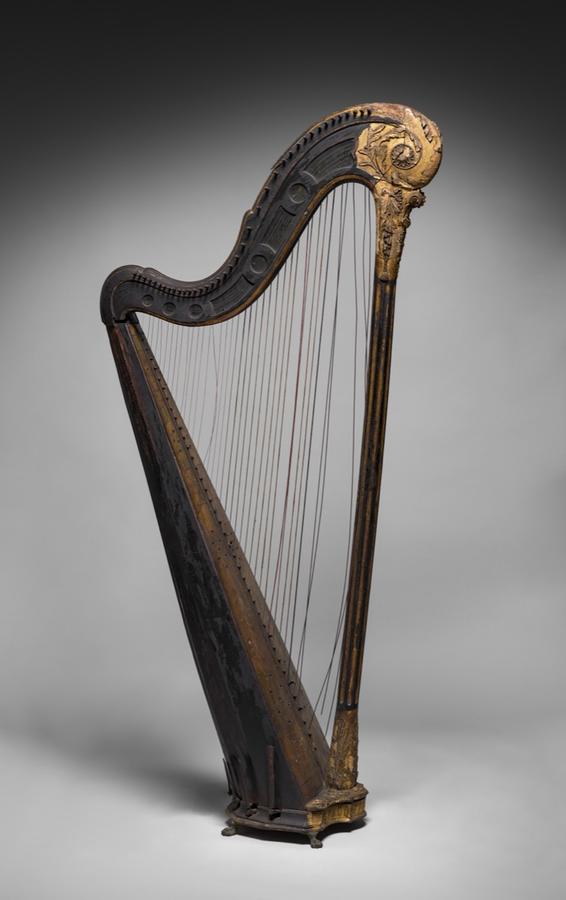
Harp1700s · France -
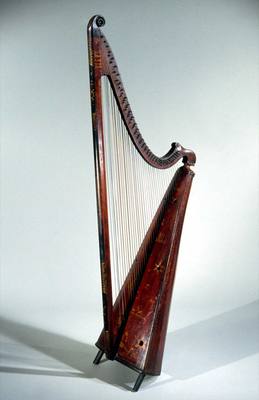
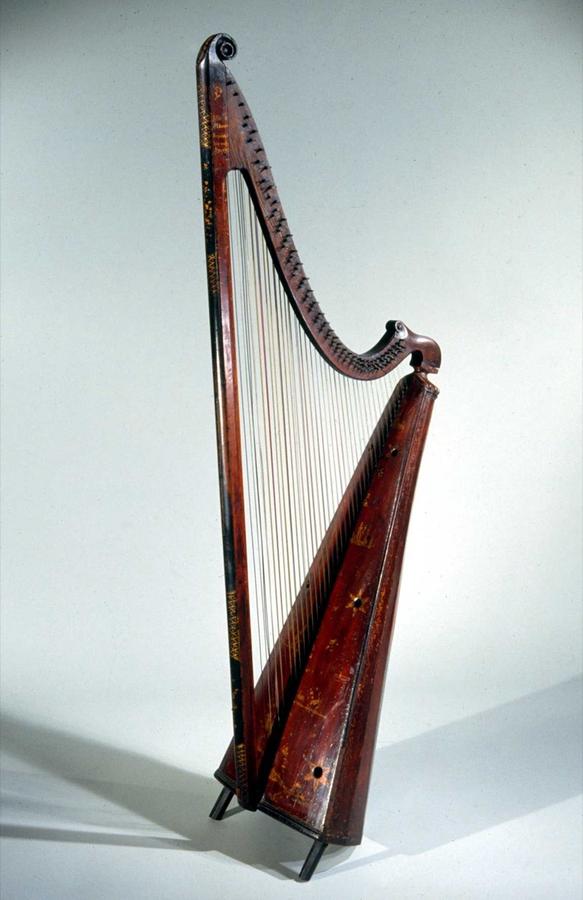
Welsh Triple Harpca. 1750 · British (Welsh) (United Kingdom) -
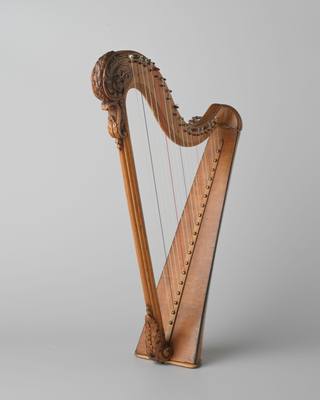
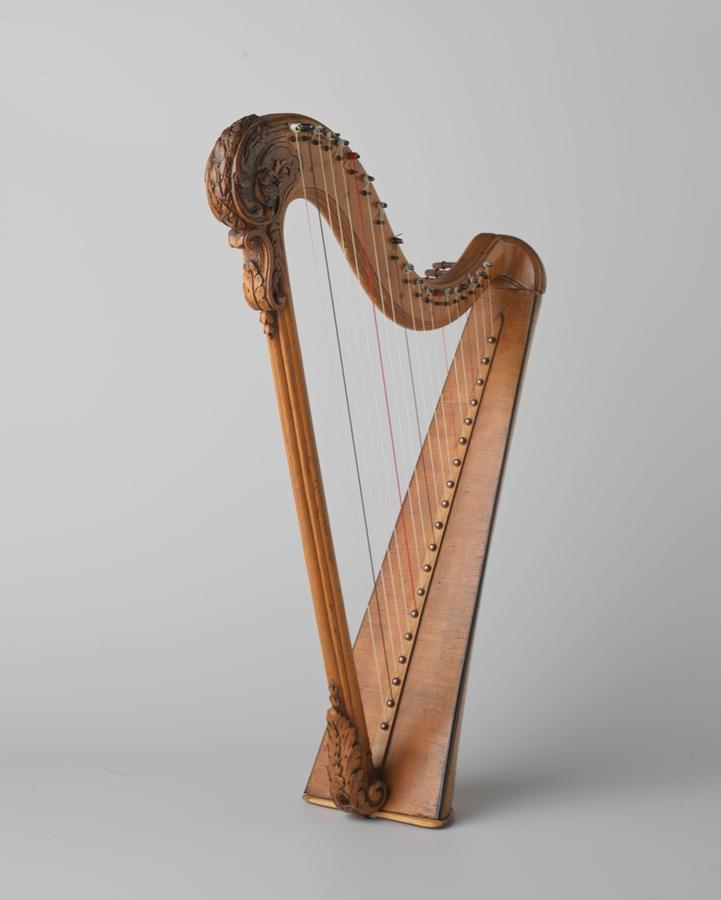
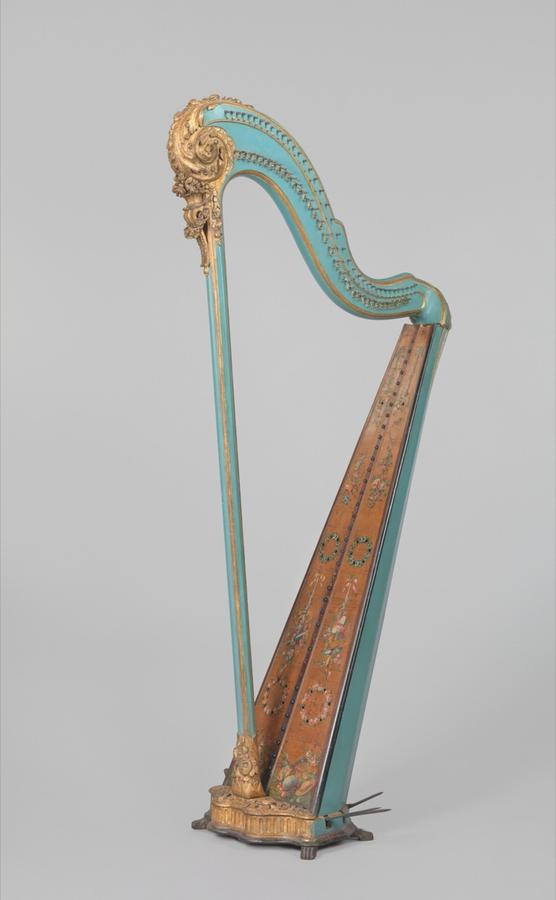
Portable harpc. 1770 - c. 1780 · France -
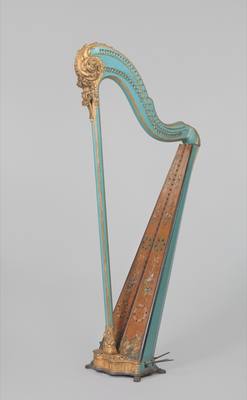
Harpc. 1780 · France -
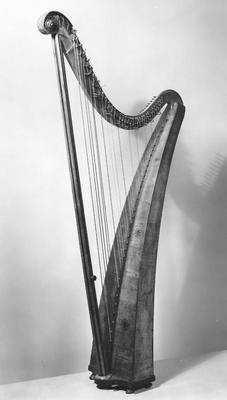
Hook Harpbefore 1848 · Germany -
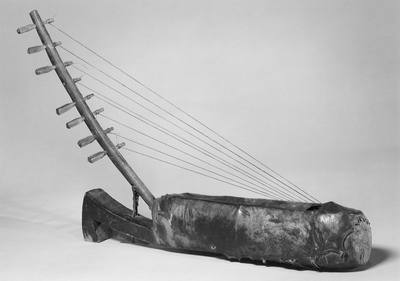
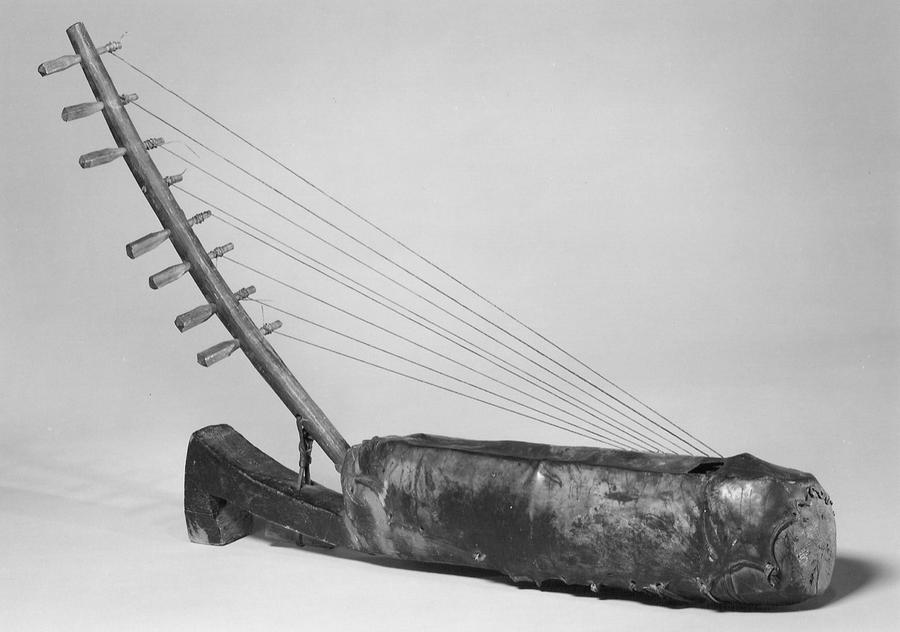
Arched Harp19th century · possibly Fang people (Gabon) -
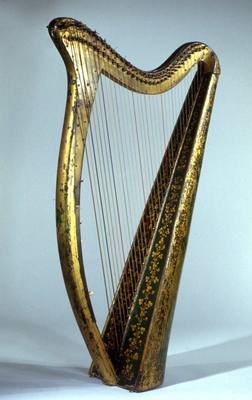
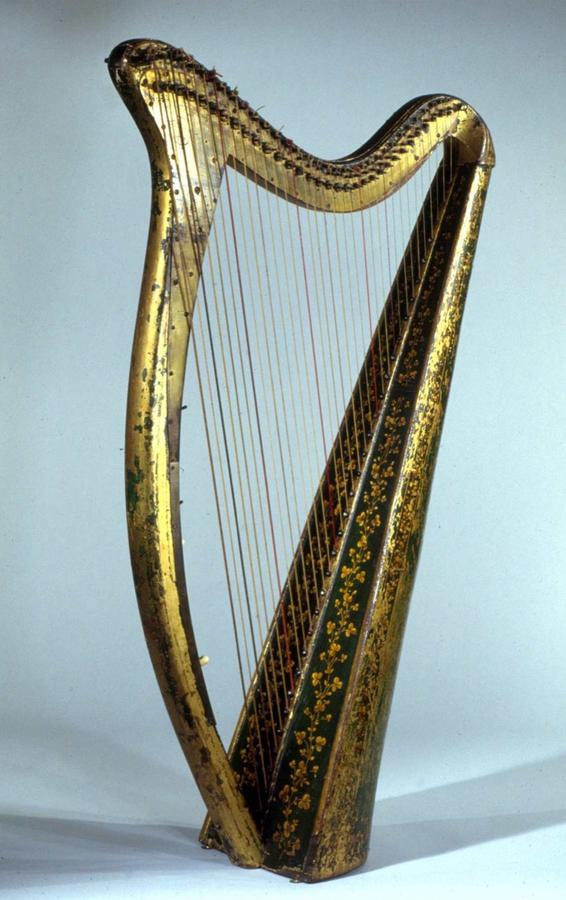
Portable Harp1819 · Irish (Ireland) -
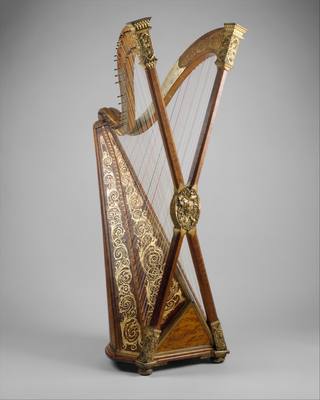
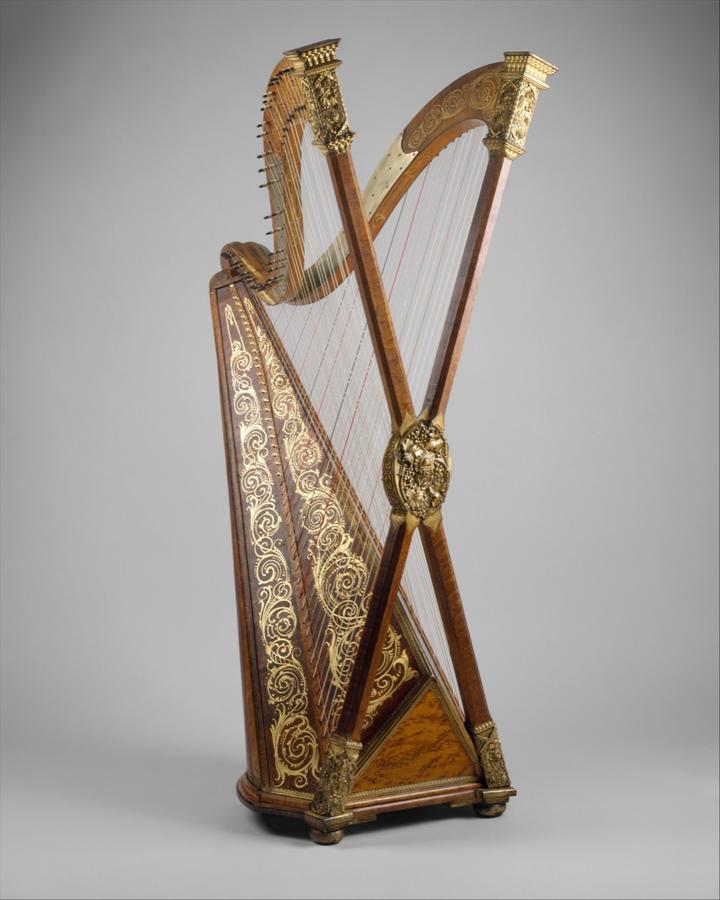
Double Chromatic Harpafter 1895 · American (United States) -
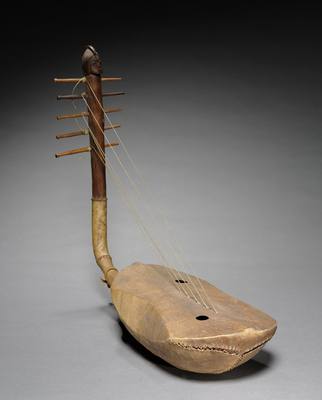
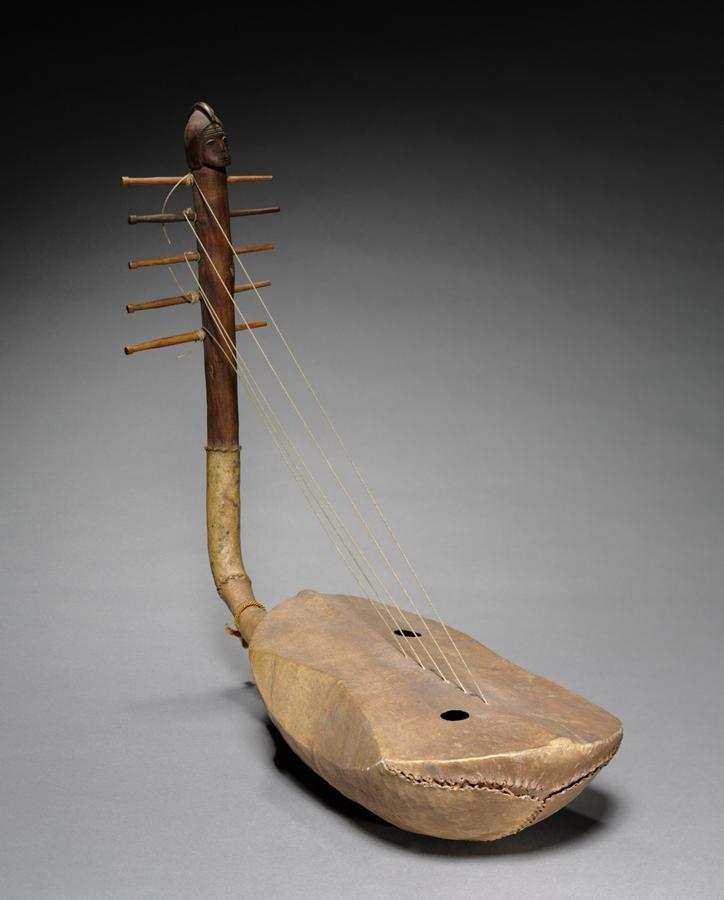
Figurative harp (domu or kundi)1900s · Africa, Central Africa, Democratic Republic of Congo, Mangbetu style, unknown maker (Africa) -
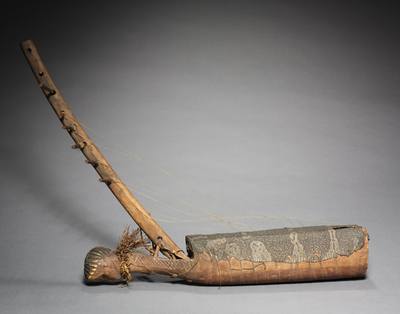
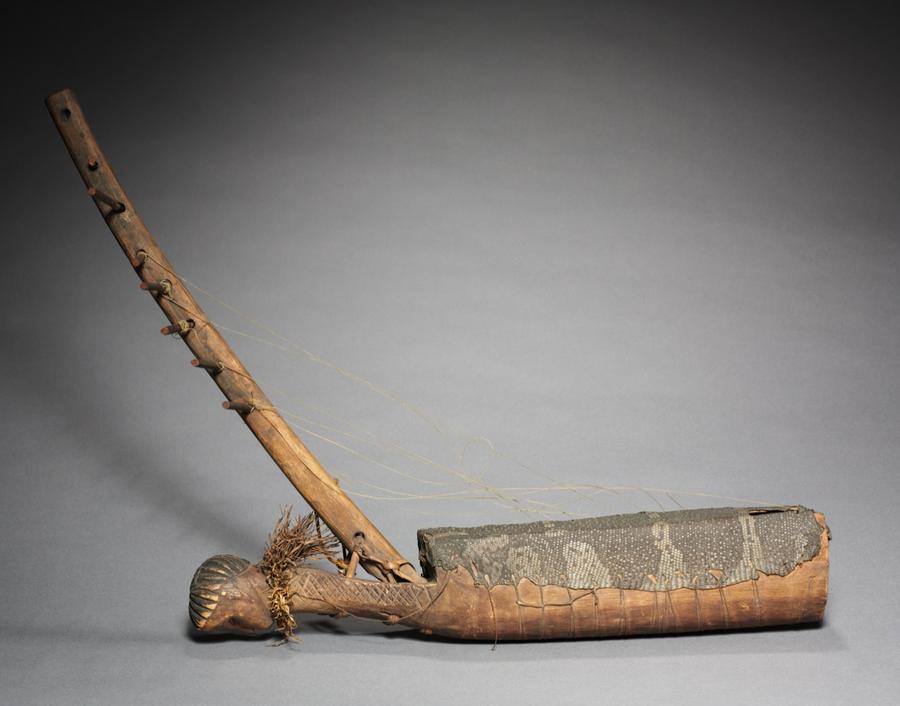
Harp1900s · Africa, Central Africa, Democratic Republic of Congo, unknown maker (Africa)
Facts at a glance
| Hornbostel–Sachs number | 322 — Composite chordophone sounded by the bare fingers |
|---|---|
| Hornbostel–Sachs group | Chordophones › Composite chordophones › Harps |
| Also known as | harfa, pillar harp |
| Wikidata labels | 101 languages |
| Wikipedia article | Harp |
| Wikidata item | Q47369 |
| Wikimedia Commons category | Harps |
| MusicBrainz instrument | f0a6e89d-b828-4b73-885d-8c1560e5e49a |
| Encyclopaedia Britannica | art/harp-musical-instrument |
Sources: Wikidata (CC0 1.0) — classification number, aliases, identifiers (dump of 2026-07-22); Wikipedia (CC BY-SA 4.0) — infobox fields (description of the classification number, development, inventors) and the names of the Hornbostel–Sachs groups (article “Hornbostel–Sachs”, revision of 2026-01-04).
The name in other languages
| Language | Name | Also written |
|---|---|---|
| English | harp | harfa, pillar harp |
| French | harpe | |
| German | Harfe | |
| Spanish | arpa | harpa |
| Italian | arpa | |
| Portuguese | harpa | |
| Dutch | harp | |
| Russian | арфа | Арфист |
| Japanese | ハープ | 竪琴 |
| Chinese | 豎琴 | |
| Korean | 하프 | |
| Arabic | جنك | القيثار, القيثارة, قيتارة |
Sources: Wikidata (CC0 1.0) — labels and aliases; MusicBrainz (CC0 1.0) — instrument aliases (names only).
About the harp: history, construction and playing
The harp is a stringed musical instrument that has individual strings running at an angle to its soundboard; the strings are plucked with the fingers. Harps can be played in either a seated or standing position. Most commonly, harps are made of wood and are triangular in shape. Some have multiple rows of strings and pedal attachments.
Ancient depictions of harps were recorded in Mesopotamia (Iraq), Persia (Iran) and Egypt, and later in India and China. By medieval times, harps had spread across Europe. Harps are found across the Americas; in some regions, they are used in popular folk music traditions. Distinct designs also emerged from the African continent. Harps have symbolic political traditions and are often used in logos, including in Ireland.
Historically, strings were made of sinew (animal tendons). Other materials have included gut (animal intestines), plant fiber, braided hemp, cotton cord, silk, nylon, and wire.
In pedal harp scores, double flats and double sharps should be avoided whenever possible.
History
Harps have been known since antiquity in Asia, Africa, and Europe, dating back at least as early as 3000 BCE. The instrument had great popularity in Europe during the Middle Ages and the Renaissance, where it evolved into a wide range of variants with new technologies, and was disseminated to Europe's colonies, finding particular popularity in Latin America.
Although some ancient members of the harp family died out in the Near East and South Asia, descendants of early harps are still played in Myanmar and parts of Africa; other variants defunct in Europe and Asia have been used by folk musicians in the modern era.
West Asia and Egypt
The earliest harps and lyres were found in Sumer, c. 2500 BCE, with several harps excavated from burial pits and royal tombs in Ur. The oldest depictions of harps without a forepillar can be seen in the wall paintings of ancient Egyptian tombs in the Nile Valley, which date from the mid 3rd millennium BCE. These murals show an arched harp, an instrument that closely resembles the hunter's bow, without the pillar that we find in modern harps. The Chang flourished in Persia in many forms from its introduction, about 4000 BCE, until the 17th century CE.
Around 1900 BCE, arched harps in the Iraq-Iran region were replaced by angular harps with vertical or horizontal sound boxes. The Kinnor (kīnnōr) was an ancient Israelite musical instrument in the yoke lutes family, the first one to be mentioned in the Hebrew Bible. Its exact identification is unclear, but in the modern day it is generally translated as "harp" or "lyre", and associated with a type of lyre depicted in Israelite imagery, particularly the Bar Kokhba coins. It has been referred to as the "national instrument" of the Jewish people, and modern luthiers have created reproduction lyres of the kinnor based on this imagery.
By the start of the Common Era, "robust, vertical, angular harps", which had become predominant in the Hellenistic world, were cherished in the Sasanian court. In the last century of the Sasanian period, angular harps were redesigned to make them as light as possible ("light, vertical, angular harps"); while they became more elegant, they lost their structural rigidity. At the height of the Persian tradition of illustrated book production (1300–1600 CE), such light harps were still frequently depicted, although their use as musical instruments was reaching its end.
South Asia
Mesolithic era paintings from Bhimbetka show harp playing. An arched harp made of wooden brackets and metal strings is depicted on an Indus seal. The works of the Tamil Sangam literature describe the harp and its variants, as early as 200 BCE. Variants were described, ranging from 14 to 17 strings, and the instrument was used by wandering minstrels for accompaniment. Iconographic evidence of the yaal appears in temple statues dated as early as 600 BCE. One of the Sangam works, the Kallaadam recounts how the first yaaḻ harp was inspired by an archer's bow, when he heard the musical sound of its twang.
Another early South Asian harp was the ancient veena, not to be confused with the modern Indian veena which is a type of lute. Some Samudragupta gold coins show of the mid-4th century CE show (presumably) the king Samudragupta himself playing the instrument. The ancient veena survives today in Burma, in the form of the saung harp still played there.
East Asia
The harp was popular in ancient China and neighboring regions. The Chinese konghou harp is documented as early as the Spring and Autumn period (770–476 BCE) A similar harp, the Gonghu was played in ancient Korea, documented as early as the Goguryeo period (37 BCE–686 CE).
Europe
While the angle and bow harps held popularity elsewhere, European harps favored the "pillar", a third structural member to support the far ends of the arch and soundbox. A harp with a triangular three-part frame is depicted on 8th-century Pictish stones in Scotland and in manuscripts (e.g. the Utrecht Psalter) from early 9th-century France. The curve of the harp's neck is a result of the proportional shortening of the basic triangular form to keep the strings equidistant; if the strings were proportionately distant they would be farther apart.
As European harps evolved to play more complex music, a key consideration was some way to facilitate the quick changing of a string's pitch to be able to play more chromatic notes. By the Baroque period in Italy and Spain, more strings were added to allow for chromatic notes in more complex harps. In Germany in the second half of the 17th century, diatonic single-row harps were fitted with manually turned hooks that fretted individual strings to raise their pitch by a half step. In the 18th century, a link mechanism was developed connecting these hooks with pedals, leading to the invention of the single-action pedal harp.
The first primitive form of pedal harps was developed in the Tyrol region of Austria. Jacob Hochbrucker was the next to design an improved pedal mechanism around 1720, followed in succession by Krumpholtz, Naderman, and the Erard company, who came up with the double mechanism, in which a second row of hooks was installed along the neck, capable of raising the pitch of a string by either one or two half steps. While one course of European harps led to greater complexity, resulting largely in the modern pedal harp, other harping traditions maintained simpler diatonic instruments which survived and evolved into modern traditions.
Americas
In the Americas, harps are widely but sparsely distributed, except in certain regions where the harp traditions are very strong. Such areas include Mexico, the Andean region, Venezuela, and Paraguay. They are derived from the Baroque harps that were brought from Spain during the colonial period. Detailed features vary from place to place.
The Paraguayan harp is that country's national instrument, and has gained a worldwide reputation, with international influences alongside folk traditions. They have around 36 strings, are played with fingernails, and with a narrowing spacing and lower tension than modern Western harps, and have a wide and deep soundbox that tapers to the top.
The harp is also found in Argentina, though in Uruguay it was largely displaced in religious music by the organ by the end of the 18th century. The harp is historically found in Brazil, but mostly in the south of the country.
Structure and mechanism
All harps have a neck, resonator, and strings, frame harps or triangular harps have a pillar at their long end to support the strings, while open harps, such as arch harps and bow harps, do not.
Harps are essentially triangular and made primarily of wood. Strings are made of gut or wire, often replaced in the modern day by nylon or metal. Different harps may use catgut, nylon, metal, or some combination. The top end of each string is secured on the crossbar or neck, where each will have a tuning peg or similar device to adjust the pitch. From the crossbar, the string runs down to the sounding board on the resonating body, where it is secured with a knot; on modern harps the string's hole is protected with an eyelet to limit wear on the wood. The distance between the tuning peg and the soundboard, as well as tension and weight of the string, determine the pitch of the string. The body is hollow, and when a taut string is plucked, the body resonates, projecting sound.
The longest side of the harp is called the column or pillar (though some earlier harps, such as a "bow harp", lack a pillar). On most harps the sole purpose of the pillar is to hold up the neck against the great strain of the strings. On harps which have pedals (largely the modern concert harp), the pillar is a hollow column and encloses the rods which adjust the pitches, which are levered by pressing pedals at the base of the instrument.
Variations and extension of chromatic range
Harps vary globally in many ways. In terms of size, many smaller harps can be played on the lap, whereas larger harps are quite heavy and rest on the floor. Pedal harps tend to be bigger than lever harps.
On harps of earlier design a single string produces only a single pitch. In many cases, this means such a harp can only play in one key at a time and must be retuned to play in another key. Harpers and luthiers developed varying techniques to extend the range and chromaticism of the strings (e.g, adding sharps and flats) seen in modern harps:
- the addition of extra strings to cover chromatic notes (sometimes in separate or angled rows distinct from the main row of strings),
- addition of small levers on the crossbar which when actuated raise the pitch of a string by a set interval (usually a semitone)
- use of pedals at the base of the instrument, pressed with the foot, which move additional small pegs on the crossbar. The small pegs gently contact the string near the tuning peg, changing the vibrating length, but not the tension, and hence the pitch of the string.
These solutions increase the versatility of a harp at the cost of adding complexity, weight, and expense.
On lever harps a string's note is changed by flipping a lever. Each lever acts on a single string, shortening it enough to raise the pitch by a chromatic sharp.
On pedal harps depressing the pedal one step turns geared levers on the strings for all octaves of a single pitch (for example, pressing the C pedal will make every C note a C sharp). Most pedal harps also allow a second step that turns a second set of levers. The pedal harp is a standard instrument in the orchestra of the Romantic music era (ca. 1800–1910 CE) and the 20th and 21st century music era.
Source: Wikipedia, “Harp” — CC BY-SA 4.0 — text excerpted as published (references, images and tables removed); see the article for the full text and the list of authors. Revision of 2026-06-29.
From Grove’s Dictionary (1900)
HARP (Fr. Harpe; Ital. Arpa; Germ. Harfe). A musical instrument of great antiquity; in its modern development, by means of the ingenious mechanism of the double action, distinguished as the only instrument with fixed tones not formed by the ear and touch of the player, that has separate notes for sharps, flats, and naturals, thus approaching written music more nearly than any other.
The harp presents a triangular form of singular beauty, the graceful curve of the neck adding to the elegance of its appearance Although the outline has varied at different epochs and in different countries, the relation of its proportions to the musical scale—a condition of symmetry in musical instruments—is in the harp very close; so that whether it be Egyptian, Persian, Mediæval, or Keltic, it is always fashioned in beauty of line, and often characteristically adorned.
In looking at a harp we recognise at once the varied functions of its structure. The resonant instrument is the soundboard, forming with its body the angle next the player. The opposite angle is the pillar. Both support the neck, a curved bracket between which and the soundboard the strings are stretched. In modern harps the neck includes the 'comb' containing the mechanism for raising the pitch of the strings one half tone by the single action, or two half tones by the double action. The pillar is hollow to include the rods working the mechanism. The pedestal, where pillar and soundboard unite, is the frame for the pedals, levers acted upon by the feet and moving the rods in the pillar.
Source: Wikisource, A Dictionary of Music and Musicians (Grove, 1900) — “Harp” (entry by A. J. Hipkins) — Public domain (published 1879–1910; authors died before 1929) — the first paragraphs of the entry, as transcribed; see the page for the full entry.
Composers who played it
46 composers on this site list the harp as an instrument they played. A selection:
- Tuotilo 850–915
- Manuel Machado 1590–1646
- Marco Marazzoli 1602–1662
- Juan Hidalgo de Polanco 1614–1685
- Turlough O'Carolan 1670–1738
- Jacob Hochbrucker 1673–1783
- Jean-Henri Naderman 1734–1799
- Jean-Baptiste Krumpholz 1742–1790
- Mme Delaval 1763–1804
- Martin Pierre d'Alvimare 1772–1839
- Sophia Dussek 1775–
- François-Joseph Naderman 1781–1835
Composers with a page on this site whose Wikidata record lists this instrument; featured and best-dated first. Data: Wikidata (property “instrument”, P1303), CC0 1.0.
Sources and licences
- Portable Harp, Louis Joseph Domeny, 1814–30, French (France). Wood, various materials. The Crosby Brown Collection of Musical Instruments, 1889 (89.4.1082). Museum record · CC0 1.0 (public domain dedication)
- Harp, 1500s, France. wood. The Charles G. King Jr. collection; Gift of Ralph King in memory of Charles G. King Jr.. Museum record · CC0 1.0 (public domain dedication)
- Harp, 1700s, France. wood. The Charles G. King Jr. collection; Gift of Ralph King in memory of Charles G. King Jr.. Museum record · CC0 1.0 (public domain dedication)
- Welsh Triple Harp, John Richards, ca. 1750, British (Welsh) (United Kingdom). Wood, various materials.. The Crosby Brown Collection of Musical Instruments, 1889 (89.4.1087). Museum record · CC0 1.0 (public domain dedication)
- Portable harp, Anonymous, c. 1770 - c. 1780, France. iron (metal), maple (wood). Gift of Elly Lammers and Gerrit van der Veer, Lelystad. Museum record · Public Domain Mark 1.0
- Harp, Anonymous, c. 1780, France. wood (plant material). Rijksmuseum, Amsterdam. Museum record · Public Domain Mark 1.0
- Hook Harp, Martin Eggert, before 1848, Germany. Maple, spruce, metal. The Crosby Brown Collection of Musical Instruments, 1889 (89.4.2705). Museum record · CC0 1.0 (public domain dedication)
- Arched Harp, 19th century, possibly Fang people (Gabon). Wood, skin, gut, fiber. The Crosby Brown Collection of Musical Instruments, 1889 (89.4.547). Museum record · CC0 1.0 (public domain dedication)
- Portable Harp, John Egan, 1819, Irish (Ireland). Wood, various materials. The Crosby Brown Collection of Musical Instruments, 1889 (89.4.1083). Museum record · CC0 1.0 (public domain dedication)
- Double Chromatic Harp, Henry Greenway, after 1895, American (United States). Spruce, maple, metal, gilding, brass. The Crosby Brown Collection of Musical Instruments, 1889 (89.4.1235). Museum record · CC0 1.0 (public domain dedication)
- Figurative harp (domu or kundi), 1900s, Africa, Central Africa, Democratic Republic of Congo, Mangbetu style, unknown maker (Africa). Wood, rawhide, and string. The Charles G. King Jr. collection; Gift of Ralph King in memory of Charles G. King Jr.. Museum record · CC0 1.0 (public domain dedication)
- Harp, 1900s, Africa, Central Africa, Democratic Republic of Congo, unknown maker (Africa). Wood, snakeskin, plant fiber, cane, string, and colorant. The Charles G. King Jr. collection; Gift of Ralph King in memory of Charles G. King Jr.. Museum record · CC0 1.0 (public domain dedication)
Photographs: open-access collections of the museums named above; each is shown here reduced in size, otherwise unchanged. Text: Wikipedia (CC BY-SA 4.0), Grove’s Dictionary (public domain), Wikidata and MusicBrainz (CC0). The full list of sources and licences is on the credits page.