
Instruments · Chordophones
Lyre
A lyre (pronounced to rhyme with "fire") is a musical instrument which is like a mixture between a harp and a guitar. It is held in one hand and the strings are strummed using the other hand. The lyre is classified as a plucked string instrument and a member of the lute family.
Summary: Simple English Wikipedia, “Lyre” — CC BY-SA 4.0. Revision of 2026-01-08.
Museum photographs
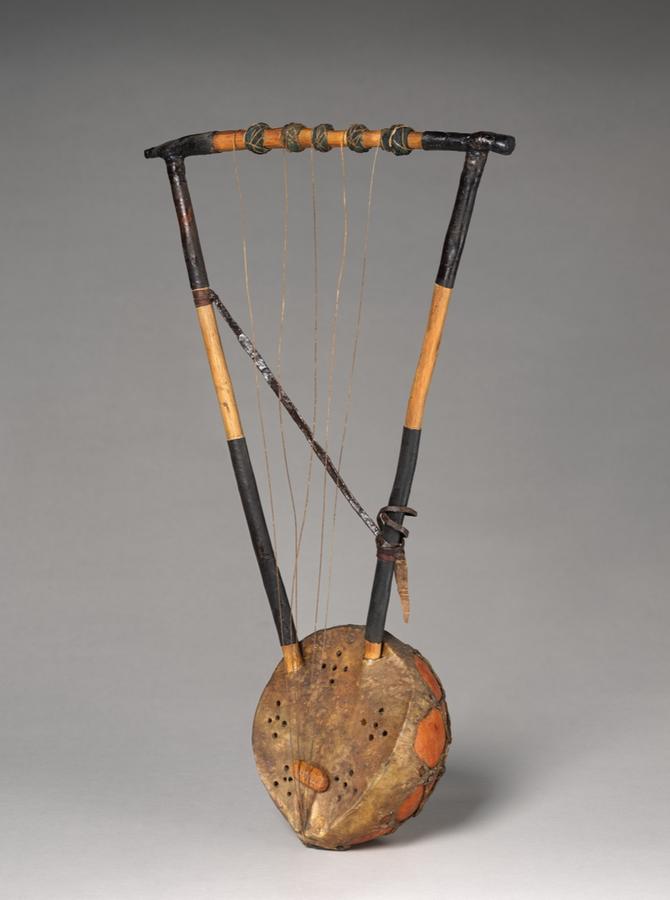
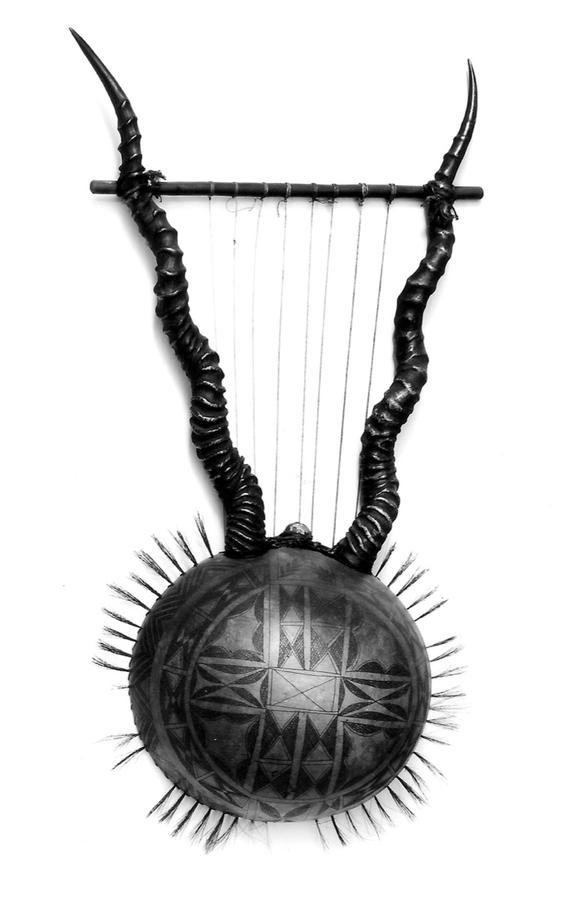
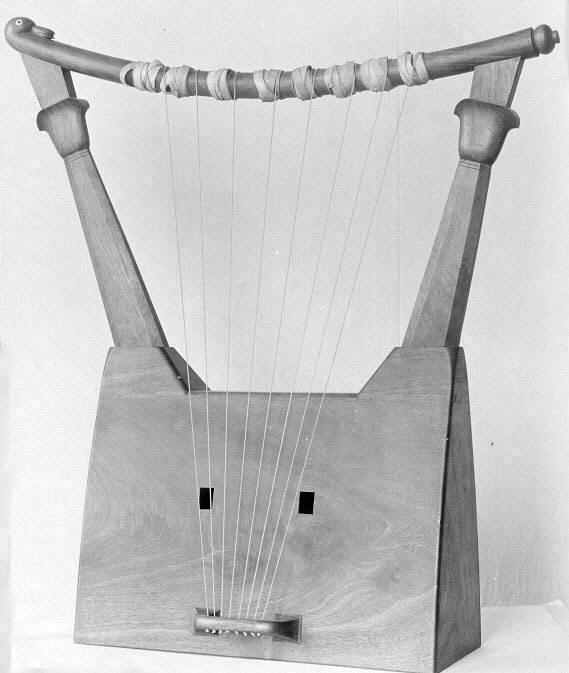
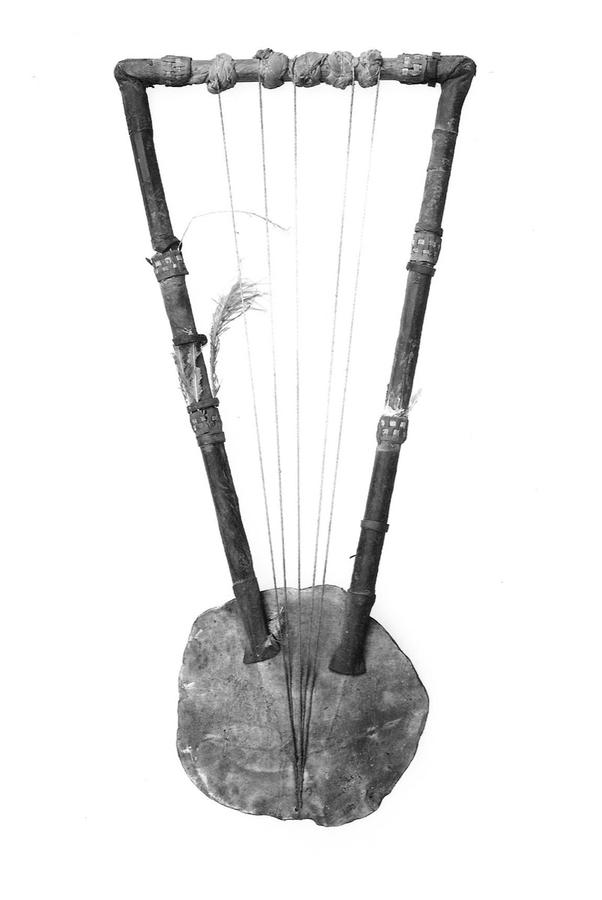
These 7 photographs span 1801–1928, 3 places of origin and 2 museums. Every photograph is public domain or openly licensed, and links to the museum’s own record.
-
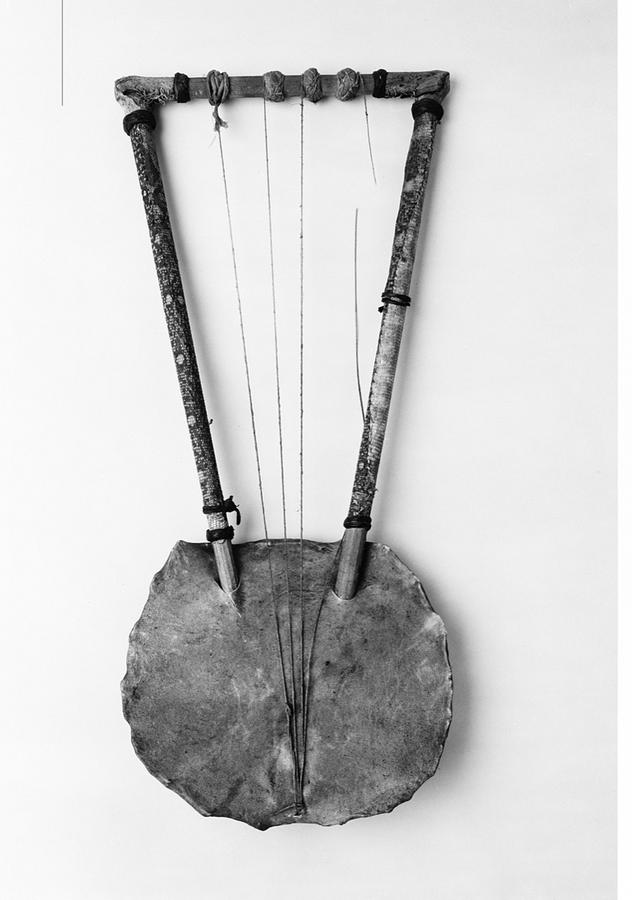
Bowl Lyre19th century · probably Ethiopian (probably Ethiopia) -
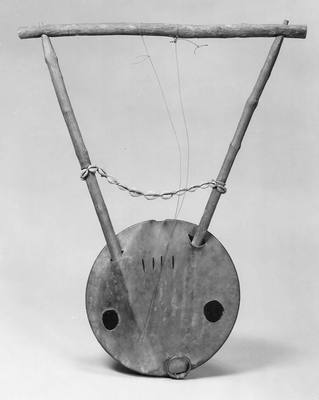
Lyre19th century · East African -
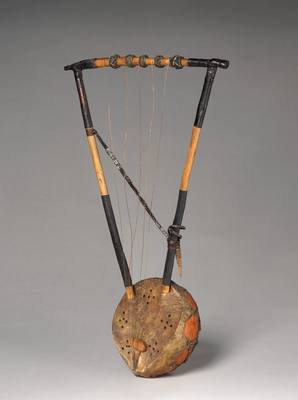
Bowl Lyre19th century · East African -
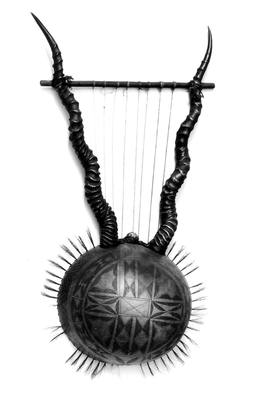
Bowl Lyre19th century · Ugandan or Kenyan (Uganda or Kenya) -
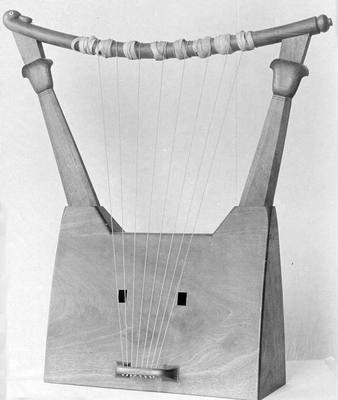
Lyre19th century · Egyptian (Egypt) -
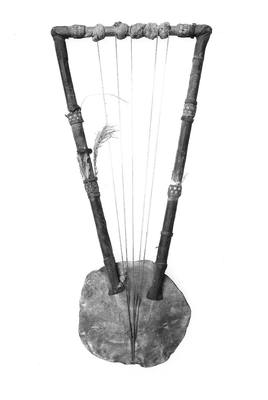
Kissarlate 19th century · East African -
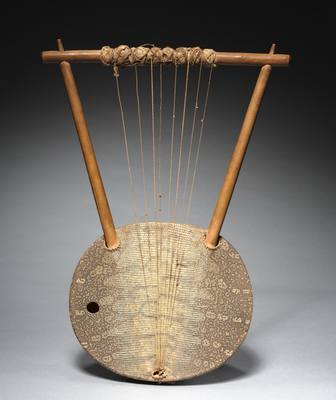
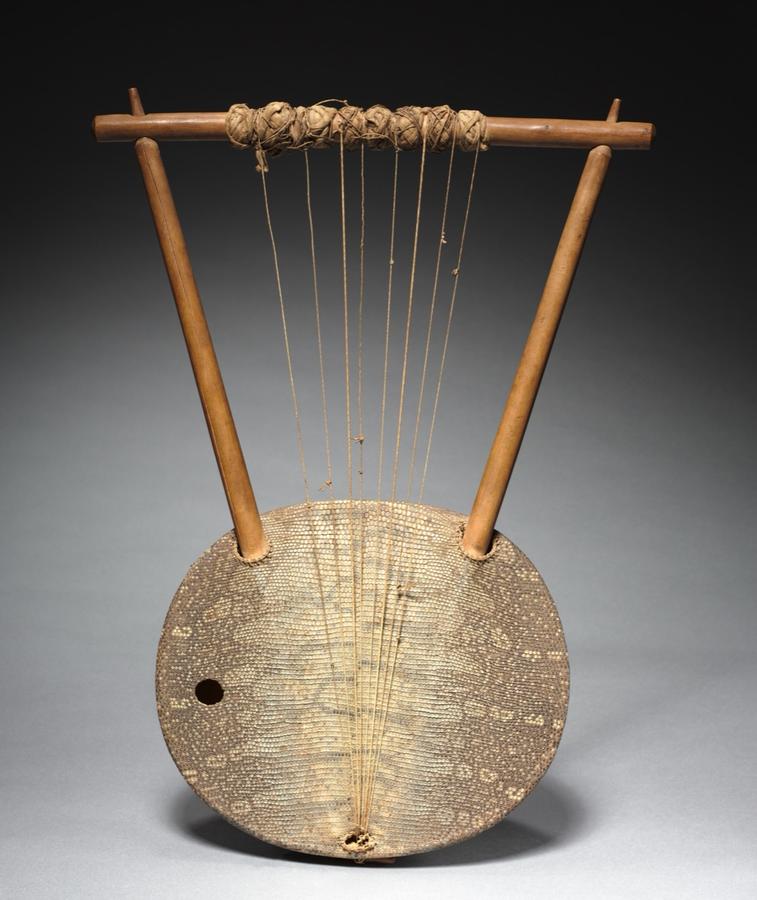
Lyre (ndongo, endongo, entongoli, or kissar)by 1928 · Africa, East Africa, Uganda, Ganda or Soga style, unknown maker (Africa)
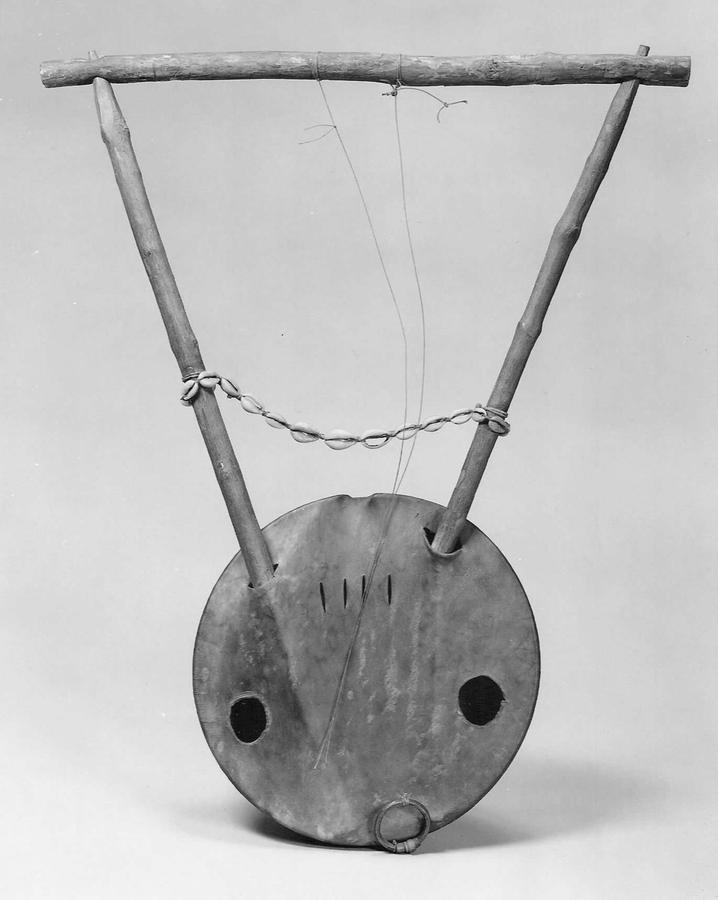
Facts at a glance
| Hornbostel–Sachs number | 321.21-5 — Composite chordophone sounded with a plectrum |
|---|---|
| Hornbostel–Sachs group | Chordophones › Composite chordophones › Lutes |
| Developed | Sumer, Iraq, Bronze Age |
| Wikidata labels | 77 languages |
| Wikipedia article | Lyre |
| Wikidata item | Q201129 |
| Wikimedia Commons category | Lyres |
| MusicBrainz instrument | 21bd4d63-a75a-4022-abd3-52ba7487c2de |
| Encyclopaedia Britannica | art/lira-musical-instrument |
Sources: Wikidata (CC0 1.0) — classification number, aliases, identifiers (dump of 2026-07-22); Wikipedia (CC BY-SA 4.0) — infobox fields (description of the classification number, development, inventors) and the names of the Hornbostel–Sachs groups (article “Hornbostel–Sachs”, revision of 2026-01-04).
The name in other languages
| Language | Name | Also written |
|---|---|---|
| English | lyre | |
| French | lyre | Lyres |
| German | Lyra | Chelys, Antike Lyra |
| Spanish | lira | |
| Italian | lira | Chelys-lyra |
| Portuguese | lira | |
| Dutch | lier | Lyra |
| Russian | лира | барбит, кнар |
| Japanese | リラ | ライヤー, リュラ, ライアー |
| Chinese | 里拉琴 | 里拉, 利拉琴 |
| Korean | 리라 | |
| Arabic | كنّارة | لير |
Sources: Wikidata (CC0 1.0) — labels and aliases; MusicBrainz (CC0 1.0) — instrument aliases (names only).
About the lyre: history, construction and playing
The lyre (from Greek λύρα and Latin lyra) is a stringed musical instrument that is classified by Hornbostel–Sachs as a member of the lute family of instruments. In organology, a lyre is considered a yoke lute, since it is a lute in which the strings are attached to a yoke that lies in the same plane as the sound table, and consists of two arms and a crossbar.
The lyre has its origins in ancient history. Lyres were used in several ancient cultures surrounding the Mediterranean Sea. The earliest known examples of the lyre have been recovered at archeological sites that date to c. 2700 BC in Mesopotamia.
The oldest lyres from the Fertile Crescent are known as the eastern lyres and are distinguished from other ancient lyres by their flat base. They have been found at archaeological sites in Egypt, Syria, Anatolia, and the Levant. In a discussion of the Nubian lyre, Carl Engel notes that modern Egyptians call it qytarah barbarîyeh, reflecting its association with the Barbaras (Berbers)—linked to the brbrta of ancient Egyptian references to Punt, a region identified with present-day Somalia, where the shareero lyre remains in use.
Etymology
The earliest reference to the word "lyre" is the Mycenaean Greek ru-ra-ta-e, meaning "lyrists" and written in the Linear B script. In classical Greek, the word "lyre" could either refer specifically to an amateur instrument, which is a smaller version of the professional cithara and eastern-Aegean barbiton, or "lyre" can refer generally to all three instruments as a family. The English word comes via Latin from the Greek.
Classification
Hornbostel–Sachs classifies the lyre as a member of the lute-family of instruments which is one of the families under the chordophone classification of instruments. Hornbostel–Sachs divide lyres into two groups, Bowl lyres (321.21) and Box lyres (321.22). In organology, a lyre is considered a yoke lute, since it is a lute in which the strings are attached to a yoke that lies in the same plane as the sound table, and consists of two arms and a crossbar.
Ancient lyres
There is evidence of the development of many forms of lyres from the period 2700 BCE through 700 BCE. Lyres from the ancient world are divided by scholars into two separate groups, the eastern lyres and the western lyres, which are defined by patterns of geography and chronology.
Eastern lyres
Eastern lyres, also known as flat-based lyres, are lyres which originated in the Fertile Crescent (Mesoptamia) in what is present day Syria, Anatolia, the Levant and Egypt. The eastern lyres all contain sound boxes with flat bases. They are the oldest lyres with iconographical evidence of their existence, such as depictions of the eastern lyre on pottery, dating back to 2700 BCE.
While flat-based lyres originated in the East, they were also later found in the West after 700 BCE. By the Hellenistic period (c. 330 BCE) what was once a clearly divided use of flat-based lyres in the East and round-based lyres in the West had disappeared, as trade routes between the East and the West dispersed both kinds of instruments across more geographic regions.
Eastern lyres are divided into four main types: bull lyres, thick lyres, thin lyres and giant lyres.
Bull lyres
Bull lyres are a type of eastern lyre that have a flat base and bull's head on one side. The lyres of Ur are bull lyres excavated in ancient Mesopotamia (modern Iraq), which date to 2500 BCE and are considered to be the world's oldest surviving stringed instruments. However, older pictorial evidence of bull lyres exist in other parts of Mesopotamia and Elam, including Susa.
Thick lyres
Thick lyres are a type of flat-based eastern lyre that comes from Egypt (2000–100 BCE) and Anatolia (c. 1600 BCE). The thick lyre is distinguished by a thicker sound box which allowed for the inclusion of more strings. These strings were held on a larger 'box-bridge' than the other type of eastern lyres, and the sound hole of the instrument was cut in the body of the lyre behind the box-bridge.
While similar to the bull lyre in size, the thick lyre did not contain the head of an animal, but did depict images of animals on the arms or yoke of the instrument. Like the bull lyre, the thick lyre did not use a plectrum but was plucked by hand.
While the clearest examples of the thick lyre are extant to archaeological sites in Egypt and Anatolia, similar large lyres with thicker soundboxes have been found in Mesopotamia (1900–1500 BCE). However, these Mesopotamia lyres lack the box-bridge found in the instruments from Egypt and Anatolia.
Thin lyres
Thin lyres are a type of flat-based eastern lyre with a thinner soundbox where the sound hole is created by leaving the base of the resonator open. The earliest known example of the thin lyre dates to c. 2500 BCE in Syria. After this, examples of the thin lyre can be found throughout the Fertile Crescent. The thin lyre is the only one of the ancient eastern lyres that is still used in instrument design today among current practitioners of the instrument. As a means of support, players of the thin lyre wear a sling around the left wrist which is also attached to the base of the lyre's right arm. It is played using a plectrum or pic to strike the strings; a technique later used by the Greeks on the western lyres.
There are several regional variations in the design of thin lyres. The Egyptian thin lyre was characterized by arms that bulged outwards asymmetrically; a feature also found later in Samaria (c. 375–323 BCE). In contrast, thin lyres in Syria and Phoenicia (c. 700 BCE) were symmetrical in shape and had straight arms with a perpendicular yoke which formed the outline of a rectangle.
The kinnor is an ancient Israelite musical instrument that is thought to be a type of thin lyre based on iconographic archaeological evidence. It is the first instrument from the lyre family mentioned in the Old Testament. Its exact identification is unclear, but in the modern day it is generally translated as "harp" or "lyre", and associated with a type of lyre depicted in Israelite imagery, particularly the Bar Kochba coins. It has been referred to as the "national instrument" of the Jewish people, and modern luthiers have created reproduction lyres of the "kinnor" based on this imagery.
Giant lyres
Giant lyres are a type of flat-based eastern lyre of immense size that typically required two players. Played from a standing position, the instrument stood taller than the instrumentalists. The oldest extent example of the instrument was found in the ancient city of Uruk in what is present day Iraq, and dates to c. 2500 BCE. Well preserved giant lyres dating to c. 1600 BCE have been found in Anatolia. The instrument reached the height of its popularity in Ancient Egypt during the reign of Pharaoh Akhenaten (c. 1353—1336 BCE). A giant lyre found in the ancient city of Susa (c. 2500 BCE) is suspected to have been played by only a single instrumentalist, and giant lyres in Egypt dating from the Hellenistic period most likely also required only a single player.
Western lyres
Western lyres, sometimes referred to as round-based lyres, are lyres from the ancient history that were extant in the Aegean, mainland Greece, and southern Italy. They initially contained only round rather than flat bases; but by the Hellenistic period both constructs of lyre could be found in these regions. Like the flat-based Eastern lyres, the round-based lyre also originated in northern Syria and southern Anatolia in the 3rd millennium BCE. However, this round-based construction of the lyre was less common than its flat-based counterparts in the east, and by c. 1750 BCE the instrument had died out completely in this region. The round-based lyre re-appeared in the West in Ancient Greece where it was sole form of lyre used between 1400-700 BCE.
Like the eastern flat-based lyre, the western round-based lyre also had several sub-types. Homer described two different western lyres in his writings, the phorminx and kitharis. However, both of these terms have not had uniform meaning across time, and their use during Homer's time was later altered. Today, scholars divide instruments referred to as kitharis into two subgroups, the round-based cylinder kithara and the flat-based concert kithara.
Central and Northern European lyres
Other instruments known as lyres have been fashioned and used in Europe outside the Greco-Roman world since at least the Iron Age. Lyres are depicted on ceramic and bronze vessels of the Proto-Celtic Hallstatt culture across central Europe. Among them there are lyres with rounded bottoms, stringed instruments whose resonators seem to be missing and lyres with strongly curved yokes and single or double bulging resonators. The number of strings depicted varies from two to ten. Fragmented tuning pegs and bridges made of wood have been discovered from the Iron Age industrial settlement in the Ramsau valley at Dürrnberg, Austria. Possible further wooden tuning pegs have been found in Glastonbury in Somerset in England and Biskupin in Poland. The remains of what is thought to be the bridge of a 2300-year-old lyre were discovered on the Isle of Skye, Scotland in 2010.
In 1988, a stone bust from the 2nd or 1st century BCE was discovered in Brittany, France which depicts a figure wearing a torc playing a seven-string lyre.
Bowed lyres
Some instruments called "lyres" were played with a bow in Europe and parts of the Middle East, namely the Arabic rebab and its descendants, including the Byzantine lyra.
After the bow made its way into Europe from the Middle-East, it was applied to several species of those lyres that were small enough to make bowing practical. The dates of origin and other evolutionary details of the European bowed lyres continue to be disputed among organologists, but there is general agreement that none of them were the ancestors of modern orchestral bowed stringed instruments, as once was thought.
There came to be two different kinds of bowed European lyres: those with fingerboards, and those without.
The last surviving examples of instruments within the latter class were the Scandinavian talharpa and the Finnish jouhikko. Different tones could be obtained from a single bowed string by pressing the fingernails of the player's left hand against various points along the string to fret the string.
The last of the bowed lyres with a fingerboard was the "modern" (c. 1485–1800) Welsh crwth. It had several predecessors both in the British Isles and in Continental Europe. Pitch was changed on individual strings by pressing the string firmly against the fingerboard with the fingertips. Like a violin, this method shortened the vibrating length of the string to produce higher tones, while releasing the finger gave the string a greater vibrating length, thereby producing a tone lower in pitch. This is the principle on which the modern violin and guitar work.
Source: Wikipedia, “Lyre” — CC BY-SA 4.0 — text excerpted as published (references, images and tables removed); see the article for the full text and the list of authors. Revision of 2026-04-29.
From Grove’s Dictionary (1900)
LYRE (λυρα), an ancient musical instrument, in use among the Greeks, and undoubtedly derived by them from Asia. It consisted of a hollow body or sound-chest, from which were raised two arms, sometimes also hollow, which were curved both outward and forward. These arms were connected near the top by a crossbar or yoke. Another crossbar was on the soundchest, and formed a bridge to convey the vibrations of the strings to it. The strings—at different times four, seven, or ten in number—were made of gut, and were stretched between the yoke and the bridge, or carried on to a tail-piece below the bridge. The lyre differs from the harp in having fewer strings, and from the lute or guitar in having no fingerboard. It was played by being struck with the plectrum, which was held in the right hand, but the fingers of the left hand were also used to touch the strings. The larger lyres (Cithara) were supported by a ribbon slung across the player's shoulders, or held as shewn in the illustration, but the treble lyre (or Chelys) was held by the left arm or between the knees. The illustration is taken from 'a drawing upon an amphora (B.C. 440–330) in the first vase room British Museum, Case 53, No. 744. The portion engraved represents Apollo holding a Cithara or large lyre as rarely shown in detail in Greek art. With his left hand he at once supports the instrument and stops the strings. The plectrum would be held in the right hand and be guided by the thumb, the fingers closing over it.
Source: Wikisource, A Dictionary of Music and Musicians (Grove, 1900) — “Lyre” (entry by A. J. Hipkins) — Public domain (published 1879–1910; authors died before 1929) — the first paragraphs of the entry, as transcribed; see the page for the full entry.
Sources and licences
- Bowl Lyre, 19th century, probably Ethiopian (probably Ethiopia). Tortoiseshell, skin, wood, leather. The Crosby Brown Collection of Musical Instruments, 1889 (89.4.539). Museum record · CC0 1.0 (public domain dedication)
- Lyre, 19th century, East African. Wood, skin, various materials. The Crosby Brown Collection of Musical Instruments, 1889 (89.4.427). Museum record · CC0 1.0 (public domain dedication)
- Bowl Lyre, 19th century, East African. wood, skin, various materials. The Crosby Brown Collection of Musical Instruments, 1889 (89.4.428). Museum record · CC0 1.0 (public domain dedication)
- Bowl Lyre, 19th century, Ugandan or Kenyan (Uganda or Kenya). Wood, horn, calabash, skin. The Crosby Brown Collection of Musical Instruments, 1889 (89.4.1361). Museum record · CC0 1.0 (public domain dedication)
- Lyre, 19th century, Egyptian (Egypt). Wood. The Crosby Brown Collection of Musical Instruments, 1889 (89.4.3404). Museum record · CC0 1.0 (public domain dedication)
- Kissar, late 19th century, East African. Turtle shell, wood, feathers, leather. The Crosby Brown Collection of Musical Instruments, 1889 (89.4.543). Museum record · CC0 1.0 (public domain dedication)
- Lyre (ndongo, endongo, entongoli, or kissar), by 1928, Africa, East Africa, Uganda, Ganda or Soga style, unknown maker (Africa). Wood, reptile skin, pelt, cloth, and natural fiber. Gift of the African Art Sponsors of Karamu House. Museum record · CC0 1.0 (public domain dedication)
Photographs: open-access collections of the museums named above; each is shown here reduced in size, otherwise unchanged. Text: Wikipedia (CC BY-SA 4.0), Grove’s Dictionary (public domain), Wikidata and MusicBrainz (CC0). The full list of sources and licences is on the credits page.