
Instruments · Chordophones
Zither
A zither is a stringed musical instrument. The word 'Zithers' is a German rendering of the Greek word cithara, from which the modern word "guitar" also derives. Historically, it has been applied to any instrument of the cittern family, or an instrument consisting of many strings stretched across a thin, flat body – similar to a psaltery. This article describes the second variety.
Summary: Simple English Wikipedia, “Zither” — CC BY-SA 4.0. Revision of 2025-07-10.
Museum photographs
These 8 photographs span 1701–1925, 5 places of origin and 3 museums. Every photograph is public domain or openly licensed, and links to the museum’s own record.
-
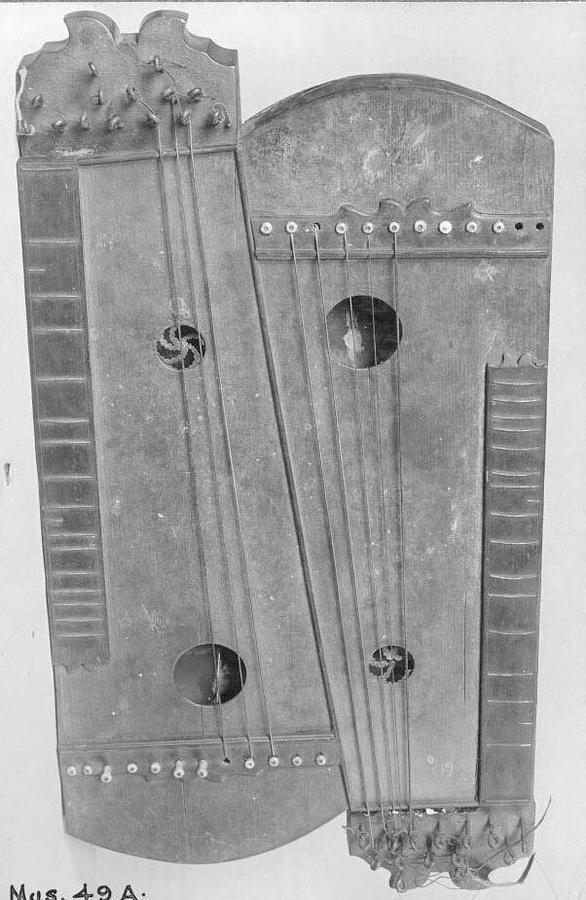
Double Zither18th century (?) · Germany -
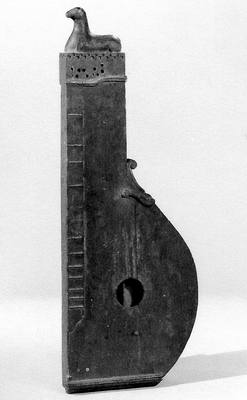
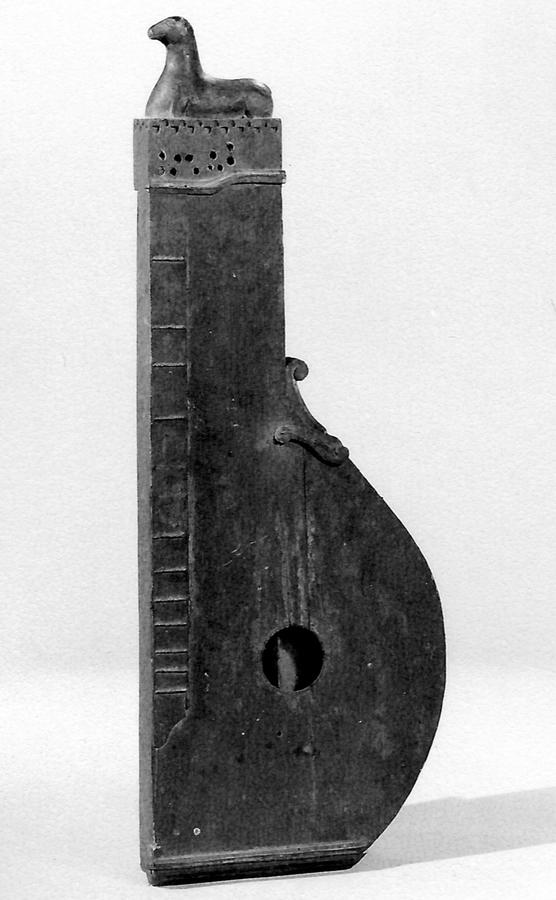
Salzburg Kratz-Zitherlate 18th–early 19th century · Austrian -
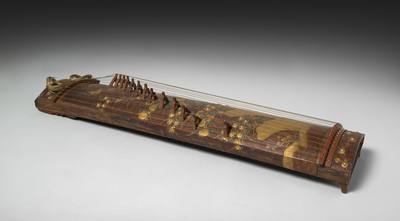
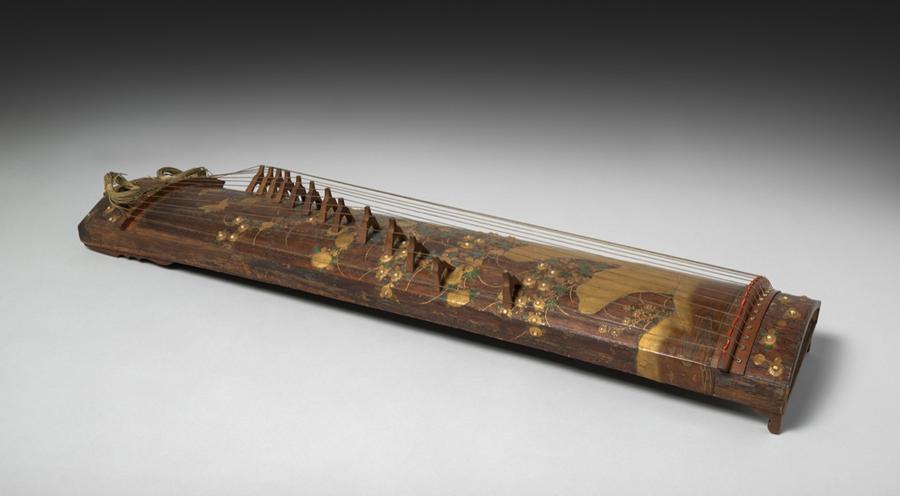
Koto (Zither)early to mid-1800s · Japan, Edo period (1615–1868) (Japan) -
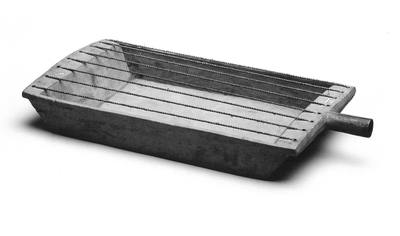
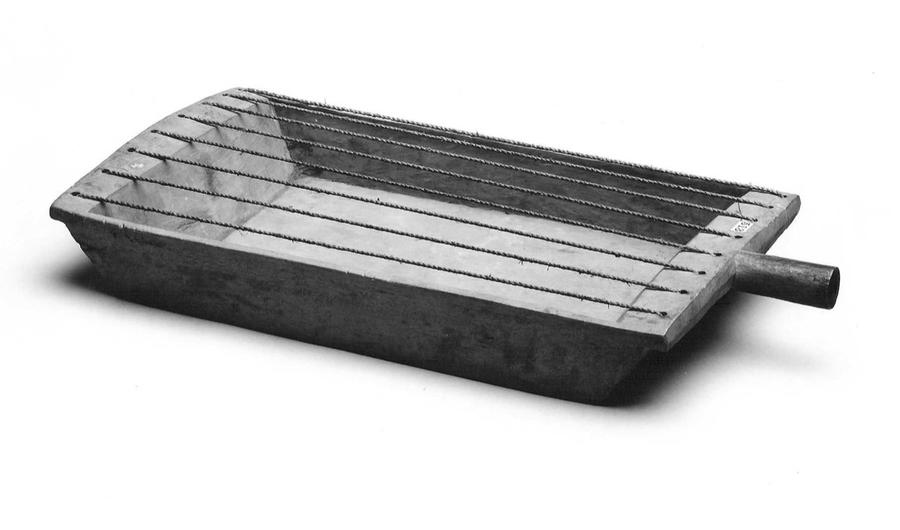
Trough Zitherlate 19th century · Congolese (Democratic Republic of Congo) -
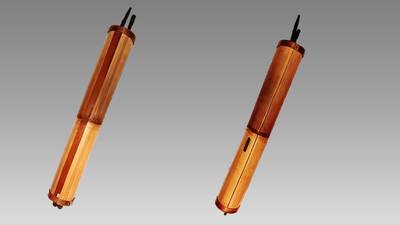
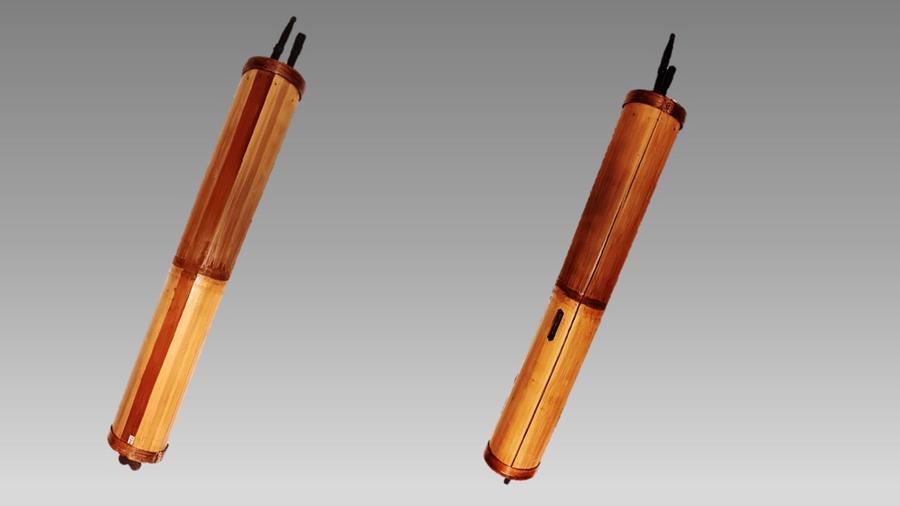
tube zitherlate 19th century · Javanese (Indonesia) -
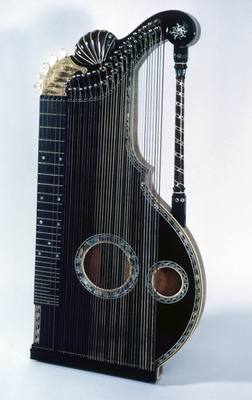
Schwarzer Zither1870-1880 · United States -
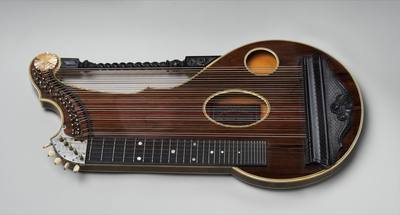
Concert Zitherca. 1890 · American (United States) -
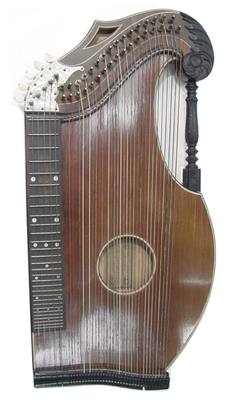
Harp Zitherearly 20th century · Germany
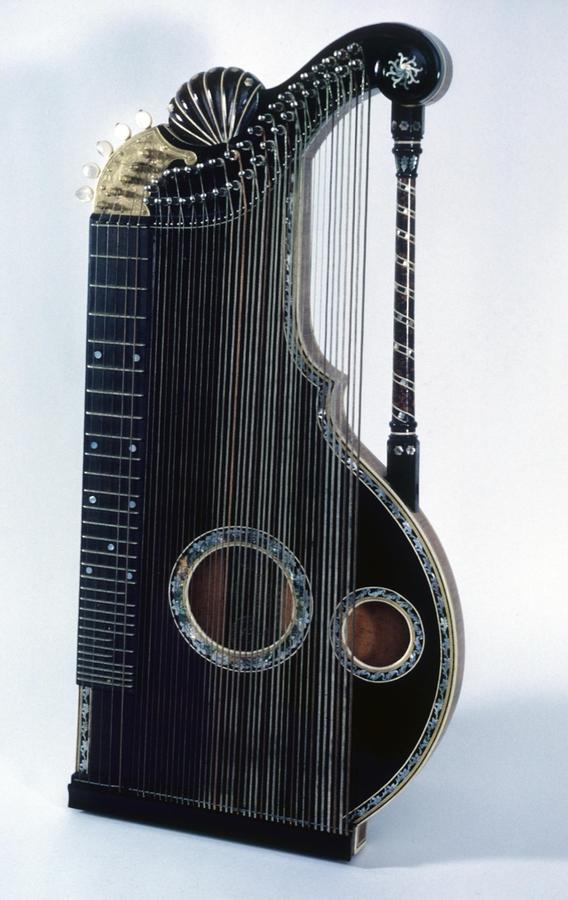
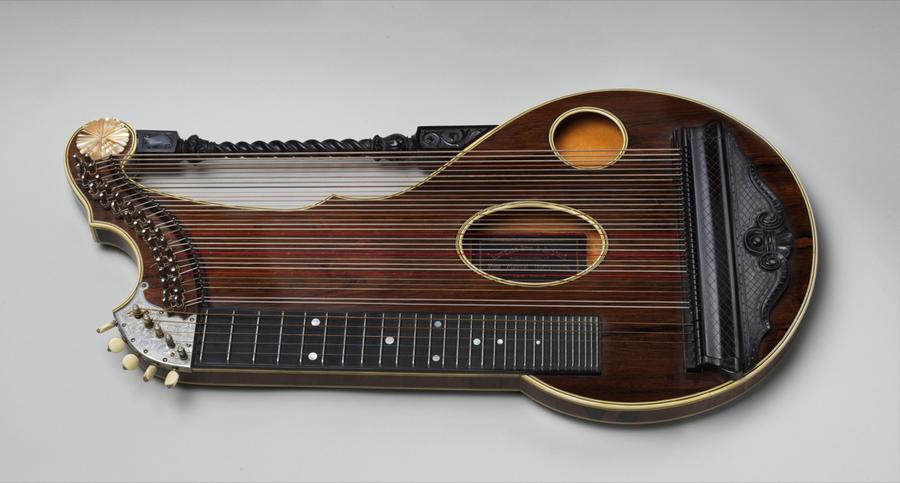
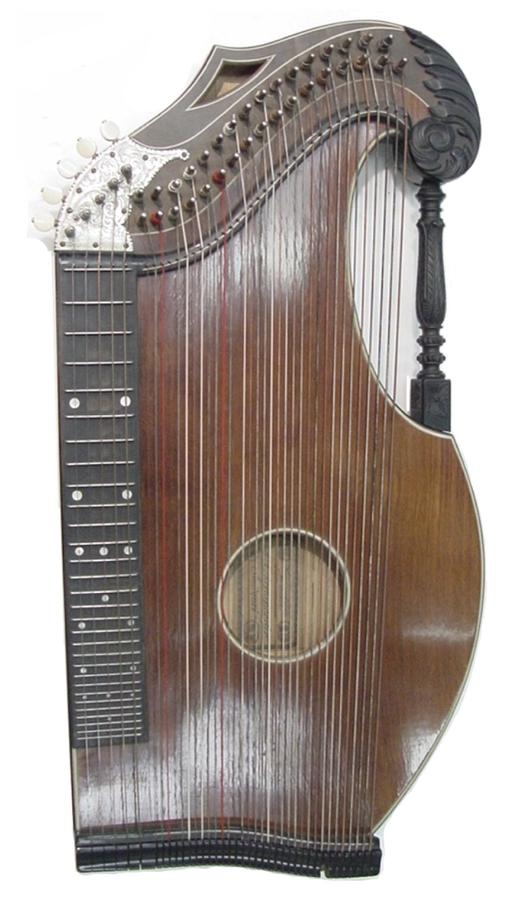
Facts at a glance
| Hornbostel–Sachs number | 314.122-4 — Resonated box zither, plucked by fingers or a plectrum |
|---|---|
| Hornbostel–Sachs group | Chordophones › Simple chordophones or zithers › Board zithers |
| Also known as | cither, simple chordophone |
| Classification (Wikipedia infobox) | (Chordophone), String instrument |
| Developed | Antiquity |
| Wikidata labels | 58 languages |
| Wikipedia article | Zither |
| Wikidata item | Q76239 |
| Wikimedia Commons category | Zithers |
| MusicBrainz instrument | c6a133d5-c1e0-47d6-bc30-30d102a78893 |
| Encyclopaedia Britannica | art/zither |
| Audio sample (Wikimedia Commons) | Zither solo from G'schichten aus dem Wienerwald Op.325.ogg |
Sources: Wikidata (CC0 1.0) — classification number, aliases, identifiers (dump of 2026-07-22); Wikipedia (CC BY-SA 4.0) — infobox fields (description of the classification number, development, inventors) and the names of the Hornbostel–Sachs groups (article “Hornbostel–Sachs”, revision of 2026-01-04).
The name in other languages
| Language | Name | Also written |
|---|---|---|
| English | zither | cither, simple chordophone |
| French | cithare | cithares, cithariste, zither |
| German | Alpenländische Zither | Zither |
| Spanish | cítara | cítarista, citara, citaredo |
| Italian | cetra da tavolo | zither, cetra, cordofoni semplici |
| Portuguese | cítara | Sítara, Cítara elétrica |
| Dutch | citer | Zither, Cither, citer (zither) |
| Russian | цитра | |
| Japanese | ツィター | チター |
| Chinese | 齊特琴 | 齐特尔琴 |
| Korean | 치터 | |
| Arabic | قانون | زيسير, زيثير, سنطور |
Sources: Wikidata (CC0 1.0) — labels and aliases; MusicBrainz (CC0 1.0) — instrument aliases (names only).
About the zither: history, construction and playing
Zither (from the Greek κιθάρα, cithara) is a class of stringed instruments, and the term also refers to a specific subset of instruments of the zither class, most usually the concert or Alpine zithers. The modern instrument has many strings stretched across a thin, flat body.
Zithers are typically played by strumming or plucking the strings with the fingers or a plectrum. In the Hornbostel–Sachs classification system, the term refers to a larger family of similarly shaped instruments that also includes the hammered dulcimer family and piano and a few rare bowed instruments like the bowed psaltery, bowed dulcimer, and streichmelodion. Like an acoustic guitar or lute, a zither's body serves as a resonating chamber (sound box), but, unlike guitars and lutes, a zither lacks a distinctly separate neck assembly. The number of strings varies, from one to more than fifty.
In modern usage, the term "zither" usually refers to three specific instruments: the concert zither (Konzertzither), its variant the Alpine zither (each of which uses a fretted fingerboard), and the chord zither (more recently described as a fretless zither or "guitar zither").
Etymology
The word "zither" is derived from Latin cythara, which was used in this form for the title covers on many 16th- and 17th-century German-printed manuscript books originally for the 'cittern' – from the Greek word kithara, an instrument used in Ancient Greece.
The German scholar Michael Praetorius mentions an Englishman who came to Germany with a small cittern, einem kleinen Citterlein, in his treatise Syntagma Musicum, published during the early 17th century. It is not fully understood how "zitter" or "zither" came to be applied to the instruments in this article as well as German varieties of the cittern.
Other types of zither also existed in Germany, mostly drone zithers like the scheitholt (which was mentioned by Praetorius) or hummel, but these generally have their own individual regional names and may have been in use before the introduction into the lexicon of 'cythara' and its German derivative cognate.
Organology
The Hornbostel–Sachs system, an academic instrument classification method, also uses the term zither to classify all stringed instruments in which the strings do not extend beyond the sounding box. Categories include Bar zithers (made up of musical bows and stick zithers), tube zithers, raft zithers, board zithers (includes box zithers, ground zithers and harp zithers), trough zithers and frame zithers.
Board-zithers form the most important category from an occidental point of view because they include our stringed keyboard instruments. The strings are stretched out over a board, which is rectangular or trapezoidal or in some other shape, and which is glued onto a shallow box.
The strings may be open or stopped, it may be a psaltery or a dulcimer.
This includes such diverse instruments as the hammered dulcimer, psaltery, Appalachian dulcimer, guqin, guzheng, tromba marina, koto, gusli, kanun, kanklės, kantele, kannel, kokles, valiha, gayageum, geomungo, ajaeng, đàn tranh, autoharp, santoor, yangqin, santur, swarmandal, and others. Pedal steel guitars, lap guitars (where the neck serves no separate function other than to extend the string length), and keyboard instruments like the clavichord, harpsichord and piano also fall within this broad categorical use.
The word has also been used in conjunction with brand varieties of other string instruments, for example, the zither banjo.
History and development
The earliest known surviving instrument of the zither family is a Chinese guqin, a fretless instrument, found in the tomb of Marquis Yi of Zeng, dating from 433 BC. Similar instruments along this design were developed over the following centuries, for example, the Japanese silk-strung koto; the siter of Indonesian gamelans; the qānūn (or kanun) of Greece and the Middle East; the valiha, a tube zither of Madagascar; and many others. Increasing interest in "world music" has brought wider recognition to these other zither family members, both ancient and modern. Many of these instruments have been sampled electronically and are available in instrument banks for music synthesizers.
In Europe and other more northern and western regions, early zithers were more similar to the modern mountain dulcimer, having long, usually rectangular, sound boxes, with one or more melody strings and several unfretted drone strings. Some of these employed movable bridges similar to the Japanese koto, used for retuning the drone strings. The Alpine Scheitholt furnishes an example of this older type of European zither. By the late 18th century, two principal varieties of European concert zither had developed, known as the Salzburg zither (with a rounded side away from the player), and the Mittenwald zither (with both sides rounded). Both styles are still found in concert zithers today, although the Salzburg style has become by far the most common.
The zither became a popular folk music instrument in Bavaria and Austria and, at the beginning of the 19th century, was known as a Volkszither.
Concert and Alpine zithers
A concert zither may have from 29 to 38 strings, with 34 or 35 being most typical. These are arranged as follows: four or five fretted melody strings, placed above a guitar-like fretboard; 12 unfretted "accompaniment" strings; followed by 12 unfretted "bass" strings; followed by a varying number of "contrabass" strings, with five or six being the most common number.
On some older zithers, one may find "half-frets" above the 12th fret, which extend only under the first two or three strings. This results in the lower fretted strings having no pitches (or no chromatic pitches) available above the 12th fret, while the higher fretted strings still have higher chromatic pitches available at these half-frets. Nearly all instruments made after 1960, however, have full-length frets all the way up the fretboard.
Anton Karas and Ruth Welcome used instruments of similar design to the one illustrated. After World War II, Karas (according to zither scholar Günter Wittenstein, who was acquainted with him) performed on an instrument of larger dimensions than normal – with a 43 cm standard scale length for the fingerboard strings. He used Viennese tuning, but with an altered chromatic sequence for the fingerboard and open strings. The accompaniment strings G and F♯ were tuned an octave higher, while contrabass strings tuned E♭, F, D, E, C♯ replaced the regular cycle of fifths bass strings. This brought the contrabasses closer to the fingerboard where the player could reach them more easily.
For The Third Man, Karas tuned the zither a semi-tone lower, giving a particularly distinctive tone to the contrabass strings. The resulting lower string tension also enabled Karas to perform an expressive vibrato on the fingerboard melody strings. Film director Carol Reed, (on whose oak kitchen table the music was performed), described the sound as "gritty and dirty", perfectly reflecting the atmospheric mood of the film.
Tuning
The C#, F, & A strings of the unfretted string section on the fretted zither are colored red; like the red C strings & blue/black F strings of a harp, they act as "separator strings" to give the musician useful reference points when playing. In Extended Munich Tuning, there can be 4 more chromatically tuned contrabass strings tuned to E1, Eb1, D1, & Db1 (the Low Db1 is the same note as on the 3rd fret of the 5th string on a 5 string bass). The fretboard strings can also be tuned A4, D4, G3, C3, F3 thanks to the Optima fretboard F3 zither string.
Playing techniques
The zither is played by plucking the strings while it lies flat on a table (which acts as a resonator to amplify the sound), or it can be held on the lap.
On concert and Alpine zithers, the melody strings are pressed to the fingerboard ("fretted") with the fingers of the left hand, and plucked with a plectrum on the right thumb. The first and second fingers of the right hand pluck the accompaniment and bass strings, and the third finger of the right hand plucks the contrabass strings (there are variants on this technique), some musicians use Plectrums on the other 4 fingers too so they can strike the accompaniment strings more easily & get a sharper attack.
The concept of the chord zither is different from that of the concert and alpine zithers. These instruments may have from 12 to 50 (or more) strings, depending on design. All the strings are played open, in the manner of a harp. The strings on the left are arranged in groups of three or four, which form various chords to be played by the left hand. The strings to the right are single (or pairs of) strings intended for the right hand to pick out the melody. Tuning can vary widely from manufacturer to manufacturer and even from model to model, but is usually indicated on the instrument itself, in the form of a chart painted or glued under the strings.
Contemporary use
Since the zither requires advanced technique to play anything more than simple tunes, the vast majority of the concert zithers sold never attained more than amateur or (mostly) ornamental use; the playing of Washington Phillips was a rare exception.
As a result, manufacturers attempted to simplify the instrument with various keyboard devices attached to the melody strings (Marxophone, dolceola, celestaphone, tremoloa etc.). The invention of the autoharp, which uses bars with felt pads attached underneath placed across and above the strings, is probably the most successful adaptation. However, the absence of a fretboard makes the autoharp a closer relative of the chord zither than the concert zither. Presence of the concert zither in classical music remains sparse.
Concert and Alpine zithers remain in use by a relatively small number of contemporary musicians from various global regions and musical genres, either out of interest in traditional musical styles for the instrument, or from a desire to seek new sounds for their music. One notable exception is the contemporary zither duo Liab und Schneid consisting of Tom Leoni and Elisabeth Lloyd, who tour and perform traditional Alpine music, classical music (including arrangements of chamber music by Mozart and Haydn), and original compositions.
New variations on the concert zither have also been employed, including the electric zither—and recent instruments that share zither characteristics, such as the Chapman stick.
While use of the concert zither itself has declined, zither music and technique continue to influence contemporary musicians. For example: Canadian musician Jeff Healey, featured in the film thriller Road House in 1989, used a zither technique to play electric guitar. Blind from the age of one, Healey began playing when he was three with the instrument flat on his lap, left hand above the fingerboard in the same manner as a zitherist Although he used a Fender Stratocaster guitar throughout his career, the instrument was in effect being used as an electric zither.
Source: Wikipedia, “Zither” — CC BY-SA 4.0 — text excerpted as published (references, images and tables removed); see the article for the full text and the list of authors. Revision of 2026-07-01.
From Grove’s Dictionary (1900)
The above drawing represents the Arion zither, which is, without doubt, up to the present time, the most powerful zither as well as the most elegant in structure. It owes its origin to the writer, and Schunda of Buda-Pest was the first manufacturer who carried out the idea. The improvement consists in the more suitable shape of the resonance-box and in the method of fastening the strings. The use of a bridge across the instrument acts as in the violin, and brings the vibrations of the strings into closer connection with the sounding-board.
The two A strings are of steel, the D of brass, the G of steel covered with silver wire, the C of brass covered with copper wires.
The strings marked with an asterisk are of gut, the rest are made of silk overspun with silver wire, and some few with copper wire, the diversity of colour helping to assist the eye of the player. Some professors in Germany are not content with less than 40 or even 46 strings, but as the additional strings lie beyond the range of the hand, and can therefore only be used in very slow tempo, they are of little practical advantage, and only tend to increase the size of the instrument.
Source: Wikisource, A Dictionary of Music and Musicians (Grove, 1900) — “Zither” (entry by Curt Schulz) — Public domain (published 1879–1910; authors died before 1929) — the first paragraphs of the entry, as transcribed; see the page for the full entry.
Composers who played it
3 composers on this site list the zither as an instrument they played. A selection:
Composers with a page on this site whose Wikidata record lists this instrument; featured and best-dated first. Data: Wikidata (property “instrument”, P1303), CC0 1.0.
Sources and licences
- Double Zither, Andreas Giller, 18th century (?), Germany. Wood, metal. The Crosby Brown Collection of Musical Instruments, 1889 (89.4.997). Museum record · CC0 1.0 (public domain dedication)
- Salzburg Kratz-Zither, late 18th–early 19th century, Austrian. Wood, wire, metal strings. The Crosby Brown Collection of Musical Instruments, 1889 (89.4.2427). Museum record · CC0 1.0 (public domain dedication)
- Koto (Zither), early to mid-1800s, Japan, Edo period (1615–1868) (Japan). Wood with colored lacquer, sprinkled gold powder (maki-e), textile, and silk strings. The Charles G. King Jr. collection; Gift of Ralph King in memory of Charles G. King Jr.. Museum record · CC0 1.0 (public domain dedication)
- Trough Zither, late 19th century, Congolese (Democratic Republic of Congo). Wood. The Crosby Brown Collection of Musical Instruments, 1889 (89.4.513). Museum record · CC0 1.0 (public domain dedication)
- tube zither, late 19th century, Javanese (Indonesia). Bamboo, wood, wire. The Crosby Brown Collection of Musical Instruments, 1889 (89.4.734). Museum record · CC0 1.0 (public domain dedication)
- Schwarzer Zither, Schwarzer, Franz, 1870-1880, United States. wood (overall material); metal (overall material); ivory (overall material); mother of pearl (overall…. Gift of Mrs. George Saegmuller. Museum record · CC0 1.0 (public domain dedication)
- Concert Zither, Hartmann Bros. & Reinhard, ca. 1890, American (United States). Wood, metal mounts. Purchase, Clara Mertens Bequest, in memory of André Mertens, 2002 (2002.227). Museum record · CC0 1.0 (public domain dedication)
- Harp Zither, A. F. Kochendorfer, early 20th century, Germany. Wood, wire. Gift of Mrs. Ruth Suffrin, 2008 (2008.362a–e). Museum record · CC0 1.0 (public domain dedication)
Photographs: open-access collections of the museums named above; each is shown here reduced in size, otherwise unchanged. Text: Wikipedia (CC BY-SA 4.0), Grove’s Dictionary (public domain), Wikidata and MusicBrainz (CC0). The full list of sources and licences is on the credits page.