
Instruments · Chordophones
Piano
The piano is an acoustic, keyboard and stringed musical instrument in which the strings are struck by wooden hammers that are coated with a softer material (modern hammers are covered with dense wool felt; some early pianos used leather). It is played using a keyboard, which is a row of keys (small levers) that the performer presses down or strikes with the fingers and thumbs of both hands to cause the hammers to strike the strings. It was invented in Italy by Bartolomeo Cristofori around the year 1700 (the exact year is uncertain).
Summary: Simple English Wikipedia, “Piano” — CC BY-SA 4.0. Revision of 2025-09-01.
Museum photographs
These 12 photographs span 1720–1939, 10 places of origin and 3 museums. Every photograph is public domain or openly licensed, and links to the museum’s own record.
-
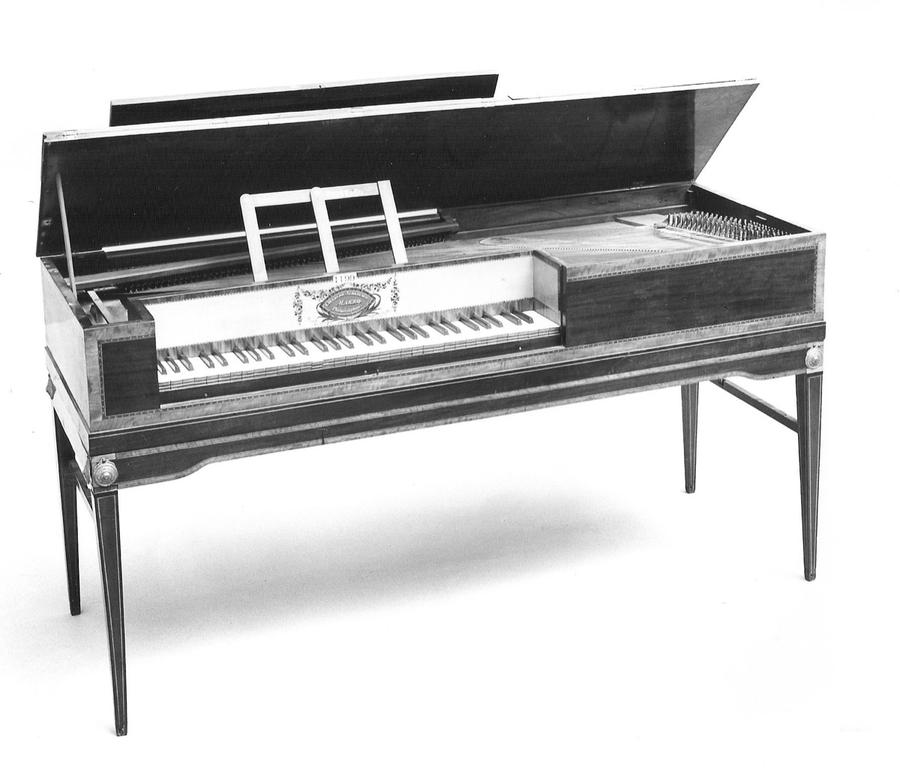
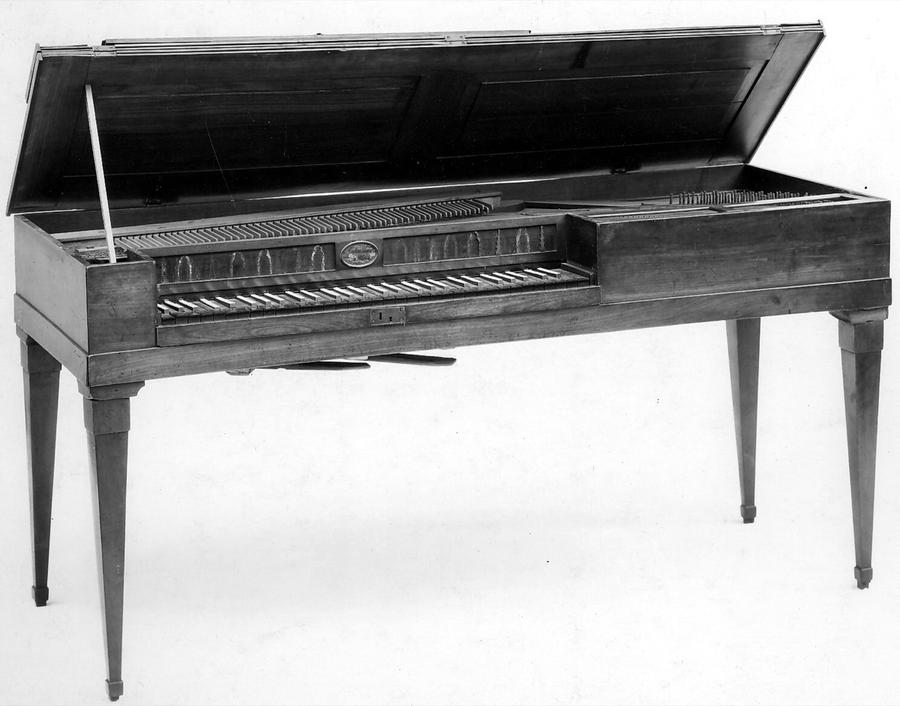
Square Piano1791–1798 · American (United States) -
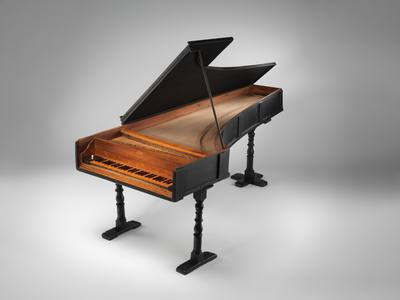
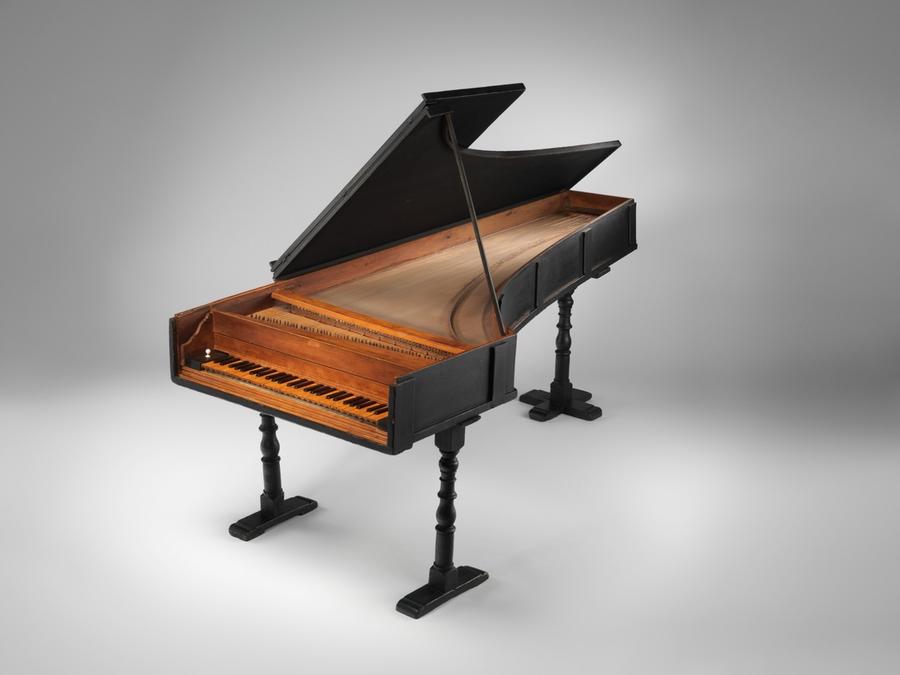
Grand Piano1720 · Italian (Florence) (Italy) -
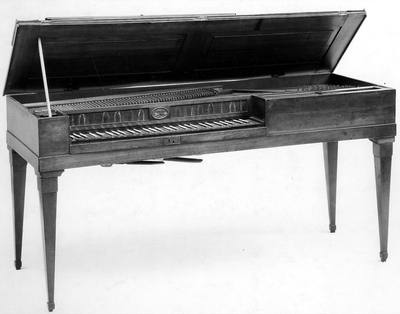
Square Pianoca. 1800 · Austrian (Austria) -
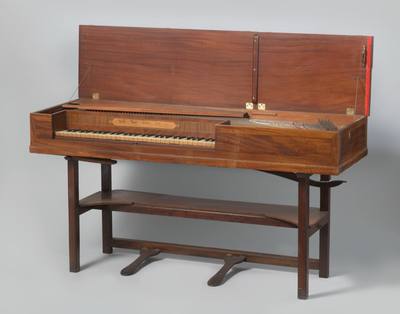
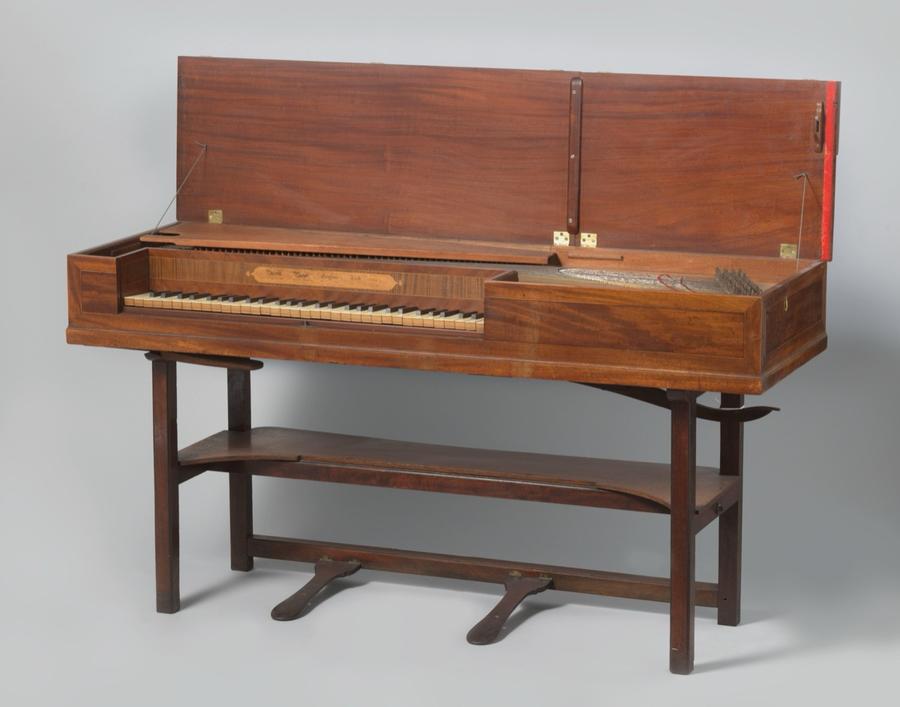
Square piano1783 · London -
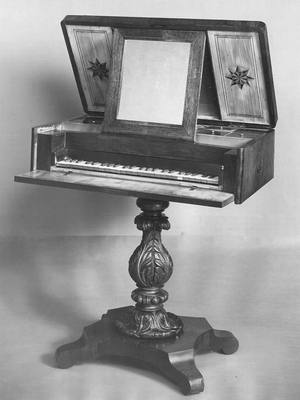
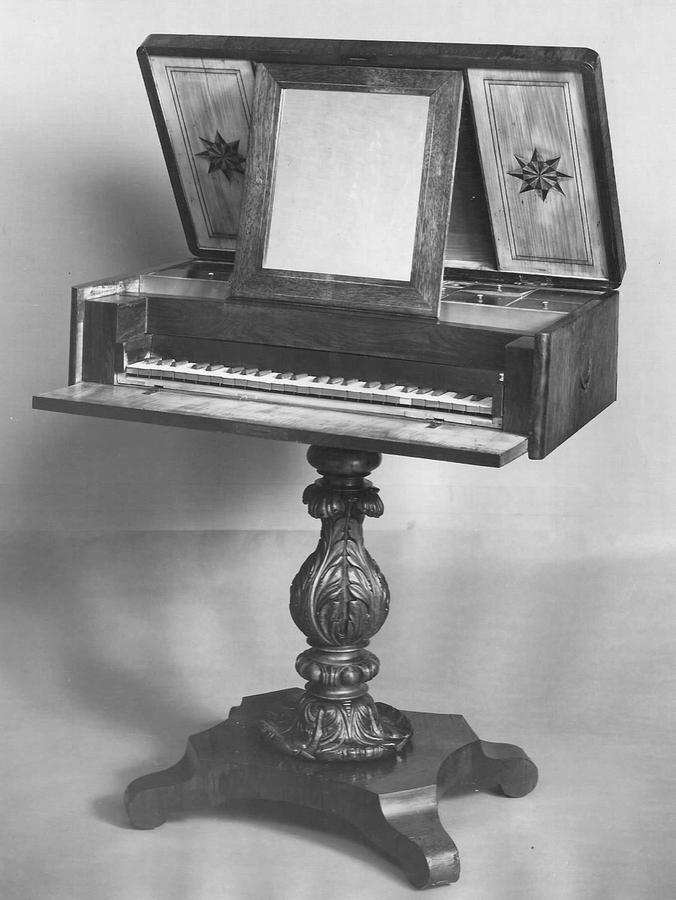
Square "Work Box" Pianofirst quarter 19th century · Austrian or German (Austria or Germany) -
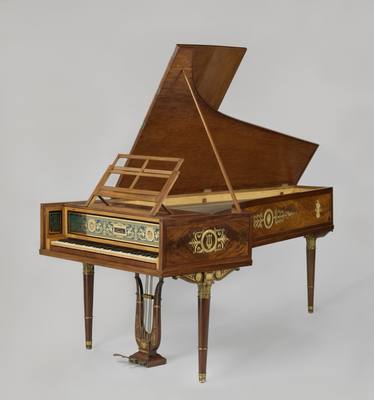
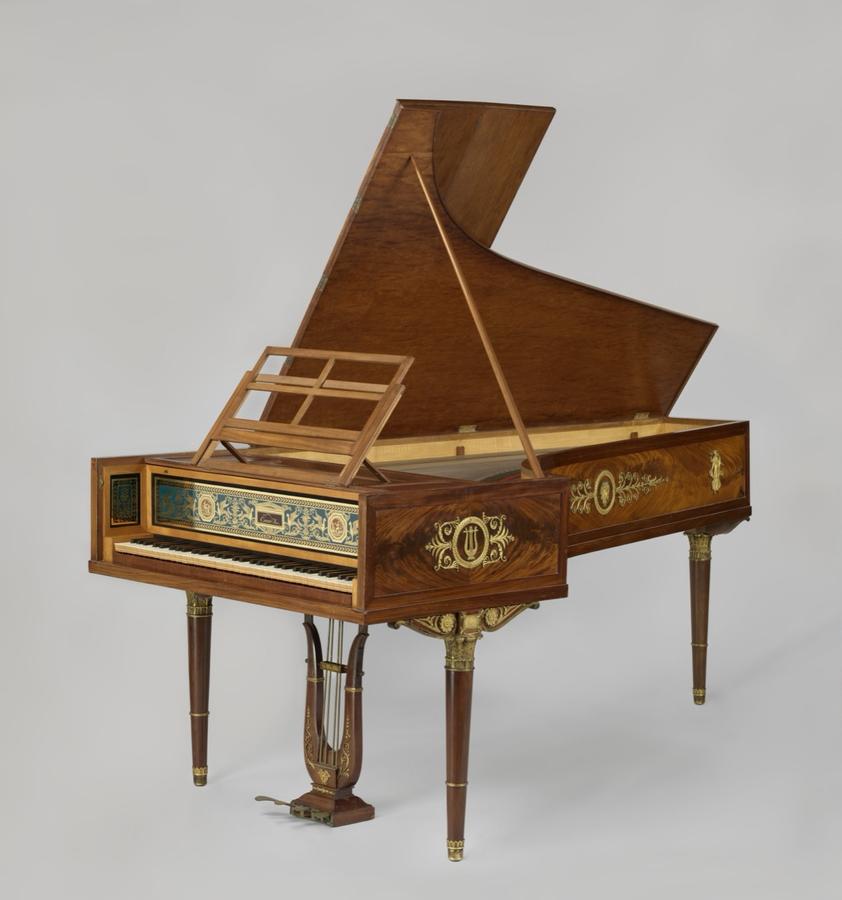
Pianoforte1808 · Paris; France -
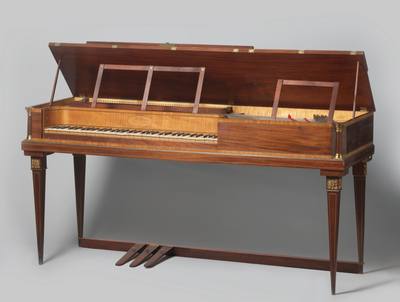
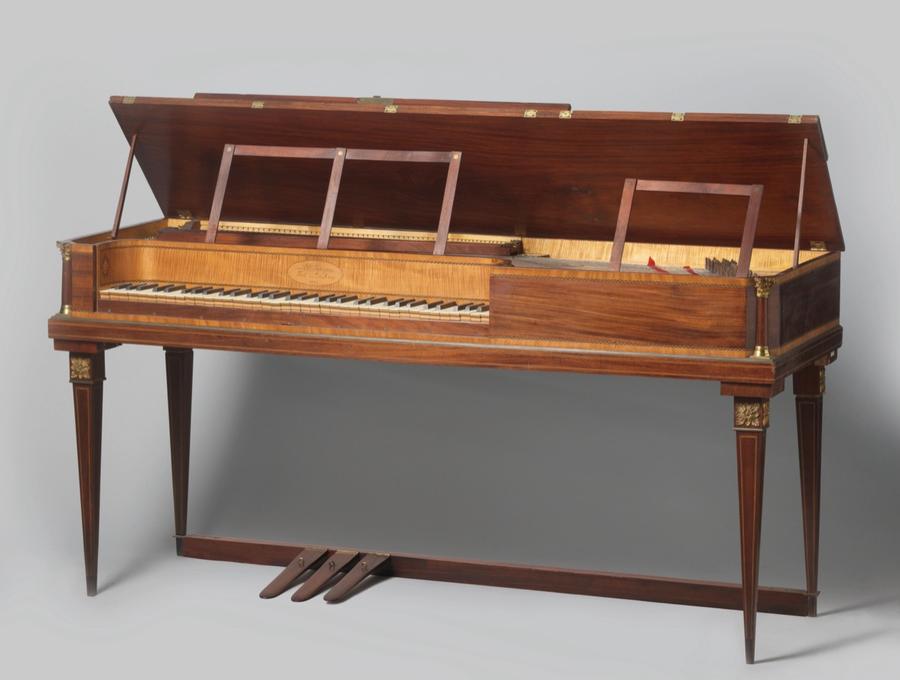
Square piano1808 · The Hague -
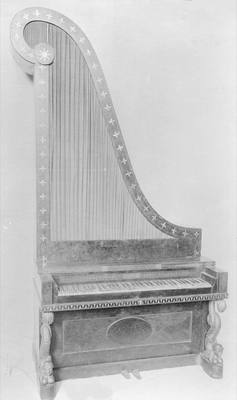
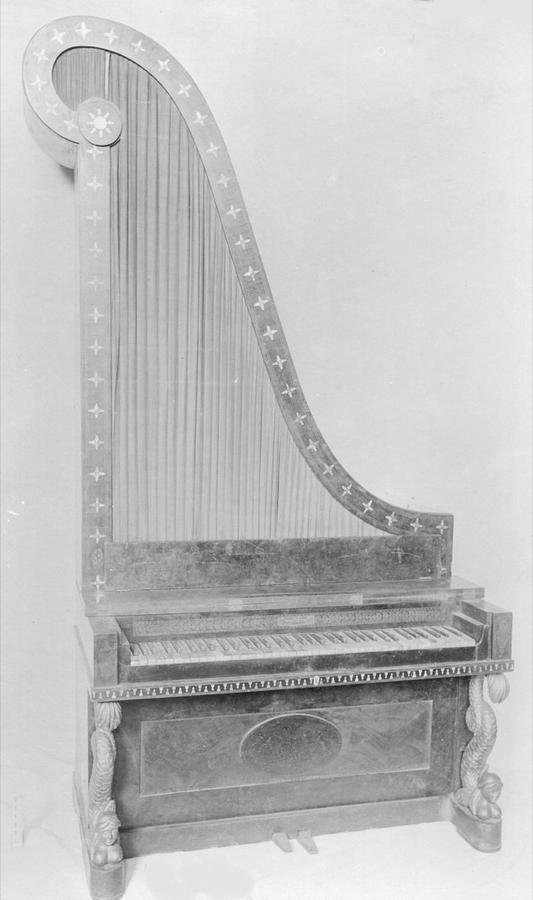
Upright (Giraffe) Pianoca. 1830–40 · Germany -
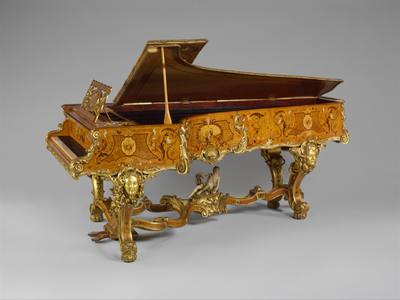
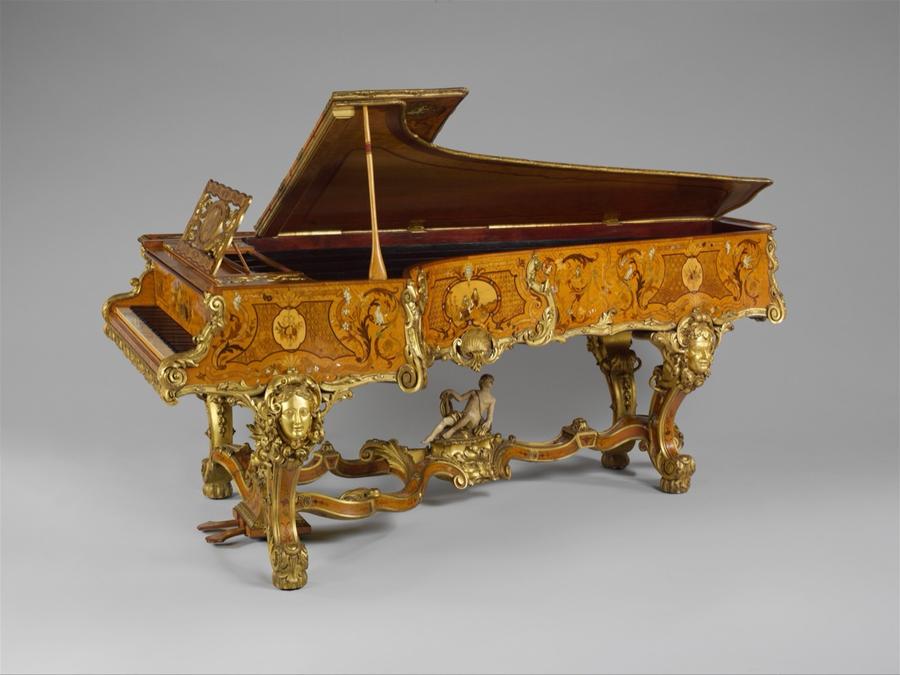
Grand Pianoforteca. 1840 · British (United Kingdom) -
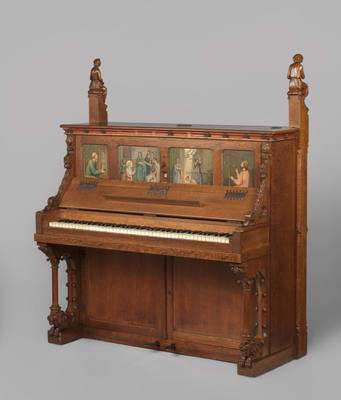
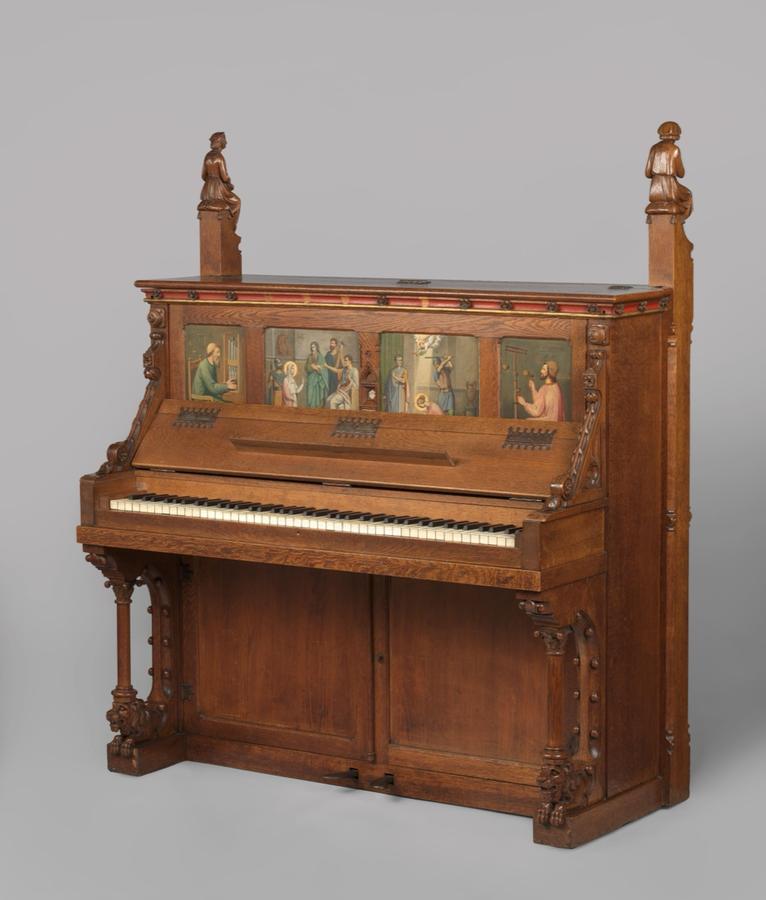
Music cabinet and piano with a relic of St Cecilia1858 - 1859 · Roermond (Limburg); Paris -
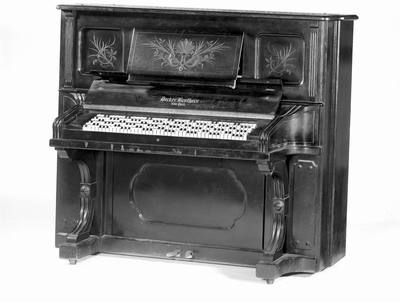
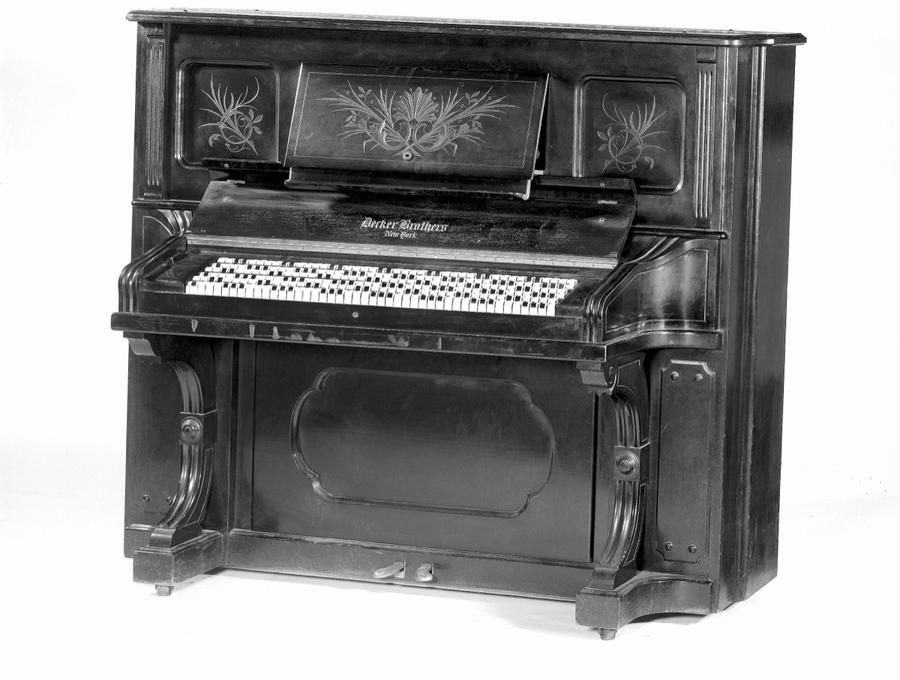
Decker Brothers Upright Piano with Jankó Keyboard1888 - 1892 · New York City -
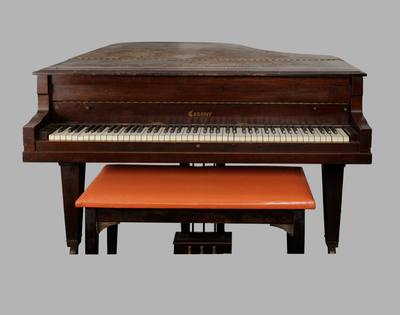
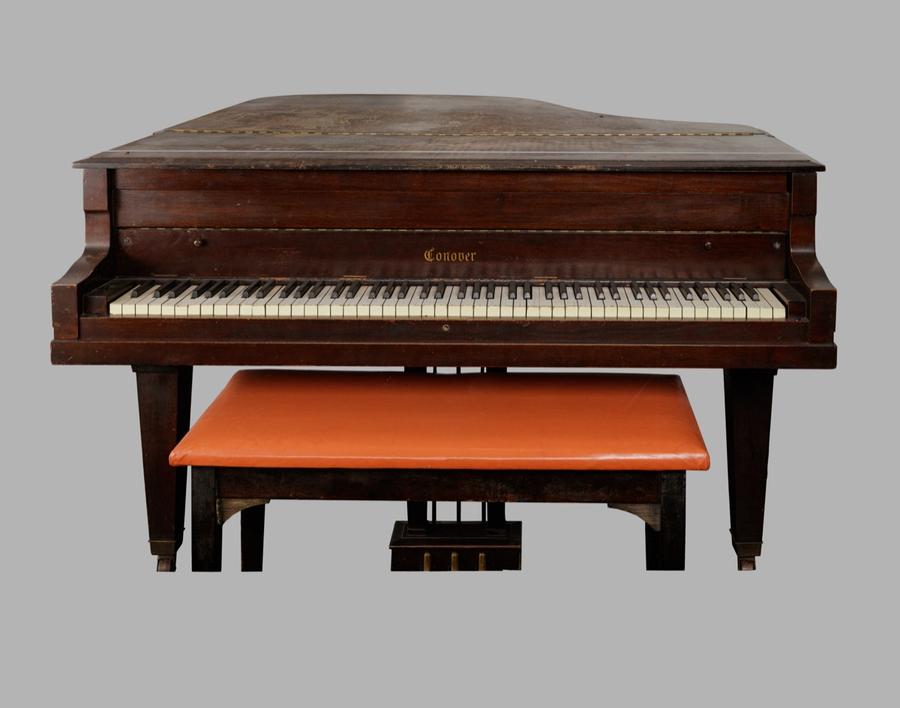
Piano from Pilgrim Baptist Church used by Thomas Dorsey1930s · Baptists; African Americans (United States)
Facts at a glance
| Hornbostel–Sachs number | 314.122-4-8 — Simple chordophone with keyboard sounded by hammers |
|---|---|
| Hornbostel–Sachs group | Chordophones › Simple chordophones or zithers › Board zithers |
| Also known as | pianoforte, concert grand piano, fortepiano, spinet, spinnet |
| Developed | Early 18th century |
| Inventor | Bartolomeo Cristofori |
| Wikidata labels | 173 languages |
| Wikipedia article | Piano |
| Wikidata item | Q5994 |
| Wikimedia Commons category | Pianos |
| MusicBrainz instrument | b3eac5f9-7859-4416-ac39-7154e2e8d348 |
| Encyclopaedia Britannica | art/piano |
| Audio sample (Wikimedia Commons) | Ludwig van Beethoven - sonata no. 14 in c sharp minor 'moonlight', op. 27 no. 2 - i. adagio sostenuto.ogg |
Sources: Wikidata (CC0 1.0) — classification number, aliases, identifiers (dump of 2026-07-22); Wikipedia (CC BY-SA 4.0) — infobox fields (description of the classification number, development, inventors) and the names of the Hornbostel–Sachs groups (article “Hornbostel–Sachs”, revision of 2026-01-04).
The name in other languages
| Language | Name | Also written |
|---|---|---|
| English | piano | pianoforte, concert grand piano, fortepiano |
| French | piano | |
| German | Klavier | |
| Spanish | piano | |
| Italian | pianoforte | |
| Portuguese | piano | |
| Dutch | piano | |
| Russian | фортепиано | |
| Japanese | ピアノ | 洋琴, ピアノフォルテ |
| Chinese | 钢琴 | 鋼琴 |
| Korean | 피아노 | |
| Arabic | بيانو | البِيانُ |
Sources: Wikidata (CC0 1.0) — labels and aliases; MusicBrainz (CC0 1.0) — instrument aliases (names only).
About the piano: history, construction and playing
A piano is a keyboard instrument that produces sound when its keys are pressed, activating an action mechanism where hammers strike strings. Modern pianos have a row of 88 black and white keys—with the exception of the Bosendörfer and Stuart & Sons pianos—and tuned to a chromatic scale in equal temperament. A musician who specializes in piano is called a pianist.
There are two main types of piano: the grand piano and the upright piano. The grand piano offers better sound and more precise key control, making it the preferred choice when space and budget allow. The grand piano is also considered a necessity in venues hosting skilled pianists. The upright piano is more commonly used because of its smaller size and lower cost.
When a key is depressed, the strings inside are struck by felt-coated wooden hammers. The vibrations are transmitted through a bridge to a soundboard that amplifies the sound by coupling the acoustic energy to the air. When the key is released, a damper stops the string's vibration, ending the sound. Most notes have three strings, except for the bass, which graduates from one to two. Notes can be sustained when the keys are released by the use of pedals at the base of the instrument, which lift the dampers off the strings. The sustain pedal allows pianists to connect and overlay sound, and achieve expressive and colorful sonority.
History
The piano was based on earlier technological innovations in struck-string instruments and keyboard instruments. The earliest known keyboard instrument was the Ancient Greek hydraulis, a type of pipe organ invented in the third century BC. Pipe organs continued to be used in Europe through the middle ages, and as such the development of pipe organs enabled instrument builders to learn about creating keyboard mechanisms for sounding pitches. The first string instruments with struck strings were the hammered dulcimers, which originated in the Middle East and were introduced in Europe in the Middle ages. During the Middle Ages, there were several attempts at creating stringed keyboard instruments with struck strings. By the 17th century, the mechanisms of keyboard instruments such as the clavichord and the harpsichord were well developed. In a clavichord the strings are struck by tangents, while in a harpsichord they are mechanically plucked by quills when the performer depresses the key. Centuries of work on the mechanism of the harpsichord in particular had shown instrument builders the most effective ways to construct the case, soundboard, bridge, and mechanical action for a keyboard intended to sound strings.
The English word piano is a shortened form of the Italian pianoforte, derived from gravecembalo col piano e forte ("harpsichord with soft and loud"). Variations in volume (loudness) are produced in response to the pianist's touch (pressure on the keys): the greater the pressure, the greater the force of the hammer hitting the strings and the louder the sound produced and the stronger the attack. Invented in 1700, the fortepiano was the second keyboard instrument (the first being the clavichord) to allow gradations of volume and tone according to how forcefully or softly the player presses or strikes the keys, unlike the pipe organ and harpsichord.
Invention
The invention of the piano is credited to Bartolomeo Cristofori of Padua, Italy, who was employed by Ferdinando de' Medici, Grand Prince of Tuscany, as the Keeper of the Instruments. Cristofori was an expert harpsichord maker and was well acquainted with the body of knowledge on stringed keyboard instruments. This knowledge of keyboard mechanisms and actions helped him to develop the first pianos. It is not known when Cristofori first built a piano. An inventory made by his employers, the Medici family, indicates the existence of a piano by 1700. The three Cristofori pianos that survive today date from the 1720s. Cristofori named the instrument un cimbalo di cipresso di piano e forte ("a keyboard of cypress with soft and loud"), abbreviated over time as pianoforte, fortepiano, and later reduced to only piano.
Cristofori's great success was designing a stringed keyboard instrument in which the notes are struck by a hammer. The hammer must strike the string but not remain in contact with it, because continued contact would damp the sound and stop the string from vibrating and making sound. This means that after striking the string, the hammer must quickly fall from (or rebound from) the strings. The hammer must return to its rest position without bouncing violently, thus preventing notes from being re-played by accidental rebound. It must return to a position in which it is ready to play again almost immediately after its key is depressed, so the player can repeat the same note rapidly when desired. Cristofori's piano action was a model for the many approaches to piano actions that followed in the next century.
Early fortepiano
Cristofori's new instrument remained relatively unknown until an Italian writer, Scipione Maffei, wrote an enthusiastic article about it in 1711, including a diagram of the mechanism, that was translated into German and widely distributed. Most of the next generation of piano builders started their work based on reading this article. One of these builders was Gottfried Silbermann, better known as an organ builder. Silbermann's pianos were virtual copies of Cristofori's, with one important addition: Silbermann invented the forerunner of the modern sustain pedal, which lifts all the dampers from the strings simultaneously. This innovation allows the pianist to sustain the notes that they have depressed even after their fingers are no longer pressing down the keys. As such, by holding a chord with the sustain pedal, pianists can relocate their hands to a different register of the keyboard in preparation for a subsequent section.
Silbermann showed Johann Sebastian Bach one of his early instruments in the 1730s, but Bach did not like the instrument at that time, saying that the higher notes were too soft to allow a full dynamic range. Although this earned him some animosity from Silbermann, the criticism was apparently heeded. Bach did approve of a later instrument he saw in 1747 and even served as an agent in selling Silbermann's pianos. "Instrument: piano et forte genandt"—a reference to the instrument's ability to play soft and loud—was an expression that Bach used to help sell the instrument when he was acting as Silbermann's agent in 1749.
Piano making flourished during the late 18th century in the Viennese school, which included Johann Andreas Stein (who worked in Augsburg, Germany) and the Viennese makers Nannette Streicher (daughter of Stein) and Anton Walter. Viennese-style pianos were built with wood frames, two strings per note, and leather-covered hammers. Some of these Viennese pianos had the opposite coloring of modern-day pianos; the natural keys were black and the accidental keys white. It was for such instruments that Wolfgang Amadeus Mozart composed his concertos and sonatas, and replicas of them are built in the 21st century for use in authentic-instrument performance of his music. The pianos of Mozart's day had a softer tone than modern pianos (those from the late 19th century or later) or English pianos, with less sustaining power. The term fortepiano now distinguishes these early instruments (and modern re-creations) from later pianos.
Further developments
In the period from about 1790 to 1860, the Mozart-era piano underwent significant changes that led to the modern structure of the instrument. This revolution was in response to a preference by composers and pianists for a more powerful, sustained piano sound, which was made possible by the ongoing Industrial Revolution with resources such as high-quality piano wire for strings and precision casting for the production of massive iron frames that could withstand the tremendous tension of the strings. Over time, the tonal range of the piano was also increased from the five octaves of Mozart's day to the seven octave (or more) range found on today's pianos.
Early technological progress in the late 18th century owed much to the firm of Broadwood. John Broadwood joined with another Scot, Robert Stodart, and a Dutchman, Americus Backers, to design a piano in the harpsichord case—the origin of the "grand". This was achieved by about 1777. They quickly gained a reputation for the splendour and powerful tone of their instruments, with Broadwood constructing pianos that were progressively larger, louder, and more robustly constructed.
They sent pianos to both Joseph Haydn and Ludwig van Beethoven, and were the first firm to build pianos with a range of more than five octaves: five octaves and a fifth during the 1790s, six octaves by 1810 (Beethoven used the extra notes in his later works), and seven octaves by 1820. The Viennese makers similarly followed these trends. The two schools used different piano actions: Broadwoods used a more robust action, whereas Viennese instruments were more sensitive.
By the 1820s, the center of piano innovation had shifted to Paris, where the Pleyel firm manufactured pianos used by Frédéric Chopin, and the Érard firm manufactured those used by Franz Liszt. In 1821, Sébastien Érard invented the double escapement action, which incorporated a repetition lever (also called the balancier) that permitted repeating a note even if the key had not return to its resting position. This facilitated rapid playing of repeated notes, a musical device exploited by Liszt. When the invention became public, as revised by Henri Herz, the double escapement action gradually became standard in grand pianos and is still incorporated into all grand pianos currently produced in the 2000s.
Variations in shape and design
Some early pianos had shapes and designs that are no longer in use. The square piano, not truly square, but rectangular, was cross strung at an extremely acute angle above the hammers, with the keyboard set along the long side. This design is attributed to Christian Ernst Friderici, a pupil of Gottfried Silbermann, in Germany and Johannes Zumpe in England, and it was improved by changes first introduced by Guillaume-Lebrecht Petzold in France and Alpheus Babcock in the United States.
Square pianos were built in great numbers until the 1840s in Europe and the 1890s in the United States, and saw the most visible change of any type of piano: the iron-framed, over-strung squares manufactured by Steinway & Sons were more than two-and-a-half times the size of Zumpe's wood-framed instruments from a century before. Their overwhelming popularity was the result of inexpensive construction and price, although their tone and performance were limited by narrow soundboards, simple actions and string spacing that made proper hammer alignment difficult.
Types
Modern pianos have two basic configurations, the grand piano and the upright piano, with various styles of each. There are also specialized and novelty pianos, electric pianos based on electromechanical designs, electronic pianos that synthesize piano-like tones using oscillators, and digital pianos using digital samples of acoustic piano sounds.
Source: Wikipedia, “Piano” — CC BY-SA 4.0 — text excerpted as published (references, images and tables removed); see the article for the full text and the list of authors. Revision of 2026-05-21.
From Grove’s Dictionary (1900)
PIANOFORTE—or Forte Piano, as often written in the 18th century—an instrument of Italian origin. The earliest mention of the name appears in records of the family of Este, in the letters of a musical instrument maker named Paliarino, dated June 27 and Dec. 31, 1598, and addressed to Alfonso II, Duke of Modena. They were found in 1879 by Count L. F. Valdrighi, custos of the Biblioteca Estense, at Modena; and the discovery was immediately announced in the Florentine musical paper, 'Boccherini.' In August of that year Valdrighi published the text of the letters, with an essay, in a pamphlet entitled 'Musurgiana' (Olivari, Modena, 1879). In the first letter Paliarino mentions the recovery of 'the instrument Piano e Forte, with the organ'Cossi io mi ritrovo l'orghano di carta, et l'instrumento Pian e Forte con l'orghano di sotto …' underneath'; in the second, 'the recovery from certain priests, with other instruments, of the Piano e Forte above mentioned and another Piano e Forte on which the late Duke Alfonso had played.L'altezza vostra sappia che mi ritrovo del' suo che lo recuperrato da questi Pretti l'horggano di carta, l'istrumento Piane e Forte con l'horggano disotto, un altro istrumento di dua registri et il Piane e Fortte, quello che adoprava il Ser. Sig. Duca Alfonso buona memoria.…' Here are two instruments distinctly named Piano e Forte (correcting Paliarino's uncertain spelling). In the second letter the same Hippolito Cricca, detto Paliarino, as he there signs himself (or Pagliarini as he spells his name elsewhere), seizes the opportunity of his brother's visit to Venice, to ask for sundry materials to be procured there, as needful for repairs, and for building a new 'Pian e Forte'; namely, limetree, boxwood, and ebony for keys, cypress for the belly, brass wire, German glue, etc, etc. In Paliarino's inventory of the Duke's keyed instruments, also given in Count Valdrighi's appendix to his essay, there are, including organs, fifty-two,This large number, as it seems to us, was not then remarkable for a prince to have: a hundred years later Prince Ferdinand dei Medici owned at least 40. See Appendix C. p. 101. to Puliti's 'Cenni Storici della vita del Serme Ferdinando dei Medici' (Florence 1874). but only one 'Piano e Forto,' the one with the organ beneath, as specially distinguished; the other, and perhaps more, being possibly recorded under the simple name 'instrument' (istromento), which is used to describe 11 of the 52. The clavicembalo or cembalo (harpsichord) and spinetta (spinet) might also have been classed under this general designation, yet Paliarino separates them. We can come to no conclusion from these names as to what kind of instrument this Piano e Forte was. It was most likely, as suggested by Sig. Cesare Ponsicchi in the 'Boccherini' (1879, No. 6), a harpsichord with a contrivance for dynamic change; but whether hammers were applied, making it a real pianoforte, we are at present in the dark. The 'gravecembalo col piano e forte' of Cristofori of Padua, a hundred years later, may not have really been the first attempt to make a hammer-harpsichord; indeed Cristofori's invention seems almost too completely successful to have been the first conception of this instrument—a dulcimer with keys.
Source: Wikisource, A Dictionary of Music and Musicians (Grove, 1900) — “Pianoforte” (entry by A. J. Hipkins) — Public domain (published 1879–1910; authors died before 1929) — the first paragraphs of the entry, as transcribed; see the page for the full entry.
Composers who played it
2214 composers on this site list the piano as an instrument they played. A selection:
- Franz Joseph Haydn 1732–1809
- Ludwig van Beethoven 1770–1827
- Franz Schubert 1797–1828
- Felix Mendelssohn 1809–1847
- Frédéric Chopin 1810–1849
- Robert Schumann 1810–1856
- Franz Liszt 1811–1886
- Giuseppe Verdi 1813–1901
- Richard Wagner 1813–1883
- Anton Bruckner 1824–1896
- Bedrich Smetana 1824–1884
- Alexander Borodin 1833–1887
Composers with a page on this site whose Wikidata record lists this instrument; featured and best-dated first. Data: Wikidata (property “instrument”, P1303), CC0 1.0.
Sources and licences
- Square Piano, Charles Albrecht, 1791–1798, American (United States). Mahogany veneered case, nameboard veneer of lighter colored wood, brass decorative medallions on upper…. Gift of Joseph W. Drexel, 1889 (89.2.185). Museum record · CC0 1.0 (public domain dedication)
- Grand Piano, Bartolomeo Cristofori, 1720, Italian (Florence) (Italy). Cypress, boxwood, paint, leather, fir. The Crosby Brown Collection of Musical Instruments, 1889 (89.4.1219a–c). Museum record · CC0 1.0 (public domain dedication)
- Square Piano, Anton Vatter, ca. 1800, Austrian (Austria). Cherry (?), iron, ebony, bone. The Crosby Brown Collection of Musical Instruments, 1889 (89.4.1214). Museum record · CC0 1.0 (public domain dedication)
- Square piano, Adam Beyer, 1783, London. mahogany (wood). Gift of the heirs of G.M. Teerink. Museum record · Public Domain Mark 1.0
- Square "Work Box" Piano, S. Hart & Son, first quarter 19th century, Austrian or German (Austria or Germany). Various materials. The Crosby Brown Collection of Musical Instruments, 1889 (89.4.1204). Museum record · CC0 1.0 (public domain dedication)
- Pianoforte, Antoine Rascalon, 1808, Paris; France. gilding (material), mahogany (wood), ivory, ebony (wood), spruce (wood), glass, brass (alloy), bronze (metal). On loan from the Koninklijke Verzamelingen. Museum record · Public Domain Mark 1.0
- Square piano, Pieter Leonhardus Fabritius, 1808, The Hague. wood (plant material), ivory, copper (metal). Rijksmuseum, Amsterdam. Museum record · Public Domain Mark 1.0
- Upright (Giraffe) Piano, Carl Lang, ca. 1830–40, Germany. Various materials. The Crosby Brown Collection of Musical Instruments, 1889 (89.4.1203). Museum record · CC0 1.0 (public domain dedication)
- Grand Pianoforte, Érard; George Henry Blake, ca. 1840, British (United Kingdom). Satinwood veneer, oak, spruce, iron, steel, ebony, ivory, gilding, mother-of-pearl, holly, mahogany, burl…. Gift of Mrs. Henry McSweeney, 1959 (59.76). Museum record · CC0 1.0 (public domain dedication)
- Music cabinet and piano with a relic of St Cecilia, Pierre Joseph Hubert Cuypers; Antoine Bord, 1858 - 1859, Roermond (Limburg); Paris. glass, cloth, pine (wood), oak (wood). Gift of P.J.H. Cuypers. Museum record · Public Domain Mark 1.0
- Decker Brothers Upright Piano with Jankó Keyboard, Decker Brothers, 1888 - 1892, New York City. iron (frame: material); felt (hammers: material); ebonized (case: material). Gift of Hugo Worch. Museum record · CC0 1.0 (public domain dedication)
- Piano from Pilgrim Baptist Church used by Thomas Dorsey, 1930s, Baptists; African Americans (United States). wood, metal, wire and vinyl. Collection of the Smithsonian National Museum of African American History and Culture, Gift of Rev. Richard C. Keller, Jr., Mr. Edward G. Keller and Ms. Paulene Austin Keller. Museum record · CC0 1.0 (public domain dedication)
Photographs: open-access collections of the museums named above; each is shown here reduced in size, otherwise unchanged. Text: Wikipedia (CC BY-SA 4.0), Grove’s Dictionary (public domain), Wikidata and MusicBrainz (CC0). The full list of sources and licences is on the credits page.