
Instruments · Chordophones
Shamisen
The shamisen or samisen (Japanese: 三味線, literally "three taste strings"), also called sangen (literally "three strings") is a Japanese musical instrument with three strings, that is played with a big plectrum called a bachi. The pronunciation in Japanese is usually "shamisen".
Summary: Simple English Wikipedia, “Shamisen” — CC BY-SA 4.0. Revision of 2024-12-13.
Museum photographs
These 3 photographs span 1800–1899, 1 place of origin and 1 museum. Every photograph is public domain or openly licensed, and links to the museum’s own record.
-
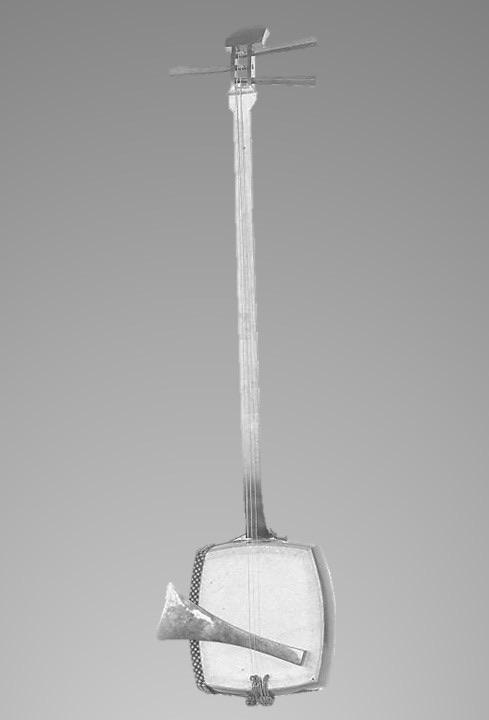
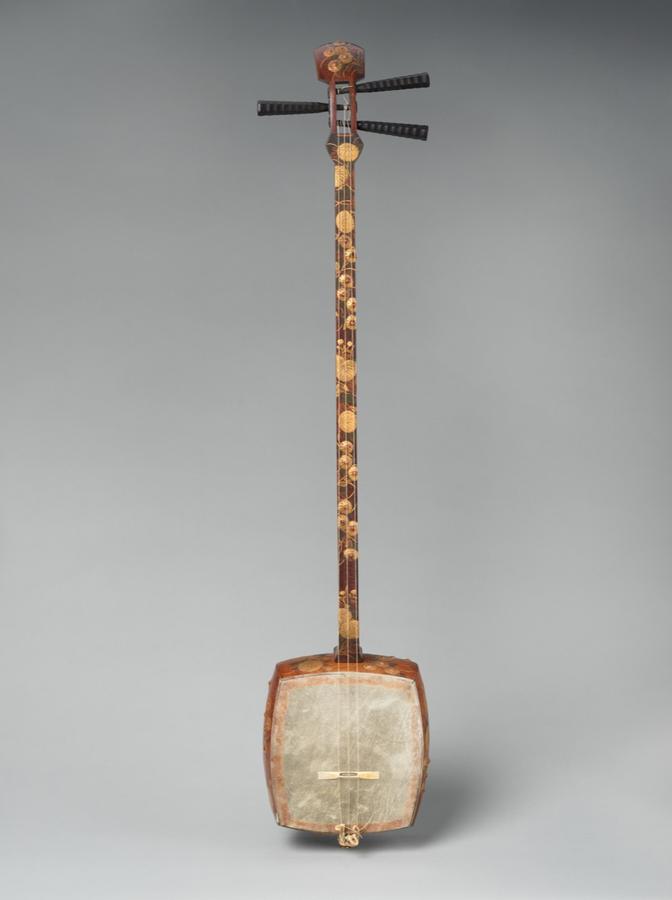
Shamisen (三味線)ca. 1875 · Japanese (Japan) -
Shamisen19th century · Japanese (Japan) -
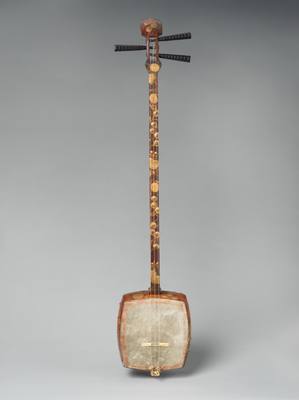
Shamisen1891 · Japanese (Japan)
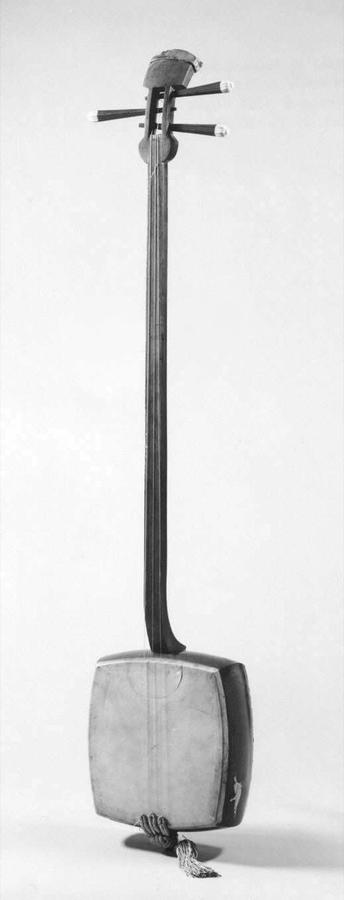
Facts at a glance
| Hornbostel–Sachs number | 321.312-6 |
|---|---|
| Hornbostel–Sachs group | Chordophones › Composite chordophones › Lutes |
| Also known as | samisen, sangen, shamisens, samisens, sangens |
| Wikidata labels | 56 languages |
| Wikipedia article | Shamisen |
| Wikidata item | Q241337 |
| Wikimedia Commons category | Shamisen |
| MusicBrainz instrument | c03753c7-1735-4e24-9c9a-8cb5994d6bc5 |
| Encyclopaedia Britannica | art/samisen |
Sources: Wikidata (CC0 1.0) — classification number, aliases, identifiers (dump of 2026-07-22); Wikipedia (CC BY-SA 4.0) — infobox fields (description of the classification number, development, inventors) and the names of the Hornbostel–Sachs groups (article “Hornbostel–Sachs”, revision of 2026-01-04).
The name in other languages
| Language | Name | Also written |
|---|---|---|
| English | shamisen | samisen, sangen, shamisens |
| French | shamisen | |
| German | Shamisen | Schamisen |
| Spanish | shamisen | samisen |
| Italian | shamisen | |
| Portuguese | sangen | shamisen, siamise |
| Dutch | shamisen | |
| Russian | сямисэн | Сямисен, Сямизен |
| Japanese | 三味線 | 細棹, ぺんぺん, さみ |
| Chinese | 三味线 | 三味線 |
| Korean | 샤미센 | |
| Arabic | الشاميسن |
Sources: Wikidata (CC0 1.0) — labels and aliases; MusicBrainz (CC0 1.0) — instrument aliases (names only).
About the shamisen: history, construction and playing
The shamisen or, also known as (all meaning 'three strings'), is a three-stringed traditional Japanese musical instrument derived from the Chinese instrument sanxian. It is played with a plectrum called a bachi.
The Japanese pronunciation is usually shamisen but sometimes jamisen when used as a suffix, according to regular sound change (e.g. tsugaru-jamisen). In Western Japanese dialects and several Edo period sources, it is both written and pronounced as samisen.
The construction of the shamisen varies in shape, depending on the genre in which it is used. The instrument used to accompany kabuki has a thin neck, facilitating the agile and virtuosic requirements of that genre. The one used to accompany puppet plays and folk songs has a longer and thicker neck instead, to match the more robust music of those genres.
Construction
The shamisen is a plucked stringed instrument. Its construction follows a model similar to that of a guitar or a banjo, with a neck and strings stretched across a resonating body. The neck of the shamisen is fretless and slimmer than that of a guitar or banjo. The body, called the, resembles a drum, having a hollow body that is covered front and back with skin, in the manner of a banjo. The skin used depends on the genre of music and the skill of the player. Traditionally, skins were made using dog or cat skin, with cat skin favored for finer instruments; though use of animal skins was common throughout the 20th century, use of these skins gradually fell out of favor, starting around the mid 2000s, due to social stigma and the decline of workers skilled in preparing these particular skins. Contemporary shamisen skins are often prepared with synthetic materials, such as plastic.
The, or neck of the shamisen, is usually divided into three or four pieces that fit and lock together, with most shamisen made to be easily disassembled. The neck of the shamisen is a singular rod that crosses the drum-like body of the instrument, partially protruding at the other side of the body and acting as an anchor for the strings. The pegs used to wind the strings are long, thin and hexagonal in shape; though they were traditionally fashioned out of ivory, due to scarcity and trading regulations regarding and constricting the sale of ivory, many are now constructed from other materials, such as wood and plastic.
Variations in construction and playing method
The construction of the shamisen varies in shape and size, depending on the genre in which it is used. The bachi used will also be different according to genre, if it is used at all. Shamisen are classified according to size and genre. There are three basic sizes: hosozao, chuzao and futozao. Examples of shamisen genres include nagauta, jiuta, min'yo, kouta, hauta, shinnai, tokiwazu, kiyomoto, gidayu and tsugaru.
Shamisen used for traditional genres of Japanese music, such as jiuta, kouta, and nagauta, adhere to very strict standards. Purists of these genres demand that the shamisen be made of the correct wood, the correct skin, and are played with the correct bachi, with little room for variation. The tsugaru-jamisen, on the other hand, has lent itself to modern use, and is used in modern genres such as jazz and rock. As a more open instrument, variations of it exist for show. The tuning pegs, which are usually fashioned out of ivory, and bachi which are fashioned from a combination of ivory and tortoise-shell for example, are sometimes made of acrylic material to give the shamisen a more modern, flashy look. Recently, avant-garde inventors have developed a tsugaru-jamisen with electric pickups to be used with amplifiers, like the electric guitar.
Hosozao
The, as its Japanese name implies, is the smallest kind of shamisen. The body is small and particularly square-shaped, with a particularly thin neck, which tapers away from the strings just as it approaches the body. Generally, the hosozao is used in nagauta, the shorter and thinner neck facilitating the agile and virtuosic requirements of kabuki. Hosozao shamisen built especially for nagauta ensembles are often simply known as nagauta shamisen. The hosozao is also often used in kouta, where it is plucked with the fingernails.
Chuzao
The is a size up from the hosozao. As its name implies, the neck is slightly thicker. As the neck approaches the body of the instrument, the distance between the strings and the fingerboard is maintained, unlike the hosozao, where it tapers off. The fingerboard ends abruptly, and the rest of the neck curves sharply into the body of the instrument. The pronounced curve that occurs just before the neck meets the body is called. The result is an extended fingerboard that gives the chuzao a higher register than the hosozao. The chuzao is favored for jiuta-style playing, with a broader, more mellow timbre. It is also an "all-round" instrument that can be used across many genres.
Futozao
The shamisen is used in the robust music of gidayubushi (the music of bunraku), jōruri min'yo, and tsugaru-jamisen. In these genres, a thicker neck facilitates the greater force used in playing the music of these styles. The futozao of tsugaru-jamisen is quite a recent innovation, and is purposefully constructed in a much larger size than traditional style shamisen, and its neck is much longer and thicker than the traditional nagauta or jiuta shamisen.
Heike shamisen
The is a shamisen particularly fashioned for the performance of the song Heike Ondo, a folk tune originating from Shimonoseki, Yamaguchi Prefecture. The neck of the heike shamisen is about half the length of most shamisen, giving the instrument the high range needed to play Heike Ondo. The use of more typical shamisen is possible, but they must be properly adjusted with a capo device to raise their pitch to make them suitable for use. Today the strings are made out of steel to make a better sound and the drum heads are made out of plastic to avoid breakage in a performance.
Variations in bachi
The, the plectrum used to play the shamisen, also differ in size, shape, and material from genre to genre.
The bachi used for nagauta shamisen can be made out of three possible materials: wood, plastic, or ivory. While many nagauta teachers generally do not approve of the use of plastic, if ivory is unattainable and wood is still out of price range, plastic is considered acceptable for use.
Jiuta bachi are made entirely out of plastic or ivory, plastic and tortoiseshell (bekko), or ivory and tortoiseshell. Jiuta bachi are the easiest to identify as they are the longest, the widest, and also have a deep indentation where the tortoiseshell meets the handle. There are sometimes also jiuta bachi that are made with a buffalo horn handle. The material, however, makes no difference in the sound.
The gidayu shamisen style uses the heaviest and thickest bachi, though the nagauta bachi is wider.
The bachi used for tsugaru-jamisen is the smallest, and is almost always tipped with tortoiseshell.
Variations in playing
In most genres, the shamisen strings are plucked with a bachi. The sound of a shamisen is similar in some respects to that of the American banjo, in that the drum-like dō, amplifies the sound of the strings. As in the clawhammer style of American banjo playing, the bachi is often used to strike both string and skin, creating a highly percussive sound. When playing on the shamisen, and occasionally in other genres, the shamisen is plucked with the fingers. Sometimes, the shamisen is bowed with a violin bow, similar to the kokyū, a similar instrument.
Tuning
The shamisen is played and tuned according to genre, with the nomenclature of the nodes in an octave also varying according to genre. A number of shamisen styles exist across Japan, and tunings, tonality and notation vary to some degree. Three of the most commonly recognized tunings across all genres are, and.
Honchoushi
Honchoushi means "home tuning" or "base tuning", and is called so because other tunings are considered to derive from it. For honchoushi, the first and third strings are tuned an octave apart, while the middle string is tuned to the equivalent of a fourth, in Western terms, from the 1st string. The most commonly used tuning is C-F-C. An example of a song that uses this tuning is Akita Nikata Bushi.
History and genres
The Japanese shamisen originated from the Chinese sanxian (Chinese: 三弦). The sanxian was introduced through the Ryūkyū Kingdom (Okinawa) in the 16th century, where it developed into the Okinawan, from which the shamisen ultimately derives. It is believed that the ancestor of the shamisen was introduced in the 16th century through the port city of Sakai, near Osaka.
The shamisen can be played solo or with other shamisen, in ensembles with other Japanese instruments, with singing such as nagauta, or as an accompaniment to drama, notably kabuki and bunraku. Both men and women traditionally played the shamisen.
The most famous and perhaps most demanding of the narrative styles is gidayū, named after Takemoto Gidayū (1651–1714), who was heavily involved in the bunraku puppet-theater tradition in Osaka. The gidayū shamisen and its plectrum are the largest of the shamisen family, and the singer-narrator is required to speak the roles of the play, as well as to sing all the commentaries on the action. The singer-narrator role is often so vocally taxing that the performers are changed halfway through a scene. There is little notated in the books (maruhon) of the tradition except the words and the names of certain appropriate generic shamisen responses. The shamisen player must know the entire work perfectly in order to respond effectively to the interpretations of the text by the singer-narrator. From the 19th century, female performers known as onna-jōruri or onna gidayū also carried on this concert tradition.
In the early part of the 20th century, blind musicians, including Shirakawa Gunpachirō (1909–1962), Takahashi Chikuzan (1910–1998), and sighted players such as Kida Rinshōei (1911–1979), evolved a new style of playing, based on traditional folk songs (min'yō) but involving much improvisation and flashy fingerwork. This style – now known as tsugaru-jamisen, after the home region of this style in the north of Honshū – continues to be relatively popular in Japan. The virtuosic tsugaru-jamisen style is sometimes compared to bluegrass banjo.
is a style of shamisen historically developed by and mostly performed by geisha and maiko. Its name literally means "little song", which contrasts with the musical genre of nagauta found in bunraku and kabuki; though both maiko and geisha training to play the shamisen will also learn naguata and will occasionally perform nagauta at banquets, the vast majority of musical performances seen at the parties and events they attend are kouta.
Source: Wikipedia, “Shamisen” — CC BY-SA 4.0 — text excerpted as published (references, images and tables removed); see the article for the full text and the list of authors. Revision of 2026-06-24.
Sources and licences
- Shamisen (三味線), Shigemoto, Isohachi, ca. 1875, Japanese (Japan). Wood, cloth, skin. The Crosby Brown Collection of Musical Instruments, 1889 (89.4.106). Museum record · CC0 1.0 (public domain dedication)
- Shamisen, 19th century, Japanese (Japan). Wood, cloth, skin. Purchase, Clara Mertens Bequest, in memory of André Mertens, by exchange; and Gift of Mark H. Handwerk, in memory of Mary Lewin Wethered Clark Handwerk, by exchange, 1990 (1990.129.5). Museum record · CC0 1.0 (public domain dedication)
- Shamisen, Takechi Matsukawa; Wakamura workshop, 1891, Japanese (Japan). Wood, catskin, rope, silk string, lacquer, red coral. Gift of the Estate of Mary Flagler Cary, 1969 (69.271.2a, b). Museum record · CC0 1.0 (public domain dedication)
Photographs: open-access collections of the museums named above; each is shown here reduced in size, otherwise unchanged. Text: Wikipedia (CC BY-SA 4.0), Wikidata and MusicBrainz (CC0). The full list of sources and licences is on the credits page.