
Instruments · Chordophones
Violin
The violin is a string instrument which has four strings and is played with a bow. The strings are usually tuned to the notes G, D, A, and E. It is held between the left collar bone (near the shoulder) and the chin. Different notes are made by fingering (pressing on the strings) with the left hand while bowing with the right. Unlike guitar, it has no frets or other markers on the fingerboard.
Summary: Simple English Wikipedia, “Violin” — CC BY-SA 4.0. Revision of 2026-04-22.
Hear the real instrument
These are recordings of a real violin, not a synthesiser. Click or tap a key to hear that note, or press Play the range to hear every note the instrument was recorded on, from lowest to highest.
| Recorded instrument | Violin |
|---|---|
| Range recorded | G3 to E7 |
| Notes | 46 recorded notes, one for every semitone from lowest to highest. Middle C is C4. |
Without JavaScript: play the lowest note (G3) or the highest note (E7) as MP3 files.
Recordings: IRCAM SOL (TinySOL), CC BY 4.0, Cella et al. Each note is cut from the original recording, levelled in loudness and converted to a short MP3; the playing technique is ordinary (ordinario), mostly at mezzo-forte.
Museum photographs
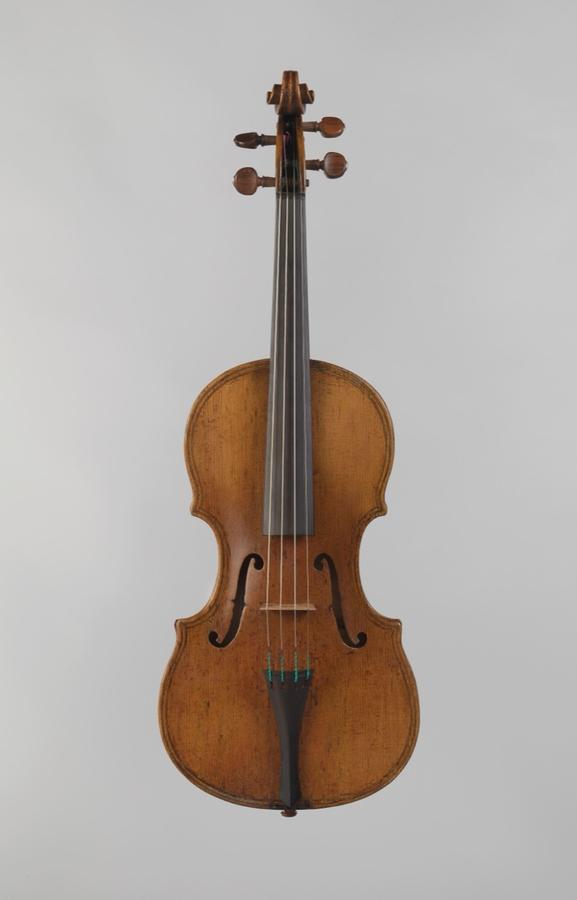
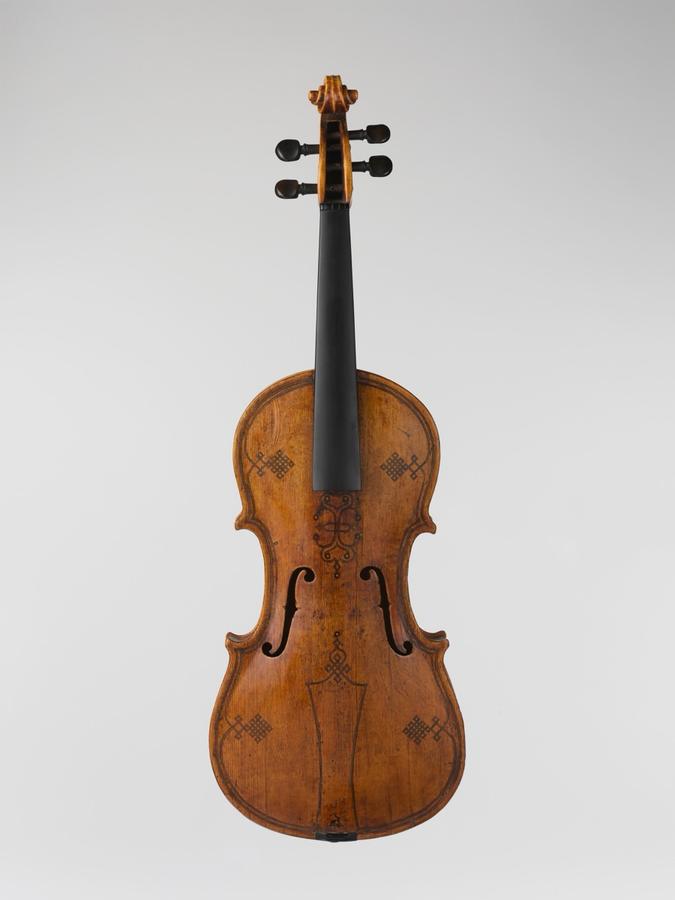
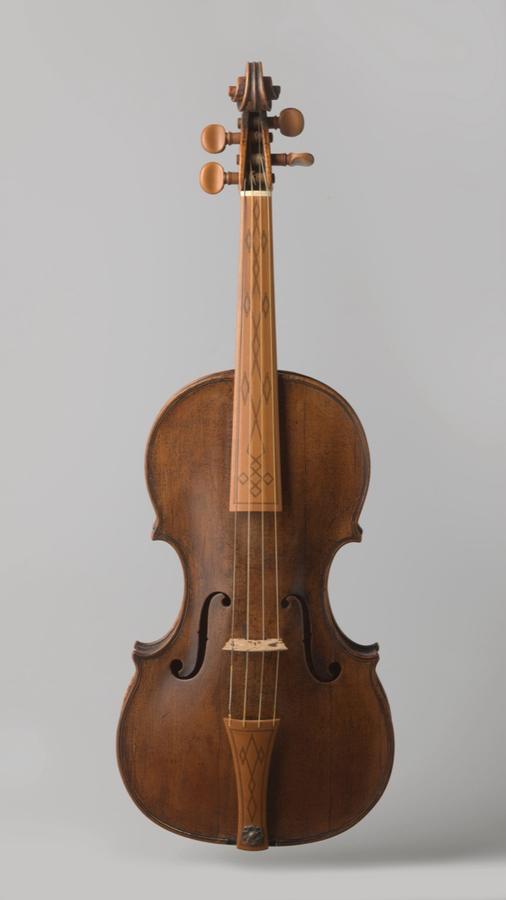
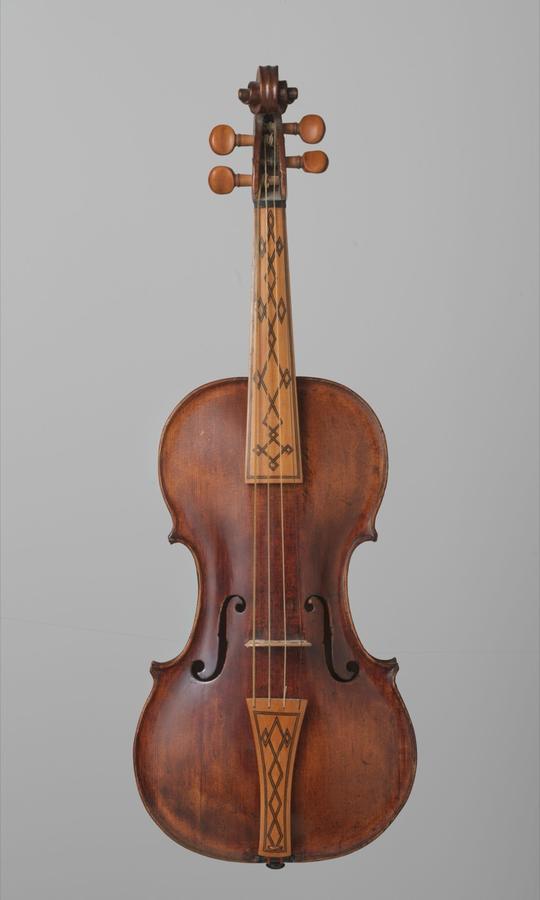
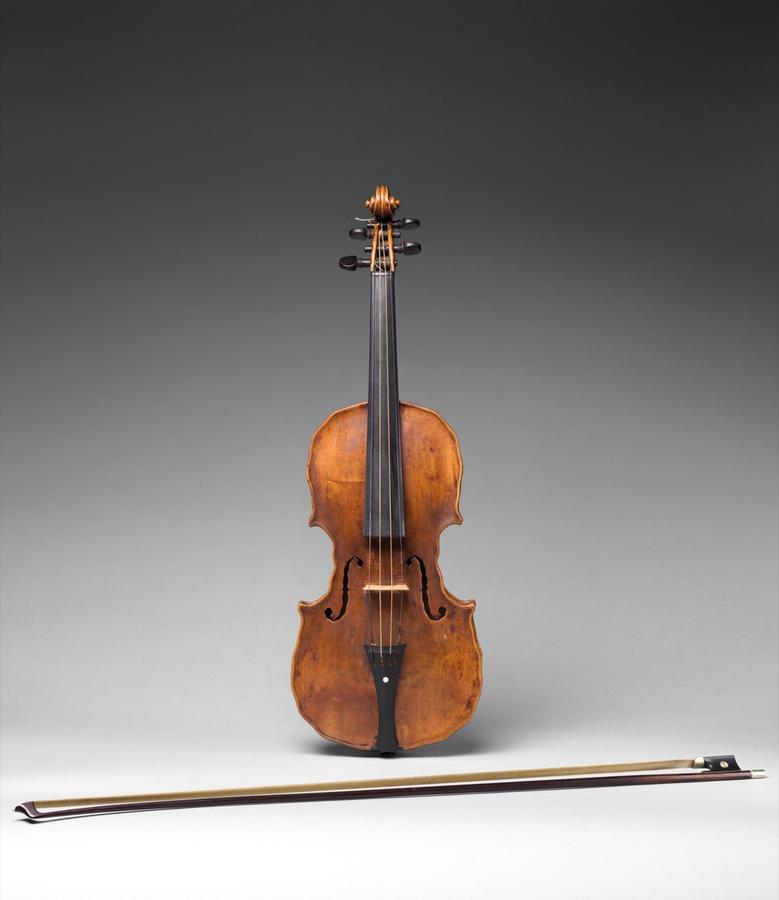
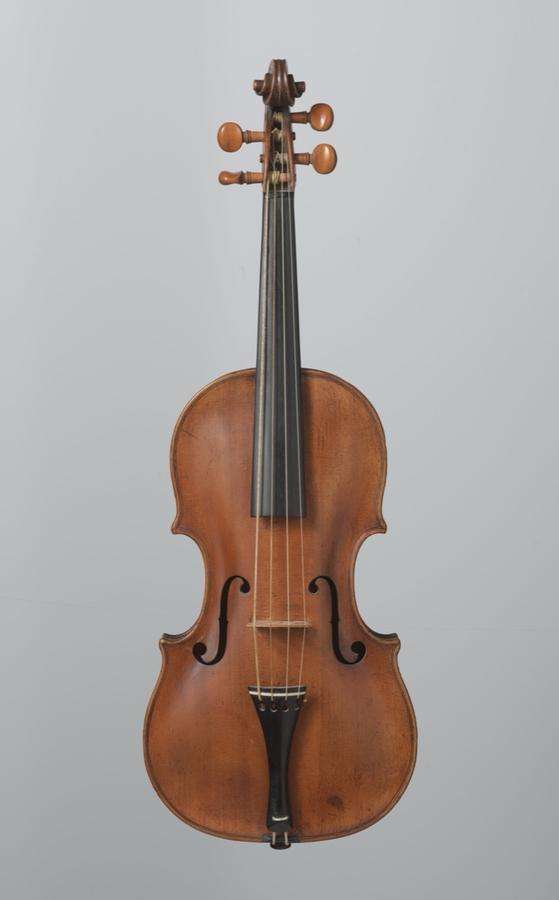
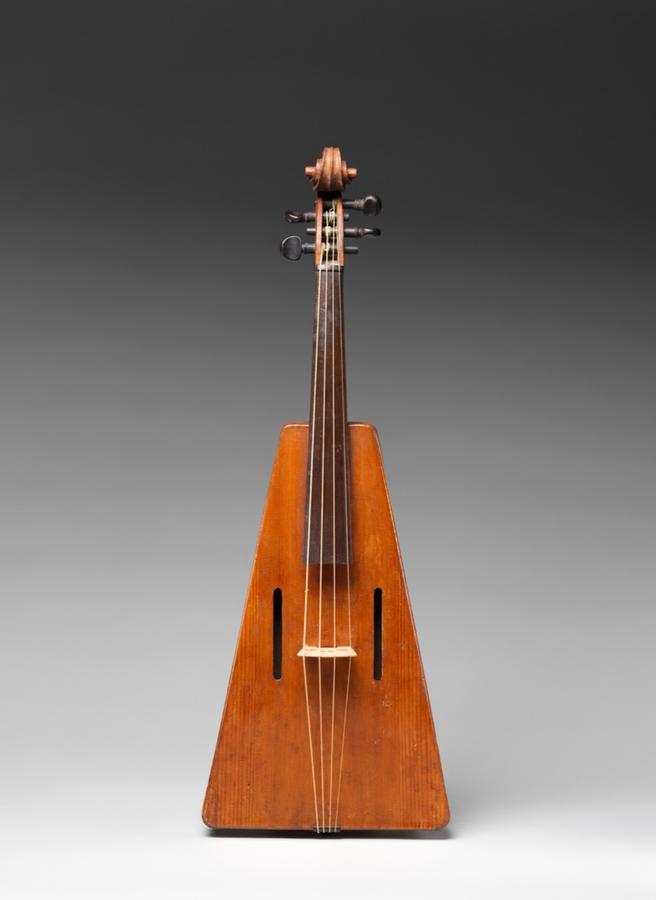
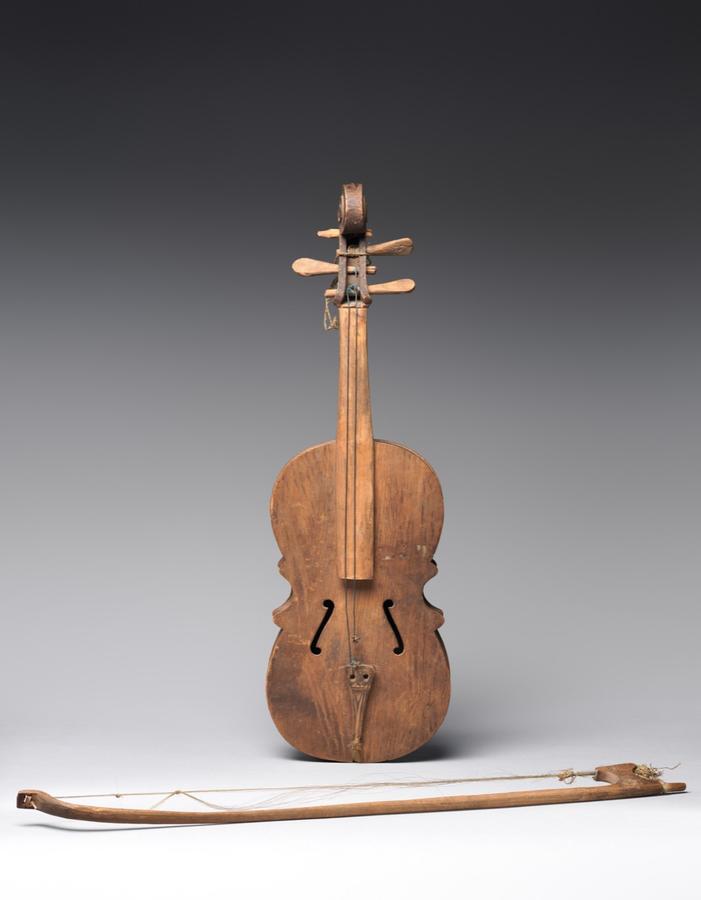
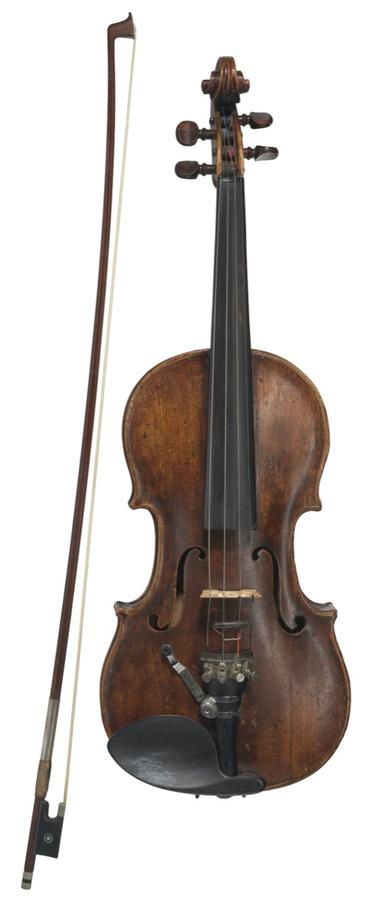
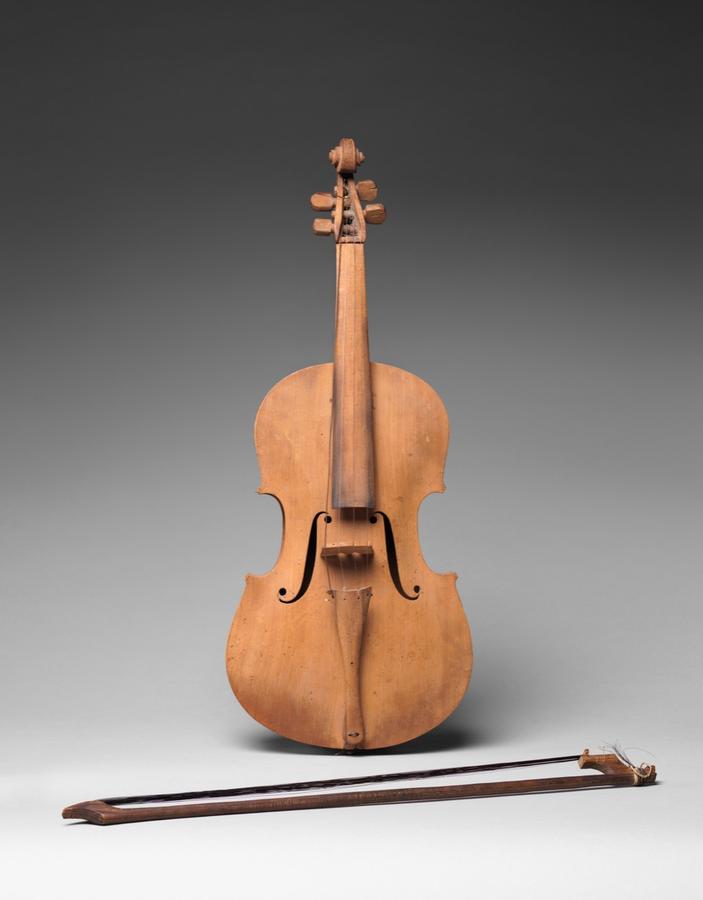
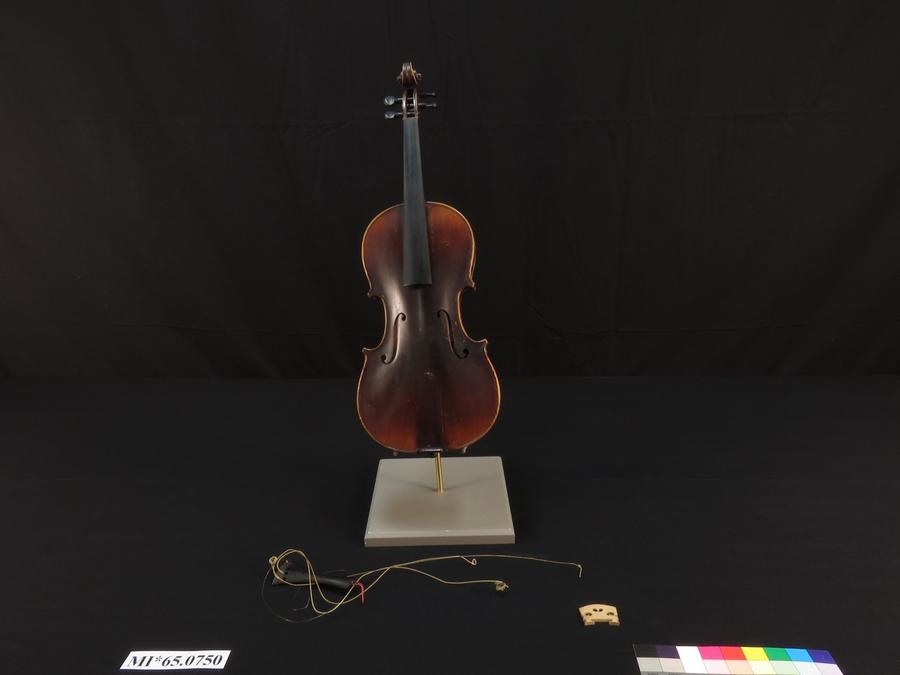
These 12 photographs span 1610–1902, 12 places of origin and 3 museums. Every photograph is public domain or openly licensed, and links to the museum’s own record.
-
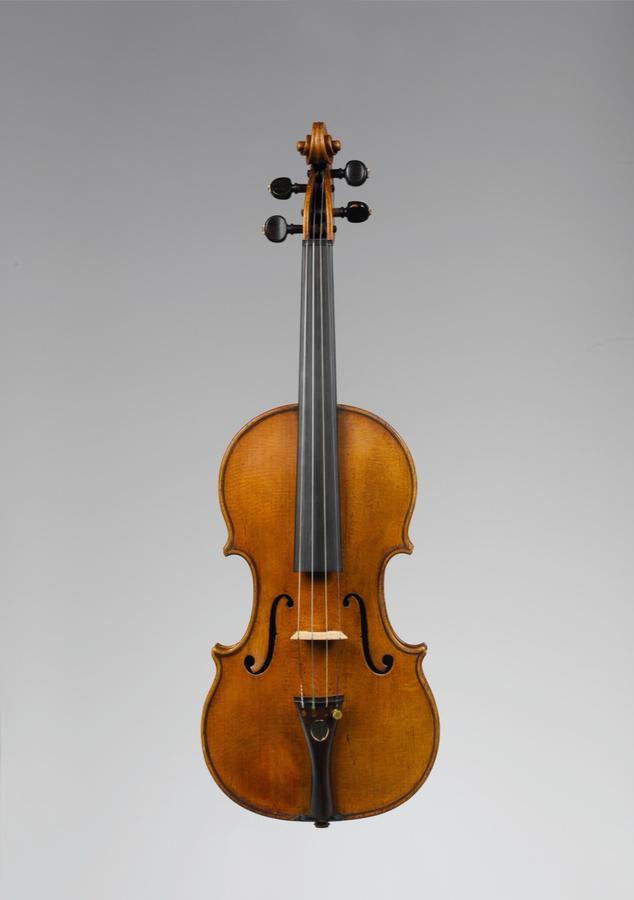
Violin1783 · Italian (Italy) -
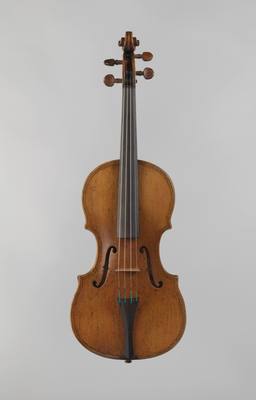
Violinc. 1610 · Brescia -
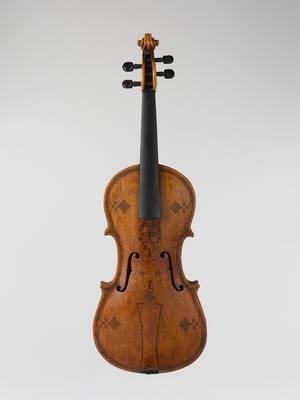
Violinafter 1625 · British or German (England or Germany) -
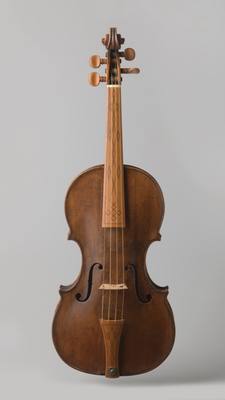
Violin1692 · Amsterdam -
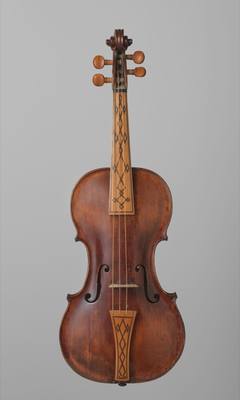
Violin1700 - 1750 · Saksen -
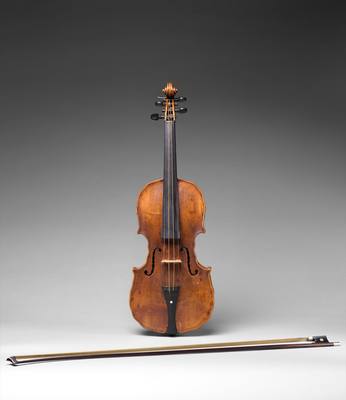
Violinca. 1752–1800 · Germany -
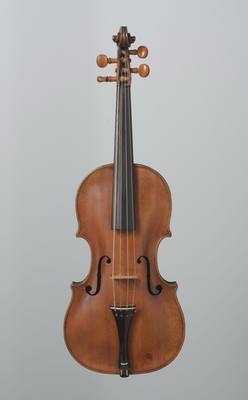
Violin1764 · London -
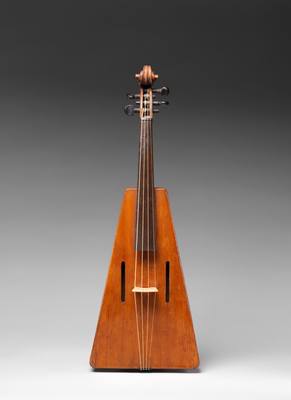
"Savart model" Violinca. 1819 · French (France) -
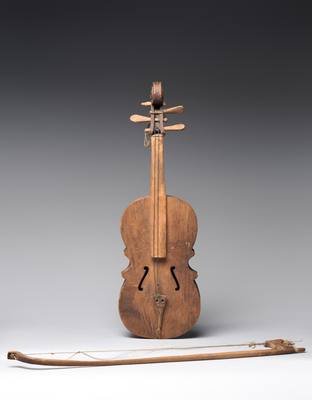
Violinca. 1800–1889 · Russian (Siberia) (Russia) -
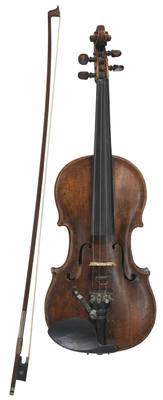
Violin owned by Ginger Smock1849 · African Americans (Czech Republic) -
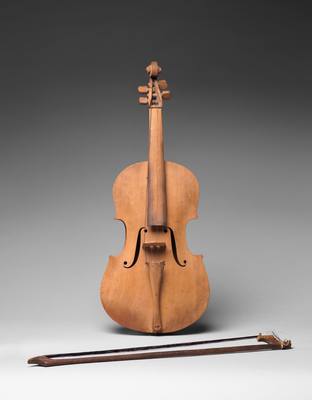
Raberi (folk violin)late 19th century · Native American (Rarámuri / Tarahumara) (Mexico) -
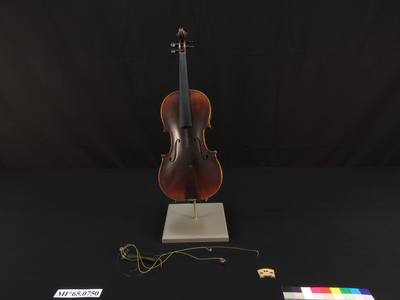
Violin (3/4 size)1898 - 1902 · Mittenwald
Facts at a glance
| Hornbostel–Sachs number | 321.322-71 — Composite chordophone sounded by a bow |
|---|---|
| Hornbostel–Sachs group | Chordophones › Composite chordophones › Lutes |
| Also known as | fiddle |
| Developed | Early 16th century |
| Wikidata labels | 176 languages |
| Wikipedia article | Violin |
| Wikidata item | Q8355 |
| Wikimedia Commons category | Violins |
| MusicBrainz instrument | 089f123c-0f7d-4105-a64e-49de81ca8fa4 |
| Encyclopaedia Britannica | art/violin |
| Audio sample (Wikimedia Commons) | Whiskey-youre-the-devil-violin.ogg |
Sources: Wikidata (CC0 1.0) — classification number, aliases, identifiers (dump of 2026-07-22); Wikipedia (CC BY-SA 4.0) — infobox fields (description of the classification number, development, inventors) and the names of the Hornbostel–Sachs groups (article “Hornbostel–Sachs”, revision of 2026-01-04).
The name in other languages
| Language | Name | Also written |
|---|---|---|
| English | violin | fiddle |
| French | violon | |
| German | Violine | Geige, Geige / Violine |
| Spanish | violín | |
| Italian | violino | |
| Portuguese | violino | |
| Dutch | viool | |
| Russian | скрипка | кеманча |
| Japanese | ヴァイオリン | 提琴, 小提琴, バイオリン |
| Chinese | 小提琴 | 梵婀玲 |
| Korean | 바이올린 | |
| Arabic | كمان | الكمان |
Sources: Wikidata (CC0 1.0) — labels and aliases; MusicBrainz (CC0 1.0) — instrument aliases (names only).
About the violin: history, construction and playing
The violin, sometimes referred to as a fiddle, is a wooden chordophone, and is the smallest, and thus highest-pitched instrument (soprano) in regular use in the violin family. Smaller violin-type instruments exist, including the violino piccolo and the pochette, but these are virtually unused. Most violins have a hollow wooden body, and commonly have four strings (sometimes five), usually tuned in perfect fifths with notes G3, D4, A4, E5, and are most commonly played by drawing a bow across the strings. The violin can also be played by plucking the strings with the fingers (pizzicato) and, in specialized cases, by striking the strings with the wooden side of the bow (col legno).
Violins are important instruments in a wide variety of musical genres. They are most prominent in the Western classical tradition, both in ensembles (from chamber music to orchestras) and as solo instruments. Violins are also important in many varieties of folk music, including country music, bluegrass music, and in jazz. Electric violins with solid bodies and piezoelectric pickups are used in some forms of rock music and jazz fusion, with the pickups plugged into instrument amplifiers and speakers to produce sound. The violin has come to be incorporated in many non-Western music cultures, including Indian music and Iranian music. The name fiddle is often used regardless of the type of music played on it.
History
The earliest stringed instruments were mostly plucked (for example, the Greek lyre). Two-stringed, bowed instruments, played upright and strung and bowed with horsehair, may have originated in the nomadic equestrian cultures of Central Asia, in forms closely resembling the modern-day Mongolian Morin huur and the Kazakh Kobyz. Similar and variant types were probably disseminated along east–west trading routes from Asia into the Middle East, and the Byzantine Empire.
Rebec, fiddle and lira da braccio are generally considered the ancestors of the violin, Several sources suggest alternative possibilities for the violin's origins, such as northern or western Europe. The first makers of violins probably borrowed from various developments of the Byzantine lyra. These included the vielle (also known as the fidel or viuola) and the lira da braccio. The violin in its present form emerged in early 16th-century northern Italy. The earliest pictures of violins, albeit with three strings, are seen in northern Italy around 1530, at around the same time as the words "violino" and "vyollon" are seen in Italian and French documents. One of the earliest explicit descriptions of the instrument, including its tuning, is from the Epitome musical by Jambe de Fer, published in Lyon in 1556.
The violin proved very popular, both among street musicians and the nobility; the French king Charles IX ordered Andrea Amati to construct 24 violins for him in 1560. One of these "noble" instruments, the Charles IX, is the oldest surviving violin. It is now located in the Ashmolean Museum of Oxford. The finest Renaissance carved and decorated violin in the world is the Gasparo da Salò (c.1574) owned by Ferdinand II, Archduke of Austria and later, from 1841, by the Norwegian virtuoso Ole Bull, who used it for forty years and thousands of concerts, for its very powerful and beautiful tone, similar to that of a Guarneri. "The Messiah" or "Le Messie" (also known as the "Salabue") made by Antonio Stradivari in 1716 remains pristine. It is also located in the Ashmolean Museum.
The most famous (luthiers) between the 16th century and the 18th century include:
Construction and mechanics
A violin generally consists of a spruce (especially Norway spruce) top (the soundboard, also known as the top plate, table, or belly), maple ribs and back, two endblocks, a neck, a bridge, a soundpost, four strings, and various fittings, optionally including a chinrest, which may attach directly over, or to the left of, the tailpiece. A distinctive feature of a violin body is its hourglass-like shape and the arching of its top and back. The hourglass shape comprises two upper bouts, two lower bouts, and two concave C-bouts at the waist, providing clearance for the bow. The "voice" or sound of a violin depends on its shape, the wood it is made from, the graduation (the thickness profile) of both the top and back, the varnish that coats its outside surface and the skill of the luthier in doing all of these steps. The varnish and especially the wood continue to improve with age, making the fixed supply of old well-made violins built by famous luthiers much sought after.
The majority of glued joints in the instrument use animal hide glue rather than common white glue for a number of reasons. Hide glue is capable of making a thinner joint than most other glues. It is reversible (brittle enough to crack with carefully applied force and removable with hot water) when disassembly is needed. Since fresh hide glue sticks to old hide glue, more original wood can be preserved when repairing a joint. (More modern glues must be cleaned off entirely for the new joint to be sound, which generally involves scraping off some wood along with the old glue.) Weaker, diluted glue is usually used to fasten the top to the ribs, and the nut to the fingerboard, since common repairs involve removing these parts. The purfling running around the edge of the spruce top provides some protection against cracks originating at the edge. It also allows the top to flex more independently of the rib structure. Painted-on faux purfling on the top is usually a sign of an inferior instrument. The back and ribs are typically made of maple, most often with a matching striped figure, referred to as flame, fiddleback, or tiger stripe.
Strings
Strings were first made of sheep gut (commonly known as catgut, which despite the name, did not come from cats), or simply gut, which was stretched, dried, and twisted. In the early years of the 20th century, strings were made of either gut or steel. Modern strings may be gut, solid steel, stranded steel, or various synthetic materials such as perlon, wound with various metals, and sometimes plated with silver. Most E strings are unwound, either plain or plated steel. Gut strings are not as common as they once were, but many performers use them to achieve a specific sound especially in historically informed performance of Baroque music. Strings have a limited lifetime. Eventually, when oil, dirt, corrosion, and rosin accumulate, the mass of the string can become uneven along its length. Apart from obvious things, such as the winding of a string coming undone from wear, players generally change a string when it no longer plays "true" (with good intonation on the harmonics), losing the desired tone, brilliance and intonation. String longevity depends on string quality and playing intensity.
Acoustics
The arched shape, the thickness of the wood, and its physical qualities govern the sound of a violin. Patterns of the node made by sand or glitter sprinkled on the plates with the plate vibrated at certain frequencies, called Chladni patterns, are occasionally used by luthiers to verify their work before assembling the instrument.
Bows
A violin is usually played using a bow consisting of a stick with a ribbon of horsehair strung between the tip and frog (or nut, or heel) at opposite ends. A typical violin bow may be 75 cm overall, and weigh about 60 g. Viola bows may be about 5 mm shorter and 10 g heavier. At the frog end, a screw adjuster tightens or loosens the hair. Just forward of the frog, a leather thumb cushion (called the grip) and a winding protect the stick and provide a secure hold for the player's hand. Traditional windings are of wire (often silver or plated silver), silk, or baleen ("whalebone", now substituted by alternating strips of tan and black plastic.) Some fiberglass student bows employ a plastic sleeve as both grip and winding.
Bow hair traditionally comes from the tail of a grey male horse (which has predominantly white hair). Some cheaper bows use synthetic fiber. Solid rosin is rubbed onto the hair, to render it slightly sticky; when the bow is drawn across a string, the friction between them makes the string vibrate. Traditional materials for the more costly bow sticks include snakewood, and brazilwood (which is also known as Pernambuco wood). Some recent bow design innovations use carbon fiber (CodaBows) for the stick, at all levels of craftsmanship. Inexpensive bows for students are made of less costly timbers, or from fiberglass (Glasser).
Open strings
If a string is bowed or plucked without any finger stopping it, it is said to be an open string. This gives a different sound from a stopped string, since the string vibrates more freely at the nut than under a finger. Further, it is impossible to use vibrato fully on an open string (though a partial effect can be achieved by stopping a note an octave up on an adjacent string and vibrating that, which introduces an element of vibrato into the overtones). In the classical tradition, violinists will often use a string crossing or shift of position to allow them to avoid the change of timbre introduced by an open string, unless indicated by the composer. This is particularly true for the open E which is often regarded as having a harsh sound. However, there are also situations where an open string may be specifically chosen for artistic effect. This is seen in classical music which is imitating the drone of an organ (J. S. Bach, in his Partita in E for solo violin, achieved this), fiddling (e.g., Hoedown) or where taking steps to avoid the open string is musically inappropriate (for instance in Baroque music where shifting position was less common). In quick passages of scales or arpeggios an open E string may simply be used for convenience if the note does not have time to ring and develop a harsh timbre. In folk music, fiddling and other traditional music genres, open strings are commonly used for their resonant timbre.
Playing an open string simultaneously with a stopped note on an adjacent string produces a bagpipe-like drone, often used by composers in imitation of folk music. Sometimes the two notes are identical (for instance, playing a fingered A on the D string against the open A string), giving a ringing sort of "fiddling" sound. Playing an open string simultaneously with an identical stopped note can also be called for when more volume is required, especially in orchestral playing. Some classical violin parts have notes for which the composer requests the violinist to play an open string, because of the specific sonority created by an open string.
Source: Wikipedia, “Violin” — CC BY-SA 4.0 — text excerpted as published (references, images and tables removed); see the article for the full text and the list of authors. Revision of 2026-07-05.
From Grove’s Dictionary (1900)
The Violin is the most popular and useful of all portable instruments, and indeed of all instruments except the pianoforte, and it has considerable importance as being the principal instrument in the orchestra, the main body of which is composed of violins, in their three sizes of trebles, altos or tenors, and basses. It is nearer to the human voice in quality, compass, and facility of execution than any other instrument; few are simpler in construction, and none is so cheap or so easily mastered, provided the learner sets rightly about it. In addition to the popularity which it enjoys on these accounts, the fiddle exercises an unique charm over the mind from the continuity of its existence and usefulness. Most people are aware that 'an old fiddle is better than a new one.' This, as will appear further on, is not absolutely true; although probably the majority of the fiddles in use are not new, very many being one, two, and even three hundred years old. A violin, if it be only well-made to begin with, can by timely and judicious rehabilitation, be made to last practically for ever, or at least to outlast the lifetime of any particular possessor: and few things are more fascinating than putting an old disused Violin through this process, and reawakening its musical capacities. The Violin thus enjoys a sort of mysterious immortality, the effect of which is often enhanced by the groundless idea that no good fiddles have been made since the golden age of the Cremona makers, which terminated 120 years ago, and that the secrets of violin-making are lost. In connexion with this, a good deal of enthusiasm has been lavished by connoisseurs on the beauty of design and varnish of the old Cremona Violins, and even in some useful and reputable works on this subject this enthusiasm has been carried to a point where it can only be described as silly and grotesque. A fiddle, after all, even a Stradivari, is not a work of pure art, like a piece of painting or sculpture: it is as merely a machine as a watch, a gun, or a plough. Its main excellences are purely mechanical, and though most good fiddles are also well-designed and handsome, not a few are decidedly ugly. Leopold Mozart, in his Violin-School, has some pertinent remarks on this fallacy. To choose a fiddle for its outward symmetry and varnish, he says, is like choosing a singing bird for its fine feathers.
Source: Wikisource, A Dictionary of Music and Musicians (Grove, 1900) — “Violin” (entry by Edward John Payne) — Public domain (published 1879–1910; authors died before 1929) — the first paragraphs of the entry, as transcribed; see the page for the full entry.
Composers who played it
728 composers on this site list the violin as an instrument they played. A selection:
- Jean-Baptiste Lully 1632–1687
- François Couperin 1668–1733
- Antonio Vivaldi 1678–1741
- Jean-Philippe Rameau 1683–1764
- Johann Sebastian Bach 1685–1750
- Wolfgang Amadeus Mozart 1756–1791
- Ludwig van Beethoven 1770–1827
- Franz Schubert 1797–1828
- Felix Mendelssohn 1809–1847
- Bedrich Smetana 1824–1884
- Camille Saint-Saëns 1835–1921
- Antonín Dvořák 1841–1904
Composers with a page on this site whose Wikidata record lists this instrument; featured and best-dated first. Data: Wikidata (property “instrument”, P1303), CC0 1.0.
Sources and licences
- Violin, Antonio Gragnani, 1783, Italian (Italy). Spruce, maple, ebony. Gift of Evelyn Stark, 1997 (1997.147). Museum record · CC0 1.0 (public domain dedication)
- Violin, Giovanni Paolo Maggini, c. 1610, Brescia. intestine, ebony (wood), metal, wood (plant material), maple (wood). On loan from the Gemeentemuseum Den Haag. Museum record · Public Domain Mark 1.0
- Violin, Unknown Maker, after 1625, British or German (England or Germany). Wood. Purchase, Clara Mertens Bequest, in memory of André Mertens, 1990 (1990.7). Museum record · CC0 1.0 (public domain dedication)
- Violin, Hendrik Jacobs, 1692, Amsterdam. wood (plant material). Purchased with the support of the State of the Netherlands and the Vereeniging van Noord-Nederlandsche Muziekgeschiedenis. Museum record · Public Domain Mark 1.0
- Violin, Anonymous, 1700 - 1750, Saksen. wood (plant material). Gift of Elly Lammers and Gerrit van der Veer, Lelystad. Museum record · Public Domain Mark 1.0
- Violin, Johann Anton Gedler, ca. 1752–1800, Germany. Wood, mother-of-pearl, silver. Funds from various donors, 1953 (53.222a). Museum record · CC0 1.0 (public domain dedication)
- Violin, Richard Duke, 1764, London. wood (plant material). Gift of Elly Lammers en Gerrit van der Veer, Lelystad. Museum record · Public Domain Mark 1.0
- "Savart model" Violin, Ch. Michel, ca. 1819, French (France). Wood. The Crosby Brown Collection of Musical Instruments, 1889 (89.4.959). Museum record · CC0 1.0 (public domain dedication)
- Violin, Chukchee People, ca. 1800–1889, Russian (Siberia) (Russia). Pinewood. The Crosby Brown Collection of Musical Instruments, 1889 (89.4.3452a, b). Museum record · CC0 1.0 (public domain dedication)
- Violin owned by Ginger Smock, 1849, African Americans (Czech Republic). 2016.161.1.1 (violin): wood, metal, plastic;; 2016.161.1.2 (bow): wood, horsehair, metal, leather, and…. Collection of the Smithsonian National Museum of African American History and Culture, Gift of Lydia Samuel Bennett. Museum record · CC0 1.0 (public domain dedication)
- Raberi (folk violin), late 19th century, Native American (Rarámuri / Tarahumara) (Mexico). Wood (yellow pine), horse hair. The Crosby Brown Collection of Musical Instruments, 1889 (89.4.563). Museum record · CC0 1.0 (public domain dedication)
- Violin (3/4 size), 1898 - 1902, Mittenwald. ebony (overall material); spruce (table material); maple (back material). Gift of Dr. and Mrs. Arthur M. Greenwood. Museum record · CC0 1.0 (public domain dedication)
Photographs: open-access collections of the museums named above; each is shown here reduced in size, otherwise unchanged. Text: Wikipedia (CC BY-SA 4.0), Grove’s Dictionary (public domain), Wikidata and MusicBrainz (CC0). The full list of sources and licences is on the credits page.