
Instruments · Aerophones
Basset horn
The basset horn (sometimes hyphenated as basset-horn) is a member of the clarinet family of musical instruments.
Summary: Wikipedia, “Basset horn” — CC BY-SA 4.0. Revision of 2026-05-05.
Museum photographs
These 6 photographs span 1770–1870, 4 places of origin and 2 museums. Every photograph is public domain or openly licensed, and links to the museum’s own record.
-
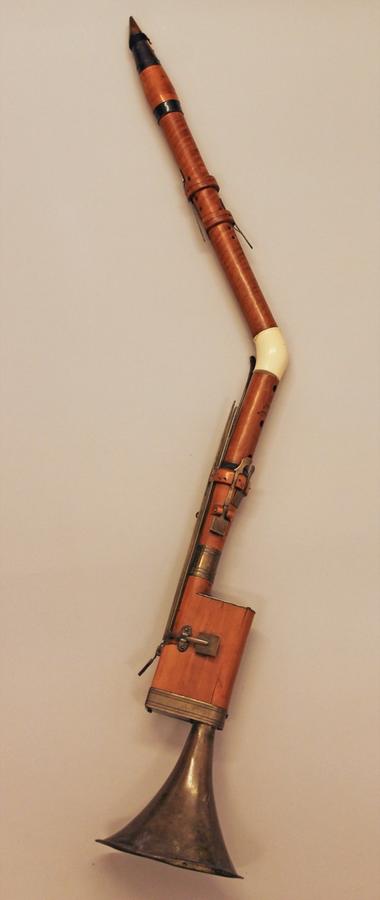
Basset Horn in Fca. 1800 · Slovenian (Slovenia) -
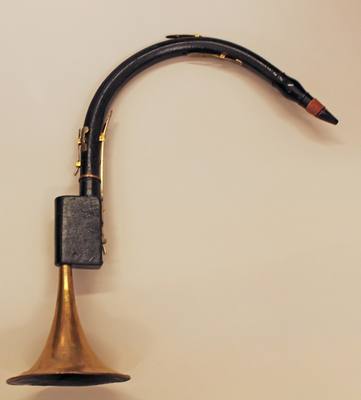
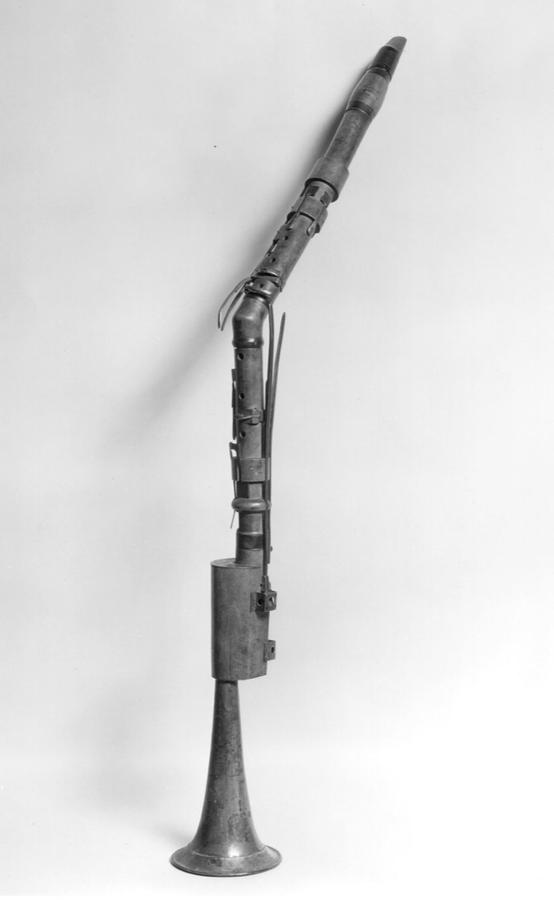
Basset Horn in Fca. 1770–80 · probably British (England?) -
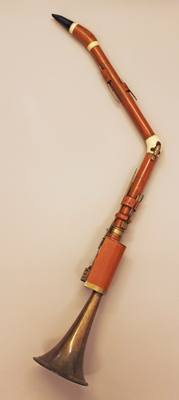
Basset Horn in Fca. 1800 · Germany -
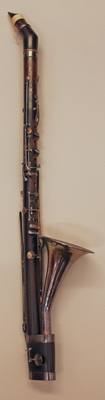
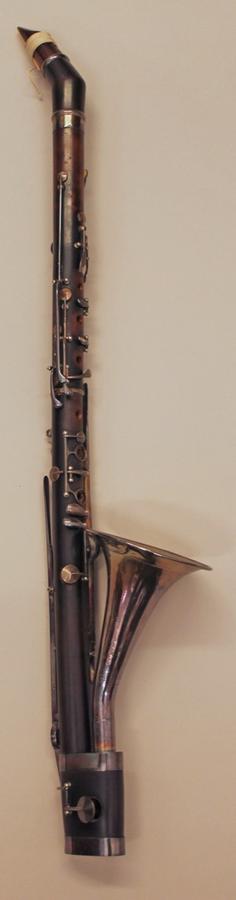
Basset Horn in Fca. 1860 · Germany -
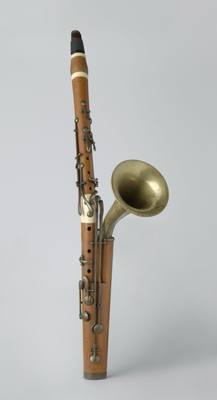
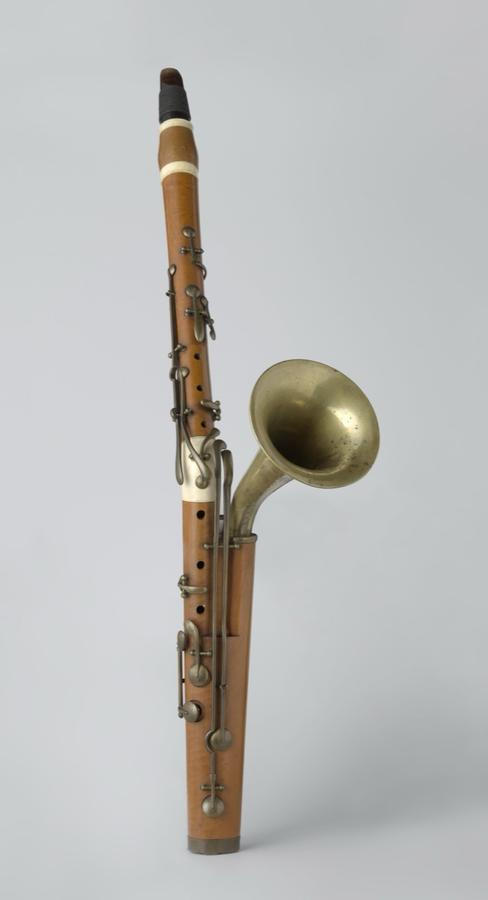
Basset hornc. 1820 · Germany -
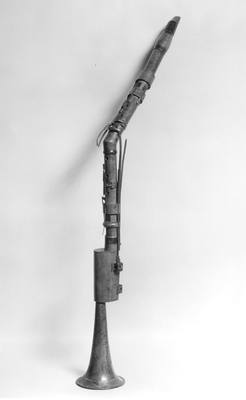
Basset Horn in Fmid-19th century · Czech Republic or Hungarian (Bohemia (Hungary))
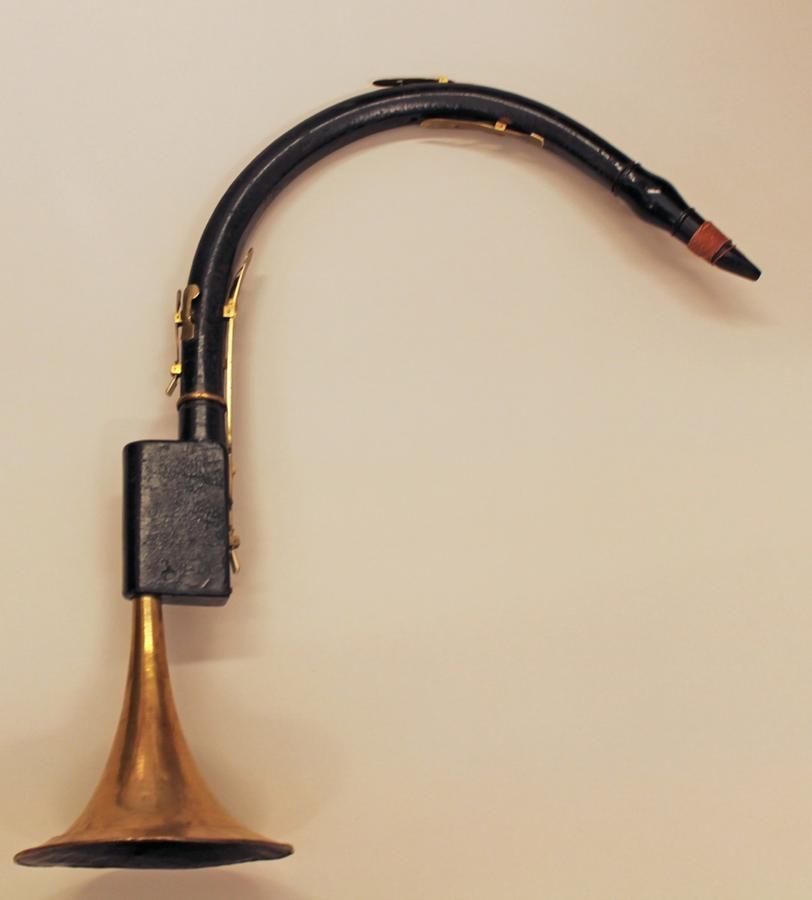
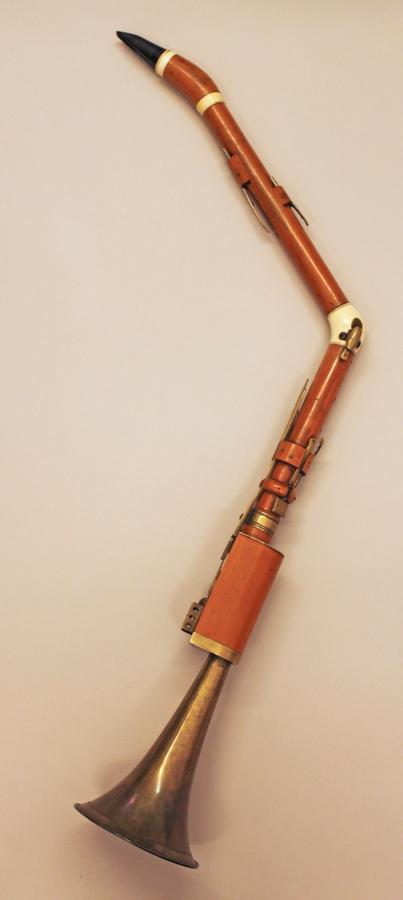
Facts at a glance
| Hornbostel–Sachs number | 422.211.2 |
|---|---|
| Hornbostel–Sachs group | Aerophones › Non-free aerophones (wind instruments proper) › Reed aerophones |
| Also known as | basset-horn |
| Classification (Wikipedia infobox) | Woodwind, clarinet family |
| Wikidata labels | 22 languages |
| Wikipedia article | Basset horn |
| Wikidata item | Q810515 |
| Wikimedia Commons category | Basset horns |
| MusicBrainz instrument | f93d6f87-6447-4d10-8bfd-08500dfcdb33 |
| Encyclopaedia Britannica | art/basset-horn |
Sources: Wikidata (CC0 1.0) — classification number, aliases, identifiers (dump of 2026-07-22); Wikipedia (CC BY-SA 4.0) — infobox fields (description of the classification number, development, inventors) and the names of the Hornbostel–Sachs groups (article “Hornbostel–Sachs”, revision of 2026-01-04).
The name in other languages
| Language | Name | Also written |
|---|---|---|
| English | basset horn | basset-horn |
| French | cor de basset | |
| German | Bassetthorn | Corno di Bassetto |
| Spanish | corno di bassetto | clarinete tenor, corno di basseto, corno di basetto |
| Italian | corno di bassetto | clarone |
| Dutch | bassethoorn | |
| Russian | бассетгорн | |
| Japanese | バセットホルン | バセット・ホルン, バセット・ホーン, バセットホーン |
| Chinese | 巴塞管 |
Sources: Wikidata (CC0 1.0) — labels and aliases; MusicBrainz (CC0 1.0) — instrument aliases (names only).
About the basset horn: history, construction and playing
The basset horn (sometimes hyphenated as basset-horn) is a member of the clarinet family of musical instruments.
Construction and tone
Like the clarinet, the instrument is a wind instrument with a single reed and a cylindrical bore. However, the basset horn is larger and has a bend or a kink between the mouthpiece and the upper joint (older instruments are typically curved or bent in the middle), and while the clarinet is typically a transposing instrument in B♭ or A (meaning a written C sounds as a B♭ or A), the basset horn is typically in F (less often in G). Finally, the basset horn has additional keys for an extended range down to written C, which sounds F at the bottom of the bass staff. In comparison, the alto clarinet typically extends down to written E♭, which sounds G♭, one semitone higher than the basset horn. The timbre of the basset horn is similar to the alto clarinet's, but darker. Basset horns in A, G, E, E♭, and D were also made; the first of these is closely related to the basset clarinet.
The basset horn is not related to the horn, or other members of the brass family (Sachs-Hornbostel classification 423.121.2 or 423.23); it does, however, bear a distant relationship to the hornpipe and cor anglais. Its name probably derives from the resemblance of early, curved versions to the horn of some animal.
Some of the earliest basset horns, which are believed to date from the 1760s, bear an inscription "ANT et MICH MAYRHOFER INVEN. & ELABOR. PASSAVII", which has been interpreted to mean they were made by Anton and Michael Mayrhofer of Passau.
Modern basset horns can be divided into three basic types, distinguished primarily by bore size and, consequently, the mouthpieces with which they are played:
Basset horn soloists and ensembles
The Lotz Trio performs on replicas of the basset horns made by the 18th-century instrument maker Theodor Lotz of Pressburg (Bratislava) and Vienna. The ensemble presents a repertoire of popular 18th-century wind harmonias (known in German as Harmoniemusik) represented predominantly by Mozart's music. However, the ensemble also performs music by other central European composers including Georg Druschetzky, Martín I Soler, Anton Stadler, Vojtech Nudera, Johann Josef Rösler and Anton Wolanek.
The Prague Trio of Basset Horns, based in the Czech Republic, has a repertoire of music written or transcribed for three basset horns, by composers including Mozart, Scott Joplin, and Paul Desmond.
Suzanne Stephens is a leading basset horn specialist in contemporary music. Starting in 1974, the German Karlheinz Stockhausen composed many new works for her, including a large number for basset horn with a solo role in his opera LIGHT. Other interpreters of Stockhausen's music include the Dutch Fie Schouten and the Italian Michele Marelli.
Source: Wikipedia, “Basset horn” — CC BY-SA 4.0 — text excerpted as published (references, images and tables removed); see the article for the full text and the list of authors. Revision of 2026-05-05.
From Grove’s Dictionary (1900)
Mozart is the composer who has written most for this instrument. In one great work, his 'Requiem,' it replaces the clarinet, there being independent parts for two players. Perhaps the finest instance of its use is in the opening of the 'Recordare.' In his opera 'Clemenza di Tito' it is also employed, and a fine obbligato is allotted to it in the song 'Non piu di fiori.' In his chamber music there are often parts for two or even three bassethorns.
Source: Wikisource, A Dictionary of Music and Musicians (Grove, 1900) — “Basset-Horn” (entry by William H. Stone) — Public domain (published 1879–1910; authors died before 1929) — the first paragraphs of the entry, as transcribed; see the page for the full entry.
Sources and licences
- Basset Horn in F, Simon Unglerth, ca. 1800, Slovenian (Slovenia). Boxwood, brass, horn. The Crosby Brown Collection of Musical Instruments, 1889 (89.4.2143). Museum record · CC0 1.0 (public domain dedication)
- Basset Horn in F, ca. 1770–80, probably British (England?). Wood, leather, brass. Gift of Helen C. Lanier, 1982 (1982.100.3). Museum record · CC0 1.0 (public domain dedication)
- Basset Horn in F, Johann Gottlieb Freyer, ca. 1800, Germany. Boxwood, ivory, brass. Gift of The University Museum, University of Pennsylvania, 1953 (53.56.12). Museum record · CC0 1.0 (public domain dedication)
- Basset Horn in F, Joseph Seidel; Buffet, Crampon & Cie., ca. 1860, Germany. Cocus, boxwood, silver, nickel-silver. Rogers Fund, 1956 (56.94a–e). Museum record · CC0 1.0 (public domain dedication)
- Basset horn, Anonymous, c. 1820, Germany. Purchased with the support of the State of the Netherlands and the Vereeniging van Noord-Nederlandsche Muziekgeschiedenis. Museum record · Public Domain Mark 1.0
- Basset Horn in F, Anton Fischer, mid-19th century, Czech Republic or Hungarian (Bohemia (Hungary)). Wood, horn, brass. Gift of The University Museum, University of Pennsylvania, 1953 (53.56.13). Museum record · CC0 1.0 (public domain dedication)
Photographs: open-access collections of the museums named above; each is shown here reduced in size, otherwise unchanged. Text: Wikipedia (CC BY-SA 4.0), Grove’s Dictionary (public domain), Wikidata and MusicBrainz (CC0). The full list of sources and licences is on the credits page.