
Instruments · Aerophones
Shawm
The shawm was a musical instrument of the woodwind family that was played in Europe during the Middle Ages and the Renaissance. The modern oboe was developed from the shawm. Like the modern oboe, the shawm was played by blowing into a double reed. It was usually made from one piece of wood, with a flare at the end (like a trumpet). It sounded very loud, and was mostly used outdoors.
Summary: Simple English Wikipedia, “Shawm” — CC BY-SA 4.0. Revision of 2023-02-12.
Museum photographs
These 7 photographs span 1680–1900, 5 places of origin and 2 museums. Every photograph is public domain or openly licensed, and links to the museum’s own record.
-
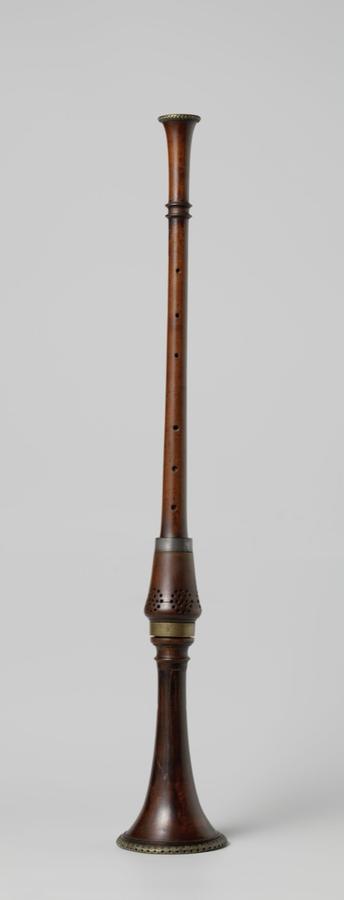
Soprano Shawm (Duytse Schalmey)c. 1680 · Amsterdam -
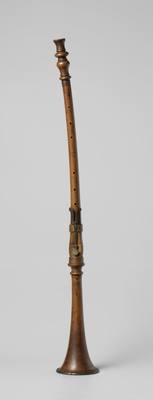
Alto Shawm (Duytse Schalmey)c. 1680 · Amsterdam -
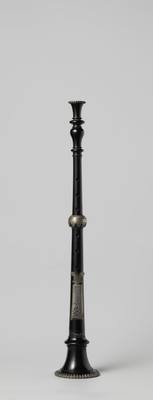
Oboe or shawmc. 1680 · Amsterdam -
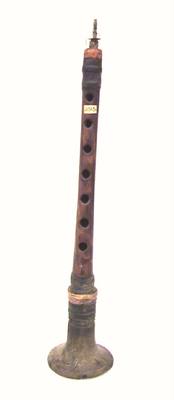
Zurna19th century · Syrian- Palestine (Syria) -
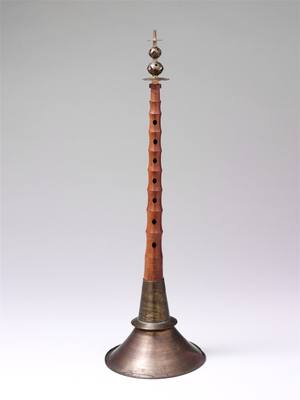
Suona (嗩吶 )19th century · Chinese (China) -
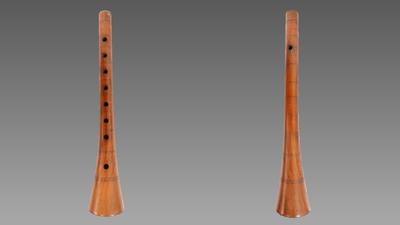
Zurna19th century · Asiatic Russia (Georgia, Republic of [Azerbaijan, Armenia]) -
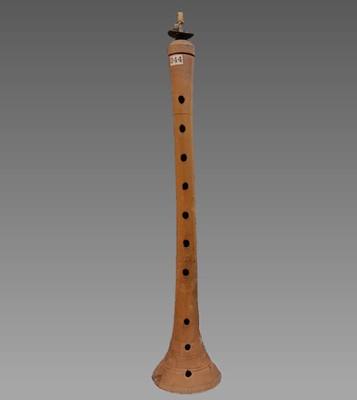
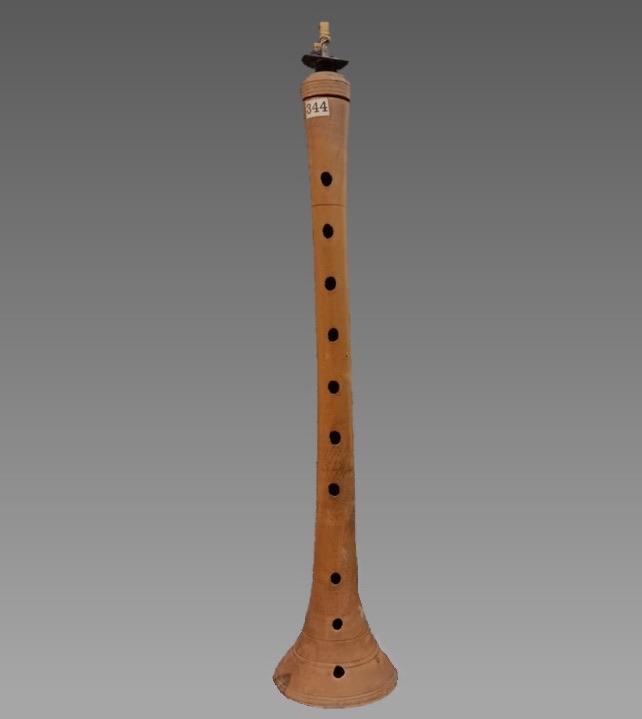
Zurnalate 19th century · Turkish (Turkey)
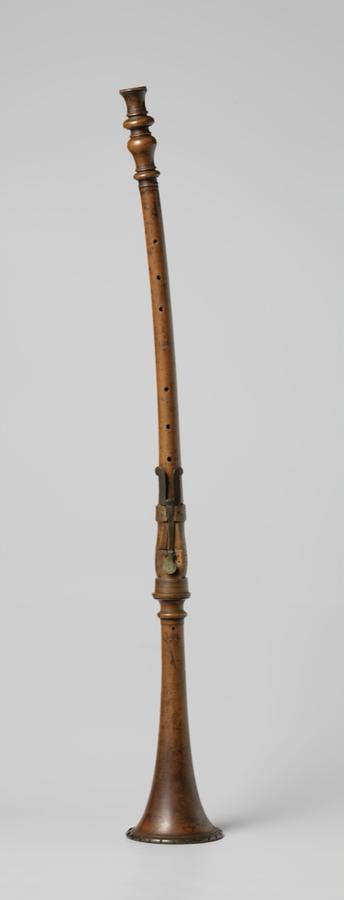
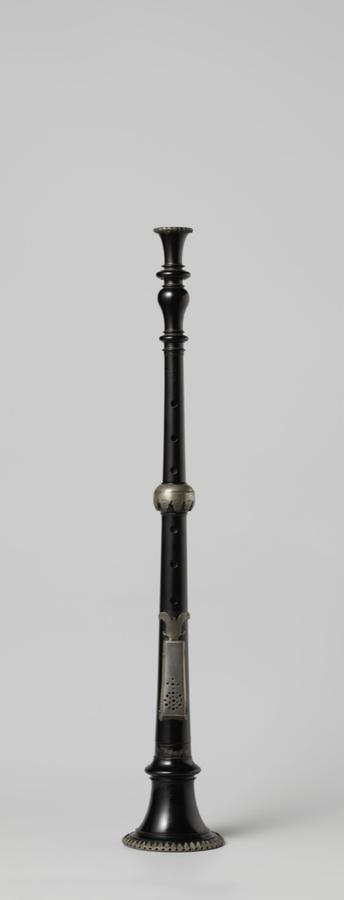
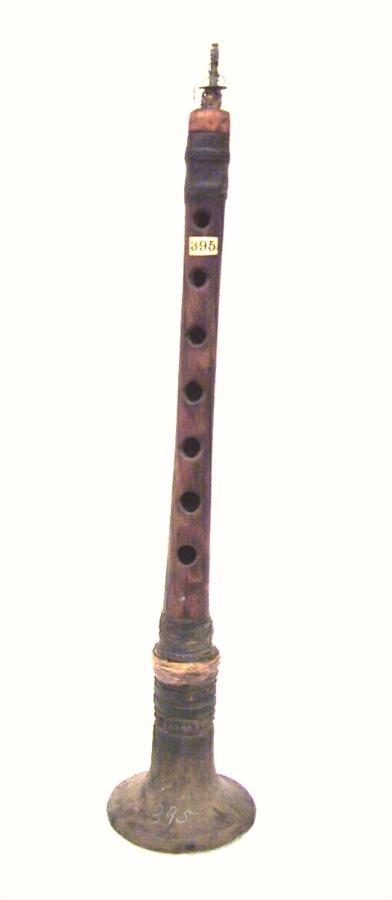
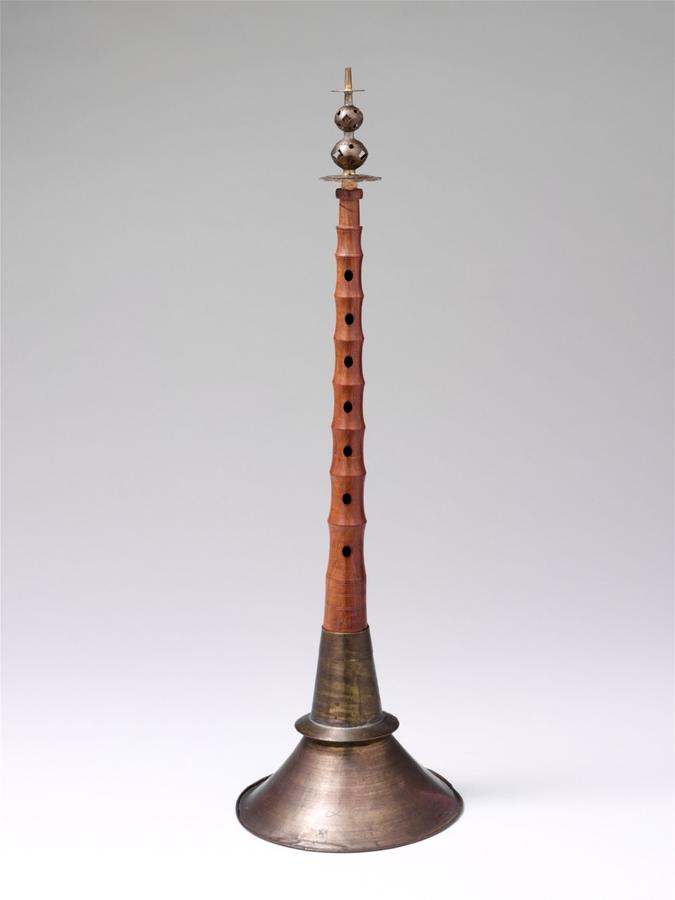
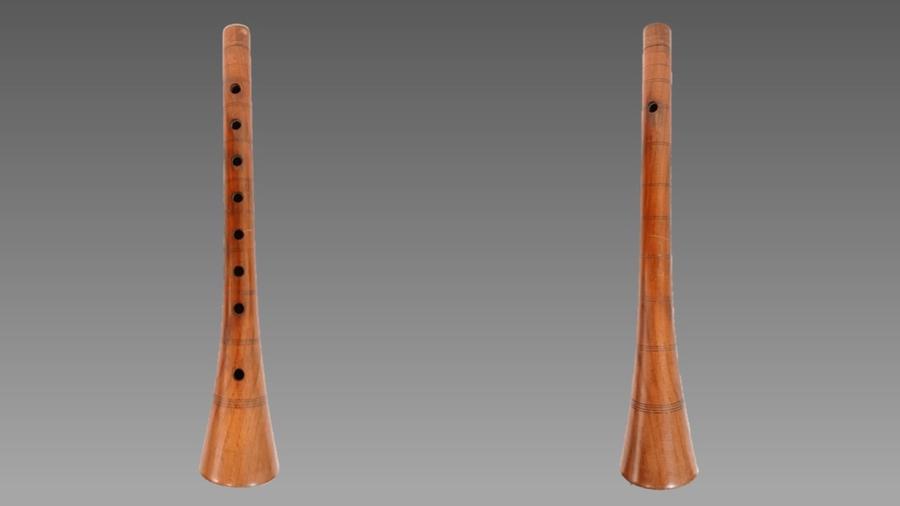
Facts at a glance
| Hornbostel–Sachs number | 422.112 |
|---|---|
| Hornbostel–Sachs group | Aerophones › Non-free aerophones (wind instruments proper) › Reed aerophones |
| Also known as | schalmei |
| Classification (Wikipedia infobox) | Double reed |
| Wikidata labels | 36 languages |
| Wikipedia article | Shawm |
| Wikidata item | Q677921 |
| Wikimedia Commons category | Shawms |
| MusicBrainz instrument | b4f112c3-d666-47f2-bb85-bae28572ca13 |
| Encyclopaedia Britannica | art/shawm |
Sources: Wikidata (CC0 1.0) — classification number, aliases, identifiers (dump of 2026-07-22); Wikipedia (CC BY-SA 4.0) — infobox fields (description of the classification number, development, inventors) and the names of the Hornbostel–Sachs groups (article “Hornbostel–Sachs”, revision of 2026-01-04).
The name in other languages
| Language | Name | Also written |
|---|---|---|
| English | shawm | schalmei |
| French | chalemie | chalémie |
| German | Schalmei | |
| Spanish | chirimía antigua | shawm, chirimía |
| Italian | ciaramella | cennamella, ciarameddha, pipita |
| Portuguese | charamela | Shalmei |
| Dutch | schalmei | |
| Russian | Шалмей | |
| Japanese | ショーム | |
| Chinese | 蕭姆管 | |
| Arabic | شَوْم |
Sources: Wikidata (CC0 1.0) — labels and aliases; MusicBrainz (CC0 1.0) — instrument aliases (names only).
About the shawm: history, construction and playing
The shawm is a conical bore, double-reed woodwind instrument made in Europe from the 13th or possibly 12th century to the present day. It achieved its peak of popularity during the medieval and Renaissance periods, after which it was gradually eclipsed by the oboe family of descendant instruments in classical music. It is likely to have come to Western Europe from the Eastern Mediterranean around the time of the Crusades. Double-reed instruments similar to the shawm were long present in Southern Europe and the East, for instance the ancient Greek, and later Byzantine aulos, the closely related sorna and zurna, and the Armenian duduk.
Etymology
In English the name first appears in the 14th century. There were originally three main variant forms, (1) schallemele (shamulle or shamble), (2) s(c)halmys (shalemeyes or chalemyes, all plural forms in Middle English), and (3) sc(h)almuse (or schalmesse), each derived from a corresponding variant in Old French: chalemel, chalemie, and chalemeaux (the plural of chalemel), each in turn derived from the Latin calamus ('reed'), or its Vulgar Latin diminutive form, calamellus. Calamus, in turn, derives from Ancient Greek κάλαμος (kálamos), "reed, cane".
(The name of a somewhat different reed instrument, the chalumeau, also shares this etymology.) The early plural forms were often mistaken for a singular, and new plurals were formed from them. The later reduction in the 15th and 16th centuries to a single syllable in forms such as schalme, shaume, shawme, and finally (in the 16th century) shawm, was probably due to this confusion of plural and singular forms.
In German the shawm is called Schalmei (or for the larger members of the family Bombard—also in English in the 14th century—later corrupted to Bombhardt and finally in the 17th century to Pommer) This is borne out by the very similar names of many folk shawms used as traditional instruments in various European nations: in Spain, many traditional shawms with different names can be found, such as the Castilian, Aragonese, and Leonese dulzaina (sometimes called chirimía, a term that derives from the same Old French word as shawm); the Valencian and Catalan shawms (xirimia, dolçaina, or gralla) or the Navarrese gaita. In Portugal there is an instrument called charamela; and the name of the Italian shawm is ciaramella (or: cialamello, cennamella).
However, it is also possible that the name comes from the Arabic salamiya (سلامية), a traditional oboe from Egypt, as the European shawm seems to have been developed from similar instruments brought to Europe from the Near East during the time of the Crusades. This Arabic name is itself linguistically related to many other Eastern names for the instrument: the Arabic zamr (زمر), the Turkish zūrnā, the Persian surnāy, the Chinese suona, the Javanese saruni, and the Hindu sahanai or sanayi.
Use
By the early 16th century the brash tonality of the medieval shawm had been modulated by a narrowing of the bore and a reduction in the size of the fingerholes. This also extended the range, enabling the performer to play the notes in the second octave. Larger sizes of shawm were built, down to the great bass in B♭, two octaves and a major third below the soprano in D. However, the larger sizes were unwieldy, which made them somewhat rare.
The smaller sizes of shawm, chiefly the soprano, alto and sometimes the tenor, were more often coupled with the Renaissance trombone, or sackbut, and the majestic sound of this ensemble was much in demand by civic authorities. The shawm became standard equipment for town bands, or waits, who were required to herald the start of municipal functions and signal the major times of day. The shawm became so closely associated with the town waits (die Stadtpfeifer in German and I pifferi in Italian) that it was also known as the wait-pipe.
Before the discovery of a still shawm aboard the shipwreck of the Mary Rose, instrument historians had been puzzled by references to "still shawms", or "soft" shawms, that were said to have a sound that was less shrill than earlier shawms. The still shawm disappeared from the musical scene in the 16th century; the instrument found on the Mary Rose is the only surviving example. A reproduction has been made and played. Combined with a pipe and tabor, it provides a "very effective bass part" that would have produced "rich and full sound, which would have provided excellent music for dancing on board ship".
The shawm was reserved almost exclusively for outdoor performance—for softer, indoor music, other instruments such as the crumhorn and cornamuse were preferred. These were double reed instruments fitted with a capsule that completely enclosed the reed, which softened the sound but still did not allow for any variation in dynamics.
Known by the Spanish term chirimia, the shawm remains an important ritual instrument among Maya peoples of Highland Guatemala. Accompanied by a drum, the chirimia is frequently used in processions and in certain ritual dances, such as the Dance of the Conquest (Baile de la Conquista), and this is still played today.
Progeny of the shawm
A tenor shawm in C with a single key [without the customary lower extension to G], with a range of a perfect twelfth, was described as a nicolo according to Michael Praetorius in his Syntagma Musicum II (1619), pages 23 and 36, but was not illustrated. Praetorius does, however, illustrate in Plate 13 in the supplementary volume of illustrations, the Theatrum instrumentorum (1620), along with crumhorns, a bassett:nicolo which has the outward appearance of a capped shawm with four keys, but in fact conceals a mostly cylindrical bore. (The range of the bassett: nicolo descended to the A below great C and was just over four feet in length; a shawm of this range, i.e, with a conical bore, would require more than 9 feet of bore length.)
Oboe
The shawm inspired the later 17th-century hautbois, an invention of the French musician Martin Hotteterre (d. 1712). He is credited with devising essentially a brand-new instrument, one which borrowed several features from the shawm, chiefly its double reed and conical bore, but departed from it significantly in other respects, the most important departure being the fact the player places his lips directly on the reed with no intervening pirouette. Around 1670, the new French hautbois began replacing the shawm in military bands, concert music and opera; by 1700, the shawm had all but disappeared from concert life, although as late as 1830 shawms could still be heard in German town bands performing their municipal functions. Curiously, the Germans and Dutch continued to manufacture an ornate version of the shawm, called deutsche Schalmey, well after the introduction of the French hautbois. Several examples of this instrument survive in European collections, although its exact musical use is unclear.
Dulcian/bassoon
The 16th-century proclivity for building instruments in a full range of sizes was naturally extended to the shawm, but the extreme length of pipe of the bass instruments meant that few were built and played, due to their cumbersome size. A solution was devised whereby the bore was in effect "folded back" upon itself, creating a much more manageable instrument. The new instrument is often referred to as the dulcian, and was called curtal in England, fagott or fagotto in Germany and Italy, and bajón in Spain. The dulcian, like the first oboes, employed direct lip-to-reed contact, which allowed for much greater control over the sound than was offered by shawms. This led to the dulcian becoming very popular, serving as a bass both to the other shawms and even to indoor ensembles that did not feature shawms, afforded by its ability to play quietly. The dulcian was the forerunner to the bassoon, which like the oboe was a Baroque invention.
Charumera
The charumera, or charumeru, is a double-reed instrument in traditional Japanese music descended either from shawms brought to Japan by Portuguese Christian missionaries, or possibly Iberian traders in the 16th century. It is sometimes used in kabuki theatre performances. It is also strongly associated in popular culture with street vendors of ramen, who played a distinctive melody on it to attract customers.
Source: Wikipedia, “Shawm” — CC BY-SA 4.0 — text excerpted as published (references, images and tables removed); see the article for the full text and the list of authors. Revision of 2026-03-21.
From Grove’s Dictionary (1900)
Another similarity between the shawm and the bagpipe, as also between it and the musette, is noted by Schladebach in describing the Schalmey or Schalmei. He states that it is still played under this name by the peasants of the Tyrol and of Switzerland, and that the reed, instead of being inserted directly into the player's lips, is fitted into a box or 'capsule' with a mouthpiece, wherein it vibrates unconstrained. This is exactly the device still retained in the bagpipe, and nowhere else. It possesses, according to the same writer, six holes for the three middle fingers of either hand, with a single hole covered by means of a key for the right little finger. This would give the scale of the musette or shepherd's pipe.
Source: Wikisource, A Dictionary of Music and Musicians (Grove, 1900) — “Shawm” (entry by William H. Stone) — Public domain (published 1879–1910; authors died before 1929) — the first paragraphs of the entry, as transcribed; see the page for the full entry.
Sources and licences
- Soprano Shawm (Duytse Schalmey), Richard Haka, c. 1680, Amsterdam. silver (metal), boxwood (hardwood), brass (alloy). Purchased with the support of the State of the Netherlands and the Vereeniging van Noord-Nederlandsche Muziekgeschiedenis. Museum record · Public Domain Mark 1.0
- Alto Shawm (Duytse Schalmey), c. 1680, Amsterdam. boxwood (hardwood), brass (alloy). Purchased with the support of the State of the Netherlands and the Vereeniging van Noord-Nederlandsche Muziekgeschiedenis. Museum record · Public Domain Mark 1.0
- Oboe or shawm, Richard Haka, c. 1680, Amsterdam. ebony (wood), silver (metal). Purchased with the support of the State of the Netherlands and the Vereeniging van Noord-Nederlandsche Muziekgeschiedenis. Museum record · Public Domain Mark 1.0
- Zurna, 19th century, Syrian- Palestine (Syria). Wood.. The Crosby Brown Collection of Musical Instruments, 1889 (89.4.395). Museum record · CC0 1.0 (public domain dedication)
- Suona (嗩吶 ), 19th century, Chinese (China). Rosewood, brass.. The Crosby Brown Collection of Musical Instruments, 1889 (89.4.20). Museum record · CC0 1.0 (public domain dedication)
- Zurna, 19th century, Asiatic Russia (Georgia, Republic of [Azerbaijan, Armenia]). Wood. The Crosby Brown Collection of Musical Instruments, 1889 (89.4.317). Museum record · CC0 1.0 (public domain dedication)
- Zurna, late 19th century, Turkish (Turkey). Wood. The Crosby Brown Collection of Musical Instruments, 1889 (89.4.344). Museum record · CC0 1.0 (public domain dedication)
Photographs: open-access collections of the museums named above; each is shown here reduced in size, otherwise unchanged. Text: Wikipedia (CC BY-SA 4.0), Grove’s Dictionary (public domain), Wikidata and MusicBrainz (CC0). The full list of sources and licences is on the credits page.