
Instruments · Aerophones
Cor anglais
The cor anglais, or English horn, is a double reed instrument in the woodwind family. It is very similar to an oboe, but as it is longer than an oboe it plays lower notes.
The lowest note of an oboe is B flat (just below Middle C). The lowest note of a cor anglais is an E natural, a diminished fifth (five notes of a scale, minus a semitone) lower than the oboe's lowest note.
Summary: Simple English Wikipedia, “Cor anglais” — CC BY-SA 4.0. Revision of 2025-01-26.
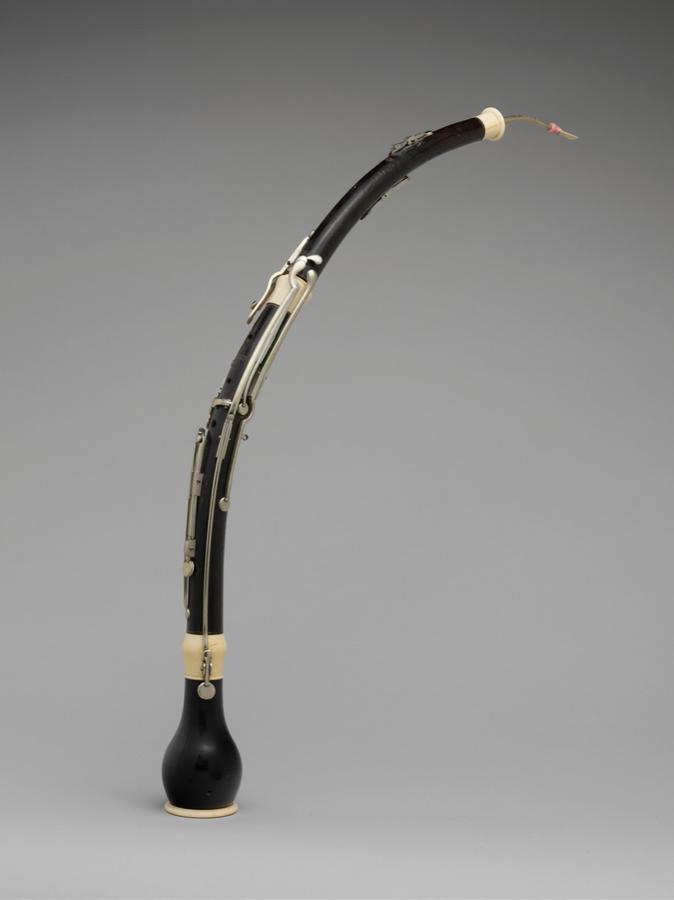
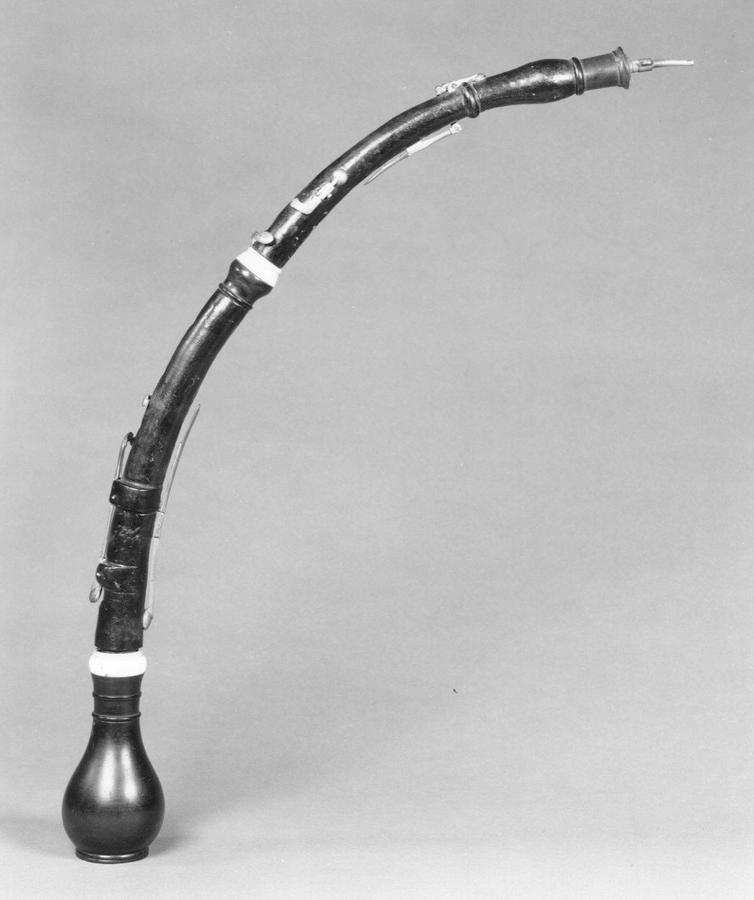
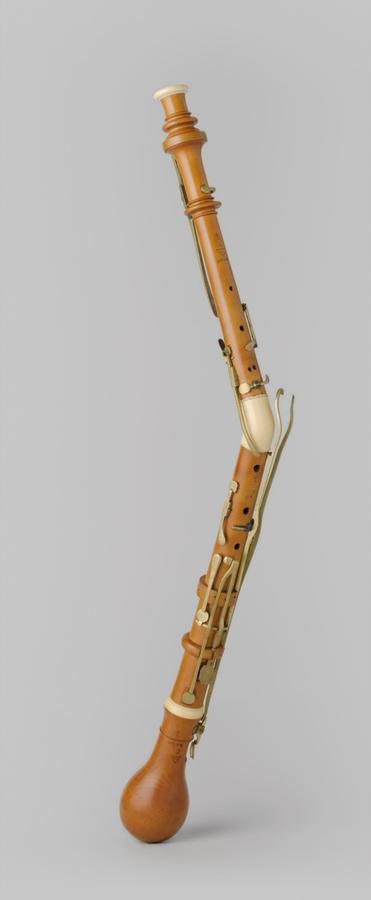
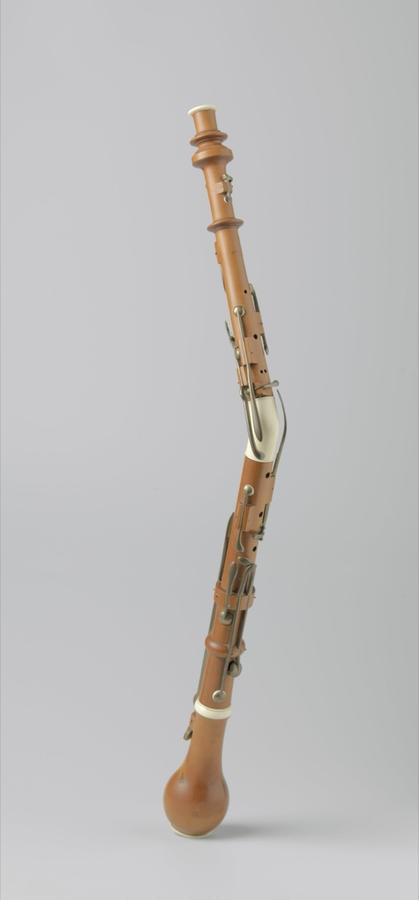
Museum photographs
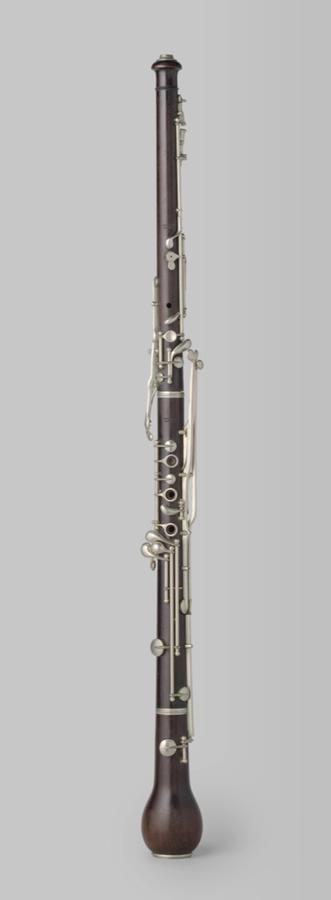
These 11 photographs span 1780–1900, 9 places of origin and 2 museums. Every photograph is public domain or openly licensed, and links to the museum’s own record.
-
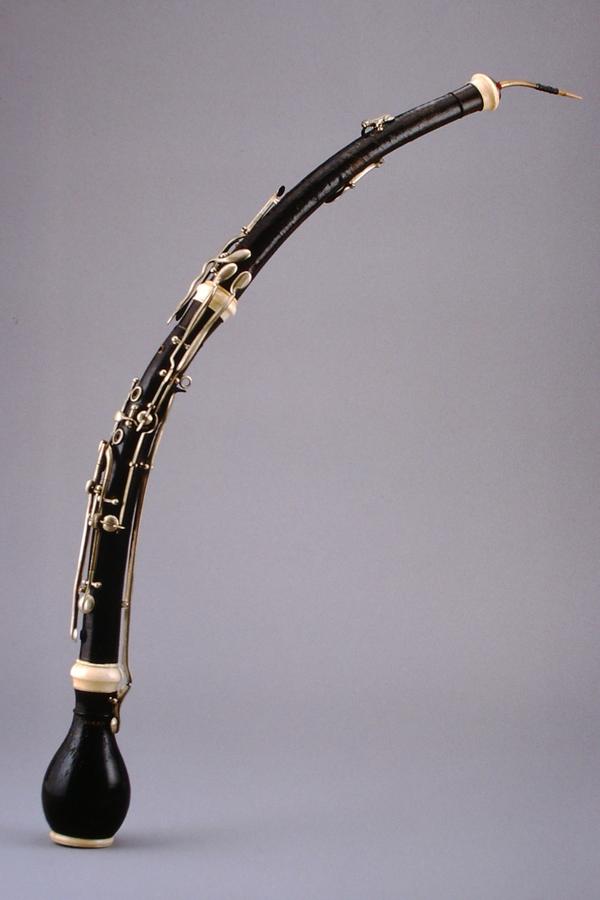
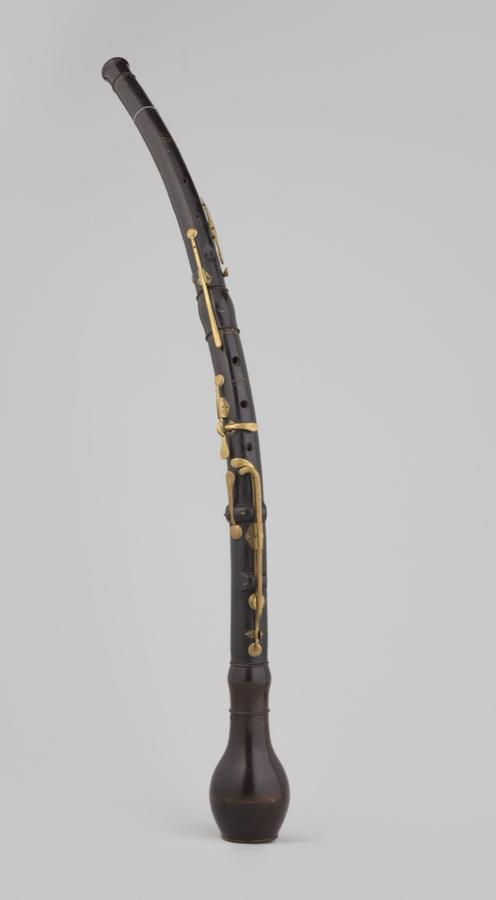
English Horn in F1832 · Italian (Venice) (Italy) -
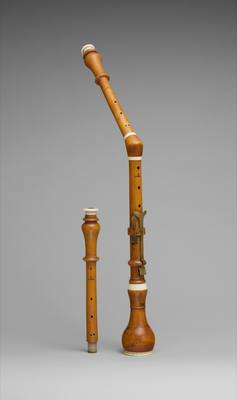
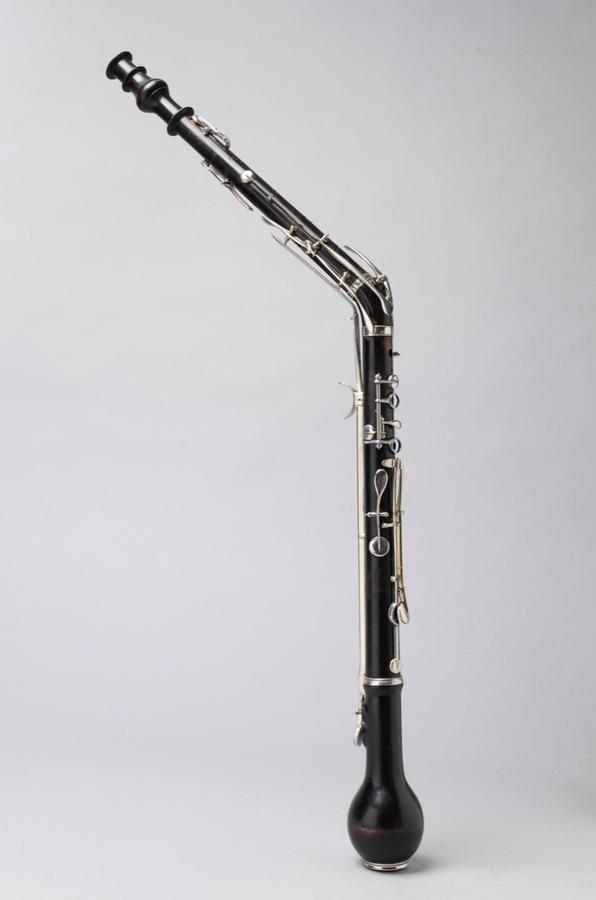
English Hornbefore 1807 · Germany -
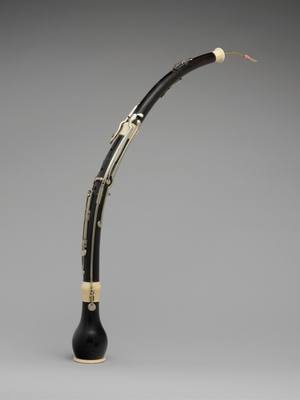
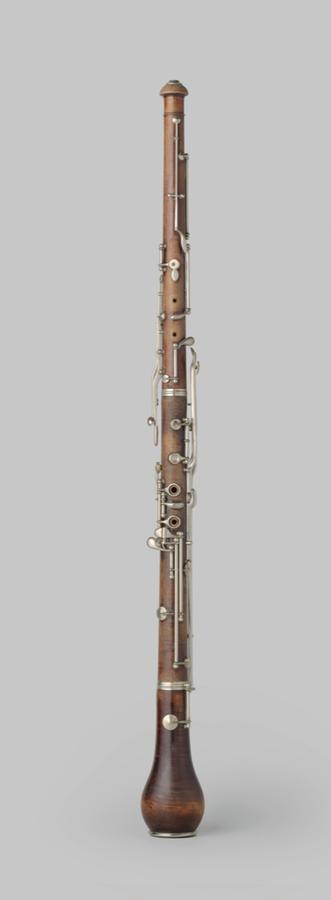
English Horn in Gca. 1840 · Germany -
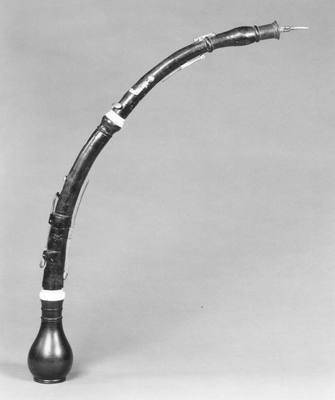
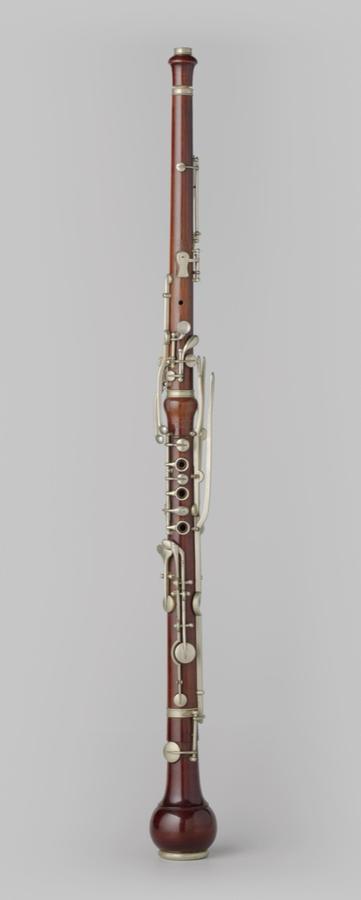
English Hornca. 1825–50 · possibly German or Italian (Germany or Italy?) -
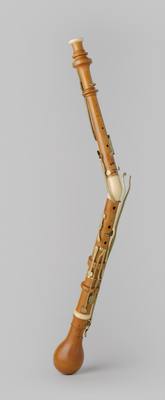
English hornc. 1820 - before 1828 · Vienna -
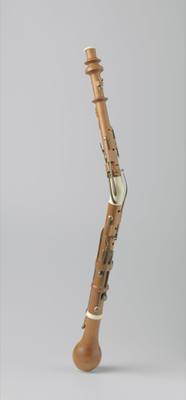
English hornc. 1830 · Biebrich -
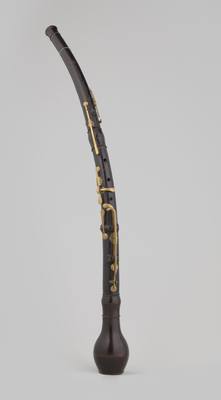
English hornc. 1830 · Paris -
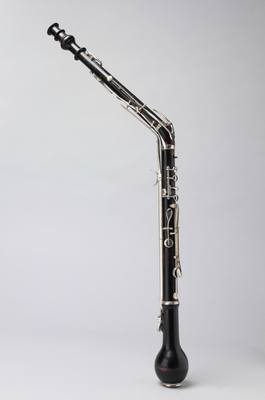
English Hornca. 1860–70 · Austrian (Austria) -
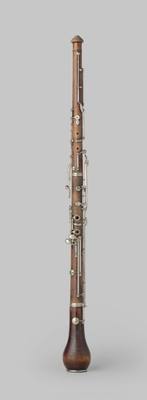
English hornc. 1850 - c. 1899 · Ferrara (stad) -
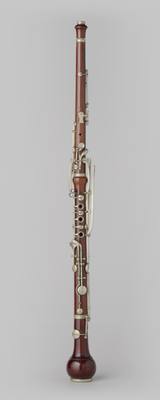
English hornc. 1900 · Rotterdam -
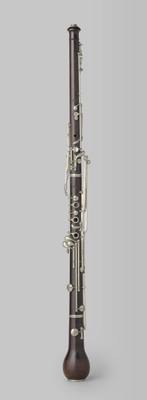
English horn1900 · Boedapest
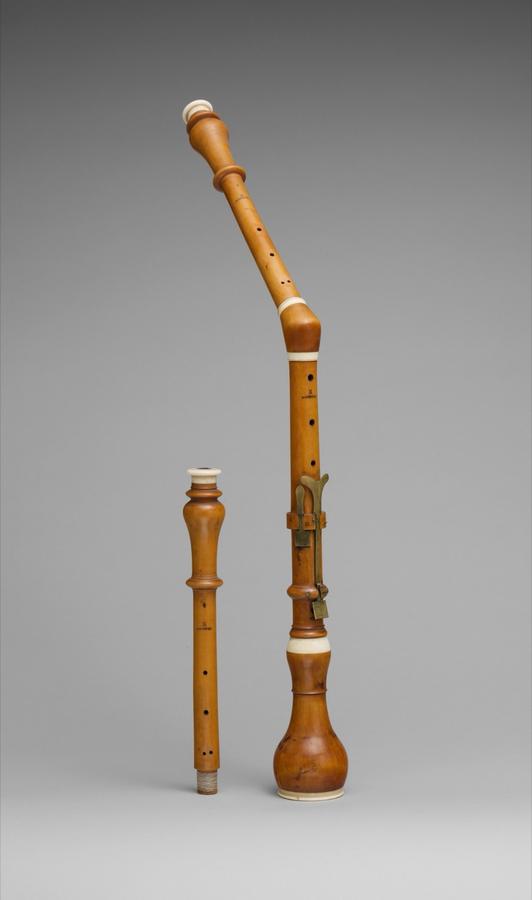
Facts at a glance
| Hornbostel–Sachs number | 422.112-71 — Double reed aerophone with keys |
|---|---|
| Hornbostel–Sachs group | Aerophones › Non-free aerophones (wind instruments proper) › Reed aerophones |
| Also known as | English horn, tenor oboe |
| Classification (Wikipedia infobox) | Woodwind, Wind, Aerophone |
| Developed | about 1720 from the oboe da caccia |
| Wikidata labels | 62 languages |
| Wikipedia article | Cor anglais |
| Wikidata item | Q185041 |
| Wikimedia Commons category | Cor anglais |
| MusicBrainz instrument | 3590521b-8c97-4f4b-b1bb-5f68d3663d8a |
Sources: Wikidata (CC0 1.0) — classification number, aliases, identifiers (dump of 2026-07-22); Wikipedia (CC BY-SA 4.0) — infobox fields (description of the classification number, development, inventors) and the names of the Hornbostel–Sachs groups (article “Hornbostel–Sachs”, revision of 2026-01-04).
The name in other languages
| Language | Name | Also written |
|---|---|---|
| English | cor anglais | English horn, tenor oboe |
| French | cor anglais | Cor anglé, Cor anglet, English horn |
| German | Englischhorn | Englisch Horn, Corno inglese, Englisch-Horn |
| Spanish | corno inglés | Cuerno, Corno ingles, Cor anglais |
| Italian | corno inglese | |
| Portuguese | corne inglês | Corne-inglês, Corne, Corno inglês |
| Dutch | althobo | alt-hobo, Engelse Hoorn, cor anglais |
| Russian | английский рожок | альтовый гобой |
| Japanese | コーラングレ | コール・アングレ, イングリッシュホルン, コールアングレ |
| Chinese | 英國管 | 英国管, 天使管 |
| Korean | 잉글리시 호른 | 잉글리쉬 호른 |
| Arabic | مزمار إنكليزي | صُورٌ إنكَليزي, كور أنجليه |
Sources: Wikidata (CC0 1.0) — labels and aliases; MusicBrainz (CC0 1.0) — instrument aliases (names only).
About the cor anglais: history, construction and playing
The cor anglais (or original; plural: cors anglais), or English horn (mainly North America), is a double-reed woodwind instrument in the oboe family. It is approximately one and a half times the length of an oboe, making it essentially an alto oboe in F.
The cor anglais is a transposing instrument pitched in F, a perfect fifth lower than the oboe (a C instrument). This means that music for the cor anglais is written a perfect fifth higher than the instrument sounds. The fingering and playing technique used for the cor anglais are essentially the same as those of the oboe, and oboists typically double on the cor anglais when required. The cor anglais normally lacks the lowest B♭ key found on most oboes, and so its sounding range stretches from E3 (written B♮) below middle C to C6 two octaves above middle C. Some versions have a Low B♭ key to extend the range down one more note to sounding E♭3.
Description and timbre
The pear-shaped bell (called Liebesfuß) of the cor anglais gives it a more covered timbre than the oboe, closer in tonal quality to the oboe d'amore. Whereas the oboe is the soprano instrument of the oboe family, the cor anglais is generally regarded as the alto member of the family, and the oboe d'amore—pitched between the two in the key of A—as the mezzo-soprano member. The cor anglais is perceived to have a more mellow and plaintive tone than the oboe. The difference in sound results primarily from a wider reed and a conical bore that expands over a greater distance than the oboe's; although darker in tone and lower in pitch than the oboe, its sound is distinct from (though naturally blends with) the sound of the bassoon family. Its appearance differs from the oboe in that the instrument is notably longer, the reed is attached to a slightly curved metal tube called the bocal, or crook, and the bell has a bulbous shape ("Liebesfuß").
The cor anglais is usually notated in the treble clef, a perfect fifth higher than sounding pitch. Alto clef written at sounding pitch is occasionally used, even by as late a composer as Sergei Prokofiev. In late-18th- and early-19th-century Italy, where the instrument was often played by bassoonists instead of oboists, it was notated in the bass clef an octave below sounding pitch (as found in Rossini's Overture to William Tell). French operatic composers up to Fromental Halévy notated the instrument at sounding pitch in the mezzo-soprano clef, which enabled the player to read the part as if it were in the treble clef.
Although the instrument usually descends only to (written) low B♮, continental instruments with an extension to low B♭ (sounding E♭) have existed since early in the 19th century. Examples of works requiring this note (while acknowledging its exceptional nature) include Arnold Schoenberg's Gurre-Lieder, Gustav Mahler's Das Lied von der Erde, Heitor Villa-Lobos's Chôros No. 6, and Karlheinz Stockhausen's Zeitmaße. Antonín Dvořák, in his Scherzo capriccioso, even writes for the cor anglais down to low A, though it seems unlikely that such an extension ever existed.
History and etymology
The term cor anglais is French for English horn, but the instrument is neither from England nor related to the various conical-bore brass instruments called "horns", such as the French horn, the natural horn, the post horn, or the tenor horn. The instrument originated in Silesia about 1720 when a bulb bell was fitted to a curved oboe da caccia-type body by the Weigel family of Breslau. The two-keyed, open-belled, straight tenor oboe (French taille de hautbois, "tenor oboe"), and more particularly the flare-belled oboe da caccia, resembled the horns played by angels in religious images of the Middle Ages. This gave rise in German-speaking central Europe to the Middle High German name engellisches Horn, meaning angelic horn. Because engellisch also meant English in the vernacular of the time, the "angelic horn" became the "English horn". In the absence of any better alternative, the curved, bulb-belled tenor oboe then retained the name even after the oboe da caccia fell into disuse around 1760. The name first appeared regularly in Italian, German, and Austrian scores from 1749 on, usually in the Italian form corno inglese.
Source: Wikipedia, “Cor anglais” — CC BY-SA 4.0 — text excerpted as published (references, images and tables removed); see the article for the full text and the list of authors. Revision of 2026-06-07.
From Grove’s Dictionary (1900)
COR ANGLAIS. (Ital. Oboe di Caccia; and Corno Inglese; Germ. Englisches Horn.) A tenor oboe, standing in the key of F, and therefore speaking a fifth lower than the ordinary oboe. It has the same scale and compass as the latter instrument, from E or E♭ in the bass, to about A or B♭ above the treble clef. It bears the same relation to the oboe that the bassethorn does to the clarinet, hence frequent confusion between the two instruments. It is probably similar in many respects to the 'oboe di caccia' found in Bach's scores, and perhaps to the 'chalumeau' of Glcck's operas; although the former was made in the form of a bassoon or alto-fagotto, and the latter may have been a kind of clarinet.
Source: Wikisource, A Dictionary of Music and Musicians (Grove, 1900) — “Cor Anglais” (entry by William H. Stone) — Public domain (published 1879–1910; authors died before 1929) — the first paragraphs of the entry, as transcribed; see the page for the full entry.
Composers who played it
3 composers on this site list the cor anglais as an instrument they played. A selection:
Composers with a page on this site whose Wikidata record lists this instrument; featured and best-dated first. Data: Wikidata (property “instrument”, P1303), CC0 1.0.
Sources and licences
- English Horn in F, Andrea Fornari, 1832, Italian (Venice) (Italy). Wood, ivory, leather, horn. The Crosby Brown Collection of Musical Instruments, 1889 (89.4.889). Museum record · CC0 1.0 (public domain dedication)
- English Horn, H. Grenser, before 1807, Germany. Wood, ivory, brass. Rogers Fund, 1980 (1980.111a, b). Museum record · CC0 1.0 (public domain dedication)
- English Horn in G, Carl Theodor Golde, ca. 1840, Germany. Wood, leather, ivory, silver. Purchase, Amati Gifts, 2002 (2002.150a, b). Museum record · CC0 1.0 (public domain dedication)
- English Horn, ca. 1825–50, possibly German or Italian (Germany or Italy?). Wood, leather, horn, ivory, metal. Gift of Helen C. Lanier, 1982 (1982.100.2). Museum record · CC0 1.0 (public domain dedication)
- English horn, Stephan Koch, c. 1820 - before 1828, Vienna. brass (alloy), ivory, leather, boxwood, velvet (fabric weave). Gift Han de Vries Collection, Amsterdam. Museum record · Public Domain Mark 1.0
- English horn, c. 1830, Biebrich. wood (plant material), copper (metal), ivory. Purchased with the support of the State of the Netherlands and the Vereeniging van Noord-Nederlandsche Muziekgeschiedenis. Museum record · Public Domain Mark 1.0
- English horn, Guillaume Triébert, c. 1830, Paris. maple (wood), leather, brass (alloy), copper (metal). Gift Han de Vries Collection, Amsterdam. Museum record · Public Domain Mark 1.0
- English Horn, Johann Tobias Uhlmann, ca. 1860–70, Austrian (Austria). Nickel-silver, boxwood. Purchase, Clara Mertens Bequest, in memory of André Mertens, 1998 (1998.419). Museum record · CC0 1.0 (public domain dedication)
- English horn, Carlo Gherardi, c. 1850 - c. 1899, Ferrara (stad). silver (metal), boxwood. Gift Han de Vries Collection, Amsterdam. Museum record · Public Domain Mark 1.0
- English horn, c. 1900, Rotterdam. silver (metal), boxwood. Gift Han de Vries Collection, Amsterdam. Museum record · Public Domain Mark 1.0
- English horn, Miksa Pliverics, 1900, Boedapest. silver (metal), rosewood (wood). Gift Han de Vries Collection, Amsterdam. Museum record · Public Domain Mark 1.0
Photographs: open-access collections of the museums named above; each is shown here reduced in size, otherwise unchanged. Text: Wikipedia (CC BY-SA 4.0), Grove’s Dictionary (public domain), Wikidata and MusicBrainz (CC0). The full list of sources and licences is on the credits page.