
Instruments · Aerophones
Bassoon
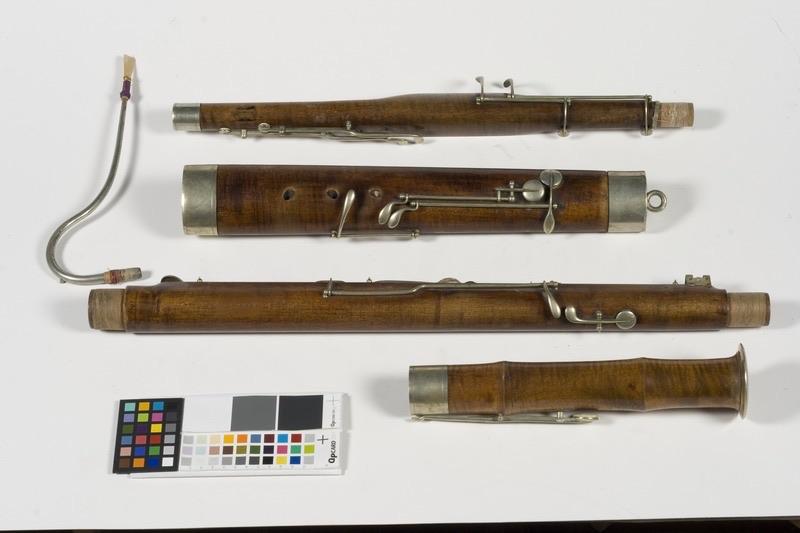
The bassoon is the lowest of the four main instruments of the woodwind family. Like the oboe, it has a double reed. The reed is attached to a curved metal mouthpiece called a "crook" or "bocal" which is joined to the main part of the instrument. Unlike the oboe, this consists of two parts called ‘bass joint’ and ‘wing joint’ (or ‘tenor joint’). These two are joined at the bottom by a U-shaped piece called the ‘boot’. At the top of the instrument is the ‘bell joint’. The instrument is quite heavy. Some players have a neckstrap around their neck to support the weight, but usually they use a seat strap that connects at the bottom of the boot and goes across the floor. The bassoonist, a person who plays a bassoon, then sits on that strap. The bassoon is held to the right side of the bassoonist and the top of the boot joint is usually level with the players hip. The bassoon has one of the largest note ranges, going from low B flat to a high F on the top line of the treble clef. The bassoon can also play in tenor clef, but usually plays bass clef.
Summary: Simple English Wikipedia, “Bassoon” — CC BY-SA 4.0. Revision of 2025-11-20.
Hear the real instrument
These are recordings of a real bassoon, not a synthesiser. Click or tap a key to hear that note, or press Play the range to hear every note the instrument was recorded on, from lowest to highest.
| Recorded instrument | Bassoon |
|---|---|
| Range recorded | B♭1 to E♭5 |
| Notes | 42 recorded notes, one for every semitone from lowest to highest. Middle C is C4. |
Without JavaScript: play the lowest note (B♭1) or the highest note (E♭5) as MP3 files.
Recordings: IRCAM SOL (TinySOL), CC BY 4.0, Cella et al. Each note is cut from the original recording, levelled in loudness and converted to a short MP3; the playing technique is ordinary (ordinario), mostly at mezzo-forte.
Museum photographs
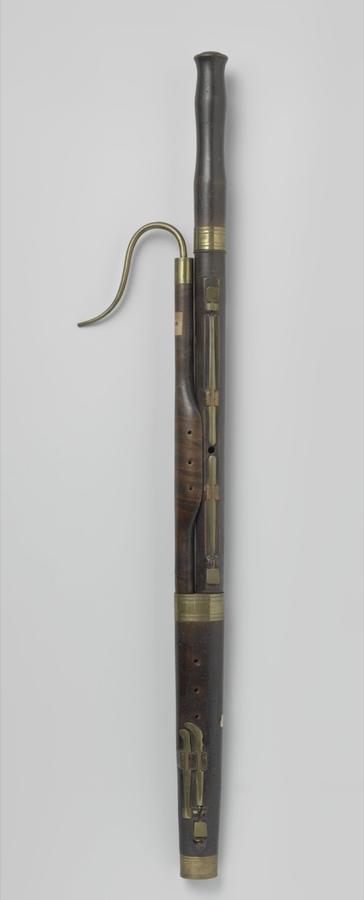
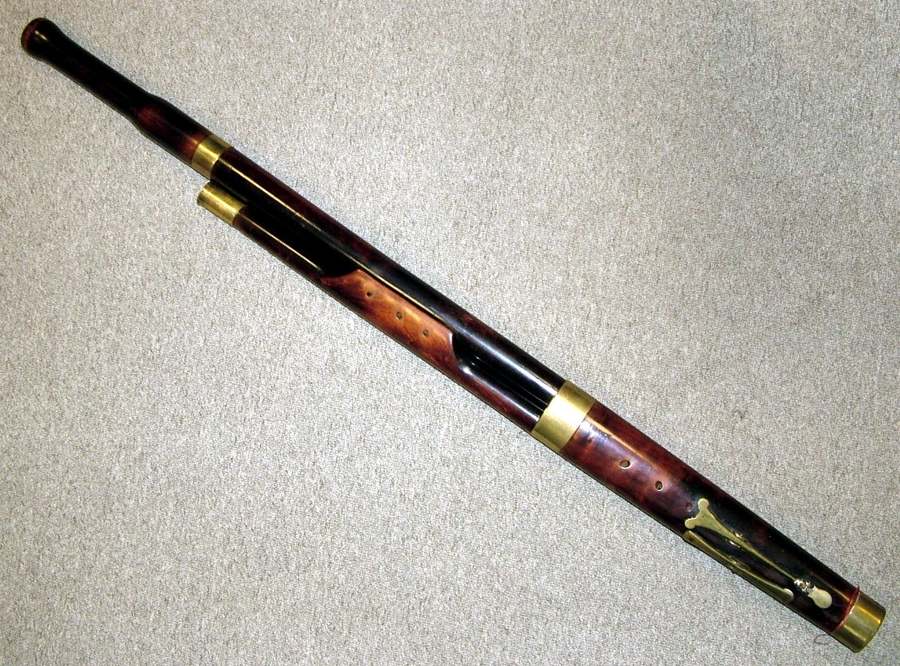
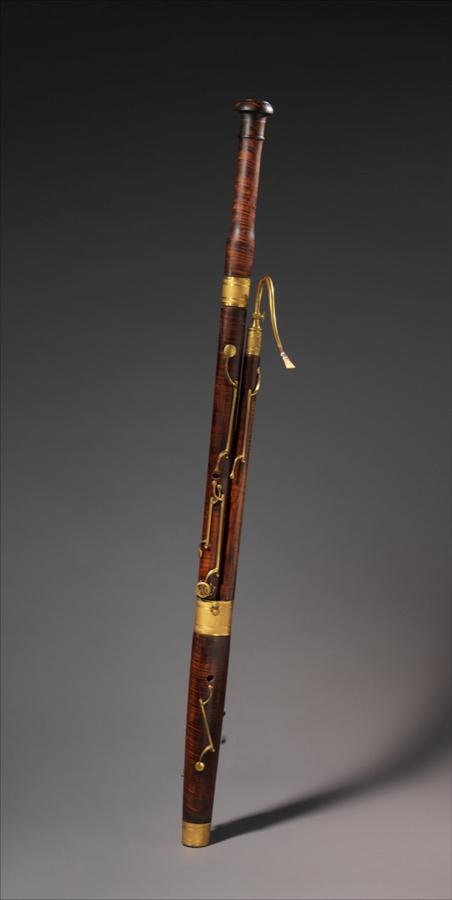
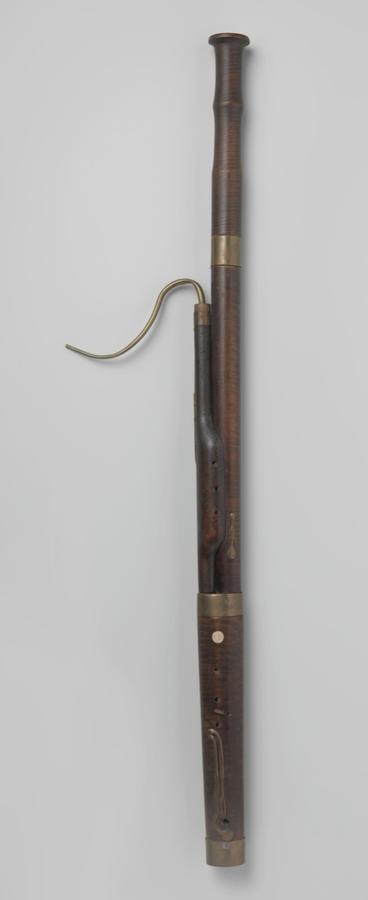
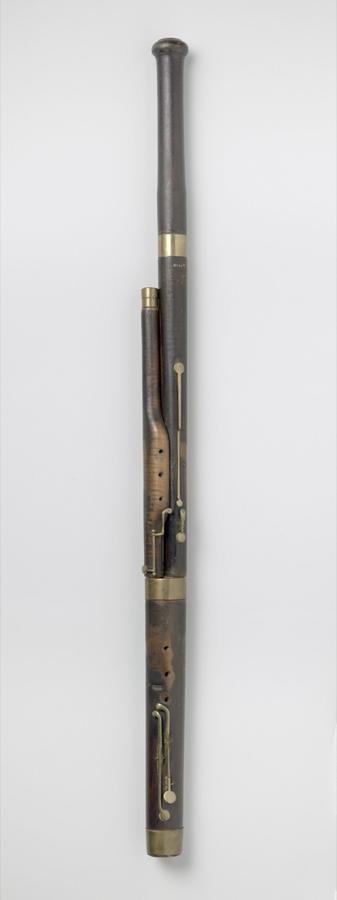
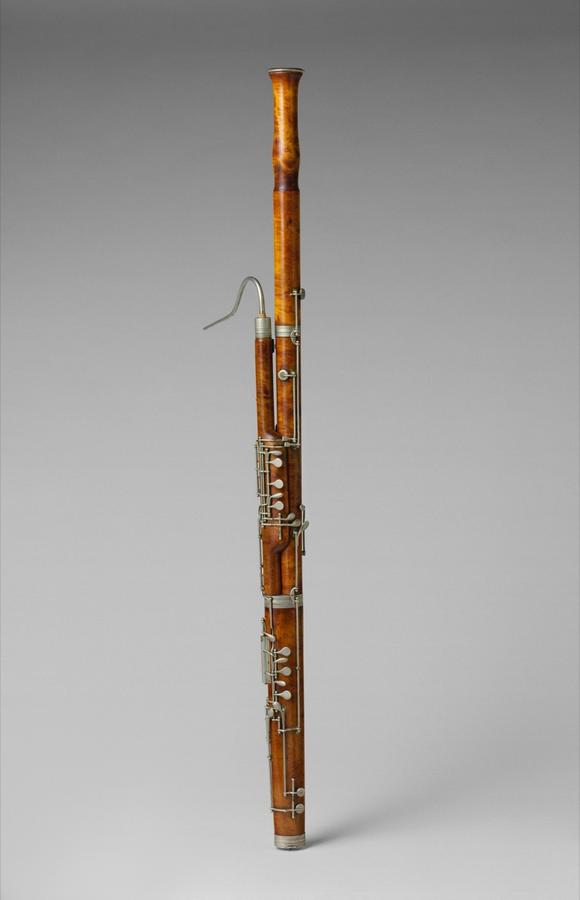
These 12 photographs span 1750–1881, 11 places of origin and 3 museums. 1 of them carry no date in the museum record. Every photograph is public domain or openly licensed, and links to the museum’s own record.
-
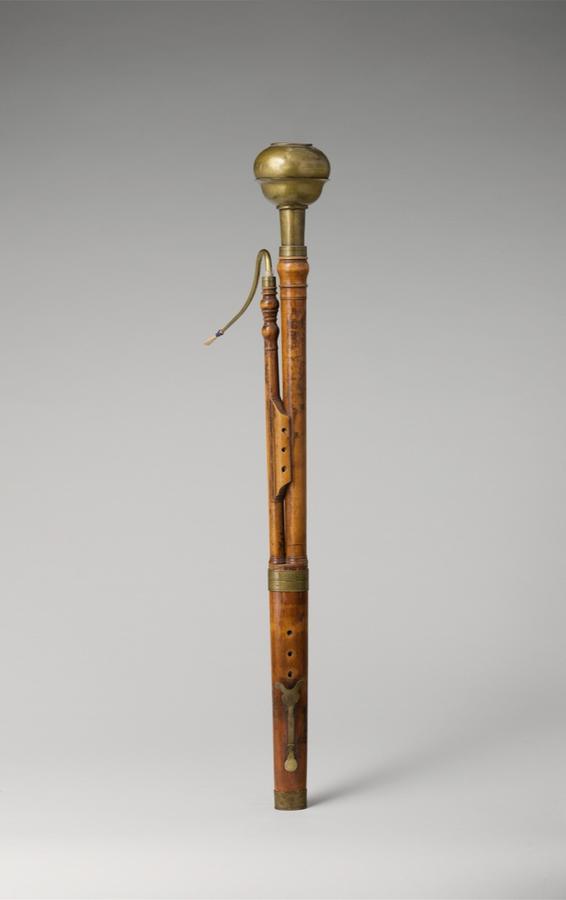
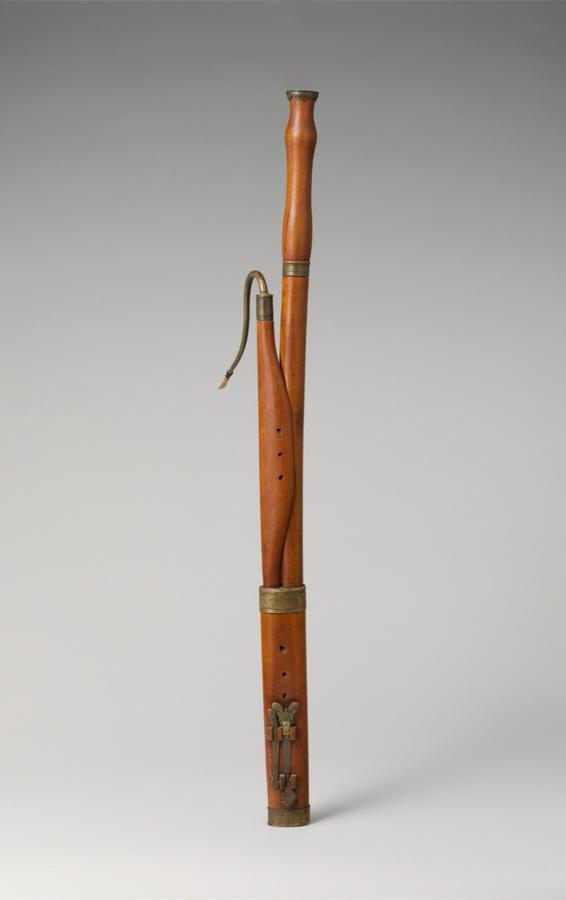
Bassoon in C1771 · Swiss (Switzerland) -
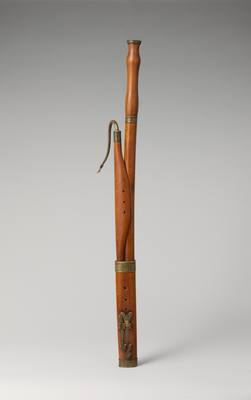
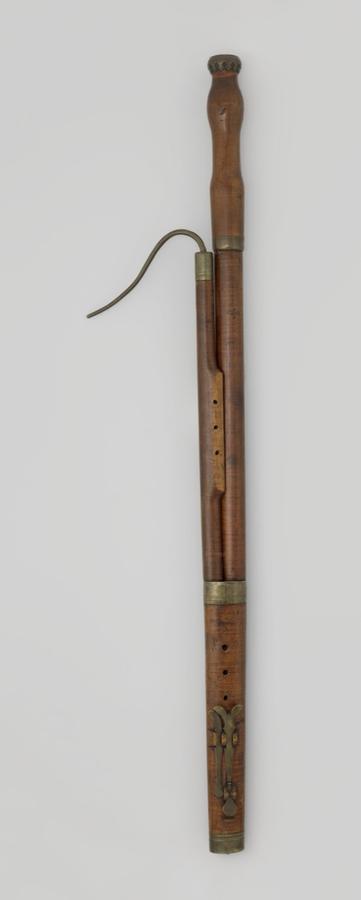
Bassoon in C1750–70 · Germany -
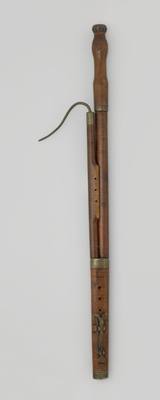
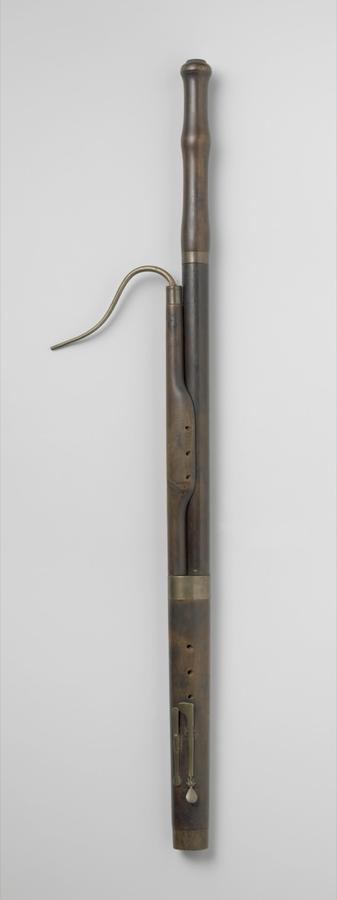
Bassoonc. 1750 · Butzbach -
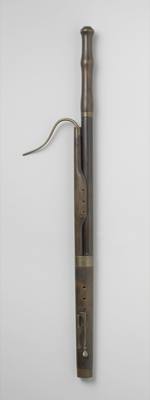
Bassoonc. 1780 - c. 1800 · Tilburg -
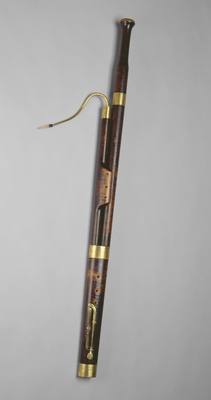
Bassoon in Cca. 1811 · American (United States) -
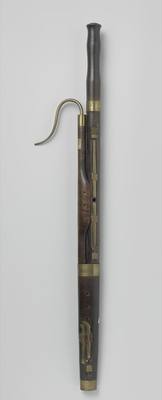
Bassoonc. 1800 - c. 1813 · Dresden -
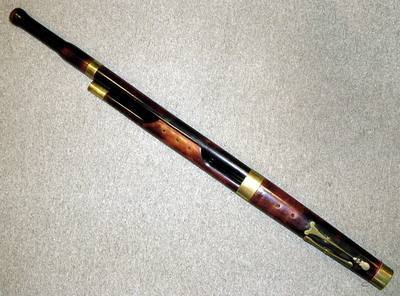
Bassoonearly 19th century · British (United Kingdom) -
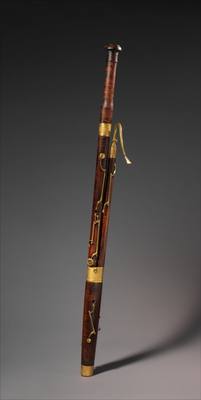
Bassoon in Cca. 1813–25 · French (France) -
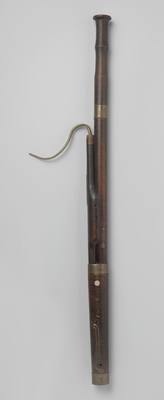
Bassoonc. 1820 · Amsterdam -
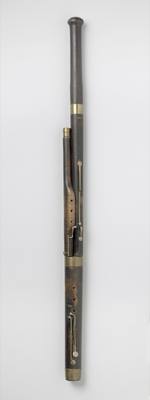
Bassoonc. 1855 · Berlin -
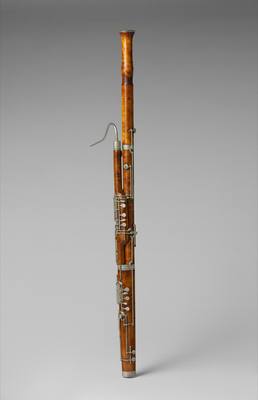
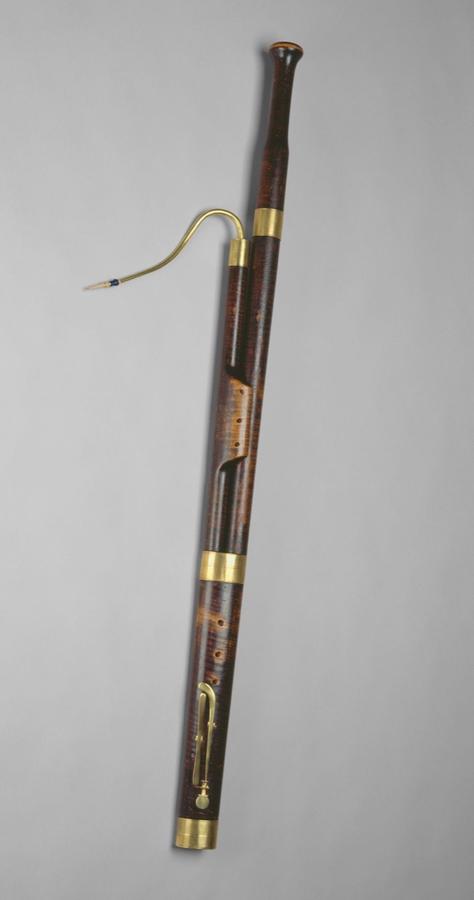
Bassoon1881 · Italian (Italy) -
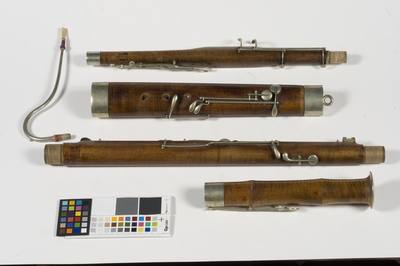
FagottUndated · Estonia
Facts at a glance
| Hornbostel–Sachs number | 422.112-71 — Double-reeded aerophone with keys |
|---|---|
| Hornbostel–Sachs group | Aerophones › Non-free aerophones (wind instruments proper) › Reed aerophones |
| Also known as | fagot |
| Developed | Early 18th century |
| Wikidata labels | 88 languages |
| Wikipedia article | Bassoon |
| Wikidata item | Q159998 |
| Wikimedia Commons category | Bassoons |
| MusicBrainz instrument | 5318ae3e-fb33-4187-a1a1-1df9a59930f8 |
| Encyclopaedia Britannica | art/bassoon |
| Audio sample (Wikimedia Commons) | Bassoon-technical-articulations.ogg |
Sources: Wikidata (CC0 1.0) — classification number, aliases, identifiers (dump of 2026-07-22); Wikipedia (CC BY-SA 4.0) — infobox fields (description of the classification number, development, inventors) and the names of the Hornbostel–Sachs groups (article “Hornbostel–Sachs”, revision of 2026-01-04).
The name in other languages
| Language | Name | Also written |
|---|---|---|
| English | bassoon | fagot |
| French | basson | fagott |
| German | Fagott | Bassoon, Subkontrafagott, Basson |
| Spanish | fagot | Fagotista, Fagots, Fagote |
| Italian | fagotto | |
| Portuguese | fagote | Contra-fagote |
| Dutch | fagot | |
| Russian | фагот | фаготино |
| Japanese | ファゴット | バスーン, バソン, バズーン |
| Chinese | 低音管 | 大管, 巴松管 |
| Korean | 바순 | 파곳, 파고토 |
| Arabic | زمخر | باصون |
Sources: Wikidata (CC0 1.0) — labels and aliases; MusicBrainz (CC0 1.0) — instrument aliases (names only).
About the bassoon: history, construction and playing
The bassoon is a musical instrument in the woodwind family, which plays in the tenor and bass ranges. It is composed of six pieces, and is usually made of wood. It is known for its distinctive tone color, wide range, versatility, and virtuosity. It is a non-transposing instrument and typically its music is written in the bass and tenor clefs, and sometimes in the treble. There are two forms of modern bassoon: the Buffet (or French) and Heckel (or German) systems. It is typically played while sitting using a seat strap, but can be played while standing if the player has a harness to hold the instrument. Sound is produced by rolling both lips over the reed and blowing direct air pressure to cause the reed to vibrate. Its fingering system can be quite complex when compared to those of other instruments. Appearing in its modern form in the 19th century, the bassoon figures prominently in orchestral, concert band, and chamber music literature, and is occasionally heard in pop, rock, and jazz settings as well. One who plays a bassoon is called a bassoonist.
Etymology
The word bassoon comes from French basson and from Italian bassone (basso with the augmentative suffix -one), both terms that refer to the version of any instrument in a bass register. The term for bassoon used in classical music scores and parts is often its Italian name fagotto (plural fagotti), which referred initially to the dulcian. This word, adopted in many other European languages as fagot, fagote, or in German, Fagott, comes from an Old French word meaning a bundle of sticks.
Range
The range of the bassoon begins at B♭1 (the first one below the bass staff) and extends upward over three octaves, roughly to the G above the treble staff (G5). However, most writing for bassoon rarely calls for notes above C5 or D5; even Stravinsky's opening solo in The Rite of Spring only ascends to D5, but Ravel's Piano Concerto calls for E5. Notes higher than this are possible, but seldom written, as they are difficult to produce (often requiring specific reed design features to ensure reliability), and at any rate are quite homogeneous in timbre to the same pitches on the cor anglais, which can produce them with relative ease. French bassoon has greater facility in the extreme high register, and so repertoire written for it is somewhat likelier to include very high notes, although repertoire for French system can be executed on German system without alterations and vice versa.
The extensive high register of the bassoon and its frequent role as a lyric tenor have meant that tenor clef is very commonly employed in its literature after the Baroque, partly to avoid excessive ledger lines, and, beginning in the 20th century, treble clef is also seen for similar reasons.
Like other woodwind instruments, the lowest note is fixed, but A1 is possible with a special extension to the instrument—see "Extended techniques" below.
Although the primary tone hole pitches are a pitched perfect 5th lower than other non-transposing Western woodwinds (effectively an octave beneath English horn) the bassoon is non-transposing, meaning that notes sounded match the written pitch.
Construction
The bassoon disassembles into six main pieces, including the reed. The bell (6), extending upward; the bass joint (or long joint) (5), connecting the bell and the boot; the boot (or butt) (4), at the bottom of the instrument and folding over on itself; the wing joint (or tenor joint) (3), which extends from boot to bocal; and the bocal (or crook) (2), a crooked metal tube that attaches the wing joint to a reed (1) (listen).
Structure
The bore of the bassoon is conical, like that of the oboe and the saxophone, and the two adjoining bores of the boot joint are connected at the bottom of the instrument with a U-shaped metal connector. Both bore and tone holes are precision-machined, and each instrument is finished by hand for proper tuning. The walls of the bassoon are thicker at various points along the bore; here, the tone holes are drilled at an angle to the axis of the bore, which reduces the distance between the holes on the exterior. This ensures coverage by the fingers of the average adult hand. Playing is facilitated by closing the distance between the widely spaced holes with a complex system of key work, which extends throughout nearly the entire length of the instrument. The overall height of the bassoon stretches to 1.34 m tall, but the total sounding length is 2.54 m considering that the tube is doubled back on itself. There are also short-reach bassoons made for the benefit of young or petite players.
Materials
A modern beginner's bassoon is generally made of maple, with medium-hardness types such as sycamore maple and sugar maple preferred. Less-expensive models are also made of materials such as polypropylene and ebonite, primarily for student and outdoor use. Metal bassoons were made in the past but have not been produced by any major manufacturer since 1889.
Double reeds
The art of reed-making has been practiced for several hundred years, some of the earliest known reeds having been made for the dulcian, a predecessor of the bassoon. Current methods of reed-making consist of a set of basic methods; however, individual bassoonists' playing styles vary greatly and thus require that reeds be customized to best suit their respective bassoonist. Advanced players usually make their own reeds to this end. With regards to commercially made reeds, many companies and individuals offer pre-made reeds for sale, but players often find that such reeds still require adjustments to suit their particular playing style.
Modern bassoon reeds, made of Arundo donax cane, are often made by the players themselves, although beginner bassoonists tend to buy their reeds from professional reed makers or use reeds made by their teachers. Reeds begin with a length of tube cane that is split into three or four pieces using a tool called a cane splitter. The cane is then trimmed and gouged to the desired thickness, leaving the bark attached. After soaking, the gouged cane is cut to the proper shape and milled to the desired thickness, or profiled, by removing material from the bark side. This can be done by hand with a file; more frequently it is done with a machine or tool designed for the purpose. After the profiled cane has soaked once again it is folded over in the middle. Prior to soaking, the reed maker will have lightly scored the bark with parallel lines with a knife; this ensures that the cane will assume a cylindrical shape during the forming stage.
Origin
Music historians generally consider the dulcian to be the forerunner of the modern bassoon, as the two instruments share many characteristics: a double reed fitted to a metal crook, obliquely drilled tone holes and a conical bore that doubles back on itself. The origins of the dulcian are obscure, but by the mid-16th century it was available in as many as eight different sizes, from soprano to great bass. A full consort of dulcians was a rarity; its primary function seems to have been to provide the bass in the typical wind band of the time, either loud (shawms) or soft (recorders), indicating a remarkable ability to vary dynamics to suit the need. Otherwise, dulcian technique was rather primitive, with eight finger holes and two keys, indicating that it could play in only a limited number of key signatures.
Technique
The bassoon is held diagonally in front of the player, but unlike the flute, oboe and clarinet, it cannot be easily supported by the player's hands alone. Some means of additional support is usually required; the most common ones are a seat strap attached to the base of the boot joint, which is laid across the chair seat prior to sitting down, or a neck strap or shoulder harness attached to the top of the boot joint. Occasionally a spike similar to those used for the cello or the bass clarinet is attached to the bottom of the boot joint and rests on the floor. It is possible to play while standing up if the player uses a neck strap or similar harness, or if the seat strap is tied to the belt. Sometimes a device called a balance hanger is used when playing in a standing position. This is installed between the instrument and the neck strap, and shifts the point of support closer to the center of gravity, adjusting the distribution of weight between the two hands.
Embouchure and sound production
The bassoon embouchure is a very important aspect of producing a full, round, and rich sound on the instrument. The lips are both rolled over the teeth, often with the upper lip further along in an "overbite". The lips provide micromuscular pressure on the entire circumference of the reed, which grossly controls intonation and harmonic excitement, and thus must be constantly modulated with every change of note. How far along the reed the lips are placed affects both tone (with less reed in the mouth making the sound more edged or "reedy", and more reed making it smooth and less projectile) and the way the reed will respond to pressure.
The musculature employed in a bassoon embouchure is primarily around the lips, which pressure the reed into the shapes needed for the desired sound. The jaw is raised or lowered to adjust the oral cavity for better reed control, but the jaw muscles are used much less for upward vertical pressure than in single reeds, only being substantially employed in the very high register. However, double reed students often "bite" the reed with these muscles because the control and tone of the labial and other muscles is still developing, but this generally makes the sound sharp and "choked" as it contracts the aperture of the reed and stifles the vibration of its blades.
Apart from the embouchure proper, students must also develop substantial muscle tone and control in the diaphragm, throat, neck and upper chest, which are all employed to increase and direct air pressure. Air pressure is a very important aspect of the tone, intonation and projection of double reed instruments, affecting these qualities as much, or more than the embouchure does.
Attacking a note on the bassoon with imprecise amounts of muscle or air pressure for the desired pitch will result in poor intonation, cracking or multiphonics, accidentally producing the incorrect partial, or the reed not speaking at all. These problems are compounded by the individual qualities of reeds, which are categorically inconsistent in behaviour for inherent and exherent reasons.
The muscle requirements and variability of reeds mean it takes some time for bassoonists (and oboists) to develop an embouchure that exhibits consistent control across all reeds, dynamics and playing environments.
Source: Wikipedia, “Bassoon” — CC BY-SA 4.0 — text excerpted as published (references, images and tables removed); see the article for the full text and the list of authors. Revision of 2026-07-06.
From Grove’s Dictionary (1900)
BASSOON (Fr. Bosson, Ital. Fagotto, Ger. Fagott). A wooden double-reed instrument of eight-foot tone. The English and French names are derived from its pitch, which is the natural bass to the oboe and other reed instruments; the Italian and German names come from its resemblance to a faggot or bundle of sticks.
It is probably, in one form or another, of great antiquity, although there exists circumstantial evidence of its discovery by Afranio, a Canon of Ferrara. This occurs in a work by the inventor's nephew, entitled 'Introductio in Chaldaicain linguam, mystica et cabalistica, a Theseo Albonesio utriusque juris doctori,' etc. (Pavia, 1539). It is illustrated by two rough woodcuts, and is termed 'Descriptio ac simulacrum Phagoti Afranii,' from which it would appear that the author, although an Italian, did not realise the etymological origin of the name. A class of instruments named bombards, pommers, or brummers, which were made in many keys, seems to have been the immediate predecessor of the bassoon. Some of the older forms are well described, with representations of their shape, in the 'Metodo complete di Fagotto' of Willent. They possess a contrivance which does not exist at the present day on any reed, though it somewhat anticipates the 'crooks' and 'transposing slides' of brass instruments. Besides the holes to be stopped by the fingers, there are other intermediate apertures stopped by pegs, and only to be opened in certain keys. No doubt in the older style of music this mechanism may have been useful; but it would hardly adapt itself to the rapid modulations of later composers.
Source: Wikisource, A Dictionary of Music and Musicians (Grove, 1900) — “Bassoon” (entry by William H. Stone) — Public domain (published 1879–1910; authors died before 1929) — the first paragraphs of the entry, as transcribed; see the page for the full entry.
Composers who played it
29 composers on this site list the bassoon as an instrument they played. A selection:
- Jacques-Martin Hotteterre 1673–1763
- John Frederick Lampe 1703–1751
- John Hebden 1705–1765
- Ernst Eichner 1740–1777
- Antoine Bullant 1751–1821
- Étienne Ozi 1754–1813
- François Devienne 1759–1803
- François-René Gebauer 1773–1845
- Carl Almenräder 1786–1846
- Eugène Louis-Marie Jancourt 1815–1900
- Désiré Dihau 1833–1909
- Jean-Théodore Radoux 1835–1911
Composers with a page on this site whose Wikidata record lists this instrument; featured and best-dated first. Data: Wikidata (property “instrument”, P1303), CC0 1.0.
Sources and licences
- Bassoon in C, Jeanneret workshop, 1771, Swiss (Switzerland). Maple, brass. The Crosby Brown Collection of Musical Instruments, 1889 (89.4.883). Museum record · CC0 1.0 (public domain dedication)
- Bassoon in C, Johannes Scherer, Jr., 1750–70, Germany. Wood, brass. The Crosby Brown Collection of Musical Instruments, 1889 (89.4.886). Museum record · CC0 1.0 (public domain dedication)
- Bassoon, Georg Heinrich Scherer, c. 1750, Butzbach. maple (wood), brass (alloy). Purchased with the support of the State of the Netherlands and the Vereeniging van Noord-Nederlandsche Muziekgeschiedenis. Museum record · Public Domain Mark 1.0
- Bassoon, Johannes van de Knikker, c. 1780 - c. 1800, Tilburg. copper (metal), maple (wood). Rijksmuseum, Amsterdam. Museum record · Public Domain Mark 1.0
- Bassoon in C, John Meacham, ca. 1811, American (United States). Wood, brass. The Crosby Brown Collection of Musical Instruments, 1889 (89.4.884). Museum record · CC0 1.0 (public domain dedication)
- Bassoon, Heinrich Grenser, c. 1800 - c. 1813, Dresden. copper (metal), rope, steel (alloy), wood (plant material). Gift of the Koninklijke Militaire Academie. Museum record · Public Domain Mark 1.0
- Bassoon, William Milhouse, early 19th century, British (United Kingdom). Wood, brass. Gift of David G. Barton and Susan V. Barton, 1999 (1999.193). Museum record · CC0 1.0 (public domain dedication)
- Bassoon in C, Jean-Jacques Baumann; C.H. Felix, ca. 1813–25, French (France). Maple, brass. The Crosby Brown Collection of Musical Instruments, 1889 (89.4.885). Museum record · CC0 1.0 (public domain dedication)
- Bassoon, c. 1820, Amsterdam. copper (metal), wood (plant material). Gift of the Koninklijke Militaire Academie. Museum record · Public Domain Mark 1.0
- Bassoon, August Friedrich Andreas Knochenhauer, c. 1855, Berlin. maple (wood). Purchased with the support of the State of the Netherlands and the Vereeniging van Noord-Nederlandsche Muziekgeschiedenis. Museum record · Public Domain Mark 1.0
- Bassoon, Giosue Esposito, 1881, Italian (Italy). Maple, nickel-silver. Purchase, Clara Mertens Bequest, in memory of André Mertens, 2003 (2003.150a–g). Museum record · CC0 1.0 (public domain dedication)
- Fagott, Undated, Estonia. Estonian Theater and Music Museum / Estonian e-Repository and Conservation of Collections (via Europeana). Museum record · CC BY 4.0
Photographs: open-access collections of the museums named above; each is shown here reduced in size, otherwise unchanged. Text: Wikipedia (CC BY-SA 4.0), Grove’s Dictionary (public domain), Wikidata and MusicBrainz (CC0). The full list of sources and licences is on the credits page.