
Instruments · Aerophones
Oboe
An oboe is a woodwind instrument with a double reed. It looks very similar to the clarinet, and may be confused with it. While the clarinet's shape remains cylindrical, the oboe's body is conical. The sounds produced by clarinets and oboes are very different. An oboe's sound is produced by blowing air through the double reed at the upper end of the instrument which forces the two reeds to vibrate together which produces the sound. The oboe has four parts: the bell, lower joint, upper joint, and the reed. A person that plays the oboe is called an oboist. A typical orchestra employs between two and four oboists, one of which also plays the cor anglais which sounds a fifth lower than the oboe. The oboe is part of a family of double reed instruments that includes the piccolo oboe, oboe d'amore, Cor anglais, bass oboe, and heckelphone.
Summary: Simple English Wikipedia, “Oboe” — CC BY-SA 4.0. Revision of 2025-08-10.
Hear the real instrument
These are recordings of a real oboe, not a synthesiser. Click or tap a key to hear that note, or press Play the range to hear every note the instrument was recorded on, from lowest to highest.
| Recorded instrument | Oboe |
|---|---|
| Range recorded | B♭3 to A6 |
| Notes | 36 recorded notes, one for every semitone from lowest to highest. Middle C is C4. |
Without JavaScript: play the lowest note (B♭3) or the highest note (A6) as MP3 files.
Recordings: IRCAM SOL (TinySOL), CC BY 4.0, Cella et al. Each note is cut from the original recording, levelled in loudness and converted to a short MP3; the playing technique is ordinary (ordinario), mostly at mezzo-forte.
Museum photographs
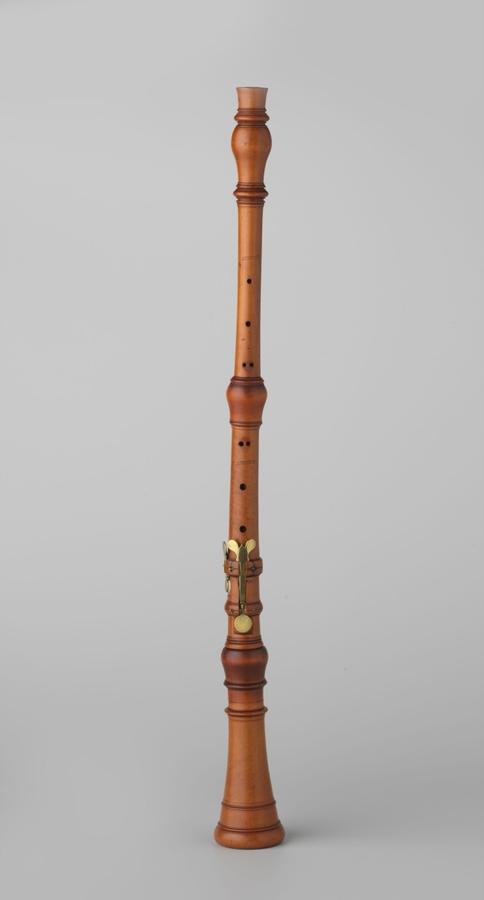
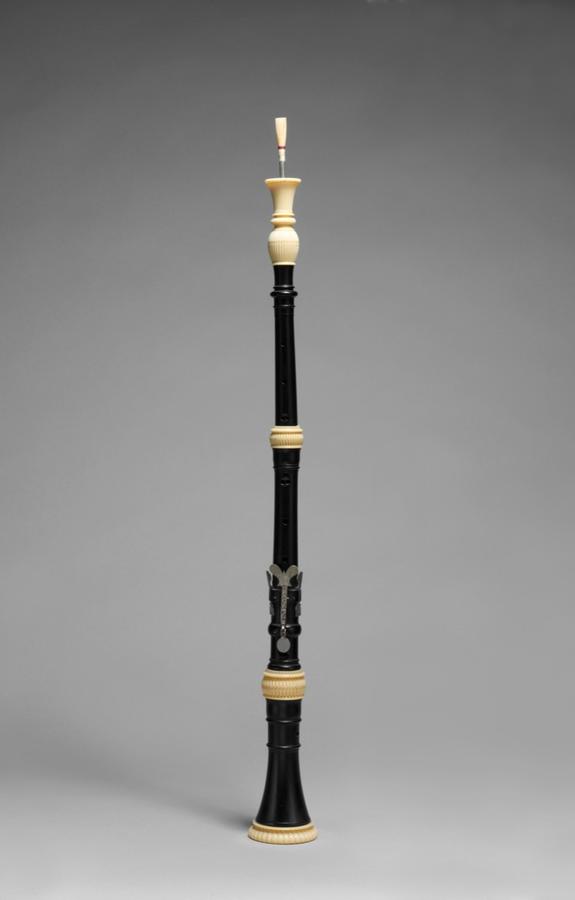
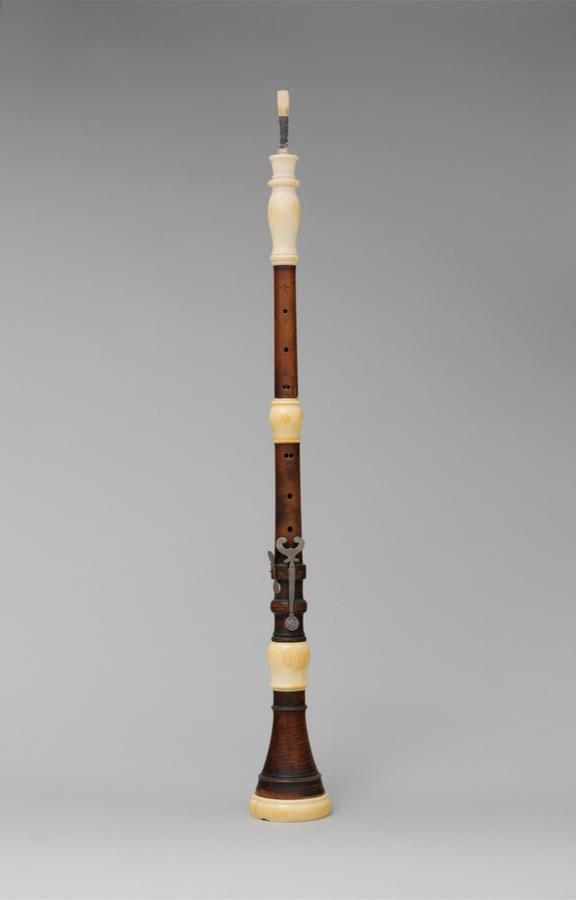
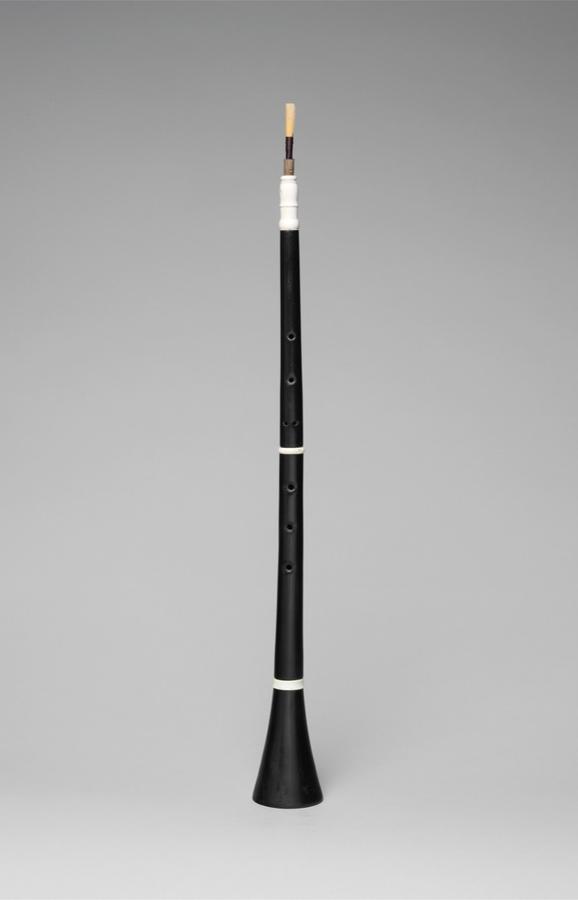
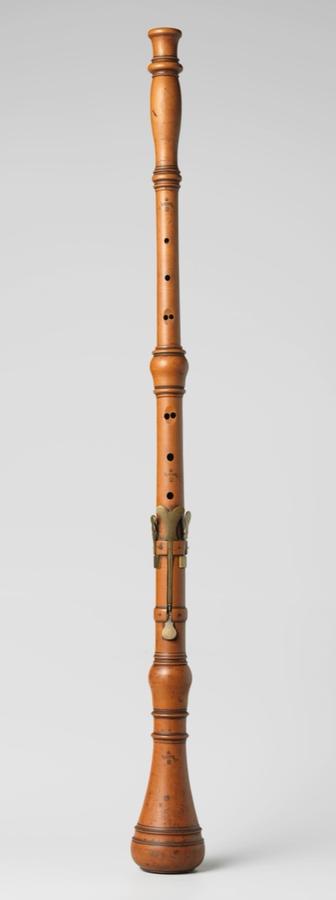
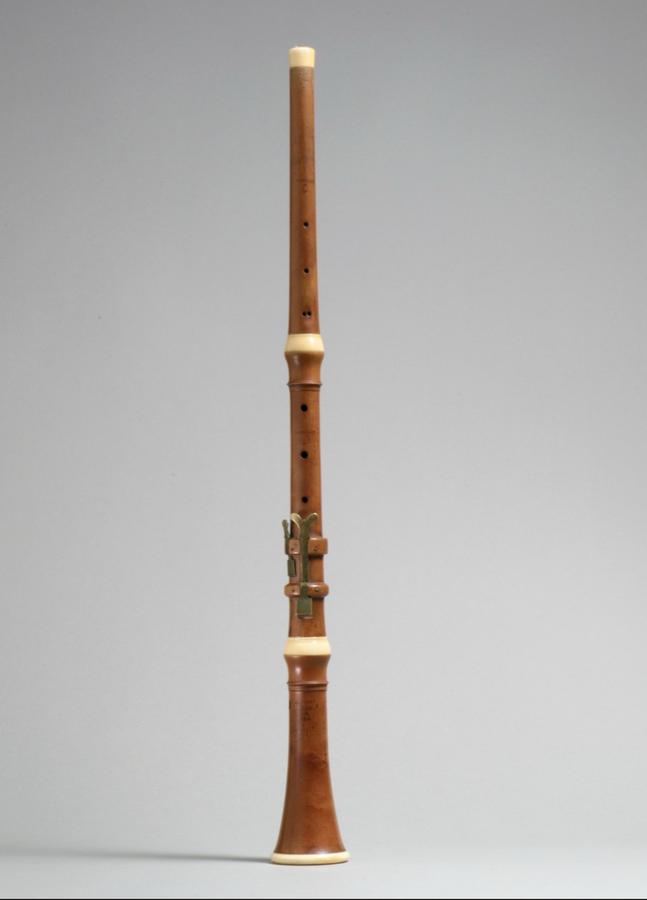
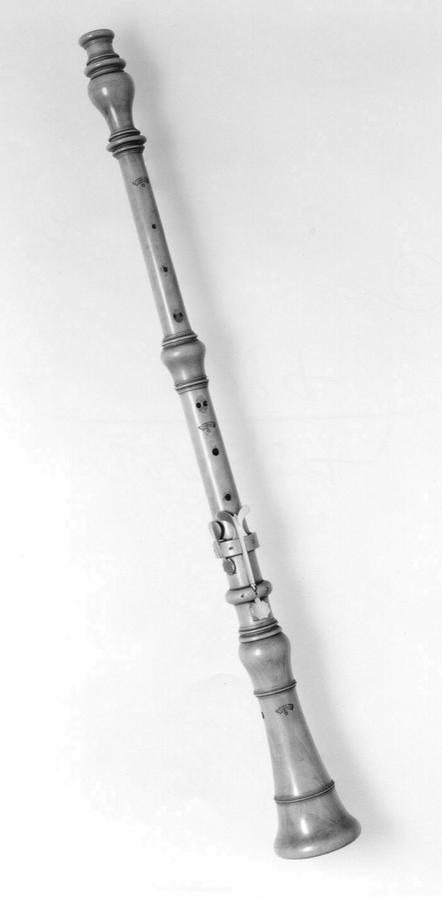
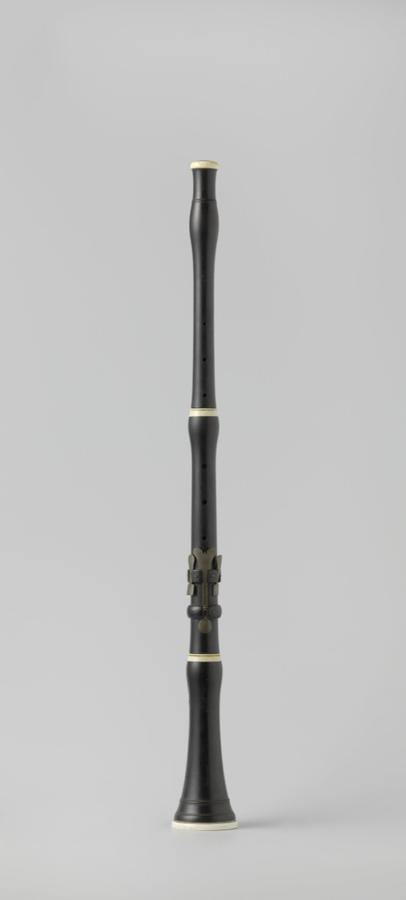
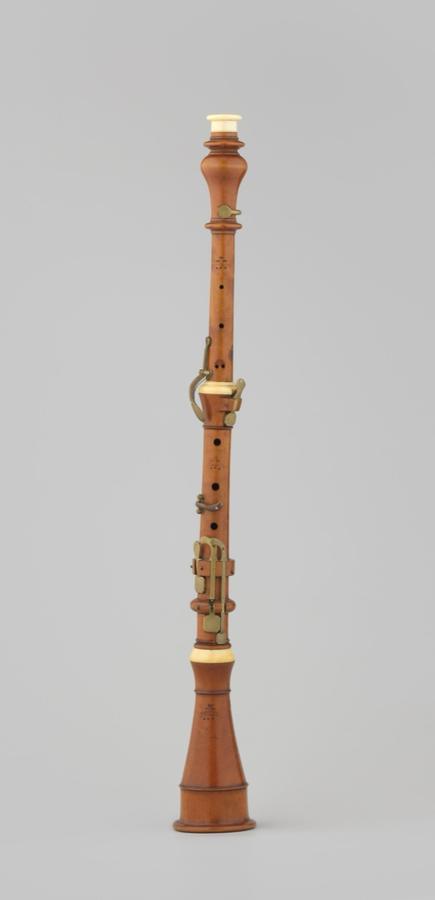
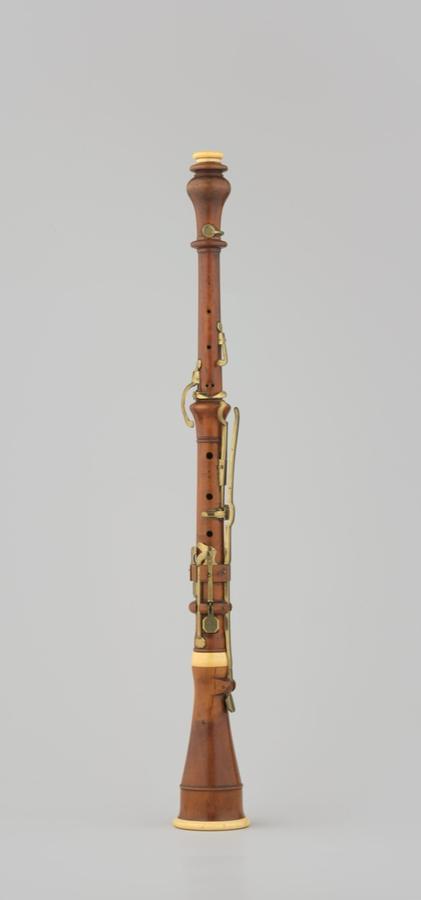
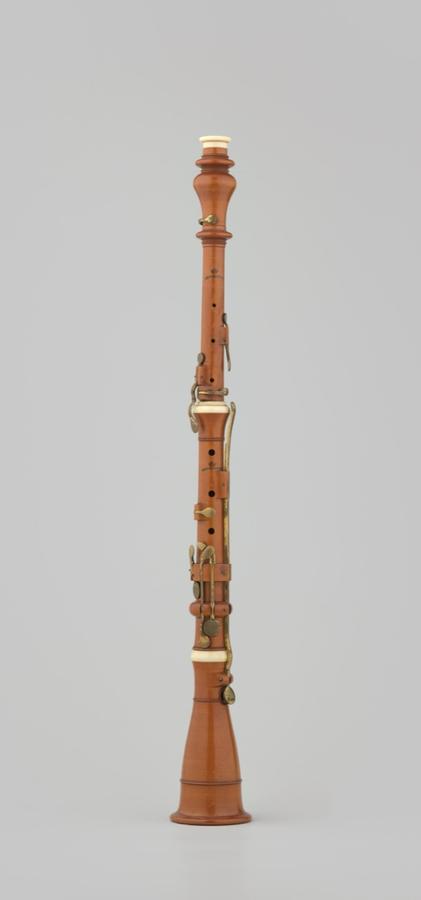
These 12 photographs span 1692–1850, 12 places of origin and 2 museums. Every photograph is public domain or openly licensed, and links to the museum’s own record.
-
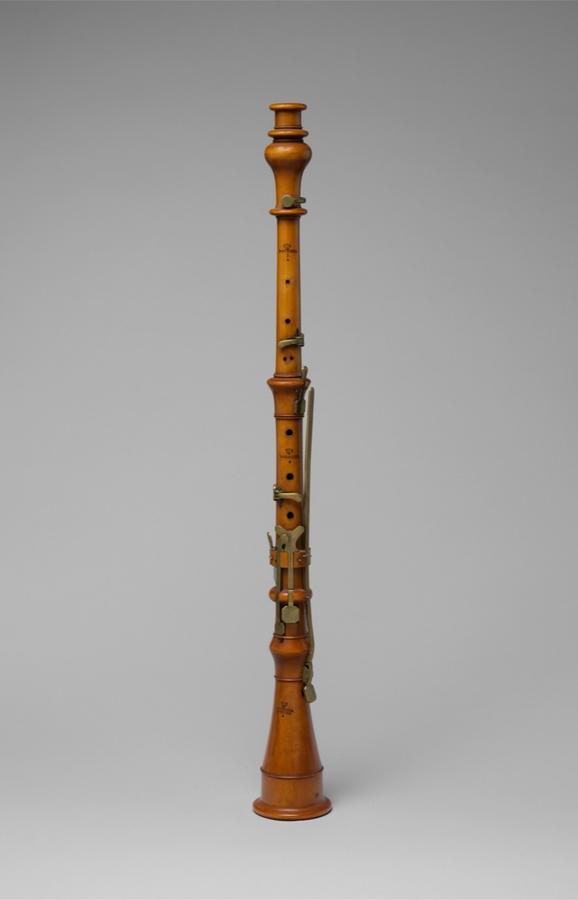
Oboeca. 1806–13 · Germany -
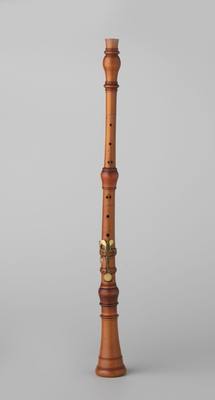
Oboebefore 1692 · Paris -
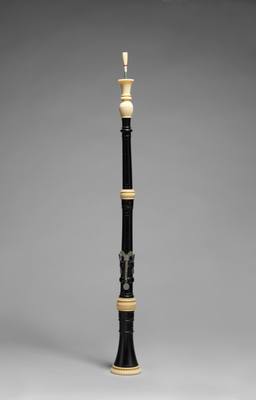
Oboe in Cbefore 1727 · Dutch (Netherlands) -
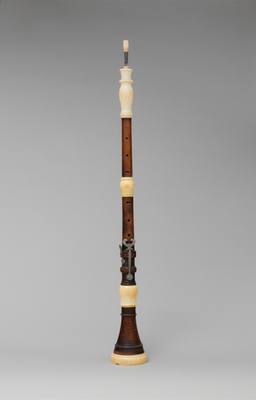
Oboeca. 1750 · Italian (Italy) -
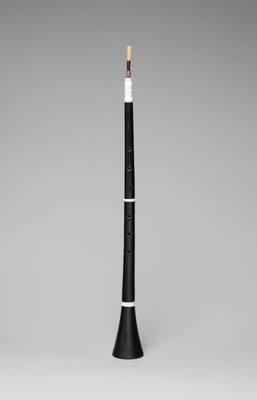
Oboe in Dsecond half 18th century · possibly Austrian (Austria) -
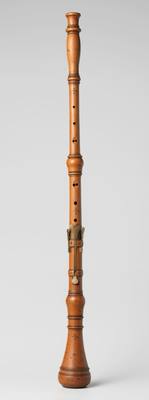
Tenor oboec. 1750 · Nijmegen -
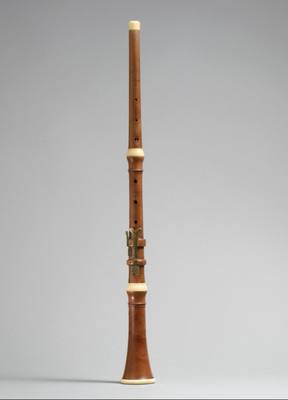
Oboeca. 1785–1800 · American (United States) -
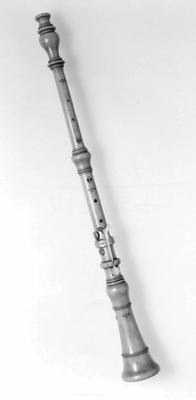
Oboeca. 1770–90 · British (United Kingdom) -
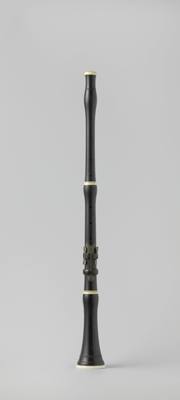
Oboec. 1780 - c. 1800 · Tilburg -
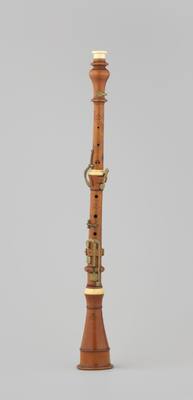
Oboec. 1810 · Bayreuth -
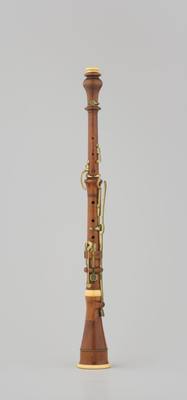
Oboec. 1820 · Dresden -
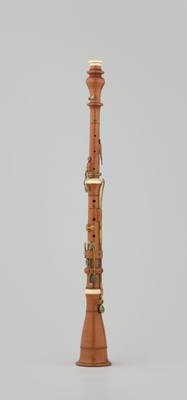
Oboec. 1850 · Neukirchen
Facts at a glance
| Hornbostel–Sachs number | 422.112-71 — Double-reeded aerophone with keys |
|---|---|
| Hornbostel–Sachs group | Aerophones › Non-free aerophones (wind instruments proper) › Reed aerophones |
| Also known as | standard oboe |
| Classification (Wikipedia infobox) | Wind, Woodwind, Double reed |
| Developed | Mid 17th century from the shawm |
| Wikidata labels | 94 languages |
| Wikipedia article | Oboe |
| Wikidata item | Q8377 |
| Wikimedia Commons category | Oboes |
| MusicBrainz instrument | 1b97909a-6db7-4829-91fd-414338ce28cf |
| Encyclopaedia Britannica | art/oboe-musical-instrument |
| Audio sample (Wikimedia Commons) | Ferling Oboe Study No 28 Aaron Hill.ogg |
Sources: Wikidata (CC0 1.0) — classification number, aliases, identifiers (dump of 2026-07-22); Wikipedia (CC BY-SA 4.0) — infobox fields (description of the classification number, development, inventors) and the names of the Hornbostel–Sachs groups (article “Hornbostel–Sachs”, revision of 2026-01-04).
The name in other languages
| Language | Name | Also written |
|---|---|---|
| English | oboe | standard oboe |
| French | hautbois | haut bois |
| German | Oboe | Standardoboe |
| Spanish | oboe | |
| Italian | oboe | |
| Portuguese | oboé | |
| Dutch | hobo | |
| Russian | гобой | |
| Japanese | オーボエ | |
| Chinese | 雙簧管 | 双簧管 |
| Korean | 오보에 | |
| Arabic | أوبوا | مزمار, مِزمار |
Sources: Wikidata (CC0 1.0) — labels and aliases; MusicBrainz (CC0 1.0) — instrument aliases (names only).
About the oboe: history, construction and playing
The oboe is a type of double-reed woodwind instrument. Oboes are usually made of wood, but may also be made of synthetic materials, such as plastic, resin, or hybrid composites.
The most common type of oboe, the soprano oboe pitched in C, measures roughly 65 cm long and has metal keys, a conical bore and a flared bell. Sound is produced by blowing into the reed at a sufficient air pressure, causing it to vibrate with the air column. The distinctive tone is versatile and has been described as "bright". When the word oboe is used alone, it is generally taken to mean the soprano member rather than other instruments of the family, such as the bass oboe, the cor anglais (English horn), or oboe d'amore.
Today, the oboe is commonly used as orchestral or solo instrument in symphony orchestras, concert bands and chamber ensembles. The oboe is especially used in classical music, film music, some genres of folk music, and is occasionally heard in jazz, rock, pop, and popular music. The oboe is widely recognized as the instrument that tunes the orchestra with its distinctive A.
A musician who plays the oboe is called an oboist.
Sound
In comparison to other modern woodwind instruments, the soprano oboe is sometimes referred to as having a "bright and penetrating" voice. The Sprightly Companion, an instruction book published by Henry Playford in 1695, describes the oboe as "Majestical and Stately, and not much Inferior to the Trumpet". In the play Angels in America the sound is described as like "that of a duck if the duck were a songbird". The rich timbre is derived from its conical bore (as opposed to the generally cylindrical bore of flutes and clarinets). As a result, oboes are easier to hear over other instruments in large ensembles due to its penetrating sound. The highest note is a semitone lower than the nominally highest note of the B♭ clarinet. Since the clarinet has a wider range, the lowest note of the B♭ clarinet is significantly deeper (a minor sixth) than the lowest note of the oboe.
Music for the standard oboe is written in concert pitch (i.e, it is not a transposing instrument), and the instrument has a soprano range, usually from B♭3 to G6. Orchestras tune to a concert A played by the first oboe. According to the League of American Orchestras, this is done because the pitch is secure and its penetrating sound makes it ideal for tuning. The pitch of the oboe is affected by the way in which the reed is made. The reed has a significant effect on the sound. Variations in cane and other construction materials, the age of the reed, and differences in scrape and length all affect the pitch. German and French reeds, for instance, differ in many ways, causing the sound to vary accordingly. Weather conditions such as temperature and humidity also affect the pitch. Skilled oboists adjust their embouchure to compensate for these factors. Subtle manipulation of embouchure and air pressure allows the oboist to express timbre and dynamics.
Reeds
The oboe uses a double reed, similar to that used for the bassoon. Most professional oboists make their reeds to suit their individual needs. By making their reeds, oboists can precisely control factors such as tone color, intonation, and responsiveness. They can also account for individual embouchure, oral cavity, oboe angle, and air support.
Novice oboists rarely make their own reeds, as the process is difficult and time-consuming, and frequently purchase reeds from a music store instead. Commercially available cane reeds are available in several degrees of hardness; a medium reed is very popular, and most beginners use medium-soft reeds. These reeds, like clarinet, saxophone, and bassoon reeds, are made from Arundo donax. As oboists gain more experience, they may start making their own reeds after the model of their teacher or buying handmade reeds (usually from a professional oboist) and using special tools including gougers, pre-gougers, guillotines, shaper tips, knives, and other tools to make and adjust reeds to their liking. The reed is considered the part of oboe that makes the instrument so difficult because the individual nature of each reed means that it is hard to achieve a consistent sound. Slight variations in temperature, humidity, altitude, weather, and climate can also have an effect on the sound of the reed, as well as minute changes in the physique of the reed.
Oboists often prepare several reeds to achieve a consistent sound, as well as to prepare for environmental factors such as chipping of a reed or other hazards. Oboists may have different preferred methods for soaking their reeds to produce optimal sounds; the most preferred method tends to be soaking the reed in water before playing.
Plastic oboe reeds are rarely used, and are less readily available than plastic reeds for other instruments, such as the clarinet. However, they do exist, and are produced by brands such as Legere.
History
Centuries before the Spanish and Portuguese conquests in the New World, the early version of the chirimía arrived in Europe from the Middle East due to cultural exchanges. The Crusades brought Europeans into contact with the Turko-Arabic zurna. However, the oboe’s roots go back even further, linked to ancient reed instruments like those of Egypt and Mesopotamia, as well as the Greek aulos and Roman tibia. Nearly lost in the West during the Dark Ages, the oboe reappeared with the Arabic zurna in the 13th century, evolving through European bagpipes and finally becoming the French hautbois in the 17th century, which is when modern oboe history truly began. In English, prior to 1770, the standard instrument was called a hautbois, hoboy, or French hoboy. This was borrowed from the French name, hautbois, which is a compound word made up of haut ("high", "loud") and bois ("wood", "woodwind"). The French word means 'high-pitched woodwind' in English. The spelling of oboe was adopted into English c. 1770 from the Italian oboè, a transliteration of the 17th-century pronunciation of the French name.
The regular oboe first appeared in the mid-17th century, when it was called a hautbois. This name was also used for its predecessor, the shawm, from which the basic form of the hautbois was derived. Major differences between the two instruments include the division of the hautbois into three sections, or joints (which allowed for more precise manufacture), and the elimination of the pirouette, the wooden ledge below the reed which allowed players to rest their lips.
The exact date and location of origin of the hautbois are obscure, as are the inventors. Circumstantial evidence, such as the statement by the flautist composer Michel de la Barre in his Memoire, points to members of the Philidor (Filidor) and Hotteterre families. The instrument may in fact have had multiple inventors. The hautbois quickly spread throughout Europe, including Great Britain, where it was called hautboy, hoboy, hautboit, howboye, and similar variants of the French name. It was the main melody instrument in early military bands, until it was succeeded by the clarinet.
Wiener oboe
The Wiener oboe (Viennese oboe) is a type of modern oboe that retains the essential bore and tonal characteristics of the historical oboe. The Akademiemodel Wiener Oboe, first developed in the late 19th century by Josef Hajek from earlier instruments by C. T. Golde of Dresden (1803–73), is now made by several makers such as André Constantinides, Karl Rado, Guntram Wolf, Christian Rauch and Yamaha. It has a wider internal bore, a shorter and broader reed and the fingering-system is very different from the conservatoire oboe. In The Oboe, Geoffrey Burgess and Bruce Haynes write "The differences are most clearly marked in the middle register, which is reedier and more pungent, and the upper register, which is richer in harmonics on the Viennese oboe". Guntram Wolf describes them: "From the concept of the bore, the Viennese oboe is the last representative of the historical oboes, adapted for the louder, larger orchestra, and fitted with an extensive mechanism. Its great advantage is the ease of speaking, even in the lowest register. It can be played very expressively and blends well with other instruments." The Viennese oboe is, along with the Vienna horn, perhaps the most distinctive member of the Wiener Philharmoniker instrumentarium.
Conservatoire oboe
This oboe was developed further in the 19th century by the Triébert family of Paris. Using the Boehm flute as a source of ideas for key work, Guillaume Triébert and his sons, Charles and Frederic, devised a series of increasingly complex yet functional key systems. A variant form using large tone holes, the Boehm system oboe, was never in common use, though it was used in some military bands in Europe into the 20th century. F. Lorée of Paris made further developments to the modern instrument. Minor improvements to the bore and key work have continued through the 20th century, but there has been no fundamental change to the general characteristics of the instrument for several decades.
Modern oboe
The modern standard oboe is most commonly made from grenadilla, also known as African blackwood, although some manufacturers also make oboes out of other species of the genus Dalbergia, which includes cocobolo, rosewood, and violetwood (also known as kingwood). Ebony (genus Diospyros) has also been used. Student model oboes are often made from plastic resin to make the instrument cheaper and more durable. Conservation efforts in Africa and Central America have contributed to rising costs for grenadilla, cocobolo and rosewood.
The oboe has an extremely narrow conical bore. It is played with a double reed consisting of two thin blades of cane tied together on a small-diameter metal tube (staple) which is inserted into the reed socket at the top of the instrument. The commonly accepted range for the oboe extends from B♭3 to about G6, over two and a half octaves, though its common tessitura lies from C4 to E♭6. Some student oboes do not have a B♭ key and only extend down to B3.
Descriptive assessments
According to Jesse Green of the New York Times, the oboe has been described by professional players and devotees as "invented by a sadist", "really awkward technically", and sounding like a "wild duck" for the first three years a player is learning the instrument. Nicknames include 'the melancholy reed', 'the sprightly companion', and 'the ill wind that blows no good', for its "wonkiness and honkiness" and its piercing but uniquely solacing sound.
Source: Wikipedia, “Oboe” — CC BY-SA 4.0 — text excerpted as published (references, images and tables removed); see the article for the full text and the list of authors. Revision of 2026-06-11.
From Grove’s Dictionary (1900)
OBOE (Fr. Hautbois; Ger. Hoboe, Hochholz). A wooden reed instrument of two-foot tone, borrowing one or two semitones from the four-foot octave. It is played with a double reed, although it is possible to produce all its scale with a single-reed mouthpiece somewhat similar to that of the clarinet. It is of the highest antiquity, and in one form or another is used in all parts of the globe. It can be traced in the sculptures and paintings of ancient Egypt and Greece; indeed, specimens are preserved in the British and Leyden Museums, which were found with straws beside them, probably to be used in making the reed. Instruments from Arabia, ancient America, China, Hindostan, Italy, and Wallachia are deposited in the South Kensington Museum. It occurs under many names in the older writers, such as Schalmei, Schalmey, Chalumeau, and Shawm. There was also a family of instruments named Bombardi, of which the Oboe was the treble. This name was corrupted into Pommer in Germany, the Bassoon being named Brummer.
Source: Wikisource, A Dictionary of Music and Musicians (Grove, 1900) — “Oboe” (entry by William H. Stone) — Public domain (published 1879–1910; authors died before 1929) — the first paragraphs of the entry, as transcribed; see the page for the full entry.
Composers who played it
59 composers on this site list the oboe as an instrument they played. A selection:
- George Frideric Handel 1685–1759
- André Danican Philidor the Elder 1652–1730
- Robert Valentine 1671–1747
- Jacques-Martin Hotteterre 1673–1763
- Jean-Baptiste Loeillet of London 1680–1730
- Anne Danican Philidor 1681–1728
- Johann Ernst Galliard 1687–1749
- Francesco Barsanti 1690–1775
- Johan Helmich Roman 1694–1758
- Giuseppe Sammartini 1695–1750
- Giovanni Benedetto Platti 1697–1763
- Johann Joachim Quantz 1697–1773
Composers with a page on this site whose Wikidata record lists this instrument; featured and best-dated first. Data: Wikidata (property “instrument”, P1303), CC0 1.0.
Sources and licences
- Oboe, Johann Heinrich Grenser, ca. 1806–13, Germany. Boxwood, brass. Museum Accession (X.307). Museum record · CC0 1.0 (public domain dedication)
- Oboe, Etienne Fremont, before 1692, Paris. boxwood (hardwood), brass (alloy). Gift of Elly Lammers en Gerrit van der Veer, Lelystad. Museum record · Public Domain Mark 1.0
- Oboe in C, Hendrik Richters, before 1727, Dutch (Netherlands). Ebony, ivory, silver. Gift of The University Museum, University of Pennsylvania, 1953 (53.56.11). Museum record · CC0 1.0 (public domain dedication)
- Oboe, Castel, ca. 1750, Italian (Italy). Wood, ivory, metal. Purchase, Clara Mertens Bequest, in memory of André Mertens, 1994 (1994.364). Museum record · CC0 1.0 (public domain dedication)
- Oboe in D, second half 18th century, possibly Austrian (Austria). Ebony, ivory. The Crosby Brown Collection of Musical Instruments, 1889 (89.4.2654). Museum record · CC0 1.0 (public domain dedication)
- Tenor oboe, Robert Wijne, c. 1750, Nijmegen. boxwood (hardwood), brass (alloy). Purchased with the support of the State of the Netherlands and the Vereeniging van Noord-Nederlandsche Muziekgeschiedenis. Museum record · Public Domain Mark 1.0
- Oboe, Jacob Anthony, ca. 1785–1800, American (United States). Boxwood, ivory, brass. Purchase, Gift of Albany Institute of History and Art, by exchange, and Rogers Fund, 1997 (1997.272). Museum record · CC0 1.0 (public domain dedication)
- Oboe, Thomas Collier, ca. 1770–90, British (United Kingdom). Wood, metal. The Crosby Brown Collection of Musical Instruments and Gift of University Museum, University of Pennsylvania, by exchange, 1981 (1981.216). Museum record · CC0 1.0 (public domain dedication)
- Oboe, Johannes van de Knikker, c. 1780 - c. 1800, Tilburg. silver (metal), ebony (wood), ivory. Purchased with the support of the State of the Netherlands and the Vereeniging van Noord-Nederlandsche Muziekgeschiedenis. Museum record · Public Domain Mark 1.0
- Oboe, Johann Samuel Stengel, c. 1810, Bayreuth. brass (alloy), boxwood, ivory. Gift Han de Vries Collection, Amsterdam. Museum record · Public Domain Mark 1.0
- Oboe, Carl Gottlob Bormann, c. 1820, Dresden. ivory, leather, brass (alloy), boxwood. Gift Han de Vries Collection, Amsterdam. Museum record · Public Domain Mark 1.0
- Oboe, Robert Schuster, c. 1850, Neukirchen. brass (alloy), boxwood, ivory. Gift Han de Vries Collection, Amsterdam. Museum record · Public Domain Mark 1.0
Photographs: open-access collections of the museums named above; each is shown here reduced in size, otherwise unchanged. Text: Wikipedia (CC BY-SA 4.0), Grove’s Dictionary (public domain), Wikidata and MusicBrainz (CC0). The full list of sources and licences is on the credits page.