
Instruments · Chordophones
Cello
The cello is an instrument used to play music. Its name comes from the Italian language, so it is pronounced “chello”. The full word is violoncello, but when speaking, people normally call it the “cello”. A person who plays the cello is called a “cellist”. The cello is a very popular instrument. It belongs to the string family. It has many uses: as a solo instrument, in chamber music and also in orchestras. It is also occasionally used by pop musicians, e.g. by The Beatles, Björk and Jamiroquai.
Summary: Simple English Wikipedia, “Cello” — CC BY-SA 4.0. Revision of 2025-05-02.
Hear the real instrument
These are recordings of a real cello, not a synthesiser. Click or tap a key to hear that note, or press Play the range to hear every note the instrument was recorded on, from lowest to highest.
| Recorded instrument | Cello |
|---|---|
| Range recorded | C2 to C6 |
| Notes | 49 recorded notes, one for every semitone from lowest to highest. Middle C is C4. |
Without JavaScript: play the lowest note (C2) or the highest note (C6) as MP3 files.
Recordings: IRCAM SOL (TinySOL), CC BY 4.0, Cella et al. Each note is cut from the original recording, levelled in loudness and converted to a short MP3; the playing technique is ordinary (ordinario), mostly at mezzo-forte.
Museum photographs
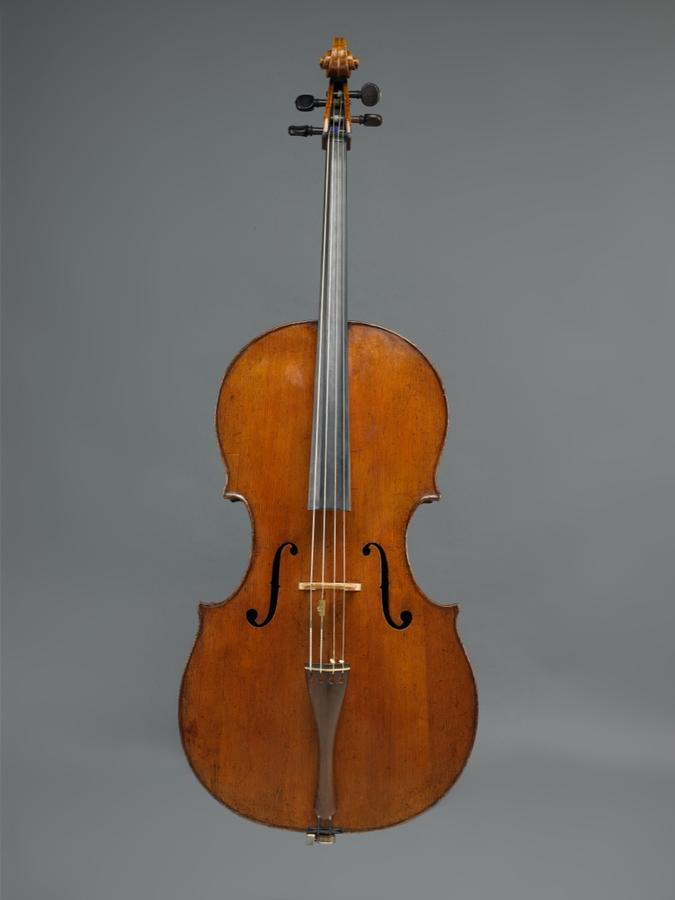
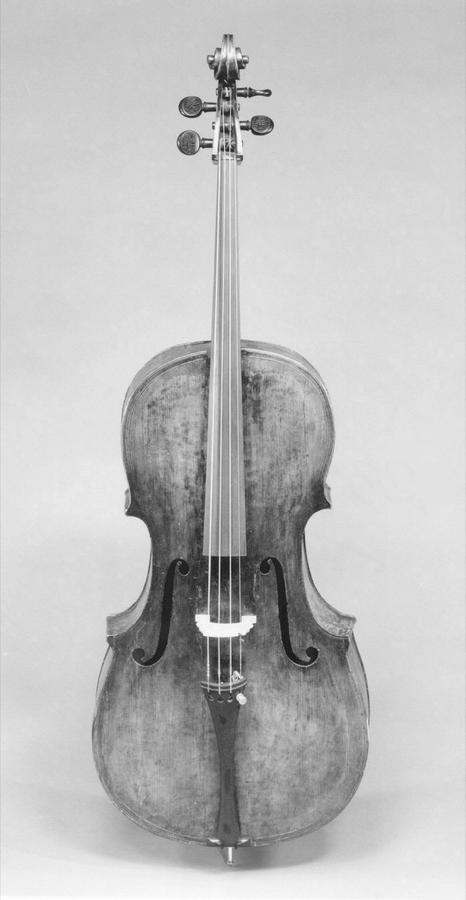
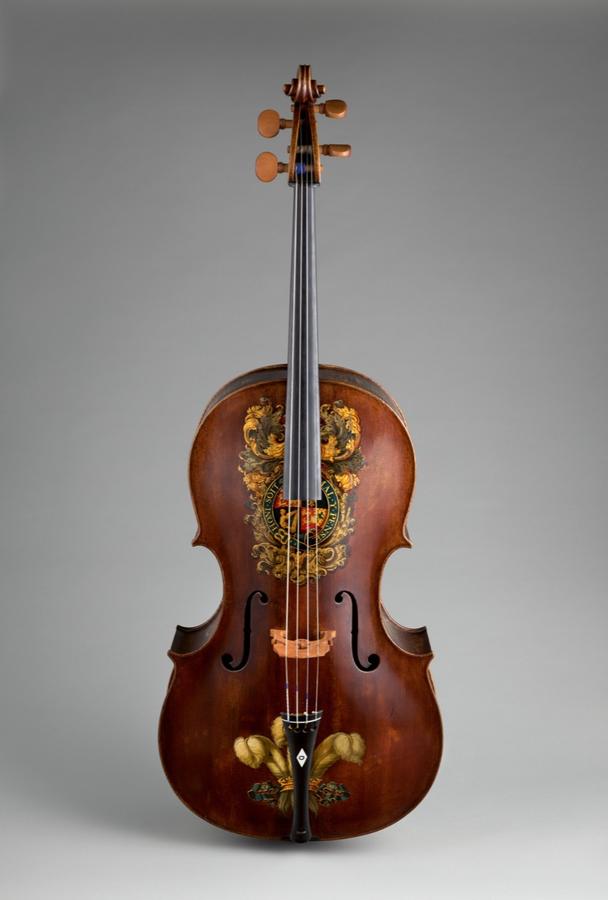
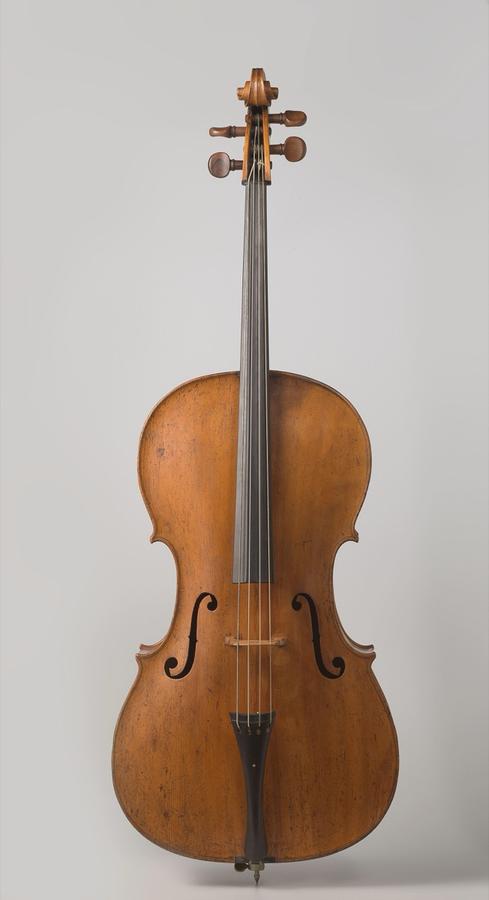
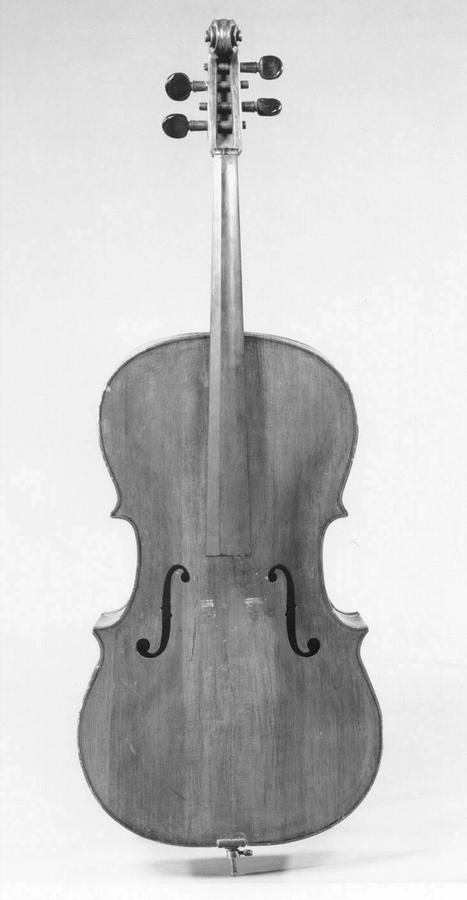
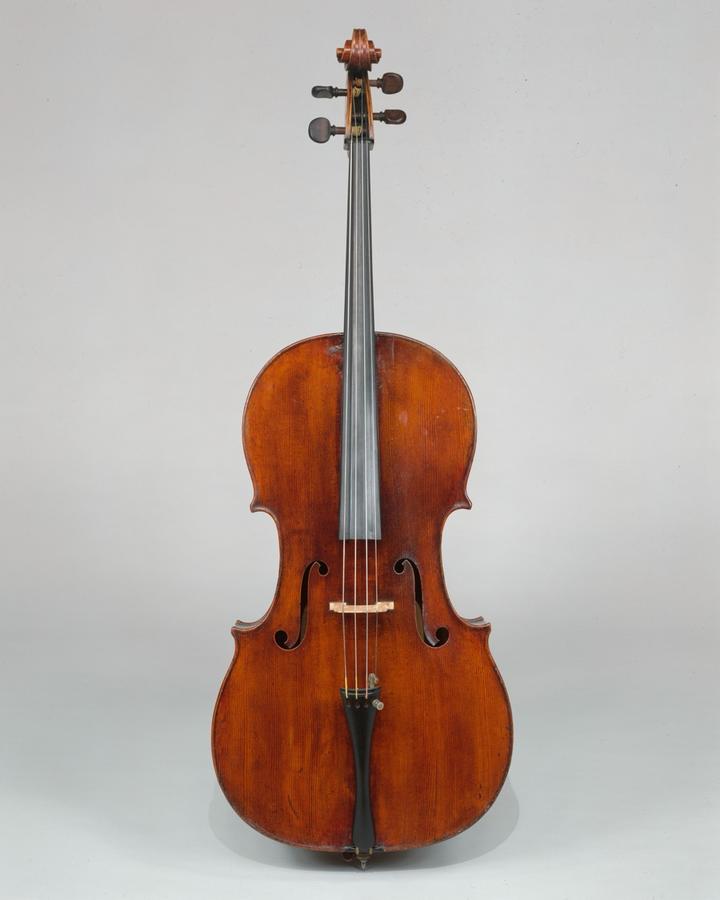
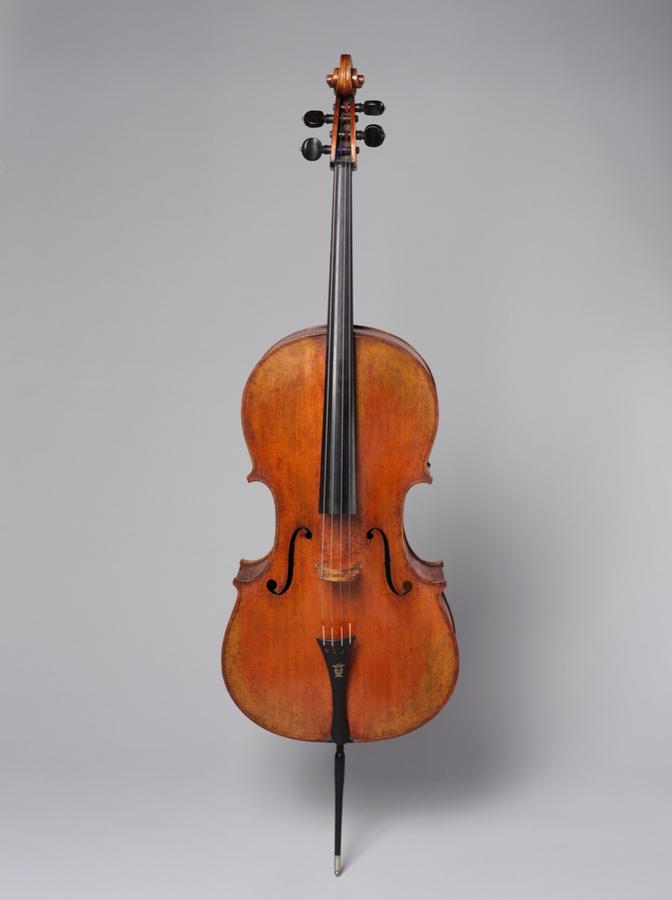
These 8 photographs span 1677–1893, 6 places of origin and 3 museums. Every photograph is public domain or openly licensed, and links to the museum’s own record.
-
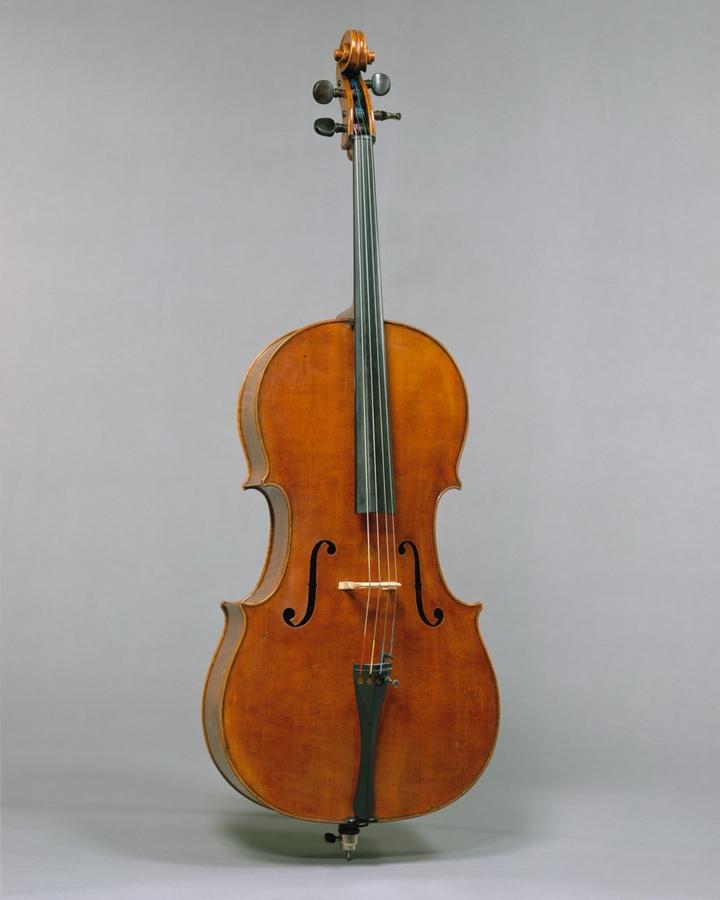
Violoncelloca. 1800 · French (France) -
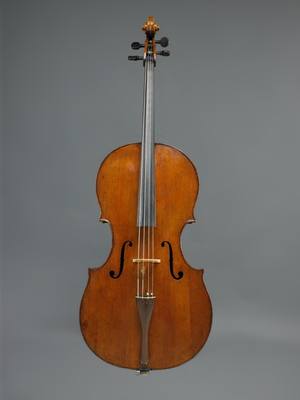
Nicolò Amati Violoncello: the "Herbert"1677 · Cremona -
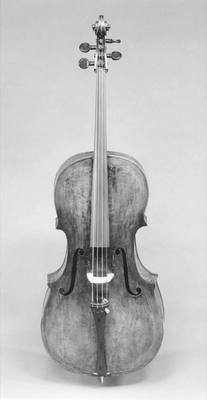
Violoncello18th century · Austrian (Austria) -
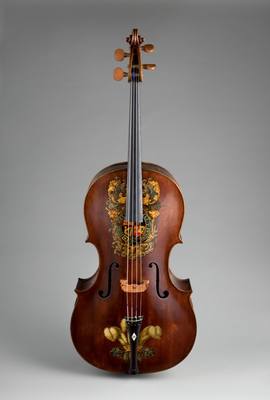
"Royal George" Cello1782 · British (United Kingdom) -
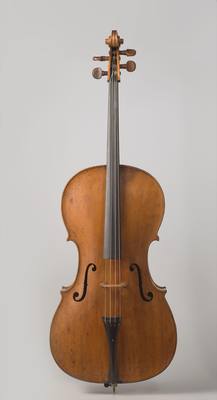
Cello1793 · The Hague -
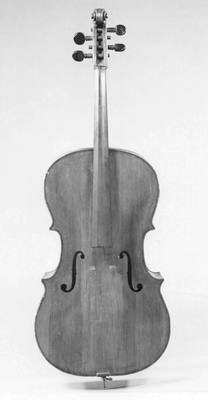
Violoncello or "Yankee Church Bass"1807 · American (United States) -
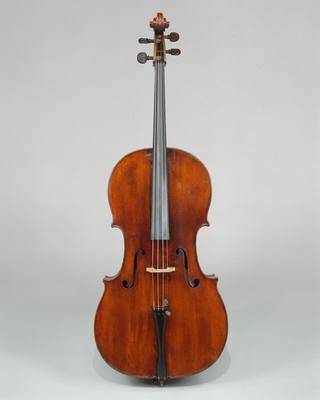
Violoncellomid-19th century · French (France) -
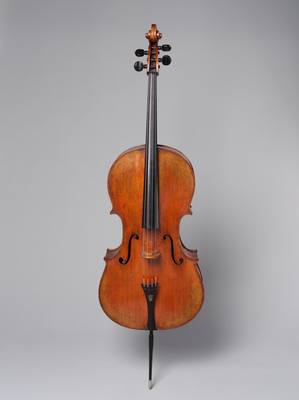
Violoncello1893 · American (United States)
Facts at a glance
| Hornbostel–Sachs number | 321.322-71 — Composite chordophone sounded by a bow |
|---|---|
| Hornbostel–Sachs group | Chordophones › Composite chordophones › Lutes |
| Also known as | violoncello, Cello |
| Developed | 1660 from bass violin |
| Wikidata labels | 110 languages |
| Wikipedia article | Cello |
| Wikidata item | Q8371 |
| Wikimedia Commons category | Cellos |
| MusicBrainz instrument | 0db03a60-1142-4b25-ab1b-72027d0dc357 |
| Encyclopaedia Britannica | art/cello |
| Audio sample (Wikimedia Commons) | JOHN MICHEL CELLO-J S BACH CELLO SUITE 1 in G Prelude.ogg |
Sources: Wikidata (CC0 1.0) — classification number, aliases, identifiers (dump of 2026-07-22); Wikipedia (CC BY-SA 4.0) — infobox fields (description of the classification number, development, inventors) and the names of the Hornbostel–Sachs groups (article “Hornbostel–Sachs”, revision of 2026-01-04).
The name in other languages
| Language | Name | Also written |
|---|---|---|
| English | cello | violoncello |
| French | violoncelle | |
| German | Violoncello | Cello, Violoncelli |
| Spanish | violonchelo | chelo, cello, violoncello |
| Italian | violoncello | |
| Portuguese | violoncelo | |
| Dutch | cello | violencel |
| Russian | виолончель | |
| Japanese | チェロ | ヴィオロンチェロ, セロ |
| Chinese | 大提琴 | |
| Korean | 첼로 | |
| Arabic | كمان جهير | تشللو, التشللو, الكمان الجهير |
Sources: Wikidata (CC0 1.0) — labels and aliases; MusicBrainz (CC0 1.0) — instrument aliases (names only).
About the cello: history, construction and playing
The violoncello, commonly abbreviated as cello, is a medium-low pitched bowed string instrument of the violin family. Its four strings are usually tuned in perfect fifths: from low to high, C2, G2, D3 and A3. The viola's four strings are each an octave higher. Music for the cello is generally written in the bass clef; the tenor clef and treble clef are used for higher-range passages.
Played by a cellist or violoncellist, the instrument enjoys a large solo repertoire with and without accompaniment, as well as numerous concerti. As a solo instrument, the cello uses its whole range, from bass to soprano, and in chamber music, such as string quartets and the orchestra's string section, it often plays the bass part, where it may be reinforced an octave lower by the double basses. Figured bass music of the Baroque era typically assumes a cello, viola da gamba or bassoon as part of the basso continuo group alongside chordal instruments such as organ, harpsichord, lute, or theorbo. Cellos are found in many other ensembles, from modern Chinese orchestras (as a replacement of Gehu 革胡)to cello rock bands.
History
The violin family, including cello-sized instruments, emerged c. 1500 as a family of instruments distinct from the viola da gamba family. The earliest depictions of the violin family, from Italy c. 1530, show three sizes of instruments, roughly corresponding to what we now call violins, violas, and cellos. Contrary to a popular misconception, the cello did not evolve from the viola da gamba, but existed alongside it for about two and a half centuries. The violin family is also known as the viola da braccio (meaning viola for the arm) family, a reference to the primary way the members of the family are held. This is to distinguish it from the viola da gamba (meaning viola for the leg) family, in which all the members are all held with the legs. The likely predecessors of the violin family include the lira da braccio and the rebec. The earliest surviving cellos are made by Andrea Amati, the first known member of the celebrated Amati family of luthiers.
The direct ancestor to the violoncello was the bass violin.[unt. library] Monteverdi referred to the instrument as "basso de viola da braccio" in Orfeo (1607). Although the first bass violin, possibly invented as early as 1538, was most likely inspired by the viol, it was created to be used in consort with the violin. The bass violin was actually often referred to as a "violone", or "large viola", as were the viols of the same period. Instruments that share features with both the bass violin and the viola da gamba appear in Italian art of the early 16th century.
Around 1700, Italian players popularized the cello in northern Europe, although the bass violin (basse de violon) continued to be used for another two decades in France. Many existing bass violins were literally cut down in size to convert them into cellos according to the smaller pattern developed by Stradivarius, who also made a number of old pattern large cellos (the 'Servais'). The sizes, names, and tunings of the cello varied widely by geography and time. The size was not standardized until c. 1750.
Construction
The cello is typically made from carved wood, although other materials such as carbon fiber or aluminum may be used. A traditional cello has a spruce top, with maple for the back, sides, and neck. Other woods, such as poplar or willow, are sometimes used for the back and sides. Less expensive cellos frequently have tops and backs made of laminated wood. Laminated cellos are widely used in elementary and secondary school orchestras and youth orchestras, because they are much more durable than carved wood cellos (i.e, they are less likely to crack if bumped or dropped) and they are much less expensive.
The top and back are traditionally hand-carved, though less expensive cellos are often machine-produced. The sides, or ribs, are made by heating the wood and bending it around forms. The cello body has a wide top bout, narrow middle formed by two C-bouts, and wide bottom bout, with the bridge and F holes just below the middle. The top and back of the cello have a decorative border inlay known as purfling. While purfling is attractive, it is also functional: if the instrument is struck, the purfling can prevent cracking of the wood. A crack may form at the rim of the instrument but spreads no further. Without purfling, cracks can spread up or down the top or back. Playing, traveling and the weather all affect the cello and can increase a crack if purfling is not in place.
The fingerboard and pegs on a cello are generally made from ebony, as it is strong and does not wear out easily.
Alternative materials
In the late 1920s and early 1930s, the Aluminum Company of America (Alcoa) as well as German luthier G.A. Pfretzschner produced an unknown number of aluminum cellos (in addition to aluminum double basses and violins). Cello manufacturer Luis & Clark constructs cellos from carbon fibre. Carbon fibre instruments are particularly suitable for outdoor playing because of the strength of the material and its resistance to humidity and temperature fluctuations. Luis & Clark has produced over 1,000 cellos, some of which are owned by cellists such as Yo-Yo Ma and Josephine van Lier.
Neck, fingerboard, pegbox, and scroll
Above the main body is the carved neck. The neck has a curved cross-section on its underside, which is where the player's thumb runs along the neck during playing. The neck leads to a pegbox and the scroll, which are all normally carved out of a single piece of wood, usually maple. The fingerboard is glued to the neck and extends over the body of the instrument. The fingerboard is given a curved shape, matching the curve on the bridge. Both the fingerboard and bridge need to be curved so that the performer can bow individual strings. If the cello were to have a flat fingerboard and bridge, as with a typical guitar, the performer would only be able to bow the leftmost and rightmost two strings or bow all the strings. The performer would not be able to play the inner two strings alone.
The nut is a raised piece of wood, fitted where the fingerboard meets the pegbox, in which the strings rest in shallow slots or grooves to keep them the correct distance apart. The pegbox houses four tapered tuning pegs, one for each string. The pegs are used to tune the cello by either tightening or loosening the string. The pegs are called "friction pegs", because they maintain their position by friction. The scroll is a traditional ornamental part of the cello and a feature of all other members of the violin family. Ebony is usually used for the tuning pegs, fingerboard, and nut, but other hardwoods, such as boxwood or rosewood, can be used. Black fittings on low-cost instruments are often made from inexpensive wood that has been blackened or "ebonized" to look like ebony, which is much harder and more expensive. Ebonized parts such as tuning pegs may crack or split, and the black surface of the fingerboard will eventually wear down to reveal the lighter wood underneath.
Strings
Historically, cello strings had cores made out of catgut, which, despite its name, is made from sheep or goat intestines. Most modern strings used in the 2010s are wound with metallic materials like aluminum, titanium and chromium. Cellists may mix different types of strings on their instruments. The pitches of the open strings are C, G, D, and A (black note heads in the playing range figure above), unless alternative tuning (scordatura) is specified by the composer. Some composers (e.g. Ottorino Respighi in the final movement of The Pines of Rome) ask that the low C be tuned down to a B-flat so that the performer can play a different low note on the lowest open string.
Bridge and f-holes
The bridge holds the strings above the cello and transfers their vibrations to the top of the instrument and the soundpost inside. The bridge is not glued but rather held in place by the tension of the strings. The bridge is usually positioned by the cross point of the "f-hole" (i.e, where the horizontal line occurs in the "f"). The f-holes, named for their shape, are located on either side of the bridge and allow air to move in and out of the instrument as part of the sound-production process. The f-holes also act as access points to the interior of the cello for repairs or maintenance. Sometimes a small length of rubber hose containing a water-soaked sponge, called a Dampit, is inserted through the f-holes and serves as a humidifier. This keeps the wood components of the cello from drying out.
Bow
Traditionally, bows are made from pernambuco or brazilwood. Both come from the same species of tree (Caesalpinia echinata), but Pernambuco, used for higher-quality bows, is the heartwood of the tree and is darker in color than brazilwood (which is sometimes stained to compensate). Pernambuco is a heavy, resinous wood with great elasticity, which makes it an ideal wood for instrument bows. Horsehair is stretched out between the two ends of the bow. The taut horsehair is drawn over the strings, while being held roughly parallel to the bridge and perpendicular to the strings, to produce sound. A small knob is twisted to increase or decrease the tension of the horsehair. The tension on the bow is released when the instrument is not being used. The amount of tension a cellist puts on the bow hair depends on the preferences of the player, the style of music being played, and for students, the preferences of their teacher.
Bows are also made from other materials, such as carbon fibre—stronger than wood—and fiberglass (often used to make inexpensive, lower-quality student bows). An average cello bow is 73 cm long (shorter than a violin or viola bow) 3 cm high (from the frog to the stick) and 1.5 cm wide. The frog of a cello bow typically has a rounded corner like that of a viola bow, but is wider. A cello bow is roughly 10 g heavier than a viola bow, which in turn is roughly 10 g heavier than a violin bow.
Instrument makers
Cellos are made by luthiers, specialists in building and repairing stringed instruments, ranging from guitars to violins. The following luthiers are notable for the cellos they have produced:
- Nicolò Amati and others in the Amati family
- Nicolò Gagliano
- Matteo Goffriller
- Giovanni Battista Guadagnini
- Andrea Guarneri
- Pietro Guarneri
- Charles Mennégand
- Domenico Montagnana
- Giovanni Battista Rogeri
- Francesco Ruggieri
- Stefano Scarampella
- Antonio Stradivari
- David Tecchler
- Carlo Giuseppe Testore
- Jean Baptiste Vuillaume
Source: Wikipedia, “Cello” — CC BY-SA 4.0 — text excerpted as published (references, images and tables removed); see the article for the full text and the list of authors. Revision of 2026-06-19.
Composers who played it
160 composers on this site list the cello as an instrument they played. A selection:
- Gioachino Rossini 1792–1868
- Alexander Borodin 1833–1887
- Johannes Brahms 1833–1897
- Leonora Baroni 1611–1670
- Gottfried Finger 1660–1730
- Antonio Caldara 1670–1736
- Giovanni Bononcini 1670–1747
- Quirino Colombani 1670–1735
- Antonio de Literes 1673–1747
- Evaristo Felice Dall'Abaco 1675–1742
- Francesco Paolo Supriani 1678–1753
- Nicola Francesco Haym 1678–1729
Composers with a page on this site whose Wikidata record lists this instrument; featured and best-dated first. Data: Wikidata (property “instrument”, P1303), CC0 1.0.
Sources and licences
- Violoncello, François-Louis Pique, ca. 1800, French (France). Wood. Purchase, The Astor Foundation, Mrs. Jackson Burke, J. Richardson Dilworth, Mrs. Harold H. Krechmer, in memory of Harold H. Krechmer, and American Society for Eighteenth Century Studies Gifts; Rogers Fund; Gift of Mr. and Mrs. Gregory W. Mandeville, The Crosby Brown Collection of Musical Instruments, Gifts of Mrs. Harold H. Krechmer and Helen Blank, in memory of Therese Gittler, by exchange; and funds from various donors, 1983 (1983.435). Museum record · CC0 1.0 (public domain dedication)
- Nicolò Amati Violoncello: the "Herbert", Amati, Nicolo, 1677, Cremona. spruce (overall material); poplar (overall material); maple (overall material). Gift of Evelyn and Herbert R. Axelrod. Museum record · CC0 1.0 (public domain dedication)
- Violoncello, 18th century, Austrian (Austria). Wood, metal. Gift of Nat and Yanna Brandt, in memory of Sophie Kroyt, 1983 (1983.487.2). Museum record · CC0 1.0 (public domain dedication)
- "Royal George" Cello, William Forster, 1782, British (United Kingdom). Spruce, maple, ebony. Gift of Mona and Bradford Endicott, in honor of Ken Moore, 2016 (2016.786a–c). Museum record · CC0 1.0 (public domain dedication)
- Cello, Johannes Theodorus Cuypers, 1793, The Hague. intestine, metal, wood (plant material), ebony (wood), maple (wood). On loan from the Gemeentemuseum Den Haag. Museum record · Public Domain Mark 1.0
- Violoncello or "Yankee Church Bass", William Green, 1807, American (United States). Wood. Gift of Genevieve Vaughn and Laurence Libin, in memory of Mary Ruth McClane, 1982 (1982.101). Museum record · CC0 1.0 (public domain dedication)
- Violoncello, Jean Baptiste Vuillaume, mid-19th century, French (France). Spruce and maple. Gift of Dr. Peter Blos, 1984 (1984.114.1). Museum record · CC0 1.0 (public domain dedication)
- Violoncello, A. Gemunder & Sons, 1893, American (United States). Wood, string. Gift of A. Gemunder & Sons, 1945 (45.71.4). Museum record · CC0 1.0 (public domain dedication)
Photographs: open-access collections of the museums named above; each is shown here reduced in size, otherwise unchanged. Text: Wikipedia (CC BY-SA 4.0), Wikidata and MusicBrainz (CC0). The full list of sources and licences is on the credits page.